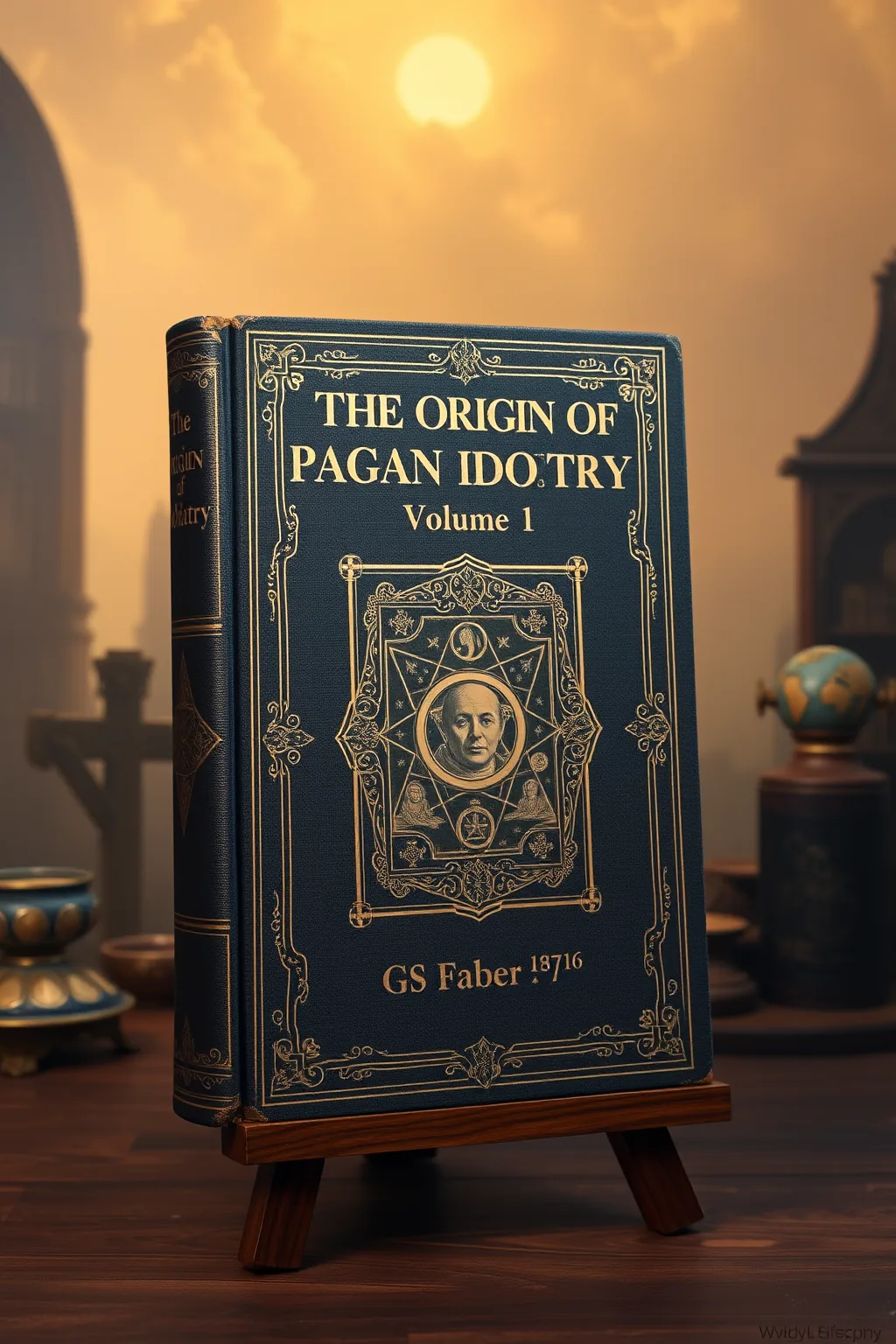
The Origin Of Pagan Idolatry Volume 1 GS Faber 1816
 77
77

The Origin Of Pagan Idolatry Volume 1 GS Faber 1816



GS Faber's The Origin of Pagan Idolatry Volume 1 is a groundbreaking work that remains as relevant today as it was in 1816. Faber's scholarly approach and thorough research make this book an invaluable resource for modern esoteric seekers. The text provides a detailed examination of pagan idolatry, tracing its origins and evolution through various cultural and historical contexts. For those interested in the esoteric traditions of Hinduism and paganism, this book offers a wealth of knowledge and insight. Faber's exploration of pagan rituals and deities is both enlightening and thought-provoking, making it a must-read for anyone delving into the mysteries of the occult. The book's historical context and philosophical depth add layers of complexity to the reader's understanding of pagan practices, making it an essential addition to any esoteric library. Rating:
📝 Description
77
George Stanley Faber's 1816 work, 'The Origin of Pagan Idolatry Volume 1,' examines ancient religious practices.
First published in 1816, George Stanley Faber's 'The Origin of Pagan Idolatry Volume 1' investigates the roots of idolatry in various ancient belief systems. Faber's research traces connections between seemingly disparate spiritual traditions, focusing on the philosophical underpinnings of worship and symbolism. He argues that many pagan practices stem from a shared, albeit corrupted, primeval revelation. The book details specific examples of symbolic representation and ritualistic behavior found in cultures across antiquity. Faber's approach is analytical, drawing comparisons to support his theories about the development of religious thought. This volume serves as an early attempt to systematize the study of comparative religion from an esoteric perspective. It is a dense work, requiring careful attention to its arguments and the historical evidence presented.
Faber's work belongs to an early 19th-century tradition of comparative mythology and religious history that sought hidden meanings behind exoteric forms. Thinkers of this period often looked for a universal, ancient wisdom underlying diverse spiritual expressions, sometimes linking them to biblical narratives or pre-diluvian sources. This volume fits within that intellectual current, attempting to decode the symbolic language of paganism to reveal a more fundamental, original truth about divinity and human worship. It represents an effort to understand the symbolic structures of belief systems as reflections of deeper, perhaps forgotten, spiritual realities.
💡 Why Read This Book?
Reading The Origin of Pagan Idolatry Volume 1 today offers a unique opportunity to understand the historical foundations of pagan idolatry and its influence on modern esoteric practices. This book provides readers with a deeper appreciation of the mystical traditions that have shaped spiritual beliefs for centuries. By exploring the origins of pagan rituals and deities, readers gain insight into the cultural and philosophical contexts that have shaped contemporary spiritual thought. This knowledge is invaluable for anyone seeking to enrich their understanding of the occult and its enduring impact on spiritual practices.
⭐ Reader Reviews
Honest opinions from readers who have explored this book.
❓ Frequently Asked Questions
What is the main focus of The Origin of Pagan Idolatry Volume 1?
The main focus of this book is the historical and philosophical exploration of pagan idolatry, tracing its origins and evolution through various cultural and historical contexts.
Who should read this book?
This book is ideal for readers interested in esoteric literature, occult studies, Hinduism, philosophy, and paganism.
What makes this book relevant today?
Despite being published in 1816, this book remains relevant today due to its comprehensive exploration of pagan idolatry and its influence on modern spiritual practices.
🔮 Key Themes & Symbolism
Symbolism in Pagan Idolatry
This theme examines the strong symbolism found in pagan idolatry, revealing the hidden meanings and esoteric knowledge embedded within ancient rituals and beliefs. Faber's exploration of symbols provides a deep understanding of their philosophical significance.
Esoteric Knowledge
The book uncovers layers of hidden knowledge that have been passed down through generations, offering insights into the mystical foundations of pagan practices. This theme is essential for those seeking to understand the deeper spiritual dimensions of idolatry.
Philosophical Significance
Faber's work examines the philosophical implications of pagan idolatry, exploring how these practices have shaped human belief systems and consciousness. This theme is crucial for philosophers and spiritual seekers alike.
💡 Key Ideas
Editorial paraphrase of the work's core concepts — not direct quotes.
The essence of idolatry lies in the symbolism that connects the divine with the human.
This quote underscores the mystical bridge that idolatry creates between the spiritual and the physical realms.
Ancient rituals are the keys to unlocking hidden knowledge.
This passage highlights the esoteric significance of pagan practices, revealing their deeper spiritual meanings.
The symbol is the language of the divine, speaking to the soul.
This quote emphasizes the importance of symbols in conveying spiritual truths and connecting with the divine.
Idolatry is a pathway to the mysteries of the universe.
This passage suggests that pagan rituals offer a means to explore the deeper mysteries of existence and the cosmos.
The seeker of truth will find enlightenment in the symbols of idolatry.
This quote encourages readers to study the symbolism of pagan practices to gain spiritual insight and enlightenment.
🌙 Esoteric Significance
Tradition
This book belongs to the Hermetic tradition, which focuses on the exploration of hidden knowledge and the mystical dimensions of spiritual practices. Faber's work is a central to Hermetic scholarship, offering insights into the esoteric foundations of pagan idolatry.
Symbolism
Key symbols in this book include ancient rituals, sacred geometry, and mythological figures, each carrying deep esoteric meanings. These symbols serve as gateways to understanding the hidden knowledge embedded within pagan practices.
Modern Relevance
This book remains relevant today for modern practitioners of occult arts and esoteric studies. Its exploration of symbolism and hidden knowledge provides a foundation for contemporary spiritual seekers and scholars, offering insights into the mystical dimensions of pagan idolatry.
👥 Who Should Read This Book
Beginners interested in esoteric studies will find Faber's work accessible through Punj's modern notes, which provide context and clarity. Scholars of Hinduism will appreciate the deep dive into the symbolism and hidden knowledge within pagan rituals. Spiritual seekers will find enlightenment in the philosophical significance of idolatry, while practitioners of occult arts will benefit from the esoteric insights offered in this volume.
📜 Historical Context
Written in 1816, 'The Origin of Pagan Idolatry Volume 1' emerged during a time of significant intellectual and spiritual inquiry. Faber's work was influential in bridging the gap between ancient religious practices and modern esoteric studies. The book's exploration of pagan idolatry provided a framework for understanding the mystical underpinnings of various spiritual traditions, influencing subsequent scholars and practitioners in the field of occult arts.
📔 Journal Prompts
Reflect on the symbolism in pagan rituals and their hidden meanings.
Explore how ancient rituals connect with the divine.
Consider the philosophical implications of idolatry in shaping human belief systems.
Journal about the mystical foundations of your own spiritual practices.
Study the esoteric knowledge revealed in Faber's exploration of pagan idolatry.
🗂️ Glossary
Idolatry
The worship of idols or images, often seen as a means of connecting with the divine through symbolism.
Symbolism
The use of symbols to represent abstract ideas or spiritual truths, a key aspect of esoteric studies.
Hermetic Tradition
A mystical and philosophical tradition that focuses on the exploration of hidden knowledge and spiritual enlightenment.
Esoteric Knowledge
Knowledge that is hidden or secret, often revealed through spiritual practices and mystical experiences.
Pagan Rituals
Ancient religious practices that often involve the use of symbols and rituals to connect with the divine and the natural world.
This book appears in 2 collections
🔮 Readers Also Liked
Browse all →







More by nindi punj
All books →


From the “Witchcraft” Collection
View all →







![BAILEY, Michael D. Historical Dictionary Of Witchcraft. [inglês]](/img/thumb/bailey-michael-d-historical-dictionary-of-witchcraft-ingl-s.webp)

More Free Witchcraft & Paganism Books
View all →