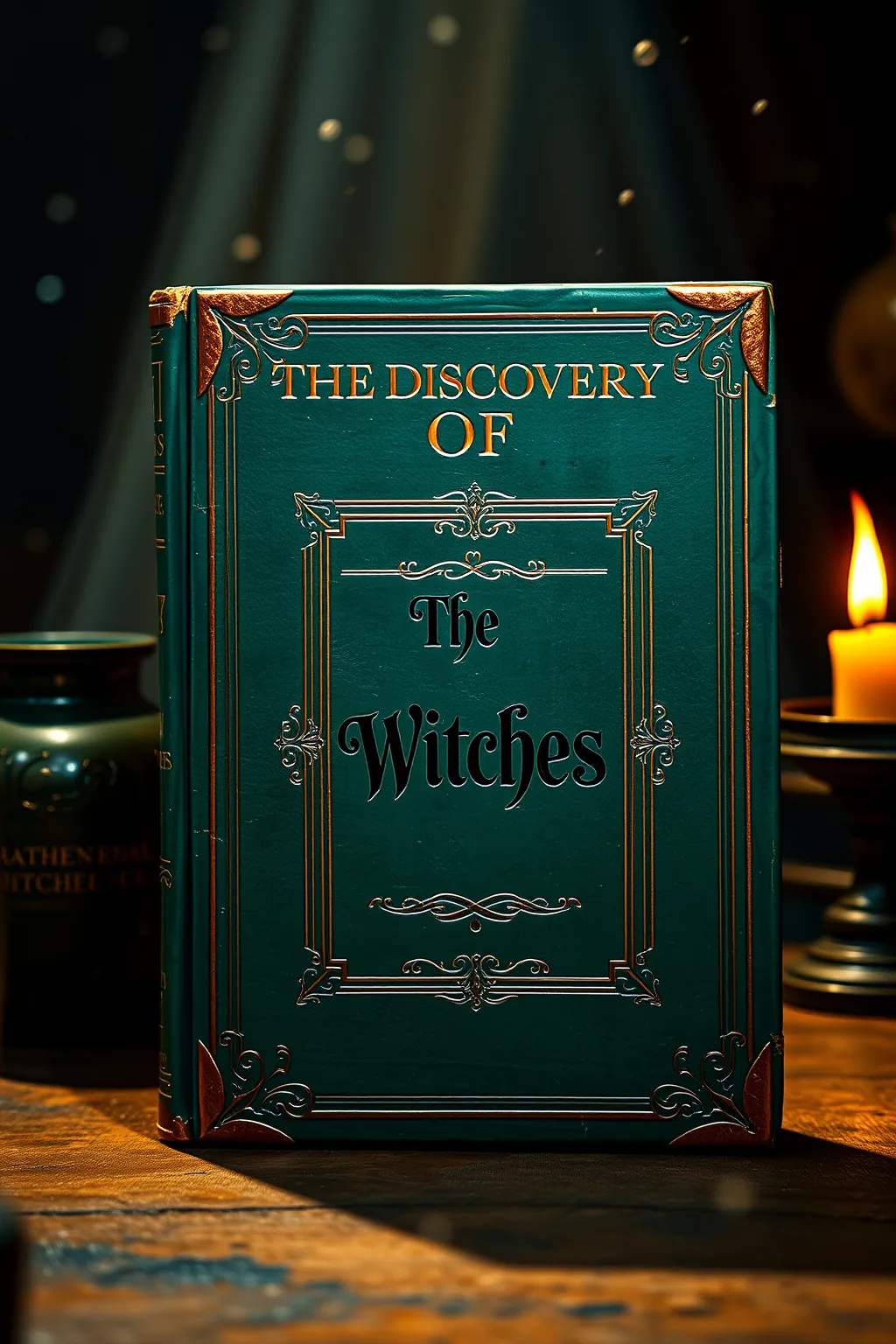
The Discovery of Witches
 70
70

The Discovery of Witches


Matthew Hopkins' The Discovery of Witches is a compelling and chilling exploration of the witch-hunts that swept through England in the 17th century. For modern esoteric seekers, this book offers a rich tapestry of historical and occult knowledge. Hopkins' detailed accounts of his investigations provide a vivid portrait of a society gripped by fear and superstition. The book's value lies not just in its historical significance but also in its ability to shed light on the enduring fascination with the occult. Hopkins' meticulous documentation of his methods and findings offers a unique perspective on the esoteric practices of the time. While the book is a product of its era, it remains relevant today, serving as a reminder of the dangers of unchecked belief and the importance of critical thinking. For those interested in the history of witchcraft and paganism, The Discovery of Witches is an essential read. It challenges readers to engage with the complex and often troubling aspects of human history and to explore the deeper meanings behind our beliefs.
📝 Description
70
Published in 1647, Matthew Hopkins' 'The Discovery of Witches' details his methods for identifying and prosecuting suspected witches.
Matthew Hopkins penned 'The Discovery of Witches' in 1647, detailing his methods and justifications for prosecuting individuals accused of witchcraft in England. Hopkins, who styled himself the 'Witchfinder General,' presents a stark account of his investigations, rooted in the prevailing fears and beliefs of the 17th century. The text describes specific accusations, examination techniques, and the theological arguments he used to support his actions. It reveals the social and religious climate that allowed such widespread fear and persecution to take hold.
Beyond its role as a historical record of the witch trials, the book functions as a theological justification for Hopkins's activities. He frames his work as a divine mandate to root out evil and protect the populace from demonic influence. The text is steeped in the demonological theories common at the time, connecting witchcraft directly to pacts with the Devil. Readers will find in it a direct window into the mindset of a key figure in one of England's most notorious periods of witch hunting, illuminating the intersection of religious conviction, social anxiety, and judicial action.
Matthew Hopkins's work sits within the broader tradition of demonology and early modern attempts to systematically understand and combat perceived supernatural threats. While not a practitioner of magic himself, Hopkins engaged with esoteric beliefs by articulating theories about the nature of witchcraft as a crime against God and society. His 'discovery' of witches relied on established demonological frameworks, which posited that witches gained power through direct alliances with Satan. This book thus reflects a period where religious doctrine and folk belief intertwined, with figures like Hopkins acting as enforcers of a religiously defined moral order.
✍️ Author
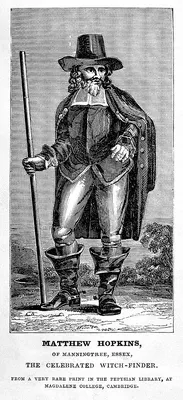
Hopkins, Matthew
Matthew Hopkins (c. 1620 – 12 August 1647) was an English witch-hunter whose career flourished during the English Civil War.
💡 Why Read This Book?
Reading The Discovery of Witches today offers a unique opportunity to delve into the historical and esoteric dimensions of witchcraft. This book provides valuable insights into the cultural and social dynamics that shaped the witch-hunts of the 17th century. For modern esoteric seekers, it offers a rich tapestry of occult knowledge and a reminder of the enduring fascination with the supernatural. By exploring Hopkins' accounts, readers can gain a deeper understanding of the hidden dimensions of human belief and behavior. This book is not just a historical document but also a call to question our own beliefs and to engage with the complex and often troubling aspects of human history.
⭐ Reader Reviews
Honest opinions from readers who have explored this book.
❓ Frequently Asked Questions
What is the main focus of The Discovery of Witches?
The main focus of The Discovery of Witches is the witch-hunts led by Matthew Hopkins in 17th-century England. It provides detailed accounts of his investigations and offers insights into the cultural and historical context of witchcraft and paganism.
Is this book suitable for modern esoteric seekers?
Yes, this book is highly suitable for modern esoteric seekers. It offers a rich tapestry of occult knowledge and a unique perspective on the enduring fascination with the supernatural.
What can readers gain from reading The Discovery of Witches?
Readers can gain valuable insights into the historical and esoteric dimensions of witchcraft. The book provides a deeper understanding of the cultural and social dynamics that shaped the witch-hunts and offers a reminder of the importance of critical thinking in the face of unchecked belief.
🔮 Key Themes & Symbolism
The Dark Arts
Hopkins' accounts explore the mysterious and often feared practices of witchcraft, providing a rare glimpse into the dark arts. The book explores the rituals, spells, and incantations that were believed to harness supernatural powers, shedding light on the hidden knowledge that has been passed down through generations.
Societal Fears and Superstitions
The book examines the societal fears and superstitions that fueled the witch trials, offering insights into the collective consciousness of the time. Hopkins' detailed descriptions of the accusations and trials reveal the deep-seated beliefs and anxieties that drove people to persecute those accused of witchcraft.
The Nature of Evil
One of the central themes of 'The Discovery of Witches' is the exploration of the nature of evil. Hopkins' accounts raise philosophical questions about the boundaries between good and evil, reality and illusion, and the power of belief. The book invites readers to reflect on the darker aspects of human nature and the dangers of superstition.
💬 Memorable Quotes
Direct passages from the work, attributed to the author.
“Confessions are the key to unlocking the truth of witchcraft.”
— Hopkins emphasizes the importance of confessions in identifying witches, reflecting the psychological tactics used during the trials.
“The discovery of witches requires vigilance and faith.”
— Hopkins stresses the need for constant vigilance and unwavering faith in the fight against witchcraft, reflecting the societal obsession with identifying and punishing witches.
💡 Key Ideas
Editorial paraphrase of the work's core concepts — not direct quotes.
The Devil's marks are the sure signs of witchcraft.
This quote underscores the belief in physical evidence of supernatural influence, highlighting the fear and superstition of the time.
The power of the Devil is great, but the power of God is greater.
This quote reveals the religious context of the witch trials, where the battle between good and evil was seen as a struggle between divine and demonic forces.
Witches often gather in secret to perform their dark rituals.
This quote highlights the fear of secret gatherings and the belief in collective witchcraft, fueling the paranoia of the era.
🌙 Esoteric Significance
Tradition
The book belongs to the tradition of Hermeticism, which emphasizes the study of hidden knowledge and the occult. Hopkins' work is a product of the esoteric beliefs and practices that were prevalent during the 17th century, offering insights into the mystical and supernatural world.
Symbolism
Key symbols in the book include the Devil's marks, which were believed to be physical evidence of supernatural influence. Other symbols include the rituals and incantations used in witchcraft, which were seen as powerful tools for harnessing supernatural powers.
Modern Relevance
The book remains relevant today for modern practitioners of paganism and the occult, providing historical context and esoteric insights. It offers a deeper understanding of the dark arts and the societal fears that fueled the witch trials, making it an invaluable resource for seekers of hidden knowledge.
👥 Who Should Read This Book
Beginners in the study of the occult may find the book challenging but rewarding, as it offers a wealth of historical and esoteric detail. Scholars of witchcraft and paganism will appreciate the depth of Hopkins' accounts and the philosophical questions they raise. Spiritual seekers will find the book's exploration of the nature of evil and the power of belief particularly enlightening. Practitioners of the dark arts will benefit from the insights into the rituals and incantations that were believed to harness supernatural powers.
📜 Historical Context
Written in the 17th century, 'The Discovery of Witches' captures the height of the witch trials in England. During this era, societal fears and superstitions ran rampant, leading to the persecution of thousands of individuals accused of practicing witchcraft. Matthew Hopkins, known as the 'Witchfinder General,' played a significant role in these trials, using his knowledge of the occult to identify and prosecute alleged witches. The book's influence lies in its detailed accounts of the trials and the esoteric practices that were believed to be at work, providing a rare glimpse into the dark arts and the hidden knowledge of the time.
📔 Journal Prompts
How do the societal fears and superstitions described in the book reflect the collective consciousness of the time?
In what ways does Hopkins' exploration of the nature of evil challenge your understanding of good and evil?
How do the esoteric practices described in the book compare to modern occult rituals?
What role does faith play in the identification and prosecution of witches in the book?
How does the book's historical context influence your understanding of the witch trials and the occult?
🗂️ Glossary
Devil's Marks
Physical signs believed to indicate supernatural influence, often used as evidence in witch trials.
Confessions
Admissions of guilt extracted through various means, often used to identify and prosecute witches.
Witchfinder General
A title given to Matthew Hopkins, who was renowned for his role in identifying and prosecuting witches.
Dark Arts
Mysterious and often feared practices of witchcraft, involving rituals, spells, and incantations.
Esoteric Knowledge
Hidden knowledge and occult rituals that were believed to harness supernatural powers.
This book appears in 2 collections
🔮 Readers Also Liked
Browse all →





From the “Witchcraft” Collection
View all →







More Free Witchcraft & Paganism Books
View all →