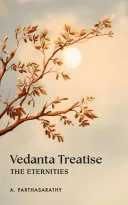
Vedanta Treatise: The Eternities
 83
83

Vedanta Treatise: The Eternities
A. Parthasarathy's Vedanta Treatise: The Eternities offers a rigorous, almost forensic, examination of life's ultimate questions. It’s less a gentle invitation into philosophy and more a direct confrontation with the mechanics of existence. The author’s insistence on viewing 'living' as a learnable technique, rather than an inherent state, is its most compelling, and perhaps daunting, aspect. While the book excels in its systematic breakdown of Vedantic principles, its dense prose can sometimes feel less like an exploration and more like a lecture. The section detailing the distinction between 'being' and 'doing' provides a particularly sharp, if stark, illustration of the treatise's analytical rigor. Ultimately, it’s a formidable work for the serious seeker, demanding attention but offering substantial intellectual reward.
📝 Description
83
A. Parthasarathy's Vedanta Treatise: The Eternities, published in 2013, seeks to answer fundamental questions about human existence.
First published in 2013, Vedanta Treatise: The Eternities by A. Parthasarathy is an extensive work on the philosophy of Vedanta. The author aims to provide clear answers regarding the purpose and ultimate goal of human life, drawing on over sixty years of dedicated study of Himalayan wisdom traditions. This book is for those actively seeking existential clarity, questioning life's objectives, and desiring a structured grasp of universal principles. It is particularly useful for students of philosophy and spirituality, and for anyone interested in applying ancient wisdom to contemporary life. The treatise synthesizes traditional Vedantic teachings with a modern analytical perspective, setting it apart from purely academic or devotional approaches. It covers core Vedantic ideas such as the nature of ultimate reality (Brahman), the individual self (Atman), the cycle of rebirth (samsara), and the path to liberation (moksha). The book stresses the practical application of these concepts, viewing life itself as a skill requiring disciplined practice to reach its full potential.
Vedanta Treatise: The Eternities emerges from the long lineage of Vedantic scholarship, a tradition that has shaped Indian philosophical discourse for millennia through oral transmissions and scriptural commentaries. It connects with the contemplative practices found in Himalayan wisdom traditions. The book's modern analytical framework distinguishes its approach from earlier interpretations, seeking to integrate classical philosophy with contemporary understanding.
💡 Why Read This Book?
• Gain a structured understanding of Vedanta, learning the practical technique for applying its principles to daily life, as detailed in the book's methodical explanations of concepts like Atman and Brahman. • Discover a philosophical framework for identifying life's ultimate goal, moving beyond superficial aims to grasp the profound purpose articulated through Parthasarathy's 60 years of research. • Engage with a critical analysis of existence that presents living as a learnable skill, offering a distinct perspective not commonly found in broader spiritual or philosophical texts.
⭐ Reader Reviews
Honest opinions from readers who have explored this book.
❓ Frequently Asked Questions
What is the core philosophy expounded in Vedanta Treatise: The Eternities?
The book expounds the ancient Indian philosophy of Vedanta, focusing on its eternal principles for life and living. It presents a systematic approach to understanding the purpose and ultimate goal of human existence.
Who is the author, A. Parthasarathy, and what is his background?
A. Parthasarathy is an author and philosopher who has dedicated over 60 years to researching and studying the ancient wisdom of the Himalayas. This treatise represents the culmination of that extensive work.
When was Vedanta Treatise: The Eternities first published?
The book was first published on August 8, 2013, making it a contemporary yet deeply rooted exploration of ancient Vedantic philosophy.
What is the primary goal of the book for the reader?
The primary goal is to provide intensive answers for those seeking clarity on the purpose and ultimate aim of human life, presenting living as a technique that can be learned and practiced.
Does the book offer practical advice or is it purely theoretical?
The book strongly emphasizes the practical application of Vedantic principles to daily living, presenting 'living' itself as a technique that requires learning and practice, not just theoretical understanding.
What kind of wisdom does the book draw upon?
It draws upon the ancient wisdom of the Himalayas, as interpreted and researched by the author over six decades, presenting it as a core set of eternal principles for existence.
🔮 Key Themes & Symbolism
The Technique of Living
The treatise posits that human existence is not merely a biological state but a skill to be mastered. It systematically breaks down the 'technique of living' into learnable components, emphasizing conscious practice and disciplined application of philosophical understanding to everyday actions and decisions. This approach moves beyond passive acceptance, framing life as an active, skill-based endeavor.
Purpose and Ultimate Aim
Central to the work is an intensive investigation into the fundamental purpose of human life and its ultimate goal. It challenges superficial interpretations, guiding the reader towards a profound understanding derived from ancient Himalayan wisdom, suggesting that a clear grasp of this aim is crucial for a fulfilling existence.
Ancient Wisdom, Modern Application
Vedanta Treatise: The Eternities bridges the gap between millennia-old Vedantic philosophy and contemporary challenges. It demonstrates how timeless principles, honed through extensive research into Himalayan traditions, can provide concrete answers and practical guidance for individuals reading through the complexities of modern life.
The Nature of Reality
The book explores the Vedantic understanding of reality, exploring concepts such as Brahman and Atman. It aims to clarify the relationship between the individual self and the ultimate cosmic principle, offering a framework for comprehending existence beyond empirical observation.
💬 Memorable Quotes
Direct passages from the work, attributed to the author.
“Living is a technique that needs to be learnt and practised by one and all.”
— This statement expresses the book's central thesis: that skillful living is not innate but acquired through deliberate effort and study, akin to mastering any practical discipline.
“The book expounds the ancient philosophy of Vedanta.”
— This highlights the core subject matter, indicating that the treatise offers a deep dive into the foundational tenets and principles of the Vedantic school of thought.
“It presents the eternal principles of life and living.”
— This suggests the work aims to uncover universal truths and guidelines for existence that transcend transient circumstances, providing a stable philosophical bedrock.
“For those seeking answers on the purpose and ultimate goal of human life...”
— This phrase defines the target audience and the book's primary objective: to provide comprehensive responses to fundamental existential inquiries.
“...forms the core of the findings of over 60 years of research and study into the ancient wisdom of the Himalayas.”
— This emphasizes the authority and depth of the work, underscoring the extensive commitment and traditional knowledge base informing its conclusions.
🌙 Esoteric Significance
Tradition
The work is deeply rooted in the Advaita Vedanta tradition, a major school of Hindu philosophy. While Advaita is often studied academically, Parthasarathy's approach emphasizes its practical, almost alchemical, transformation of the individual's lived experience, aligning it with esoteric traditions that seek direct realization rather than mere intellectual understanding.
Symbolism
While the treatise focuses on philosophical concepts, the underlying 'wisdom of the Himalayas' evokes potent esoteric imagery of secluded sages and useful insights. The concept of 'eternal principles' itself functions as a symbolic representation of immutable cosmic laws, sought by various esoteric traditions for understanding and mastery.
Modern Relevance
In an era saturated with self-help and fleeting spiritual trends, Vedanta Treatise: The Eternities offers a robust, systematic framework. Thinkers and practitioners seeking depth beyond superficial techniques may find its rigorous approach to self-inquiry and the 'technique of living' relevant to contemporary philosophical and psychological explorations of consciousness.
👥 Who Should Read This Book
• Serious students of Eastern philosophy: Individuals aiming for a comprehensive and systematic understanding of Vedanta beyond introductory texts, seeking to integrate its principles into their worldview. • Existential seekers: Those grappling with fundamental questions about life's purpose and meaning, who desire clear, structured answers grounded in a long-standing wisdom tradition. • Practical philosophers: Readers interested in applying philosophical concepts to daily life, who seek actionable techniques and a disciplined approach to personal growth and understanding existence.
📜 Historical Context
Vedanta Treatise: The Eternities, published in 2013, enters a landscape shaped by centuries of Vedantic scholarship and modern philosophical inquiry. While its roots lie in ancient Indian thought, its presentation reflects a 21st-century need to synthesize this wisdom for practical application. The mid-20th century saw significant Western engagement with Vedanta, notably through figures like Swami Vivekananda and academic scholars such as S. Radhakrishnan, who introduced its philosophical depth to a global audience. Parthasarathy's work builds on this foundation but distinguishes itself by focusing on 'living as a technique,' a more action-oriented approach than the purely philosophical discourse often emphasized by contemporaries or earlier academic translations. Its release post-dates the peak of the New Age movement, offering a more structured and less syncretic path for seekers of existential clarity.
📔 Journal Prompts
The technique of living: Identify one daily action you perform habitually and analyze its 'technique' using Vedantic principles.
Eternal principles: Reflect on a perceived 'eternal principle' from the book and how it contrasts with a temporary societal trend.
Purpose and ultimate goal: Articulate your current understanding of life's ultimate goal, referencing the book's framework.
Himalayan wisdom: Consider how 'ancient wisdom' might be practically applied to a modern technological challenge.
The nature of reality: Explore the distinction between your perceived reality and the concept of Brahman as presented.
🗂️ Glossary
Vedanta
A school of Hindu philosophy based on the Upanishads, focusing on the nature of reality, the self, and the path to liberation. It literally means 'end of the Vedas'.
Atman
The individual soul or self, often considered in Vedanta to be identical with Brahman, the ultimate reality.
Brahman
The ultimate, unchanging reality or cosmic consciousness that underlies all existence in Hindu philosophy.
Samsara
The cycle of birth, death, and rebirth, driven by karma, which individuals seek to escape through spiritual realization.
Moksha
Liberation or release from the cycle of samsara, the ultimate goal in many Indian spiritual traditions.
Technique of Living
A core concept in the book, presenting life itself as a skill that requires conscious learning, practice, and disciplined application of principles.
Himalayan Wisdom
Refers to the ancient spiritual and philosophical knowledge traditionally associated with the sages and traditions originating from the Himalayan region.