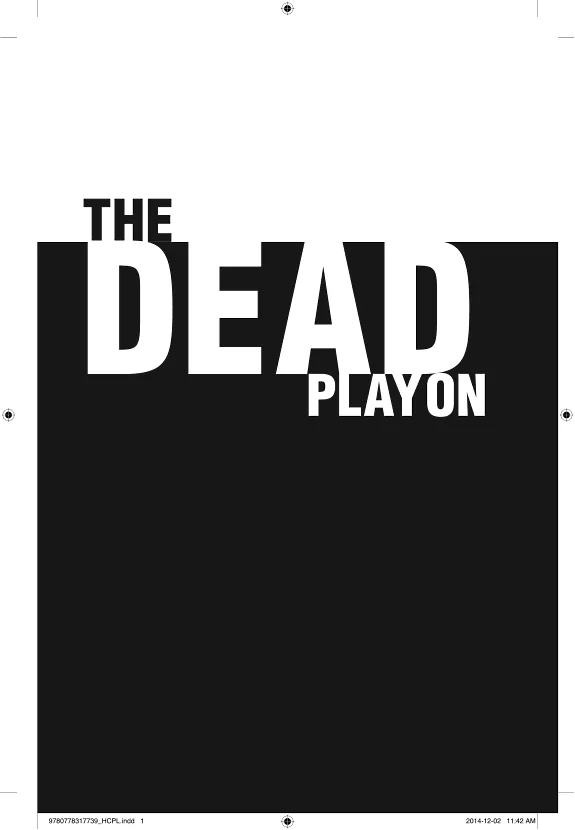
The Dead Play on
 79
79

The Dead Play on
Heather Graham’s ‘The Dead Play On’ attempts to imbue a contemporary thriller with a spectral resonance, centering on musician Tyler Anderson’s investigation into his friend Arnie Watson’s death. The inherited saxophone, a tangible link to the deceased, serves as an effective plot device for Tyler’s escalating suspicions and supernatural encounters. Graham’s strength lies in her atmospheric depiction of New Orleans, a city already steeped in mystery and folklore, which provides fertile ground for the unfolding paranormal events. However, the narrative occasionally strains under the weight of its own supernatural premise, with Tyler’s descent into conspiracy sometimes feeling less like organic discovery and more like plot expediency. A particularly striking element is the notion that musical instruments can absorb and transmit the final moments of their players, a concept that, while potent, is not always fully explored beyond its immediate narrative function. Ultimately, the book delivers a serviceable supernatural mystery, though its deeper esoteric implications remain somewhat underdeveloped.
📝 Description
79
Heather Graham's 2015 novel, 'The Dead Play On,' begins with a musician inheriting a cursed saxophone.
Tyler Anderson, a musician in New Orleans, inherits a saxophone from his friend Arnie Watson, who died under suspicious circumstances. When Tyler plays the instrument, he experiences vivid visions connected to Arnie's life and apparent suicide. These visions suggest Arnie's death was not a simple suicide but part of a larger pattern of musician murders in the city. Tyler must use these paranormal experiences to uncover the truth behind the killings and clear his friend's name.
The narrative unfolds against the atmospheric backdrop of New Orleans, a city known for its rich history and folklore. The supernatural element is tied directly to the saxophone, which acts as a conduit for past events and emotions. As Tyler investigates, he finds himself drawn into a world where the past literally haunts the present, blurring the lines between reality and the spectral.
Published in 2015, 'The Dead Play On' engages with the enduring human interest in the afterlife and the idea that objects can hold memories. It taps into themes of hauntings and psychic echoes, suggesting that strong emotions or events can leave a tangible imprint on the physical world. The novel uses a musical instrument as a focal point for these spectral impressions, aligning with traditions that view art and sound as potential channels for communication beyond the physical realm.
💡 Why Read This Book?
• You will learn how objects, specifically a saxophone, can act as conduits for spectral echoes and past trauma, drawing parallels to psychic resonance concepts. • You will feel the palpable atmosphere of New Orleans, a city known for its unique blend of history and the supernatural, as depicted through its music scene. • You will explore the idea of hidden patterns in seemingly isolated events, as Tyler investigates a series of musician deaths linked by an unseen force.
⭐ Reader Reviews
Honest opinions from readers who have explored this book.
❓ Frequently Asked Questions
What is the central supernatural element in 'The Dead Play On'?
The core supernatural element involves a saxophone that allows the protagonist, Tyler Anderson, to experience visions of his deceased friend Arnie Watson's life and death, suggesting the instrument holds psychic imprints.
Where is 'The Dead Play On' primarily set?
The novel is predominantly set in New Orleans, a city chosen for its rich history, unique culture, and reputation for being a hub of both music and paranormal phenomena.
What is the connection between musicians and the murders in the book?
Musicians are being targeted and murdered in New Orleans, and the protagonist Tyler Anderson, a musician himself, becomes convinced that these deaths are not isolated incidents but part of a larger, sinister pattern.
Who is Arnie Watson?
Arnie Watson is a soldier and musician who recently died, seemingly by suicide. He is the friend of the protagonist, Tyler Anderson, and his inherited saxophone becomes a key object in unraveling the mystery of his death.
What genre does 'The Dead Play On' fall into?
The book blends elements of supernatural thriller, mystery, and occult fiction, creating a narrative focused on solving murders with paranormal undertones.
When was 'The Dead Play On' first published?
The novel 'The Dead Play On' by Heather Graham was first published in 2015.
🔮 Key Themes & Symbolism
Psychic Imprints and Objects
The narrative posits that musical instruments, particularly Arnie Watson's saxophone, can absorb and transmit psychic energy, allowing Tyler Anderson to witness past events. This concept aligns with psychometry, where objects hold traces of their owners' experiences, suggesting that trauma and intense emotions can linger, becoming accessible to sensitive individuals. The saxophone thus becomes more than an instrument; it's a repository of memory and a conduit for supernatural investigation.
Music as a Spiritual Medium
Graham explores the idea that music itself can transcend the physical realm, acting as a medium for communication or revelation. Tyler's playing of the inherited saxophone triggers visions, implying that certain melodies or the act of performance can open pathways to the spectral or the subconscious. This theme elevates music from mere entertainment to a potent force capable of revealing hidden truths and connecting the living with the departed.
The Unseen Underbelly of New Orleans
The novel uses New Orleans as more than just a setting; it's an active participant in the mystery. The city's known association with Voodoo, jazz history, and a certain spectral atmosphere is leveraged to suggest that beneath its vibrant surface lies a network of hidden forces and unsolved mysteries. The targeting of musicians hints at a deeper, perhaps ancient, malevolence rooted in the city's unique cultural and historical fabric.
The Soldier's Trauma
The character of Arnie Watson, identified as a soldier, introduces the theme of post-traumatic stress and its potential lingering effects. His death, initially appearing as suicide, is questioned by Tyler. The work hints that the trauma of war, combined with artistic sensitivity, might make individuals more susceptible to external influences or internal turmoil, contributing to the book's exploration of psychological and supernatural distress.
💬 Memorable Quotes
Direct passages from the work, attributed to the author.
“The melody seemed to whisper secrets of the city's shadowed past.”
— This interpretation points to the atmospheric and historical elements of the novel, suggesting that the music played on the saxophone doesn't just reveal personal tragedy but also hints at deeper, perhaps ancient, mysteries within New Orleans.
“In New Orleans, the dead never truly rest; they leave their music behind.”
— This interpretation speaks to the novel's engagement with the supernatural folklore often associated with New Orleans. It frames the city as a place where spectral presences and their influence, particularly through artistic expression like music, remain potent.
💡 Key Ideas
Editorial paraphrase of the work's core concepts — not direct quotes.
He believed the saxophone was more than just wood and brass; it was a vessel carrying Arnie’s final song.
This paraphrased concept highlights the central motif of the saxophone as a psychic conduit. It emphasizes Tyler's growing conviction that the instrument holds residual energy and memories from Arnie, suggesting a tangible link to his friend's demise.
Tyler felt Arnie's fear, a chilling echo transmitted through the very notes he played.
This paraphrased concept illustrates the visceral nature of the visions Tyler experiences. It underscores how the inherited instrument allows him to directly feel the emotions and terror Arnie likely felt in his final moments.
He knew the tune was a key, unlocking a door he wasn't sure he wanted to open.
This paraphrased concept captures Tyler's apprehension as he delves deeper into the mystery. It highlights the dangerous nature of the truths he is uncovering and his internal conflict about pursuing them.
🌙 Esoteric Significance
Tradition
The novel draws loosely from the Western Esoteric tradition's interest in mediumship and the persistence of consciousness after death. While not explicitly Gnostic or Kabbalistic, it echoes themes found in spiritualism and psychical research concerning the ability of objects to retain psychic impressions. The narrative functions as a contemporary, secularized interpretation of these older ideas, presenting them through the lens of a modern thriller rather than a formal occult treatise.
Symbolism
The primary symbol is the saxophone, representing not just musical artistry but a vessel for Arnie Watson's final experiences and emotions. It functions as a psychometric tool, a conduit through which the living can perceive the spectral traces of the dead. The city of New Orleans itself symbolizes a nexus of history, music, and latent spiritual energy, a place where the veil between worlds is metaphorically thin.
Modern Relevance
In contemporary discussions of paranormal investigation and urban fantasy, 'The Dead Play On' speaks to interest in how everyday objects might hold unseen significance. It speaks to a modern fascination with hauntings and the idea that trauma can leave tangible energetic residues. While not directly citing academic esotericists, its themes align with broader cultural explorations of consciousness, memory, and the possibility of spectral communication, appealing to readers interested in accessible supernatural narratives.
👥 Who Should Read This Book
• Readers interested in supernatural thrillers that blend mystery with paranormal elements, particularly those set in atmospheric locations like New Orleans. • Fans of Heather Graham's previous works who enjoy her style of suspenseful storytelling with romantic and occult undertones. • Individuals curious about the concept of psychometry and how objects might retain traces of past events and emotions, presented in a fictional context.
📜 Historical Context
Published in 2015, Heather Graham’s ‘The Dead Play On’ arrived during a period of sustained popularity for supernatural thrillers and paranormal romance. While not directly engaging with specific esoteric movements of the past, the novel taps into enduring themes of spiritualism and object-based mediumship that saw significant interest in the late 19th and early 20th centuries, particularly within circles influenced by figures like Helena Blavatsky and the Theosophical Society. Graham’s work, however, frames these concepts within a modern crime-thriller structure, a departure from earlier, more overtly spiritualist texts. Contemporary authors such as Charlaine Harris, with her Southern Vampire Mysteries, also demonstrated a market for gothic-tinged narratives set in the American South, though Graham’s focus is distinctly on the spectral and musical rather than vampiric lore. The reception of such books typically focuses on their entertainment value within genre fiction, rather than academic engagement with esoteric traditions.
📔 Journal Prompts
The saxophone as a conduit for Arnie's final moments: explore its symbolic weight.
Reflect on the unique atmosphere of New Orleans as a setting for supernatural events.
Consider the role of music in conveying emotion and memory within the narrative.
Analyze Tyler Anderson's conviction regarding Arnie's death and the evidence he gathers.
Examine the theme of trauma, both personal and potentially historical, as presented in the book.
🗂️ Glossary
Psychometry
The purported psychic ability to read the history of an object or place by touching it. In the novel, the saxophone acts as a psychometric object for Tyler.
Spectral Echoes
Residual psychic energy or imprints left behind by deceased individuals or significant events. The novel suggests these echoes can be perceived, often through specific objects or locations.
A major US city known for its unique Creole culture, music (especially jazz), cuisine, and historical association with various spiritual and occult traditions, including Voodoo.
Arnie Watson
A fictional character, a soldier and musician who dies under mysterious circumstances, bequeathing a saxophone to the protagonist, Tyler Anderson.
Tyler Anderson
The protagonist of the novel, a musician who inherits a saxophone and begins experiencing supernatural visions related to his friend Arnie's death.
Supernatural Thriller
A genre that combines elements of horror, mystery, and suspense with supernatural or paranormal phenomena as central plot devices.
Soldier
Refers to Arnie Watson's background, hinting at potential themes of trauma, duty, and the psychological impact of military service.
This book appears in 1 collection
🔮 Readers Also Liked
Browse all →









From the “Visions” Collection
View all →

More Free Occult Philosophy Books
View all →