Moon Rising

 78
78

Moon Rising
Sutherland’s "Moon Rising" presents a world populated by dragons with distinct tribes and elemental affinities. The narrative, centered on a young dragon named Moonwatcher who can read minds, is competently structured for its target audience. The strength lies in its accessible portrayal of social dynamics and the internal conflict of a protagonist burdened by an unwanted gift. However, for the seasoned esoteric scholar, the work's primary limitation is its overt allegorical simplicity; the symbolism, while present, rarely transcends conventional fantasy tropes. The concept of the Dragonet Prophecy, for example, feels more like a plot device than a deep dive into oracular traditions. It’s a readable fantasy, but its esoteric resonance remains superficial.
📝 Description
78
Tui T. Sutherland's 2016 novel, Moon Rising, uses a YA fantasy framework for allegorical interpretation.
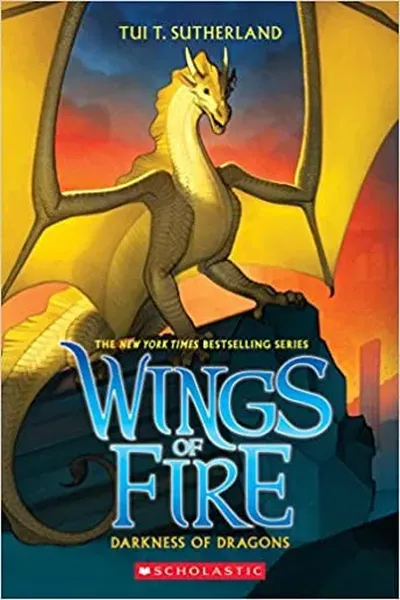
Moon Rising, published in 2016, is the first book in Tui T. Sutherland's Wings of Fire series. While presented as a young adult fantasy, its story and characters lend themselves to symbolic readings in esoteric studies. The narrative concerns prophecy, conflict between dragon clans like the SeaWings and MudWings, and the weight of leadership. It depicts a society where elemental powers and dragon ancestry shape social order and individual fates, echoing structures found in certain mythologies. The book was released in 2016, a time when fantasy literature and mythological studies saw considerable public interest. The series' popularity places it within contemporary YA fantasy that often references older archetypes.
This novel can be examined through the lens of archetypal psychology and mythological symbolism. The dragon figures and their societal structures may mirror concepts of primal forces and hierarchical mythologies found in various esoteric traditions. Its exploration of destiny and interconnectedness within a magical society offers parallels to philosophies that view the world as an animated, symbolic system.
💡 Why Read This Book?
• Gain insight into contemporary archetypal storytelling by examining the Dragonet Prophecy, a narrative device echoing ancient oracular pronouncements. • Explore the symbolic weight of telepathy and prophecy through Moonwatcher's unique abilities and the societal impact they have. • Understand the dynamics of tribal conflict and alliance through the lens of the five dragon tribes, reflecting mythological patterns of societal division.
⭐ Reader Reviews
Honest opinions from readers who have explored this book.
❓ Frequently Asked Questions
What is the central prophecy in Moon Rising?
The central prophecy in "Moon Rising" is the Dragonet Prophecy, which foretells the end of a long-standing war among the dragon tribes through the actions of five dragonets.
Who is the main protagonist of Moon Rising?
The main protagonist of "Moon Rising" is Moonwatcher, a young dragon with telepathic abilities and the capacity to see the future.
What are the main dragon tribes mentioned in Moon Rising?
The main dragon tribes are the MudWings, SandWings, SkyWings, SeaWings, and RainWings, each possessing distinct characteristics and territories.
What year was Moon Rising first published?
Moon Rising was first published in 2016.
Does Moon Rising contain explicit esoteric teachings?
While "Moon Rising" is a fantasy novel, its exploration of prophecy, telepathy, and tribal dynamics can be interpreted through an esoteric lens by interested readers.
What is the primary conflict in the Wings of Fire series starting with Moon Rising?
The primary conflict is the ongoing war between the SandWings, fueled by a succession dispute, which the Dragonet Prophecy aims to resolve.
🔮 Key Themes & Symbolism
The Burden of Prophecy
The narrative centers on the Dragonet Prophecy, a foretelling that dictates the actions of five young dragons. This theme explores the tension between predetermined fate and free will, a common motif in esoteric thought. Moonwatcher, in particular, grapples with visions and telepathic insights, questioning the extent to which her destiny is fixed and the ethical implications of foreknowledge. The work examines how such prophecies can shape societies and individual identities, often leading to conflict and manipulation by those who seek to control or fulfill them.
Tribalism and Unity
The world of Pyrrhia is divided into distinct dragon tribes, each with unique abilities and societal structures. This stark division mirrors historical and mythological instances of group identity leading to conflict. The series, beginning with "Moon Rising," posits that true resolution requires overcoming these ingrained animosities. The concept of the five dragonets uniting these disparate factions highlights the esoteric ideal of transcending limited perspectives to achieve a greater harmony, a principle found in various mystical traditions advocating for universal connection.
Hidden Abilities and Self-Discovery
Moonwatcher’s telepathic and precognitive abilities represent the unfolding of latent potential. This speaks to esoteric traditions that emphasize the discovery of inner powers and spiritual evolution. Her journey is one of self-acceptance and learning to control gifts that initially isolate her. The narrative suggests that true strength lies not only in physical prowess but in understanding and integrating one's unique, often hidden, talents, a concept central to many initiatory paths.
The Nature of Power
Power in "Moon Rising" is depicted through various means: the authority derived from prophecy, the influence of telepathic communication, and the strength of individual dragon tribes. The series implicitly questions the sources and legitimacy of power, particularly when wielded through manipulation or inherited right. It explores the responsibility that accompanies power, especially when it impacts the lives of many. This aligns with esoteric discussions on the ethical use of spiritual or psychic faculties and the dangers of unchecked ambition.
💬 Memorable Quotes
Direct passages from the work, attributed to the author.
“She hadn't been born to be a warrior. She had been born to be a listener.”
— This interpretation underscores Moonwatcher's realization of her true nature, emphasizing the esoteric idea that individual purpose may lie in passive reception and understanding rather than active conflict.
“The prophecy was a story they told themselves to make sense of the war.”
— This interpretation suggests a meta-narrative approach to prophecy, viewing it as a psychological construct or social tool rather than an immutable decree, reflecting critical perspectives on fate and destiny.
“Maybe she was supposed to be the one who ended the war, not by fighting, but by understanding.”
— This concept points to a non-violent resolution, aligning with mystical ideals of achieving peace through empathy and insight rather than aggression.
“The world was bigger and stranger than she had ever imagined.”
— This interpretation reflects a moment of profound realization, akin to an esoteric awakening, where the protagonist transcends her limited worldview and grasps a vaster, more complex reality.
💡 Key Ideas
Editorial paraphrase of the work's core concepts — not direct quotes.
The dragonet who was supposed to be the most dangerous, the most powerful, was afraid of her own abilities.
This paraphrased concept highlights the internal conflict of Moonwatcher, who possesses significant psychic gifts but fears their potential, a common theme in narratives of self-discovery and the responsible use of power.
🌙 Esoteric Significance
Tradition
While not explicitly aligned with a singular esoteric tradition, "Moon Rising" engages with themes common to Hermeticism and Gnosticism, particularly the concept of a predetermined destiny (fate) versus the potential for self-realization and gnosis (inner knowledge). The protagonist’s journey of discovering and mastering hidden abilities reflects the Hermetic principle of "As Above, So Below," implying an inner spiritual landscape that mirrors the outer world's challenges. The narrative's focus on prophecy and oracular pronouncements also touches upon divinatory practices found across various esoteric lineages.
Symbolism
The dragon itself serves as a potent symbol, representing primal power, ancient wisdom, and transformative potential across numerous mythologies. Moonwatcher's telepathy symbolizes heightened perception and the ability to connect with the collective unconscious, a concept explored in Jungian psychology and esoteric thought. The distinct dragon tribes can be interpreted as symbolic representations of elemental forces or archetypal personalities, reflecting a structured cosmos governed by inherent principles, akin to the elemental correspondences in Western esotericism.
Modern Relevance
Contemporary esoteric practitioners and authors exploring narrative psychology often cite works like "Moon Rising" for their accessible presentation of archetypal patterns. Thinkers in the field of comparative mythology and Jungian analysis may find the series valuable for illustrating how ancient symbolic structures continue to manifest in modern storytelling. The narrative's engagement with themes of destiny, hidden potential, and societal conflict provides relatable frameworks for exploring personal growth and collective consciousness in the 21st century.
👥 Who Should Read This Book
• Young adult readers interested in fantasy narratives that explore themes of destiny and social conflict, offering an accessible entry point to archetypal storytelling. • Students of comparative mythology and narrative structure who seek contemporary examples of how ancient motifs are adapted for modern audiences. • Aspiring writers and readers interested in character archetypes and the development of complex fictional worlds with underlying symbolic meaning.
📜 Historical Context
Published in 2016, "Moon Rising" emerged within a robust contemporary fantasy landscape, a period where authors like George R. R. Martin (A Song of Ice and Fire, ongoing) had already demonstrated the commercial viability of complex, adult-oriented fantasy. While Sutherland's work is primarily aimed at a younger demographic, its intricate world-building and multi-protagonist approach align with the trend towards expansive mythologies in fiction. The series’ success can be contextualized against a backdrop of renewed interest in mythological structures and archetypal narratives within popular culture, influenced by earlier works such as J.R.R. Tolkien's legendarium. Unlike earlier generations of fantasy that might have directly engaged with Tolkienian or C.S. Lewisian Christian allegories, "Moon Rising" and its contemporaries often draw more broadly from a global mythological lexicon, presenting nuanced portrayals of destiny and societal conflict.
📔 Journal Prompts
Moonwatcher's telepathic abilities present a unique burden; how does this reflect societal pressures?
The Dragonet Prophecy dictates specific roles; explore the tension between this fate and individual agency.
Reflect on the symbolism of the five distinct dragon tribes and their inherent conflicts.
Consider the nature of power as depicted through tribal leadership and prophecy in the book.
Analyze the RainWings' seemingly passive nature and its potential symbolic meaning.
🗂️ Glossary
Dragonet Prophecy
A prophecy foretelling the end of a destructive war among the dragon tribes, supposedly fulfilled by five specific dragonets born on the same night.
Pyrrhia
The name of the continent and world inhabited by the various dragon tribes in the Wings of Fire series.
Telepathy
The ability to communicate thoughts or ideas directly with another mind, a key characteristic of the protagonist, Moonwatcher.
Precognition
The ability to see future events; Moonwatcher experiences visions that relate to this capacity.
MudWings
One of the five major dragon tribes, known for their strength, loyalty, and damp, muddy habitats.
SandWings
A desert-dwelling dragon tribe known for their venomous tails and their involvement in a major succession war.
SkyWings
A mountain-dwelling tribe characterized by their fire-breathing abilities and often aggressive nature.
🔮 Readers Also Liked
Browse all →









More by Tui T. Sutherland
All books →




More Free Occult Philosophy Books
View all →