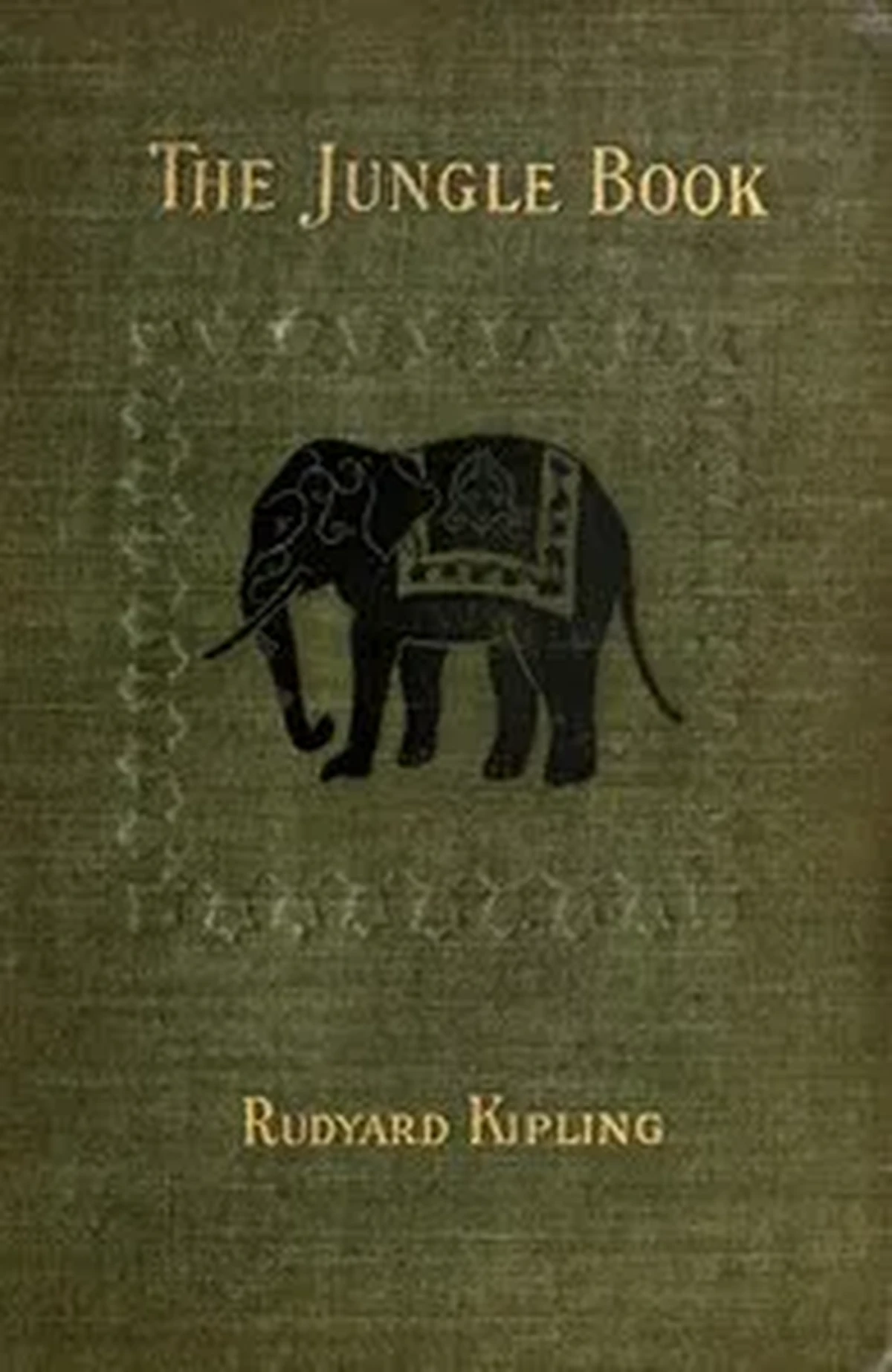
The Jungle Book
 77
77

The Jungle Book
Kipling's *The Jungle Book* offers more than just tales of a boy raised by wolves; it presents a stark, almost primal, examination of societal structures through the lens of the wild. The 'Law of the Jungle,' far from being mere animal instinct, is depicted as a rigorous, albeit natural, legal system that governs all beings. This is its signal strength, offering a unique perspective on order and chaos. However, the framing verses, while thematic, can sometimes feel more like pronouncements than integral narrative elements, occasionally disrupting the flow rather than enhancing it. The depiction of Shere Khan, the tiger driven by a personal vendetta and a sense of natural right, remains a potent archetype of the outsider who embodies a challenge to established order. Ultimately, *The Jungle Book* succeeds as a complex fable of belonging and societal integration, cloaked in adventure.
📝 Description
77
Rudyard Kipling's *The Jungle Book* was published in 1894.
Rudyard Kipling's *The Jungle Book* is a collection of seven short stories that focus on Mowgli, a boy raised by wolves in the Indian jungle. These stories are framed by poems that often reflect on primal instincts and the order of nature. While often seen as a children's book, its allegorical depth has connected with readers across many generations. The narratives examine themes of law, belonging, and the wild.
The book appeals to those interested in the relationship between nature and civilization, the concept of the 'law of the jungle,' and the psychological aspects of being an outsider. Readers who appreciate characters that represent both wild freedom and established order will find value here. It also provides rich material for students of mythology and folklore due to its archetypal characters and story structures.
While not overtly occult, *The Jungle Book* touches upon themes that resonate with esoteric thought. The 'Law of the Jungle' itself functions as a codified, almost spiritual, system of natural order, mirroring concepts found in certain nature-based spiritual traditions. The stories examine the inherent tension between instinctual drives and societal structures, a central concern in many esoteric philosophies that explore the human psyche's relationship with the primal world. Mowgli's journey between the animal and human worlds can be seen as an allegory for the spiritual seeker's path between the material and the divine.
💡 Why Read This Book?
• Learn about the 'Law of the Jungle' not as chaos, but as a structured, albeit natural, code of conduct, offering a unique framework for understanding social order. This concept is central to understanding the animal societies depicted. • Explore the archetype of Mowgli, a figure caught between the natural world and human society, providing a lens through which to examine themes of identity and belonging that transcend cultural boundaries. • Understand the narrative framing provided by the verses, which introduce primal themes and primal law, offering a distinct poetic and philosophical layer to the prose narratives.
⭐ Reader Reviews
Honest opinions from readers who have explored this book.
❓ Frequently Asked Questions
When was Rudyard Kipling's *The Jungle Book* first published?
Rudyard Kipling's *The Jungle Book* was first published in 1924, though its stories were originally serialized in magazines throughout the 1890s.
What is the 'Law of the Jungle' in Kipling's stories?
The 'Law of the Jungle' in Kipling's work is a complex code of conduct governing the behavior of animals in the Indian jungle, emphasizing rules for hunting, survival, and inter-species relations.
Is *The Jungle Book* considered a children's book?
While widely read by children, *The Jungle Book*'s allegorical depth, complex themes of law, and social structures have also led to its appreciation by adult readers and scholars.
Who are the main characters in *The Jungle Book*?
The central character is Mowgli, a human boy raised by wolves. Key animal characters include Baloo the bear, Bagheera the panther, and Shere Khan the tiger.
What are the primary themes explored in *The Jungle Book*?
Major themes include the conflict between nature and civilization, the struggle for identity and belonging, the concept of law and order, and the relationship between humans and the animal kingdom.
Is *The Jungle Book* based on Indian folklore?
While Kipling drew inspiration from Indian settings and some local tales, *The Jungle Book* is primarily his own creation, blending folklore elements with his unique narrative and thematic concerns.
🔮 Key Themes & Symbolism
The Law of the Jungle
This is not mere instinct but a codified system of rules essential for survival and coexistence within the jungle ecosystem. It dictates hunting practices, territorial rights, and social interactions among species. The concept presents an alternative to human legal systems, suggesting that order can arise organically from necessity and natural consequence. The stories explore the adherence to, and transgression of, this law, highlighting its importance for maintaining balance and community, even in a seemingly wild environment.
Belonging and Identity
Mowgli's journey is fundamentally about finding his place. Raised by wolves but inherently human, he navigates the complexities of dual identity. The stories examine what it means to belong to a pack, a species, or a society. This theme is explored through Mowgli's interactions with both animal and human communities, questioning the boundaries we impose and the innate need for acceptance and self-definition.
Nature vs. Civilization
The narratives constantly juxtapose the natural world, with its inherent laws and rhythms, against the often chaotic and artificial constructs of human civilization. The jungle, governed by the 'Law of the Jungle,' is presented as a place of order and consequence, while human settlements can be depicted as sources of disruption and moral ambiguity. This dichotomy encourages reflection on which system fosters true order and well-being.
The Archetypal Predator
Characters like Shere Khan embody the archetype of the powerful, often ostracized, predator. Their motivations, rooted in perceived natural rights or primal instincts, challenge the established order. The stories explore the dynamics of fear, respect, and conflict that arise when such figures interact with the dominant social structures, offering a primal perspective on power and opposition.
💬 Memorable Quotes
Direct passages from the work, attributed to the author.
“The Law of the Jungle, as laid down by the wolves, is that the cub will be safe as long as he is a cub.”
— This highlights the protective, yet conditional, nature of the jungle's social contract. It emphasizes that belonging and safety are often tied to adherence to established rules and the protection of the vulnerable within the community.
“The Jungle has great wonders, but the greatest of these is the Law.”
— This elevates the 'Law of the Jungle' beyond mere instinct to a fundamental principle governing the entire ecosystem. It suggests that order, rather than chaos, is the true marvel of the natural world.
“He did not know that he was only Mowgli, the frog, the little human-child.”
— This speaks to Mowgli's initial lack of self-awareness regarding his human origins, perceived by the animals. It underscores his dual nature and the process of self-discovery he must undergo.
“The Law runs not to kill Man. That is the Law.”
— This establishes a critical exception to the general hunting rules, demonstrating a specific boundary between the animal world and humanity. It hints at a deeper, perhaps instinctual, understanding of human significance or danger.
“What is the use of a good fighting-man who does not know when to be a coward?”
— This reflects a pragmatic view of survival and strategy, suggesting that true strength lies not just in aggression but in wisdom and knowing when to retreat or avoid conflict. It’s a nuanced take on courage.
🌙 Esoteric Significance
Tradition
While not strictly within a single esoteric lineage like Hermeticism or Kabbalah, *The Jungle Book* appeals to themes found in animistic traditions and certain interpretations of Theosophy. The concept of a universal 'Law' governing all life, the spiritual significance attributed to animal archetypes, and the idea of a human child raised outside conventional societal norms to embody a primal wisdom, all touch upon broader spiritual philosophies that seek connection with the natural world and its underlying order.
Symbolism
The wolf pack symbolizes community, loyalty, and the enforcement of natural law. Bagheera the panther represents cunning, foresight, and the disciplined application of that law, often serving as Mowgli's guide. Shere Khan, the tiger, embodies the disruptive force of primal ambition and the challenge to established order, representing the untamed and the outcast.
Modern Relevance
Contemporary eco-philosophy and ecopsychology find echoes in Kipling's portrayal of a structured natural world. The archetypes of Mowgli and the animal characters continue to inform discussions on nature versus nurture, human connection to the wild, and the search for belonging in increasingly complex societies. Practices focused on nature immersion and understanding primal instincts can draw parallels to the narrative's exploration of the 'Law of the Jungle.'
👥 Who Should Read This Book
• Students of comparative mythology and folklore seeking to understand archetypal narratives of societal integration and natural law. They will gain insights into foundational story structures. • Readers interested in the psychological exploration of identity and belonging, particularly those who feel 'between worlds.' They will find Mowgli's journey a compelling case study. • Individuals exploring nature-based philosophies or animistic thought, seeking to understand symbolic representations of natural order and the wisdom inherent in the wild.
📜 Historical Context
Rudyard Kipling's *The Jungle Book* emerged during a period of intense British colonial presence in India, a reality that deeply informs the work's perspective, even if allegorical. Published in 1894, its stories first appeared in magazines, reflecting a popular appetite for tales of the exotic and the 'civilizing mission.' Kipling's contemporaries included writers like Arthur Conan Doyle and H.G. Wells, though Kipling's focus on imperial themes and his distinct narrative voice set him apart. While not directly censored, the book's reception was marked by its immediate popularity and its subsequent use in educational contexts, sometimes for its perceived moral lessons, other times for its vivid portrayal of Indian life from a Western viewpoint. The work engaged with prevailing ideas of nature, law, and social order, offering a unique, albeit filtered, lens on these concepts.
📔 Journal Prompts
The Law of the Jungle as a framework for community:
Mowgli's dual identity and the struggle for belonging:
Bagheera's role as a guide and enforcer of the Law:
Shere Khan's challenge to the established order:
The verses framing the stories and their primal themes:
🗂️ Glossary
Law of the Jungle
A codified system of rules governing the behavior, hunting, and social interactions of animals in Kipling's Indian jungle setting, emphasizing order and mutual survival.
Man-village
The human settlement adjacent to the jungle, representing the 'civilized' world from which Mowgli originates and often contrasts with the natural order of the jungle.
Seeonee Pack
The wolf pack that adopts Mowgli, led by Akela, embodying the structure and protective aspects of the jungle's natural law.
Free People
Refers to the animals of the jungle who live under the Law of the Jungle, as opposed to humans or those who transgress the Law.
Kaa
A python, depicted as ancient and wise, who aids Mowgli, symbolizing primal knowledge and the serpentine aspect of nature.
Bandar-log
A tribe of wild, disorganized monkeys who live without law or leadership, representing chaos and the negative consequences of anarchy.
Red Flower
A euphemism for fire, representing a dangerous and destructive force that is both feared and a tool of humans.
🔮 Readers Also Liked
Browse all →








More by Rudyard Kipling
All books →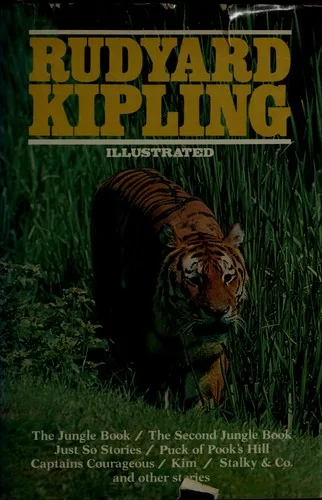





More Free Occult Philosophy Books
View all →