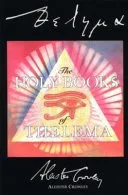
The Holy Books of Thelema
 78
78

The Holy Books of Thelema
The Holy Books of Thelema presents a challenging but essential compilation for anyone seeking to understand Aleister Crowley's most significant spiritual pronouncements. The raw, often ecstatic, dictations offer an unfiltered glimpse into the mind of a figure who profoundly impacted 20th-century occultism. The inclusion of extensive bibliographies and a preface by the O.T.O. provides necessary scholarly apparatus, contextualizing the material without diluting its esoteric power. A notable passage is the Book of the Law (Liber AL vel Legis), with its stark pronouncements on individual sovereignty. However, the sheer density and often archaic language can present a barrier to entry, requiring considerable effort from the reader to grasp the underlying philosophical currents. It is a foundational document, demanding careful study rather than passive consumption.
📝 Description
78
The Holy Books of Thelema, first compiled in 1983, contains the core scriptures for Aleister Crowley's religious system.
This volume collects the primary sacred writings attributed to Aleister Crowley, purportedly received through dictation and trance states. These texts are the scriptural basis for Thelema, a religious and philosophical system established by Crowley. The book contains distinct sections, each detailing specific theological ideas, ethical frameworks, and magical doctrines. It is intended for those deeply invested in Western Esotericism, practitioners of Thelemic magick, and scholars of comparative religion. It requires dedicated study of occult philosophy and mystical thought. Those seeking to understand the origins and central tenets of Thelema will find this the definitive primary source. The writings emerged from the spiritual climate of the early 20th century, a time of significant interest in Eastern religions, occultism, and new spiritual movements. Crowley, a central figure in modern occultism, stated he received much of this material during his travels and rituals. The compilation's official status within the Ordo Templi Orientis, an organization Crowley led, is noted.
The central concept presented is the Law of Thelema, summarized by the phrase "Do what thou wilt shall be the whole of the Law." This principle focuses on individual will and spiritual freedom, setting it apart from conventional morality. The texts also outline complex cosmologies, describe divine entities, and detail specific magical practices, creating a complete system of belief and ritual.
These texts belong to the Western Esoteric Tradition, specifically emerging from the occult revival of the early 20th century. Aleister Crowley was a significant proponent of ceremonial magick and a key figure in organizations like the Hermetic Order of the Golden Dawn and the Ordo Templi Orientis. Thelema itself draws upon influences from various mystical and religious systems, including Gnosticism, Kabbalah, and Eastern philosophies, synthesizing them into a unique system centered on individual spiritual attainment and the concept of the True Will.
💡 Why Read This Book?
• Understand the core tenets of the Law of Thelema, as articulated in "Do what thou wilt shall be the whole of the Law," providing a unique framework for personal liberation. • Engage directly with the foundational texts purportedly received by Aleister Crowley, offering direct access to the spiritual source material of his system. • Explore the cosmology and magickal practices detailed in texts like Liber III, which outlines specific ritualistic procedures and symbolic understandings relevant to Western Esotericism.
⭐ Reader Reviews
Honest opinions from readers who have explored this book.
❓ Frequently Asked Questions
When was The Holy Books of Thelema first published?
The Holy Books of Thelema was first published as a collected volume on November 1, 1983, bringing together several key texts attributed to Aleister Crowley.
What is the primary religious or philosophical system associated with these books?
These books are the sacred texts for Thelema, a religious and philosophical system established by Aleister Crowley based on his claimed spiritual revelations.
Who supervised the original publication of this collection?
The original compilation and publication of The Holy Books of Thelema were produced and supervised by the O.T.O. (Ordo Templi Orientis).
What is the central tenet of Thelema presented in these texts?
The central tenet is the Law of Thelema, famously summarized as "Do what thou wilt shall be the whole of the Law," emphasizing individual will and destiny.
Are these books considered introductory material for beginners?
No, these books are generally not considered introductory. They are dense, complex, and intended for serious students of occultism and Thelemic practice.
What is 'Liber AL vel Legis'?
Liber AL vel Legis, also known as The Book of the Law, is the primary text within The Holy Books of Thelema, containing the foundational pronouncements of the Law.
🔮 Key Themes & Symbolism
The Law of Thelema
The paramount theme is the promulgation of the Law of Thelema, epitomized by the phrase "Do what thou wilt shall be the whole of the Law." This principle posits that each individual has a unique True Will, a divine purpose that, when fully realized and acted upon, leads to spiritual fulfillment and cosmic alignment. The texts explore this not as hedonism, but as a profound ethical and existential imperative guiding one's life towards its ultimate expression, free from external constraint or imposed morality.
Thelemic Cosmology and Pantheon
These scriptures delineate a unique cosmology populated by deities and forces central to Thelemic belief. Key figures include Nuit, Hadit, and Ra-Hoor-Khuit, representing concepts of space, the point of consciousness, and the crowned and conquering child. The texts describe a dynamic, evolving universe where divine forces interact and manifest, providing a framework for understanding existence and humanity's place within it through a Gnostic and Hermetic lens.
Magickal Practice and Ritual
A significant portion of The Holy Books details various forms of magickal practice and ritual. These range from personal meditative disciplines and visualizations to more complex ceremonial rites. The texts often prescribe specific procedures, invocations, and uses of symbolism intended to facilitate contact with divine forces, achieve altered states of consciousness, and effect change in accordance with one's True Will. The emphasis is on the practical application of spiritual principles.
Individual Sovereignty and Liberation
Underlying all themes is the concept of radical individual sovereignty and liberation. Thelema asserts that the highest spiritual attainment involves recognizing and enacting one's unique destiny. This liberation is achieved by understanding and fulfilling one's True Will, shedding societal conditioning, and embracing the divine spark within. The Holy Books serve as a guide and charter for this journey of self-realization and freedom.
💬 Memorable Quotes
Direct passages from the work, attributed to the author.
“Do what thou wilt shall be the whole of the Law.”
— This is the central axiom of Thelema, defining the individual's unique path and purpose. It's interpreted not as license for selfish indulgence, but as the imperative to discover and fulfill one's True Will.
“Every man and every woman is a star.”
— This metaphor highlights the inherent divinity and autonomy of each individual. Like stars in the cosmos, each person possesses their own light, trajectory, and unique essence.
“Love is the law, love under will.”
— This companion principle to the primary law clarifies the nature of Thelemic love. It is not merely sentiment but a force guided by and aligned with one's True Will, ensuring actions are purposeful and divinely inspired.
“The Khabs is in the Khu, not the Khu in the Khabs.”
— This cryptic phrase, often related to the Egyptian concepts of the 'Khabs' (spiritual body) and 'Khu' (spiritual force), suggests the primacy of the divine spark over its manifestation or vehicle.
💡 Key Ideas
Editorial paraphrase of the work's core concepts — not direct quotes.
I am the serpent that giveth knowledge and maketh dark the shining stars.
This quote reflects the Gnostic idea of the serpent as a bringer of forbidden or transformative knowledge, often associated with challenging established orders and revealing hidden truths.
🌙 Esoteric Significance
Tradition
Thelemic tradition, as presented in these books, draws heavily from Western Esotericism, particularly Hermeticism and Gnosticism, while forging a distinct path. It reinterprets Kabbalistic concepts and incorporates elements from Eastern philosophies, notably Hinduism and Buddhism. However, it departs significantly by establishing the "Law of Thelema" as a new, divinely revealed dispensation superseding prior religious or ethical systems, emphasizing individual will and divine immanence in a unique synthesis.
Symbolism
Central symbols include Nuit (Infinite Space, the Divine Feminine) and Hadit (Infinite Point, the Divine Masculine/Consciousness), often depicted as a star and a winged disc, respectively. Ra-Hoor-Khuit, the "Crowned and Conquering Child," represents the new Aeon of Horus. The serpent is a recurring motif, symbolizing wisdom, transformation, and the Kundalini force. The texts utilize these symbols to articulate a complex cosmology and guide practitioners towards spiritual realization.
Modern Relevance
Contemporary Thelemic practice and scholarship continue to draw directly from these Holy Books. Modern occultists, ceremonial magicians, and spiritual seekers find in them a framework for personal development, ritual practice, and understanding the divine. Thinkers and artists influenced by Crowley's broader philosophy often reference these texts, ensuring their continued relevance in discussions of magick, consciousness, and individual liberty within contemporary esoteric and counter-cultural movements.
👥 Who Should Read This Book
• Serious students of Western Esotericism and comparative religion seeking primary source material on a significant 20th-century occult system. • Practitioners of Thelemic magick and philosophy who require direct access to the foundational scriptures for study and ritual. • Scholars of occult history and religious movements interested in the development and tenets of Thelema as articulated by its founder, Aleister Crowley.
📜 Historical Context
The Holy Books of Thelema emerged from the fertile ground of early 20th-century occultism, a period characterized by a widespread spiritual renaissance and a fascination with Eastern mysticism following the British presence in India. Aleister Crowley, already a controversial figure in occult circles and formerly associated with the Hermetic Order of the Golden Dawn, claimed to have received the primary text, Liber AL vel Legis, in Cairo in 1904. This period saw competing esoteric movements, including Theosophy and various forms of spiritualism, vying for influence. The publication of these texts, particularly through the O.T.O., solidified Thelema as a distinct religious system, distinct from earlier Hermetic or Kabbalistic traditions, and influenced subsequent occult thinkers and practitioners who engaged with Crowley's radical ideas.
📔 Journal Prompts
The concept of True Will as presented in Liber II, The Book of the Word.
The symbolism of Nuit and Hadit as described in Liber AL vel Legis.
The ethical implications of "Do what thou wilt shall be the whole of the Law."
The role of the "Crowned and Conquering Child" in the Thelemic cosmology.
Personal interpretation of "Every man and every woman is a star."
🗂️ Glossary
Thelema
A Greek word meaning "Will." It refers to the religious and philosophical system founded by Aleister Crowley, based on his claimed reception of sacred texts, and is central to its core doctrine, the Law of Thelema.
True Will
The unique, divinely ordained purpose or destiny of an individual. Thelema posits that discovering and enacting one's True Will is the primary spiritual goal.
Liber AL vel Legis
The Book of the Law, the foundational text of Thelema, purportedly dictated to Aleister Crowley in Cairo in 1904. It contains the core tenets and pronouncements of the Law of Thelema.
Nuit
In Thelemic cosmology, Nuit represents Infinite Space, the totality of all possibilities, and the Divine Feminine. She is often depicted as a winged star goddess.
Hadit
The complement to Nuit, Hadit represents the infinitely small point, pure consciousness, and the Divine Masculine. He is described as the 'flame that burns in every heart of man and in the core of every star.'
Ra-Hoor-Khuit
The active, manifest deity of the current Aeon of Horus, representing the "Crowned and Conquering Child." He embodies energy, action, and the divine power of the individual.
O.T.O.
Ordo Templi Orientis (Order of the Eastern Temple), an international fraternal and religious organization founded by Aleister Crowley, which serves as a primary custodian and disseminator of Thelemic teachings.