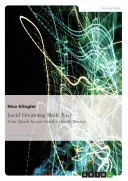
Lucid Dreaming Made Easy. Your Quick-Access Guide to Lucid Dreams
 81
81

Lucid Dreaming Made Easy. Your Quick-Access Guide to Lucid Dreams
Klingler’s "Lucid Dreaming Made Easy" offers a refreshingly direct approach to a subject often shrouded in mystique. The initial calculation of years spent dreaming is a stark, attention-grabbing statistic that frames the entire discussion. I found the author's emphasis on the lack of physical laws in dreams to be a particularly potent point for encouraging exploration. However, the work, especially given its origins as a pre-university paper from 2011, sometimes feels more like a set of observations than a fully developed guide. The section on historical context, for instance, could benefit from more specific engagement with contemporary or preceding researchers. Despite this, the core message is clear: the dream state is a vast, accessible frontier. The book ultimately serves as a pragmatic primer for those looking to initiate their own lucid dreaming practices.
📝 Description
81
Nico Klingler's 2011 pre-university paper explored the potential of conscious dreaming.
Lucid Dreaming Made Easy analyzes the vast amount of time humans spend asleep, suggesting a significant opportunity for experience and self-discovery within dreams. The book proposes that this dream state, free from physical limitations, offers an untapped potential. It is written for individuals curious about consciousness and those who want practical methods to achieve lucidity in their dreams. Beginners interested in their inner world, without needing extensive prior knowledge, will find this a starting point. The book also speaks to those who question reality's boundaries or are fascinated by intentional experiences during sleep. Students of philosophy or psychology interested in subjective states of consciousness might also find it of value.
Published in 2015, this guide emerged during a period of increased interest in consciousness studies. It builds upon existing research into dream exploration and altered states. The book's premise, that dreams are a significant and potentially controllable aspect of human experience, aligns with ongoing discussions in parapsychology. Its origins as a 2011 academic paper suggest a grounded approach. The work connects to a tradition of thinkers who have examined altered states, from early psychoanalysts to modern researchers in lucid dreaming.
💡 Why Read This Book?
• You will learn how to quantify the significant portion of your life spent dreaming, understanding its potential from Nico Klingler's 2011 paper, which frames sleep as a vast, rule-free expanse for exploration. • Gain practical insight into the concept of dreams as a realm without physical laws, a core idea presented in "Lucid Dreaming Made Easy" to encourage conscious engagement. • Discover the fundamental premise that intentional awareness can unlock new dimensions of perception during sleep, a key takeaway derived from the book's exploration of subjective reality.
⭐ Reader Reviews
Honest opinions from readers who have explored this book.
❓ Frequently Asked Questions
What is the main argument presented in Nico Klingler's "Lucid Dreaming Made Easy"?
The book argues that a significant portion of life, estimated at twenty to twenty-five years, is spent dreaming. It suggests that because dreams operate without physical laws, they offer a unique space for conscious exploration and experience beyond waking reality.
When was "Lucid Dreaming Made Easy" first published, and what was its original form?
The book was first published in 2015, but its content originates from a pre-university paper written by Nico Klingler in 2011. This background suggests an academic foundation for its exploration of lucid dreaming.
What kind of reader is "Lucid Dreaming Made Easy" best suited for?
It is ideal for beginners interested in lucid dreaming and consciousness exploration. Individuals curious about the nature of reality or seeking practical ways to engage with their dreams will find it a valuable starting point.
Does the book provide specific techniques for inducing lucid dreams?
While the book lays the groundwork by explaining the potential of dreams and the absence of physical laws within them, its primary focus is on the foundational concepts rather than detailing specific induction techniques. It encourages a general awareness and exploration.
What philosophical implications does the book touch upon?
The work implicitly explores the philosophical nature of subjective reality and the potential for self-awareness to extend into altered states of consciousness. It prompts consideration of what constitutes reality when physical laws are suspended.
How does "Lucid Dreaming Made Easy" relate to broader dream research?
It aligns with a general interest in consciousness studies and dream exploration. By emphasizing the quantifiable time spent dreaming and the unique properties of the dream state, it adds to the ongoing discourse on the significance of our nocturnal lives.
🔮 Key Themes & Symbolism
The Vastness of Dream Time
Klingler's work powerfully underscores the sheer quantity of human existence spent in the dream state. By calculating the years dedicated to sleep over an average lifespan (around 20-25 years out of 80), the book reframes dreaming not as a passive byproduct of rest, but as a significant, often overlooked, continent of conscious experience. This perspective invites readers to consider the potential for exploration and learning within this vast, internal territory, challenging the notion that waking life is the sole arena for meaningful experience.
Dreams Beyond Physical Law
A core tenet of the book is the liberation of the dream state from the constraints of physical laws. This concept serves as an invitation to experiment and perceive without the limitations of gravity, causality, or conventional logic. Klingler suggests that this inherent freedom within dreams is precisely what makes them a fertile ground for creativity, self-discovery, and unique forms of consciousness. By recognizing this fundamental difference from waking reality, practitioners can approach their dreams with a sense of wonder and possibility.
Conscious Engagement with the Dream World
The book advocates for a proactive rather than passive relationship with dreams. It implies that achieving lucidity—awareness within the dream—is a skill that can be cultivated. By encouraging readers to view their dreams as a space for intentional experience, Klingler promotes the idea that one can actively participate in, shape, and learn from their dream narratives. This concept bridges the gap between philosophical inquiry into consciousness and practical application for personal growth.
The Philosophical Underpinnings of Reality
Though presented accessibly, "Lucid Dreaming Made Easy" touches upon profound philosophical questions regarding the nature of reality and consciousness. By highlighting the subjective, lawless nature of dreams, it prompts readers to question the perceived solidity and universality of their waking experience. This exploration encourages a deeper consideration of how our perception constructs reality and the potential for multiple, valid modes of being and experiencing the world.
💬 Memorable Quotes
Direct passages from the work, attributed to the author.
“We doze around somewhere between twenty and twenty-five years of our life!”
— This striking statistic emphasizes the sheer volume of time spent in sleep and dreaming, framing it as a substantial portion of human existence ripe for conscious exploration.
“In a dream there are no laws of physics, no rules.”
— This statement highlights the fundamental difference between the dream state and waking reality, suggesting an unbound potential for experience and perception free from physical constraints.
“Let us make a thought experiment: We assume that the average life span of a citizen is around eighty years.”
— This sets up the initial premise of the work, grounding its exploration of dreams in a quantifiable, relatable framework of human lifespan and the time dedicated to sleep.
“A fact that is anything but a mystery emerges: we doze around somewhere between twenty and twenty-five years of our life!”
— This declaration, following a simple calculation, aims to shock the reader into recognizing the vast, untapped potential of the dream state as a significant part of their lived experience.
“Your Quick-Access Guide to Lucid Dreams”
— This subtitle promises immediate utility and ease of use, positioning the book as a practical tool for anyone seeking to enter the world of conscious dreaming without undue complexity.
🌙 Esoteric Significance
Tradition
This work touches upon traditions that explore consciousness beyond the physical, such as certain strands of Hermeticism that emphasize the principle of 'As Above, So Below,' implying a connection between inner and outer realities. It also aligns with contemplative practices found in various mystical traditions that utilize altered states of mind for spiritual insight. While not explicitly tied to a single lineage like Kabbalah or Theosophy, its focus on direct experiential knowledge and the potential for self-mastery within a non-physical realm places it within the broader esoteric quest for understanding the nature of being.
Symbolism
The primary symbol, though implicit, is the dream itself as a boundless inner landscape. Within this landscape, the 'absence of physical laws' acts as a symbolic key, representing freedom from limitations and the potential for transformation. The concept of 'conscious awareness' within the dream symbolizes the awakening of the inner self or higher consciousness, capable of navigating and understanding the symbolic language of the subconscious. The sheer quantity of 'dream time' itself can be seen symbolically as representing the vast, unexplored depths of the human psyche.
Modern Relevance
Contemporary thinkers and practitioners in fields like transpersonal psychology, mindfulness, and even certain branches of digital consciousness exploration draw upon the foundational ideas presented here. The emphasis on controllable altered states of consciousness appeals to modern interest in biofeedback, virtual reality experiences, and the therapeutic applications of dreamwork. Researchers and enthusiasts exploring the intersection of neuroscience and subjective experience continue to find value in Klingler's accessible framing of the dream state as a legitimate and significant arena for human exploration and development.
👥 Who Should Read This Book
• Aspiring lucid dreamers seeking a foundational understanding of the dream state's potential and the concept of conscious awareness within it. • Students of philosophy or psychology interested in exploring theories of consciousness, subjective reality, and altered states of mind from an accessible perspective. • Individuals curious about the esoteric implications of sleep and dreaming, looking for a straightforward introduction to the idea that the dream world is a vast, explorable inner landscape.
📜 Historical Context
Nico Klingler's "Lucid Dreaming Made Easy," originally a 2011 pre-university paper published in 2015, emerged in an era where interest in consciousness studies, parapsychology, and altered states was gaining mainstream traction. Building on decades of research, from early figures like J.B. Rhine's work at Duke University in the mid-20th century to more contemporary explorations of sleep science and neuroscience, Klingler’s text positions dreaming as a significant, controllable aspect of human experience. While not directly engaging with specific academic debates of 2011 or 2015, its premise aligns with broader trends in self-help and esoteric literature seeking to unlock human potential. The work implicitly stands in contrast to purely physiological or deterministic views of sleep, emphasizing subjective experience and personal agency within the dream state. Its accessible approach likely resonated with a public intrigued by figures like Stephen LaBerge, a prominent researcher in lucid dreaming.
📔 Journal Prompts
Reflect on the concept of 'dreams without physical laws' and how this contrasts with your waking experience.
Consider the calculated twenty to twenty-five years spent dreaming; what potential does this vast timeframe represent for you?
Explore the idea of conscious awareness within the dream state: what would it mean to be fully present?
How might the absence of rules in dreams facilitate creative problem-solving or self-discovery?
Imagine the dream world as a landscape unbound by physics; what is the first thing you would explore or create?
🗂️ Glossary
Lucid Dreaming
The state of becoming aware that one is dreaming while the dream is still in progress. This awareness can lead to varying degrees of control over the dream narrative and environment.
Consciousness
The state or quality of awareness, or of being aware of an external object or something within oneself. In the context of dreams, it refers to the subjective experience of being awake and aware.
Physical Laws
The fundamental principles governing the behavior of the physical universe, such as gravity, causality, and thermodynamics. Their absence in dreams is a key characteristic highlighted in the book.
Dream State
The subjective experience of dreaming, typically occurring during REM sleep. It is characterized by sensory, cognitive, and emotional occurrences, often disconnected from waking reality.
Pre-University Paper
An academic work typically written by students before entering higher education. It suggests a foundational, perhaps introductory, level of research and analysis.
Thought Experiment
An exercise of the imagination, often used in philosophy and science, to explore the potential consequences of a hypothesis or assumption. Klingler uses this to frame his calculation of dream time.
Subjective Reality
The reality as perceived and experienced by an individual, based on their personal perceptions, beliefs, and feelings, as opposed to an objective, external reality.