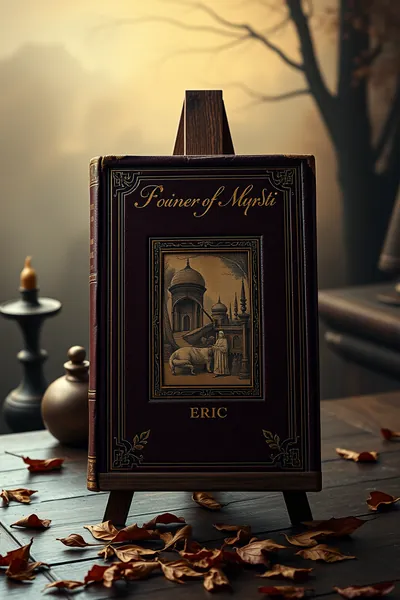
The mystic way

 75
75

The mystic way
Evelyn Underhill's "The Mystic Way" (as presented in this 2021 edition) offers a lucid, if somewhat demanding, articulation of the contemplative path. The book excels in its systematic breakdown of spiritual progress, treating the soul's journey not as a spontaneous event but as a disciplined unfolding. The chapter detailing the "Dark Night of the Soul," though not explicitly named as such but clearly described through its effects on the seeker, is particularly potent, capturing the disorienting yet purifying nature of advanced spiritual struggle. However, the prose, while elegant, can occasionally feel dense, requiring significant reader concentration. The absence of direct, modern commentary from Tim Langdell, beyond the publication date, leaves the reader to solely engage with Underhill's original, potentially dated, framework without contemporary interpretative bridges. It is a serious study for the dedicated student of Western esotericism.
📝 Description
75
Evelyn Underhill's The Mystic Way details the soul's progression toward divine union.
First published in 2021, this edition presents Evelyn Underhill's focused examination of the contemplative life. The book is not a guide to achieving mystical states, but an exposition of the stages and disciplines involved in the soul's movement toward God. It maps the inner path, outlining the practices and mindsets required for spiritual growth.
This work is for serious spiritual seekers, especially those interested in Christian mysticism but open to other contemplative traditions. It suits individuals prepared for self-examination and disciplined practice. Readers who seek a philosophical basis for their spiritual path, rather than emotional solace, will find value here. Underhill systematically covers the spiritual life's progression, from initial divine desire through soul purification, intellectual illumination, and the unitive life.
Evelyn Underhill wrote "The Mystic Way" during a period of renewed interest in personal spirituality, aiming to structure the understanding of the mystical life. It stands within the Christian contemplative tradition, drawing on concepts of purification, illumination, and union that echo earlier mystics. The book acknowledges the more academic or dogmatic religious approaches of its time, offering a path focused on inner discipline and direct experience. It seeks to clarify the often complex process of spiritual advancement.
💡 Why Read This Book?
• Gain a structured understanding of the soul's progression towards the divine, as outlined in the early 20th century by Evelyn Underhill, a key figure in mystical studies. This offers a coherent map for contemplative practice. • Learn about the disciplines of purification and illumination, two critical stages in spiritual development described in "The Mystic Way," providing concrete areas for personal spiritual work. • Appreciate the historical context of contemplative theology through this work, understanding how Underhill's approach contrasted with other religious and philosophical currents of her time.
⭐ Reader Reviews
Honest opinions from readers who have explored this book.
❓ Frequently Asked Questions
What is the primary focus of Evelyn Underhill's 'The Mystic Way'?
The book's primary focus is on delineating the structured stages and disciplines of the spiritual journey, often referred to as the contemplative or mystical life. It guides readers through the soul's progression towards divine union.
When was 'The Mystic Way' originally written by Evelyn Underhill?
While this specific edition was published in 2021, Evelyn Underhill's significant contributions to mystical theology, including works like 'Mysticism,' date back to the early 20th century, with 'Mysticism' first appearing in 1911.
Is 'The Mystic Way' a practical guide for achieving mystical experiences?
No, it is presented more as an exposition and exploration of the mystical path rather than a step-by-step manual. It describes the journey and the necessary inner conditions and disciplines.
Who is Tim Langdell in relation to this edition?
Tim Langdell is credited with the publication of this edition in 2021, bringing Evelyn Underhill's work to a new audience. Further details on Langdell's specific editorial contributions beyond standard publication are not detailed.
What kind of reader would benefit most from 'The Mystic Way'?
Serious spiritual seekers, particularly those interested in Christian contemplative traditions, who are prepared for in-depth study and self-reflection will find this book most beneficial.
Does the book discuss the concept of 'The Dark Night of the Soul'?
While not always explicitly named as such, the book thoroughly describes the phases of spiritual difficulty, disorientation, and purification that characterize advanced stages of the soul's journey, often associated with the concept of the Dark Night.
🔮 Key Themes & Symbolism
The Soul's Progression
Underhill meticulously maps the soul's trajectory toward divine union. This theme explores the distinct phases, from the initial awakening of spiritual desire ('the call') to the arduous purification of the lower self, the clear stage of intellectual and spiritual clarity, and the ultimate unitive life. The work emphasizes that this is not a linear, effortless ascent but a dynamic process requiring consistent effort, surrender, and divine assistance. The text details the inner transformations characteristic of each stage, offering a framework for self-assessment and spiritual direction.
Discipline and Surrender
A central tenet of 'The Mystic Way' is the necessity of both rigorous spiritual discipline and profound surrender to the divine will. Underhill stresses that the contemplative life demands active engagement through prayer, meditation, and ascetic practices aimed at detaching the self from worldly distractions and egoic attachments. Simultaneously, she underscores the importance of yielding one's will to God, trusting in the process even when it involves periods of spiritual aridity or darkness. This balance between active striving and passive receptivity is crucial for reading through the path.
The Role of Grace
While advocating for disciplined practice, Underhill consistently highlights that ultimate spiritual attainment is a gift of divine grace. The work posits that human effort alone is insufficient; it serves to prepare the soul to receive and cooperate with God's action. Grace is presented as the animating force that initiates, sustains, and perfects the spiritual journey. This perspective counters any purely self-help interpretation, grounding the mystical path in a relationship with the divine that transcends human capability, particularly evident in the descriptions of illumination and union.
Interior Life vs. External Form
The text distinguishes sharply between the outward forms of religious observance and the deep, internal reality of spiritual experience. Underhill argues that true mysticism is an experiential knowledge of God, which can be obscured by an overemphasis on ritual or dogma without inner substance. 'The Mystic Way' guides readers toward cultivating an authentic interior life, where practices serve as gateways to direct encounter with the divine, rather than ends in themselves. This focus on the inner transformation is key to her understanding of genuine spirituality.
💬 Memorable Quotes
Direct passages from the work, attributed to the author.
“We must learn to distinguish between the spiritual awakening and the deeper spiritual transformation.”
— This highlights Underhill's nuanced view of spiritual development. It suggests that initial spiritual experiences or conversions are distinct from the prolonged, often challenging, process of profound inner change and growth that characterizes the mature mystical life.
“Detachment is not indifference, but a loving freedom from undue attachment.”
— This clarifies a common misconception about spiritual detachment. Underhill posits that true detachment involves a healthy, ordered love that is not enslaved by possessions or outcomes, enabling a more genuine and unhindered relationship with God and creation.
“The path requires obedience, not merely to external rules, but to the inner voice of divine guidance.”
— This points to the dual nature of obedience in the spiritual life as presented in the book. It involves adherence to established spiritual disciplines while prioritizing and discerning the direct promptings of the Holy Spirit within the soul.
💡 Key Ideas
Editorial paraphrase of the work's core concepts — not direct quotes.
The whole of the spiritual life is a process of the soul's turning towards God.
This quote captures the fundamental directionality of the mystical path as described by Underhill. It emphasizes that spiritual progress is an active orientation of one's entire being towards the divine source, a constant re-alignment of will and attention.
Illumination brings a new perception of reality, a participation in the divine light.
This paraphrase describes the stage of illumination, where the seeker's understanding is divinely enhanced. It signifies a shift in consciousness, allowing for a deeper apprehension of spiritual truths and a sense of being infused with divine presence.
🌙 Esoteric Significance
Tradition
Underhill's work is firmly situated within the Western Christian contemplative tradition, drawing heavily from mystics like St. John of the Cross, St. Teresa of Ávila, and Meister Eckhart. It can be seen as a bridge between traditional monastic spirituality and the burgeoning interest in personal spiritual experience in the early 20th century. While not strictly 'esoteric' in the sense of secret teachings, it looks at the profound inner workings of the soul's relationship with the Divine, which often remains hidden from casual observation, thus holding esoteric appeal for serious practitioners.
Symbolism
Key symbols in Underhill's work often relate to light and darkness, representing stages of spiritual awareness and purification. 'Light' signifies divine illumination, wisdom, and union, while 'darkness' denotes the challenging periods of trial, the stripping away of ego, and the necessary unknowing in advanced stages (akin to the 'dark night'). The journey itself is a potent symbol, representing the soul's pilgrimage towards God, with various obstacles and stages marking the progress.
Modern Relevance
Contemporary Christian contemplative communities, spiritual directors, and authors exploring prayer and meditation frequently reference Underhill's foundational insights. Her emphasis on the disciplined, progressive nature of the spiritual life remains relevant for individuals seeking depth beyond superficial spiritual practices. Thinkers and practitioners in the broader 'spiritual but not religious' movement also draw on her descriptions of inner transformation, even if they adapt the theological framework.
👥 Who Should Read This Book
• Devout Christians seeking a deeper theological and practical understanding of prayer and mystical union, who appreciate historical context and structured guidance. • Students of comparative mysticism and religious studies interested in the development of Western contemplative thought in the early 20th century. • Individuals undergoing spiritual trials or periods of aridity, who can find solace and direction in Underhill's descriptions of purification and the soul's journey through darkness.
📜 Historical Context
Evelyn Underhill's "The Mystic Way" represents a significant strand within early 20th-century Christian spirituality, a period marked by diverse theological and philosophical currents. While her important work "Mysticism" appeared in 1911, "The Mystic Way" offers a more focused examination of the contemplative disciplines. This era saw a resurgence of interest in personal religious experience, often in response to the perceived dryness of institutional religion and the rise of secular philosophies. Underhill's approach, deeply rooted in Catholic tradition yet accessible to a broader audience, provided a structured, psychological, and deeply devotional framework for understanding the spiritual life. She engaged with thinkers across traditions but firmly anchored her work within a Christian context, contrasting with the more syncretic or esoteric movements like Theosophy gaining traction at the time. Her clear exposition sought to clarify the mystical path, making it comprehensible to earnest seekers, thereby carving out a distinct space in the range of religious thought.
📔 Journal Prompts
The soul's turning towards God: What does this movement signify in your current practice?
Reflect on the balance between spiritual discipline and surrender described by Underhill.
Identify one aspect of the purification stage that challenges your current understanding.
Consider the concept of 'loving freedom from undue attachment' in your daily life.
How might the 'illumination' Underhill describes manifest beyond overt spiritual experiences?
🗂️ Glossary
Contemplative Life
A way of life dedicated to prayer and meditation, with the primary goal of drawing closer to God through deep, direct experience and union.
Purification
The process in spiritual development where the soul is cleansed of egoic attachments, sins, and disordered desires, often involving difficult self-examination and trials.
Illumination
A stage in the spiritual journey characterized by enhanced perception, intellectual clarity, and a profound experience of divine light and presence.
Unitive Life
The highest stage of the mystical path, marked by a deep and abiding union between the soul and God, characterized by profound peace and divine indwelling.
Detachment
A spiritual practice of releasing excessive emotional or psychological dependence on external things, people, or outcomes, fostering inner freedom.
Grace
The unmerited divine assistance or favor that is seen as essential for spiritual growth, salvation, and mystical union.
Asceticism
Rigorous self-discipline and abstinence, often involving practices like fasting or solitude, undertaken for spiritual purposes.
🔮 Readers Also Liked
Browse all →







More Free Mysticism & Contemplation Books
View all →