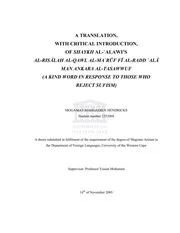
The Mystical Theology of the Eastern Church
 75
75

The Mystical Theology of the Eastern Church
Vladimir Lossky's 'The Mystical Theology of the Eastern Church' achieves a rare feat: it presents complex theological ideas with both scholarly rigor and palpable spiritual fervor. The author masterfully articulates the distinctiveness of Eastern Orthodoxy, particularly its emphasis on apophatic theology and the concept of theosis. Lossky's strength lies in his ability to translate abstract doctrines into the language of lived experience, making the tradition accessible without sacrificing its depth. A notable passage is his detailed explanation of the Cappadocian Fathers' theological distinctions, which illuminates the very structure of Orthodox thought. The primary limitation, however, is the work's inherent density; newcomers to Orthodox theology might find the initial chapters demanding. Despite this, Lossky's account remains an indispensable guide to the theological spirit of the East. It is an essential text for anyone serious about understanding Orthodox spirituality.
📝 Description
75
Vladimir Lossky's 1991 book defines mystical theology for the Eastern Church.
Vladimir Lossky's 'The Mystical Theology of the Eastern Church,' first published in 1991, examines Orthodox Christian spirituality and doctrine. It aims to convey the lived experience of faith in the Eastern tradition, not just academic theology. The book details the theological framework, its distinct characteristics, and historical development. Lossky wrote this work in the mid-20th century, a time of renewed interest in patristic theology and Eastern spirituality in post-war Europe. His book offered a counterpoint to Western theological trends and helped non-Orthodox scholars understand the Eastern Church's ethos. He engaged critically with figures like Sergei Bulgakov to articulate a purely Orthodox viewpoint.
This text is for theological students, scholars of comparative religion, and anyone wanting a deep understanding of Eastern Christian thought. It speaks to those interested in the contemplative aspects of faith, the philosophical basis of Orthodox practice, and historical differences between Eastern and Western Christianity. It also appeals to those seeking spiritual depth beyond traditional Western formulations.
Lossky's work places him within the Eastern Orthodox tradition's long history of mystical theology, which emphasizes direct experience of the divine. This tradition, rooted in the early Church Fathers and monasticism, often contrasts with Western scholastic approaches. The book's focus on apophatic theology, or the via negativa, highlights the ineffability of God and the role of silence and contemplation. It also addresses the concept of theosis, or deification, a central theme in Orthodox spirituality where believers participate in the divine life.
💡 Why Read This Book?
• Gain a clear understanding of apophatic theology, a cornerstone of Eastern Christian spirituality, as explained by Lossky, differentiating it from Western negative theology. • Grasp the concept of theosis (deification) through Lossky's detailed exposition, understanding its central role in Orthodox spiritual practice and its distinction from Western notions of salvation. • Appreciate the theological distinctions between Eastern and Western Christianity, particularly regarding the Trinity and the Holy Spirit, as Lossky outlines them, referencing the Cappadocian Fathers.
⭐ Reader Reviews
Honest opinions from readers who have explored this book.
❓ Frequently Asked Questions
What is the primary focus of Lossky's 'The Mystical Theology of the Eastern Church'?
The book's primary focus is an in-depth exploration of Eastern Orthodox spirituality and theology. It aims to present the core doctrines and mystical experiences of the Eastern Church, emphasizing its unique theological language and practices.
When was Vladimir Lossky's 'The Mystical Theology of the Eastern Church' first published?
Vladimir Lossky's significant work, 'The Mystical Theology of the Eastern Church,' was first published on August 1, 1991.
What is 'theosis' as described in the book?
Theosis, as described by Lossky, refers to the process of deification or becoming like God. It's the Orthodox understanding of salvation as a participation in the divine nature through grace, not mere forgiveness of sins.
How does Lossky explain apophatic theology?
Lossky explains apophatic theology (or negative theology) as the understanding that God is beyond all human concepts and descriptions. It emphasizes what God is not, rather than attempting to define what God is, to preserve divine transcendence.
Is this book suitable for beginners in Orthodox Christianity?
While comprehensive, the book can be dense for absolute beginners. However, it serves as an authoritative introduction for those seriously interested in Orthodox theology and spirituality, offering foundational concepts clearly.
What are the Cappadocian Fathers?
The Cappadocian Fathers (Basil the Great, Gregory of Nyssa, and Gregory of Nazianzus) were 4th-century theologians crucial to developing Trinitarian doctrine. Lossky frequently references their distinctions between ousia (essence) and hypostasis (person) to explain the Trinity.
🔮 Key Themes & Symbolism
Apophatic Theology
Lossky meticulously details apophatic theology, the via negativa, as central to the Eastern Orthodox understanding of God. This approach emphasizes God's absolute transcendence, asserting that divine essence is unknowable and beyond all human conception or affirmation. It's not about denying God but about recognizing the limits of language and intellect when approaching the divine mystery, fostering humility and awe.
Theosis: Deification of Man
The concept of theosis, or deification, is presented as the ultimate goal of the Christian life in the East. Lossky explains it as a process of becoming united with God through grace, participating in the divine life without becoming God in essence. This transformative union is achieved through prayer, asceticism, and the sacraments, leading to spiritual perfection and communion.
Distinction of Persons
Central to Lossky's exposition is the Orthodox understanding of the Trinity, particularly the distinction between ousia (essence) and hypostasis (person), heavily influenced by the Cappadocian Fathers. He explains how each divine Person (Father, Son, Holy Spirit) is unique while sharing the single divine essence, highlighting the relational nature of God and its implications for creation and salvation.
The Role of the Holy Spirit
Lossky underscores the active and salvific role of the Holy Spirit in the life of the Church and the individual believer. The Spirit is the principle of divine life and sanctification, guiding the faithful towards theosis and enabling them to experience God's presence. This emphasis differentiates the Eastern focus on pneumatology from certain Western theological traditions.
💬 Memorable Quotes
Direct passages from the work, attributed to the author.
“God is the 'beyond-being' and the 'beyond-God'.”
— This statement captures the essence of apophatic theology. It suggests that God's nature transcends even the highest conceptualizations we can form, including the very term 'God,' highlighting divine incomprehensibility.
“Theology is the contemplation of divine truths.”
— Lossky interprets theology not as an academic exercise but as a spiritual practice. True theological understanding arises from prayer, lived experience, and communion with God, rather than solely from intellectual pursuit.
“The Church is the mystical body of Christ.”
— This highlights the ecclesiology presented by Lossky, viewing the Church as a divinely-ordained organism through which the faithful experience God's presence and partake in salvation, emphasizing its sacramental and spiritual reality.
“The Holy Spirit proceeds from the Father.”
— This refers to the Orthodox understanding of the procession of the Holy Spirit, a key theological point of divergence from the Western 'filioque' clause. Lossky affirms the Father as the sole source within the Godhead.
💡 Key Ideas
Editorial paraphrase of the work's core concepts — not direct quotes.
Man is called to become by grace what God is by nature.
This paraphrased concept of theosis articulates the Orthodox ideal of human spiritual fulfillment. It's not about attaining divine essence but about a profound union with God's energies, allowing participation in divine attributes through grace.
🌙 Esoteric Significance
Tradition
Lossky's work is deeply rooted in the Eastern Orthodox Christian tradition, specifically its mystical and contemplative dimensions. While not an 'esoteric' tradition in the Western sense (like Hermeticism or Kabbalah), Orthodox spirituality shares with esoteric paths a focus on direct experience of the divine, hidden knowledge (gnosis), and transformative practices. Lossky bridges the gap by presenting these deeply spiritual aspects of Orthodoxy in a way that appeals to a broader audience interested in mysticism and the perennial philosophy.
Symbolism
Key symbols explored include the Trinity, understood not just as doctrine but as the dynamic interplay of divine Persons. Theosis, the concept of deification, functions symbolically as the ultimate human potential for union with God. The liturgy itself is a rich symbolic system, representing cosmic realities and the path to salvation, which Lossky implicitly unpacks by discussing its theological underpinnings.
Modern Relevance
Contemporary thinkers and spiritual practitioners interested in contemplative prayer, non-dualistic understandings of reality, and the intersection of faith and philosophy draw significantly from Lossky. His articulation of apophatic theology and theosis appeals to those seeking alternatives to dogmatic rigidity and intellectualized religion, finding in his work a profound expression of Christian mysticism relevant to modern spiritual inquiry.
👥 Who Should Read This Book
• Students of comparative theology and world religions seeking a rigorous yet spiritually informed perspective on Eastern Christianity. • Contemplative practitioners and mystics exploring diverse paths to divine union, finding in Lossky's work a profound articulation of Christian mystical practice. • Scholars of philosophy and metaphysics interested in the ontological distinctions and epistemological approaches within Orthodox thought, particularly concerning the nature of God and knowledge.
📜 Historical Context
Vladimir Lossky penned 'The Mystical Theology of the Eastern Church' in the mid-20th century, a period marked by significant theological re-engagement with patristic sources and a growing interest in Eastern Christian thought within the West. The book emerged as a powerful articulation of Orthodox theology, often seen as a corrective to certain Western scholastic traditions and a vital resource for understanding the spiritual distinctiveness of the East. It gained traction among scholars and spiritual seekers alike, offering a cohesive vision of Orthodox doctrine. Lossky's work provided a counter-narrative to prevailing theological discourse, engaging implicitly with figures like Karl Barth and explicitly with other émigré theologians, seeking to present a unified Orthodox voice distinct from Roman Catholicism and Protestantism. Its reception was largely positive, solidifying its status as a modern classic in Orthodox studies.
📔 Journal Prompts
The concept of theosis as participation in the divine life.
Apophatic theology's emphasis on divine unknowability.
The Cappadocian Fathers' distinction between ousia and hypostasis.
The role of the Holy Spirit in Christian experience.
The integration of mystical theology with liturgical practice.
🗂️ Glossary
Apophatic Theology
Theological approach that defines God by negation, emphasizing divine transcendence and unknowability. It focuses on what God is not, rather than what God is.
Theosis
The Orthodox Christian concept of deification or divinization; the process by which believers, through grace, become united with God and participate in the divine life.
Ousia
Greek term for 'essence' or 'substance.' In Trinitarian theology, it refers to the single divine essence shared by the Father, Son, and Holy Spirit.
Hypostasis
Greek term for 'person' or 'subsistence.' In Trinitarian theology, it refers to the distinct individual realities of the Father, Son, and Holy Spirit, who share the one divine ousia.
Mystical Theology
The branch of theology concerned with the direct, experiential knowledge of God, often involving contemplation, asceticism, and spiritual union.
Uncreated Energies
The divine operations or powers through which God interacts with creation, distinct from His unapproachable essence. It is through these energies that humans partake in God.
Hesychasm
A contemplative tradition within Eastern Orthodox Christianity emphasizing stillness (hesychia) and the practice of the Jesus Prayer to achieve union with God.
This book appears in 1 collection
🔮 Readers Also Liked
Browse all →





From the “Mystical Theology” Collection
View all →


More Free Mysticism & Contemplation Books
View all →