The Mystical Qabalah
 84
84

The Mystical Qabalah
Dion Fortune’s "The Mystical Qabalah" remains a cornerstone text for those navigating the intricate pathways of the Tree of Life. Fortune possesses a remarkable ability to distill dense Kabbalistic lore into accessible prose, a feat evident in her treatment of the Sephiroth, which she presents as dynamic forces rather than static symbols. Her explanation of Kether as the "all-containing" and Malkuth as the "all-manifested" offers a clear, if simplified, framework for understanding the divine descent. However, the book’s strength in systematic explanation can also be its limitation; the sheer volume of correspondences—astrological, tarot, Hebrew letters—can feel overwhelming for the absolute beginner, demanding significant dedication to absorb. A particular passage that stands out is Fortune's discussion of Geburah, the Sephirah of Severity, which she frames not as punitive but as a necessary force for cosmic order and personal discipline. While some of the language reflects its early 20th-century origins, the core teachings hold their power. "The Mystical Qabalah" is an indispensable, if demanding, guide to the Western esoteric tradition.
📝 Description
84
Dion Fortune published 'The Mystical Qabalah' in 1935, detailing the Kabbalistic Tree of Life.
Dion Fortune's 'The Mystical Qabalah,' first released in 1935, explains the Kabbalistic Tree of Life not as a theoretical concept but as a map of consciousness. Fortune systematically covers the ten Sephiroth and the twenty-two paths, linking them to astrological signs, tarot trumps, and Hebrew letters. The book aims to make these complex ideas accessible to those interested in the structure of reality and their place within it, serving as an entry point into Western esoteric thought.
This work is valuable for students of Western esotericism, especially those focused on Kabbalah as a living practice. It suits individuals wanting to apply esoteric knowledge to their spiritual lives, whether new to Hermeticism or familiar with occult philosophy. Readers who prefer a structured, detailed presentation of spiritual systems will appreciate Fortune's methodical approach. Those interested in the history of occult ideas in the early 20th century will also find this book significant for its insights.
Published in 1935, 'The Mystical Qabalah' arose during a period of occult revival in Britain. It followed influential works from groups like Theosophy and the Hermetic Order of the Golden Dawn. Dion Fortune, who founded the Fraternity of the Inner Light in 1924, offered a unique perspective. Her method differed from academic or ceremonial approaches, favoring a psychological and practical interpretation of Kabbalistic principles, reflecting the era's interest in spiritualism.
💡 Why Read This Book?
• Understand the Qabalistic Tree of Life as a living diagram of consciousness, a core concept Fortune details through the ten Sephiroth and twenty-two paths, offering a framework for personal spiritual development. • Integrate esoteric knowledge by learning the correspondences between the Sephiroth, Hebrew letters, and tarot trumps, as meticulously laid out in Fortune's 1935 work, facilitating a deeper connection to Western occult traditions. • Grasp the practical application of Kabbalistic principles for inner work, as Fortune emphasizes the Tree of Life as a map for navigating one's own psyche and spiritual evolution, a perspective she developed from her founding of the Fraternity of the Inner Light.
⭐ Reader Reviews
Honest opinions from readers who have explored this book.
❓ Frequently Asked Questions
What is the primary focus of Dion Fortune's "The Mystical Qabalah"?
The book's primary focus is a detailed exposition of the Qabalistic Tree of Life, presenting it as a structured map of consciousness and a system for spiritual development, integrating its correspondences with astrology, tarot, and Hebrew letters.
When was Dion Fortune's "The Mystical Qabalah" first published?
Dion Fortune's "The Mystical Qabalah" was first published in 1935, positioning it as a significant work within the early 20th-century Western esoteric revival.
What is the relationship between "The Mystical Qabalah" and the Fraternity of the Inner Light?
Dion Fortune founded the Fraternity of the Inner Light in 1924, and "The Mystical Qabalah" reflects the practical, psychological approach to esoteric teachings that she developed and disseminated through her organization.
Does "The Mystical Qabalah" cover the practical aspects of Kabbalah?
Yes, while it provides a thorough theoretical foundation, Fortune's work emphasizes the practical application of Kabbalistic principles for spiritual growth and understanding the human psyche.
What are the main esoteric systems correlated with Kabbalah in this book?
Fortune extensively correlates the Kabbalistic Tree of Life with Western astrology (signs and planets), the major arcana of the Tarot, and the Hebrew alphabet.
Is this book suitable for beginners in Kabbalah?
The book offers a systematic introduction but can be dense. While suitable for dedicated beginners, its comprehensive nature and depth of correspondences may require significant study and focus.
🔮 Key Themes & Symbolism
The Tree of Life as a Cosmic Map
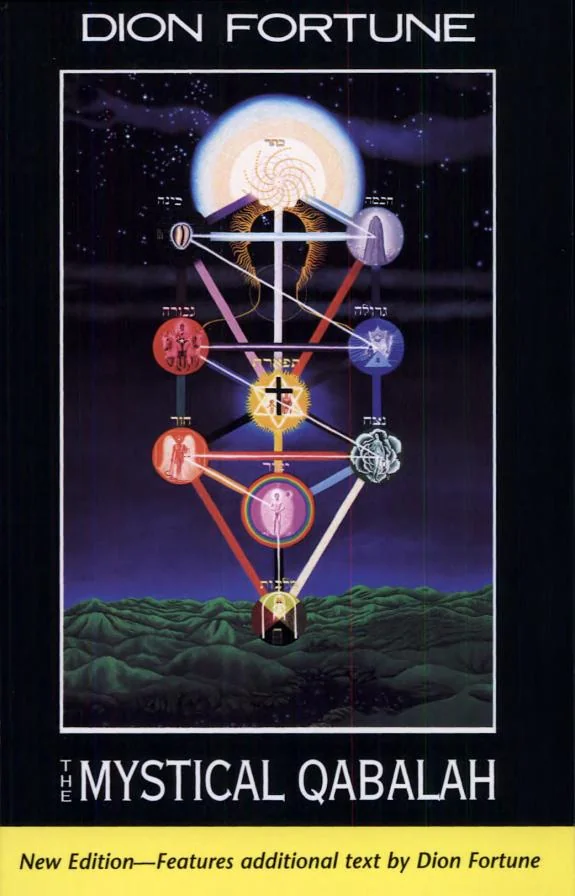
Fortune presents the Qabalistic Tree of Life not as an abstract diagram but as a dynamic map of the entire universe, from the highest divine emanations to the material plane. She meticulously details each of the ten Sephiroth and the twenty-two connecting paths, explaining their roles in the process of creation and evolution. This framework serves as the central organizing principle for understanding esoteric cosmology and the structure of consciousness, providing readers with a comprehensive model for spiritual exploration and self-understanding within the Western esoteric tradition.
Psychological Interpretation of Kabbalah
A significant aspect of Fortune's approach is her emphasis on the psychological dimensions of Kabbalistic symbolism. She interprets the Sephiroth and paths as representing stages and processes within the human psyche. For instance, Kether might be seen as the superconscious, Tiphareth as the ego-consciousness, and Malkuth as the physical self. This psychological lens makes the ancient system relatable and applicable to personal growth and self-awareness, aligning with early 20th-century trends in psychoanalytic thought and esoteric psychology.
Esoteric Correspondences and Practice
The book is rich with correspondences that link the Tree of Life to other esoteric disciplines. Fortune systematically maps Hebrew letters, astrological planets and signs, and the major arcana of the Tarot onto the Sephiroth and paths. This interweaving of systems provides multiple entry points for understanding and allows practitioners to utilize different tools, such as tarot readings or astrological charts, to illuminate their study of the Kabbalah and its application in spiritual practice.
The Inner Light and Spiritual Evolution
Fortune's teachings often revolve around the concept of the "Inner Light" and the journey of spiritual evolution. "The Mystical Qabalah" outlines how understanding and working with the Tree of Life can facilitate this evolution, guiding the practitioner towards greater self-realization and union with the divine. The book implicitly encourages a path of disciplined study and inner work, reflecting the goals of organizations like the Fraternity of the Inner Light, which aimed to help individuals connect with their higher selves.
💬 Memorable Quotes
Direct passages from the work, attributed to the author.
“The Qabalah is the key to the correspondences of the occult sciences.”
— This statement highlights Fortune's central thesis: that the Kabbalistic Tree of Life serves as an organizing principle that unites various esoteric systems like astrology and tarot, making it fundamental to understanding the occult worldview.
“The Tree of Life is a diagram of the divine forces.”
— This interpretation emphasizes the cosmological significance of the Tree, presenting it not merely as a symbolic representation but as a blueprint for the energetic and creative processes that underpin the universe and all existence.
“Kether is the All, Malkuth is the All.”
— This succinct phrasing captures the concept of divine immanence and transcendence, suggesting that the ultimate source (Kether) and the manifested reality (Malkuth) are intrinsically connected, representing the beginning and end of the creative flow.
“Severity must be tempered with Mercy.”
— This refers to the balance between opposing forces on the Tree of Life, specifically Geburah (Severity) and Chesed (Mercy), illustrating the necessity of equilibrium for cosmic order and the avoidance of extremes in spiritual or personal development.
💡 Key Ideas
Editorial paraphrase of the work's core concepts — not direct quotes.
We must know ourselves before we can know the divine.
This paraphrased concept points to the psychological emphasis in Fortune's work, suggesting that self-awareness and understanding one's own consciousness are prerequisites for comprehending higher spiritual truths and the nature of God.
🌙 Esoteric Significance
Tradition
This work is firmly rooted in the Western Esoteric Tradition, specifically within the Hermetic and Kabbalistic lineages. Fortune draws heavily upon the Qabalistic Tree of Life, a central symbol in Hermeticism, but reinterprets it through a psychological and practical lens. It departs from purely medieval or Renaissance Kabbalistic scholarship by emphasizing its application for individual spiritual evolution and consciousness exploration, aligning it with the broader esoteric revival of the late 19th and early 20th centuries.
Symbolism
The primary symbol is the Tree of Life itself, representing the divine emanations and the structure of the cosmos. Fortune also focuses on the symbolism of the Sephiroth (e.g., Kether as divine unity, Malkuth as the material world) and the twenty-two Paths connecting them. Correspondences with Hebrew letters, astrological archetypes (planets and zodiac signs), and the Tarot trumps are crucial, providing layers of meaning and practical tools for understanding the interconnectedness of these symbolic systems.
Modern Relevance
Fortune's "The Mystical Qabalah" continues to influence contemporary practitioners of Western esotericism, particularly those involved in Hermeticism, Qabalah study, and modern witchcraft. Thinkers and groups focused on psychological approaches to spirituality, self-actualization through esoteric means, and the integration of tarot and astrology with Kabbalistic frameworks frequently reference Fortune's work as a foundational text.
👥 Who Should Read This Book
• Aspiring practitioners of Western Esotericism seeking a structured introduction to the Qabalistic Tree of Life and its core principles. • Students of comparative religion and mysticism interested in how Kabbalah functions within a broader esoteric framework, including its links to astrology and tarot. • Individuals focused on psychological self-exploration who are drawn to using symbolic systems like the Tree of Life as a map for understanding consciousness and personal development.
📜 Historical Context
Dion Fortune’s "The Mystical Qabalah," first published in 1935, emerged during a period of intense interest in esoteric subjects in Britain, following the decline of high ceremonial magic orders like the Hermetic Order of the Golden Dawn. Fortune, already established with her Fraternity of the Inner Light founded in 1924, aimed to present Kabbalistic teachings in a more accessible and psychologically oriented manner. This contrasted with the more ritualistic or purely theoretical approaches prevalent at the time. Her work engaged with the growing psychological currents, influenced by figures like Freud and Jung, interpreting Kabbalistic concepts through a lens of inner experience and personal development. While not facing direct censorship, the esoteric milieu was often viewed with skepticism by mainstream academia and religion. Fortune's contemporaries included figures like Aleister Crowley, though their approaches to Kabbalah and esotericism differed significantly; Crowley focused on ceremonial magic and his own interpretations of the Qabalah, while Fortune emphasized a more integrated, practical, and internal path.
📔 Journal Prompts
The Sephirah of Tiphareth as the Sun of the Soul, its role in balance and consciousness.
The symbolic meaning of the Hebrew letter Aleph in relation to Kether and the concept of Unity.
Comparing the astrological correspondences of Jupiter (Chesed) and Mars (Geburah) on the Tree of Life.
Reflecting on the journey through the Paths from Malkuth towards Kether.
The manifestation of divine principles in the material world as represented by Malkuth.
🗂️ Glossary
Sephiroth
The ten divine emanations or attributes of God in Kabbalistic cosmology, forming the structure of the Tree of Life. Each Sephirah represents a distinct aspect of divine energy and consciousness.
Tree of Life
A symbolic diagram central to Kabbalah, consisting of ten interconnected circles (Sephiroth) linked by twenty-two paths. It represents the universe, divine creation, and the path of spiritual evolution.
Paths
The lines connecting the Sephiroth on the Tree of Life, representing the processes and transitions through which divine energy flows and consciousness evolves. They are often associated with the Hebrew alphabet.
Kether
The first Sephirah, representing the Crown or the ultimate divine source; the point of pure potentiality and unknowable divine will, often associated with the concept of Unity.
Malkuth
The tenth Sephirah, representing the Kingdom or physical manifestation; the lowest point on the Tree, symbolizing the material world and the culmination of divine emanation.
Geburah
The fifth Sephirah, representing Severity, Strength, or Justice. It is associated with the principle of limitation, discipline, and the power to break down old forms.
Tiphareth
The sixth Sephirah, representing Beauty or Harmony. Often seen as the central point of the Tree, it symbolizes the divine human, consciousness, and the balance between higher and lower aspects.
This book appears in 1 collection
🔮 Readers Also Liked
Browse all →





From the “Qabalah” Collection
View all →









More Free Kabbalah & Jewish Mysticism Books
View all →