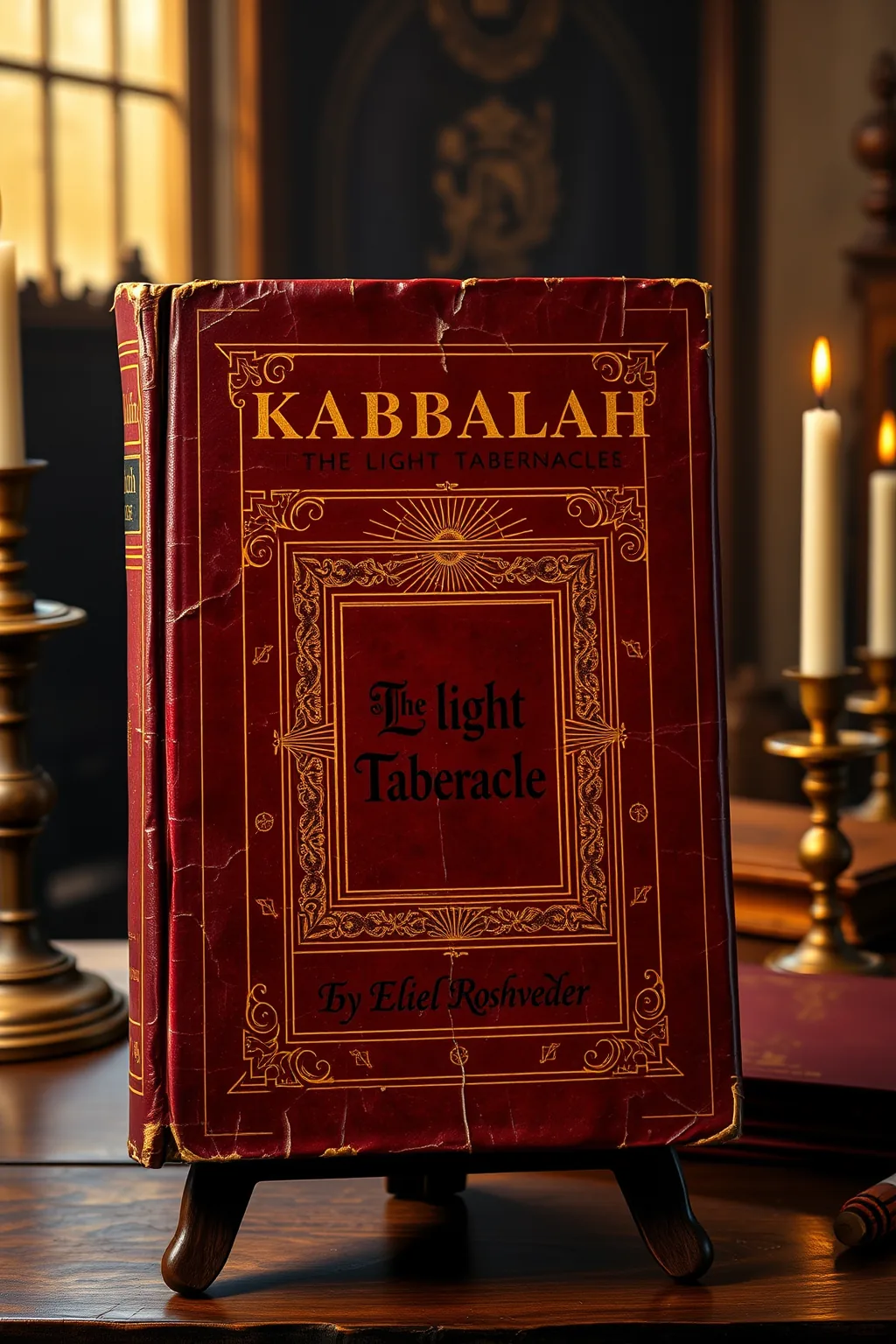
Kabbalah the Light Tabernacle
 61
61

Kabbalah the Light Tabernacle

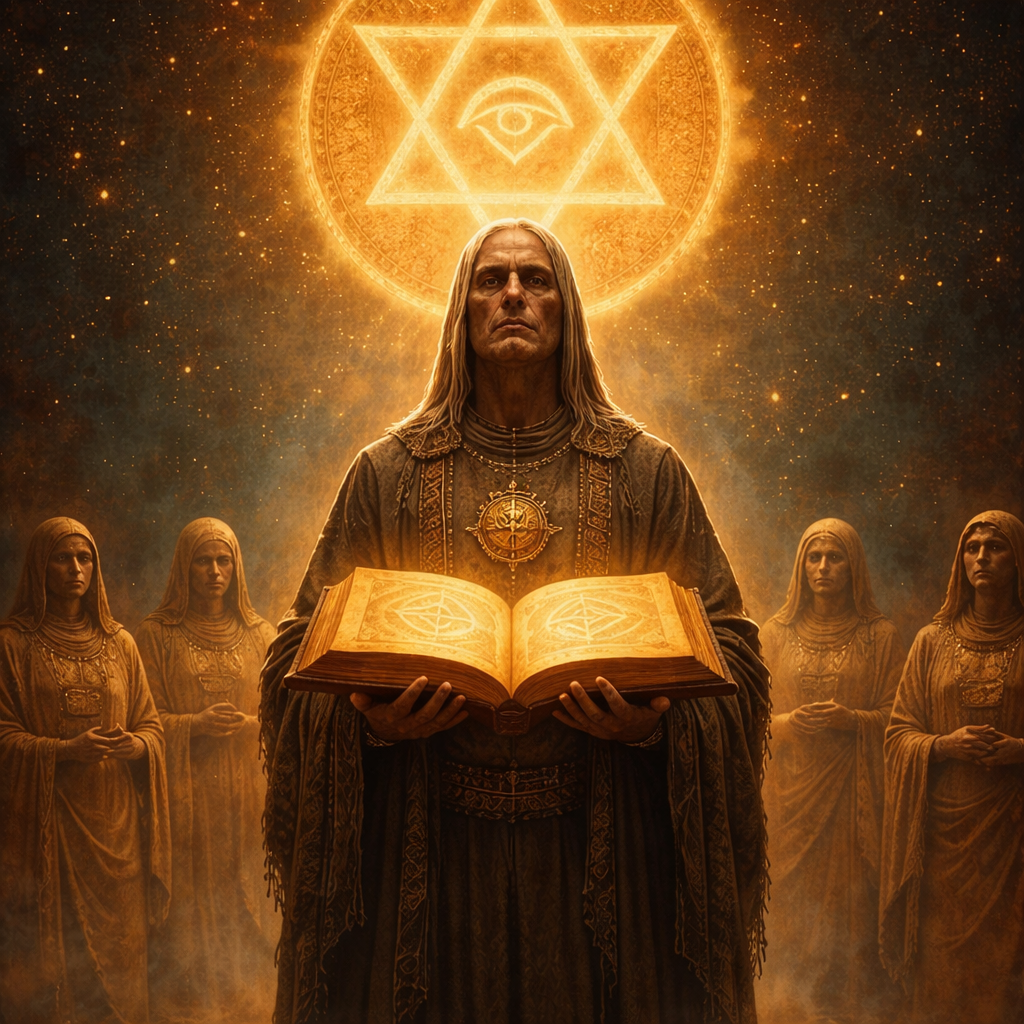

Sophia Crane (Associate Editor) — 'The Light Tabernacle' by Eliel Roshveder is a masterful exposition of Kabbalistic principles, offering a rare glimpse into the esoteric heart of Jewish mysticism. Roshveder's prose is both scholarly and deeply evocative, guiding the reader through the complex Tree of Life with unparalleled clarity. He masterfully bridges ancient wisdom with contemporary understanding, making profound concepts accessible without sacrificing their inherent mystery. This book is an indispensable resource for anyone seeking to deepen their knowledge of the Sefirot, the divine attributes, and the intricate pathways of spiritual evolution. It is a beacon for earnest students of the Kabbalah, illuminating the path towards self-realization and cosmic communion.
📝 Description
61
Eliel Roshveder's 'The Light Tabernacle' deciphers the Sefirot as living conduits of divine energy.
Eliel Roshveder's 'The Light Tabernacle' examines the structure of the Sefirot, presenting them not as abstract ideas but as active channels for divine power. Roshveder details the complex patterns within Jewish mysticism, showing the connections between the earthly and celestial spheres. The book contains esoteric knowledge that acts as a guide for spiritual advancement. It encourages engagement with the fundamental forces that form reality. The tone is reverent, suitable for those who seriously seek to understand the philosophical basis of existence and humanity's role in the divine unfolding. Readers will encounter the universe through Kabbalistic thought, where symbols carry cosmic meaning and each insight draws one nearer to the Infinite Light.
This work is situated within the tradition of Kabbalah, a mystical interpretive tradition of Judaism. It focuses on the Sefer Yetzirah and the Zohar's teachings concerning the ten Sefirot, which are understood as divine emanations or attributes. The book aims to illuminate the pathways of creation and the divine architecture that underlies reality, as conceptualized within this specific esoteric framework. It engages with concepts of divine energy, cosmic significance, and humanity's connection to the Infinite.
💡 Why Read This Book?
Delve into the foundational texts of Kabbalah and unlock profound insights into divine emanation and cosmic order. 'The Light Tabernacle' offers a clear, yet deeply esoteric, guide to the Tree of Life, essential for seekers wishing to understand spiritual ascension, the nature of God, and their own soul's journey. Ideal for students of mysticism, philosophers, and practitioners aiming to integrate Kabbalistic principles into their lives.
⭐ Reader Reviews
Honest opinions from readers who have explored this book.
❓ Frequently Asked Questions
What is the core concept of 'The Light Tabernacle'?
The book explores the Kabbalistic concept of the 'Light Tabernacle' as a metaphor for the divine presence manifest in creation, focusing on the Sefirot as channels of divine energy.
Is prior knowledge of Kabbalah required to read this book?
While some familiarity with Jewish mysticism enhances the experience, Roshveder's clear explanations make it accessible to dedicated beginners eager to learn.
What is the significance of the Tree of Life in this work?
The Tree of Life is central, serving as the map and framework through which Roshveder elucidates the emanations of divine consciousness and their interconnectedness.
What kind of spiritual practice does this book encourage?
It encourages contemplative practice, meditation on divine attributes, and the integration of Kabbalistic wisdom for personal transformation and spiritual growth.
How does this book differ from other Kabbalah texts?
Roshveder's unique approach emphasizes the experiential and luminous aspects of the Sefirot, offering a more intuitive and less purely academic interpretation.
🔮 Key Themes & Symbolism
The Sefirot as Divine Emanations
This theme explores the ten Sefirot, the divine attributes or emanations described in Kabbalistic literature, as the primary means through which the Infinite (Ein Sof) manifests and interacts with creation. Roshveder portrays them not as static concepts but as dynamic, interconnected vessels of divine light and energy, forming the very structure of existence. Understanding their interplay is crucial for comprehending the flow of divine will and the creation process, offering a blueprint for spiritual ascent and aligning oneself with cosmic forces.
The Luminous Nature of Creation
The concept of 'Light' is central, representing divine consciousness, creative energy, and the ultimate source of all being. Roshveder illuminates how this primordial light, often described as 'tzimtzum' (contraction) and 'shevirat ha'kelim' (shattering of the vessels), permeates and sustains all reality. The book explores the idea that the physical world is a reflection of higher, luminous planes, and that by understanding the nature of divine light, one can achieve spiritual illumination and reconnect with the source.
Spiritual Ascent and Self-Realization
'The Light Tabernacle' serves as a guide for the soul's journey back to its divine origin. It outlines the esoteric pathways and practices through which an individual can ascend the levels of the Tree of Life, purifying their consciousness and integrating divine wisdom. This theme emphasizes personal transformation, the unveiling of the divine spark within, and the realization of one's true potential as a microcosm reflecting the macrocosm, leading to a deeper connection with the Infinite.
💬 Memorable Quotes
Direct passages from the work, attributed to the author.
“Within the Tabernacle of Light, the soul finds its true reflection.”
— This suggests that the divine structure of creation, illuminated by God's presence, serves as a mirror for the human soul, revealing its divine essence and purpose.
“Each Seferah is a gateway, a whispered secret from the Infinite.”
— This emphasizes the esoteric knowledge contained within each divine emanation, presenting them as points of access to profound, hidden truths about existence.
“To know the Light is to know the self, and to know the self is to know the Divine.”
— This classic Kabbalistic idea underscores the interconnectedness of self-knowledge, divine knowledge, and the understanding of spiritual light.
“The universe is a collection woven from threads of divine luminescence.”
— This poetic metaphor illustrates the pervasive nature of divine energy and light, suggesting that all of reality is fundamentally infused with and constituted by this sacred luminescence.
💡 Key Ideas
Editorial paraphrase of the work's core concepts — not direct quotes.
The Sefirot are not mere names, but living currents of divine will.
This quote highlights the active, dynamic nature of the divine attributes in Kabbalah, moving beyond abstract theology to a more immanent and energetic understanding of God's interaction with the cosmos.
🌙 Esoteric Significance
Tradition
This work is deeply embedded within the Lurianic Kabbalah tradition, which focuses on concepts like Tzimtzum (divine contraction), Shevirat Ha'Kelim (shattering of the vessels), and Tikkun Olam (rectification of the world). It interprets the Sefirot not just as attributes but as the very fabric of existence, through which cosmic processes unfold and the soul can find its path to reunification with the Divine.
Symbolism
The central symbol is the 'Light Tabernacle,' representing the divine presence manifest in the created world, structured by the Tree of Life. Key symbols include the ten Sefirot (divine emanations), the Hebrew letters as carriers of divine power, and the concepts of divine light and darkness, all used to illustrate the complex interplay of creation, revelation, and spiritual transformation.
Modern Relevance
In an age often characterized by spiritual seeking and a desire for deeper meaning, 'The Light Tabernacle' offers timeless wisdom. Its exploration of interconnectedness, the power of consciousness, and the journey of self-discovery appeals to contemporary seekers of all backgrounds. The book provides a framework for understanding esoteric principles that can guide personal growth, ethical living, and a more profound appreciation of the universe's underlying spiritual order.
👥 Who Should Read This Book
This useful text is ideal for dedicated students of Kabbalah seeking a deeper, more nuanced understanding of the Sefirot and the Tree of Life. Scholars of religious studies and comparative mysticism will find it a valuable resource for its insightful interpretations. Spiritual seekers yearning to explore the esoteric dimensions of Jewish tradition and grasp the nature of divine emanation will be profoundly enriched. Practitioners of meditation and contemplative arts can use its teachings as a foundation for their spiritual disciplines.
📜 Historical Context
Written during a period of intense philosophical and spiritual inquiry, 'The Light Tabernacle' emerges from the rich tradition of Kabbalistic thought, which flourished in medieval Spain and the Mediterranean. This era saw a profound reinterpretation of Jewish scripture and tradition, seeking to understand the mystical dimensions of God, creation, and the human soul. Kabbalah offered a complex symbolic language and a sophisticated cosmological framework that resonated with seekers grappling with existential questions and a desire for direct spiritual experience. Roshveder's work, while rooted in this historical context, also speaks to enduring human yearnings for meaning and connection to the divine, making its teachings relevant across centuries.
📔 Journal Prompts
Reflect on the Sefirah that resonates most strongly with your current life experience. What lessons does it offer?
How does the concept of 'divine light' manifest in your daily life? Where do you perceive its presence or absence?
Consider the Tree of Life as a map for your spiritual journey. What are the major paths you have traversed, and what lies ahead?
In what ways can understanding the 'Light Tabernacle' help you to better understand your own 'inner tabernacle' or soul?
Explore the idea of interconnectedness through the lens of the Sefirot. How are your actions and thoughts interconnected with the wider cosmos?
🗂️ Glossary
Sefirot
The ten divine attributes or emanations through which Ein Sof (the Infinite) reveals itself and creates the universe. They form the structure of the Kabbalistic Tree of Life.
Ein Sof
The Kabbalistic term for God in His absolute, unknowable, infinite, and undifferentiated essence, prior to any manifestation or emanation.
Tree of Life (Etz Chaim)
A central diagram in Kabbalah, depicting the ten Sefirot and their interconnections, representing the structure of the cosmos and the pathways of divine emanation and spiritual ascent.
Tzimtzum
The concept of divine self-limitation or contraction, believed to have occurred to make space for creation. It signifies God's withdrawal to allow for the existence of a separate reality.
Shevirat Ha'Kelim
The 'shattering of the vessels,' a cataclysmic event in Kabbalistic cosmology where the vessels intended to hold divine light broke, scattering sparks of holiness throughout the universe.
This book appears in 1 collection
🔮 Readers Also Liked
Browse all →







From the “Kabbalah” Collection
View all →







More Free Kabbalah & Jewish Mysticism Books
View all →