Winter's Tale
 78
78

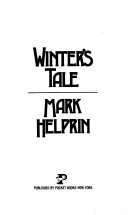
Winter's Tale
Mark Helprin's "Winter's Tale" is a remarkable feat of imagination, a novel that feels less written and more conjured from mist and starlight. Its ambition lies in its attempt to capture the ineffable — the nature of God, the mechanics of justice, and the enduring power of love. The central romance between Peter Lake and Beverly Penn is rendered with a tender, almost mythic quality that is truly its own. However, the novel's sheer density of ideas and its sometimes meandering, dreamlike structure can occasionally feel overwhelming. The passage describing the mechanics of flight, for instance, is breathtaking in its poetic science, yet the narrative can sometimes stall under the weight of its own philosophical explorations. Despite this, "Winter's Tale" remains a singular achievement, a book that dares to ask the biggest questions and offers a vision of hope grounded in the extraordinary resilience of the human heart.
📝 Description
78
Mark Helprin's 1984 novel, Winter's Tale, blends fantasy, romance, and historical fiction.
Winter's Tale, first published in 1984, weaves a story where the magical touches the everyday. The narrative possesses a dreamlike quality, merging fantasy, romance, and historical elements into a singular artistic vision. Helprin's novel examines the enduring nature of love, the pursuit of justice, and the inherent beauty within the human spirit, even when faced with hardship and the passage of time. It is a book for readers who appreciate literature that questions conventions and engages with abstract ideas.
This work appeals to those seeking stories rich in symbolism and thematic depth, rather than those driven solely by plot. Readers interested in the overlap of the spiritual and material, or those who enjoy allegorical narratives that prompt reflection on life's larger questions, will find "Winter's Tale" especially rewarding. It is for the literary explorer and the seeker of meaning.
Published in 1984, Winter's Tale offered a lyrical, mythic style that countered some postmodern trends. The novel shares a kinship with magical realism, a tradition popularized by authors like Gabriel García Márquez. Helprin's work, however, maintains its own distinct voice. Critics noted its ambitious scope and prose, recognizing it as a significant literary achievement of its time, separate from more experimental or politically focused contemporary works.
💡 Why Read This Book?
• You will explore the concept of divine providence and its manifestation in a seemingly ordinary world, as seen through the miraculous events surrounding Peter Lake's quest. This offers a unique perspective on fate and intervention. • You will encounter a depiction of love as an eternal force, transcending time and death, exemplified by the enduring connection between Peter and Beverly. This provides a profound artistic statement on commitment. • You will gain insight into the nature of miracles and their role in human existence, particularly through the supernatural abilities and occurrences that shape the narrative's trajectory.
⭐ Reader Reviews
Honest opinions from readers who have explored this book.
❓ Frequently Asked Questions
What is the central conflict in Mark Helprin's "Winter's Tale"?
The central conflict revolves around Peter Lake, an orphaned burglar in 1908 New York, who is pursued by the ethereal gangster Pearlie the Swine and his gang, as well as the mysterious "White Gangster." This pursuit is intertwined with his love for the dying Beverly Penn and his own quest for redemption and understanding.
Who are the main characters in "Winter's Tale"?
The primary characters are Peter Lake, a gentle burglar with a mysterious past, and Beverly Penn, a beautiful young woman dying of consumption. Other significant figures include Pearlie the Swine, the antagonist representing a dark, earthly force, and the enigmatic "White Gangster."
What is the significance of the year 1908 in the novel?
The year 1908 serves as a pivotal point in the narrative, marking the initial period of Peter Lake's story and his entanglement with the criminal underworld of New York City. It is when his extraordinary life and quest for love and redemption begin.
Does "Winter's Tale" have supernatural elements?
Yes, the novel is infused with supernatural and fantastical elements. Peter Lake possesses an almost magical ability to fly, and the narrative itself operates on a level that transcends ordinary reality, incorporating miracles and symbolic occurrences.
What is the symbolic meaning of winter in the book?
Winter in "Winter's Tale" symbolizes not just a season but a state of being – one of hardship, death, and spiritual coldness. However, it also holds the promise of renewal and the potential for a new beginning, mirroring the narrative's themes of hope and rebirth.
How does "Winter's Tale" explore the concept of justice?
The novel explores justice not merely as a legal system but as a cosmic or divine force. It questions whether true justice is achievable through human means or if it operates on a higher, more mysterious plane, often intertwined with love and sacrifice.
🔮 Key Themes & Symbolism
Love as Transcendent Force
The novel posits love not as a mere emotion but as an active, almost divine force capable of defying natural laws and overcoming death. The relationship between Peter Lake and Beverly Penn is depicted as a cosmic bond, suggesting that true love can create its own reality and offer salvation. This elevates their romance beyond a simple narrative arc, framing it as an eternal principle that can mend brokenness and redeem the soul, even in the face of inevitable mortality.
Miracle and Divine Intervention
"Winter's Tale" is steeped in the concept of miracles, presenting them not as anomalies but as integral to the fabric of existence. Peter Lake's ability to fly and the series of improbable events that shape his destiny suggest a world where the divine actively intervenes. This explores the idea that the universe is imbued with a benevolent, mysterious intelligence, and that faith and love can unlock these extraordinary possibilities, challenging a purely materialistic worldview.
The Nature of Justice
Justice in Helprin's novel is portrayed as a complex, often elusive ideal that operates on both earthly and celestial planes. The pursuit of justice by characters like Peter Lake, and the forces that oppose it, suggest that true justice may involve more than human law. It is tied to moral reckoning, sacrifice, and the ultimate balance of cosmic forces, hinting that a higher form of justice exists, one that encompasses mercy and redemption.
💬 Memorable Quotes
Direct passages from the work, attributed to the author.
“She was dying, and the world was dying with her.”
— This powerfully expresses the profound connection between Beverly Penn and the world around her, as perceived by Peter. Her illness is not just personal but seems to mirror a broader malaise or spiritual decay, highlighting the stakes of their love and his quest.
“Winter was not so much a season as a state of mind.”
— This interpretation of winter suggests its symbolic weight within the novel. It represents not just cold and hardship but a period of stasis, introspection, and potential transformation, reflecting the internal struggles and the promise of renewal for the characters.
“God is in the details.”
— This phrase, often attributed to architects, takes on a deeper meaning here. It suggests that divine presence and order are not found in grand pronouncements but in the intricate, often overlooked aspects of existence, urging a closer, more mindful observation of reality.
“He had a destiny, and it was to fly.”
— This highlights the theme of preordained fate and the extraordinary potential within an individual. Peter Lake's ability to fly is not just a magical gift but a symbol of his unique path and the higher purpose he is meant to fulfill, transcending his earthly origins.
💡 Key Ideas
Editorial paraphrase of the work's core concepts — not direct quotes.
He was a burglar, a thief, a killer, a devil, a lover, and a lunatic.
This quote captures the many-sided and often contradictory nature of Peter Lake. It suggests that identity is not singular but a composite of actions, desires, and perceived flaws, hinting at the complex inner life and spiritual journey the character undertakes.
🌙 Esoteric Significance
Tradition
While not explicitly tied to a single esoteric lineage, "Winter's Tale" appeals to Gnostic and Hermetic undercurrents. The concept of a dualistic struggle between light and darkness (Peter Lake vs. Pearlie the Swine), the exploration of a hidden, divine order governing reality, and the protagonist's journey toward self-knowledge and transcendence align with Gnostic themes of escaping a flawed material world. The novel's intricate symbolism and its exploration of cosmic justice also echo Hermetic principles of correspondence and the hidden workings of the universe.
Symbolism
The recurring motif of flight, particularly Peter Lake's ability to fly, symbolizes spiritual liberation, transcendence over earthly limitations, and the attainment of a higher perspective. Winter itself serves as a potent symbol of spiritual coldness, death, and the trials of existence, but also carries the implicit promise of renewal and rebirth, mirroring the cyclical nature of life and spiritual awakening. The city of New York, especially in its early 20th-century iteration, acts as a microcosm of the world, a place where both profound darkness and extraordinary light, mundane reality and magical possibility, converge.
Modern Relevance
Contemporary interest in "Winter's Tale" can be seen in the resurgence of magical realism and literary fantasy that seeks to imbue narratives with spiritual depth. Thinkers and practitioners in fields like Jungian psychology, which explores archetypes and the collective unconscious, might find resonance in the novel's mythic structure and symbolic language. Furthermore, contemporary writers who explore themes of hope and redemption in seemingly bleak circumstances often draw inspiration from Helprin's ability to find magic in the everyday and to affirm the power of love and faith.
👥 Who Should Read This Book
• Readers interested in the intersection of myth and reality, who appreciate narratives that explore spiritual concepts through imaginative storytelling. • Students of comparative literature and mythology, seeking to understand how authors like Helprin synthesize diverse thematic elements into a unique artistic vision. • Seekers of literary works that offer profound reflections on love, mortality, and the nature of existence, presented with exceptional lyrical skill.
📜 Historical Context
Mark Helprin's "Winter's Tale," published in 1984, arrived in a literary landscape marked by the lingering influence of postmodernism, which often favored deconstruction and irony. Helprin's novel stood apart with its lyrical prose, unabashed romanticism, and embrace of mythic storytelling. While authors like Thomas Pynchon explored fragmentation and John Updike continued his realist sagas, Helprin offered a different kind of ambition—one that sought to synthesize fantasy, history, and profound philosophical inquiry into a cohesive, magical realism-tinged narrative. The novel was celebrated for its stylistic virtuosity and its exploration of enduring themes like love, justice, and the nature of God, positioning it as a significant work that championed a more traditional, albeit enchanted, approach to fiction in an era often defined by skepticism and formal experimentation. Its reception affirmed a space for grand, imaginative narratives.
📔 Journal Prompts
Peter Lake's flight as a metaphor for spiritual liberation.
Beverly Penn's illness as a reflection of cosmic malaise.
The concept of a benevolent, intervening God in the narrative.
Pearlie the Swine's role as an antagonist of divine order.
The symbolic meaning of miracles in achieving justice.
🗂️ Glossary
White Gangster
An enigmatic, powerful figure in the novel who represents a force of order or destiny, distinct from the more earthly criminal elements like Pearlie the Swine. His role is ambiguous, often perceived as a guiding or judging presence.
Consumptive
Referring to tuberculosis, a serious and often fatal infectious disease that was prevalent in the early 20th century. Beverly Penn suffers from this illness, which drives much of the novel's pathos and urgency.
Helliot
A character who attempts to bridge the gap between the earthly and the divine, often acting as a messenger or interpreter of cosmic events. He represents the human capacity to perceive and interact with higher realities.
Miracle
An extraordinary event that is beyond human power or the ordinary course of nature, attributed to divine intervention. In "Winter's Tale," miracles are integral to the plot and serve to illustrate the presence of a benevolent cosmic order.
Destiny
The predetermined course of events, seen as a power beyond human control. The novel explores the idea that individuals have a specific destiny, such as Peter Lake's destiny to fly, which shapes their lives and actions.
Cosmic Justice
A form of justice that operates on a universal scale, beyond human legal systems. It suggests a balance of forces and a moral order that ultimately ensures equilibrium, often achieved through sacrifice and redemption.
Esoteric
Intended for or likely to be understood by only a small number of people with a specialized knowledge or interest. In the context of literature, it refers to works that explore hidden meanings, spiritual truths, or mystical concepts.
This book appears in 1 collection
🔮 Readers Also Liked
Browse all →









From the “Reincarnation” Collection
View all →



More Free Occult Philosophy Books
View all →