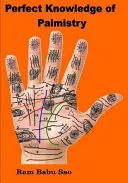
Palmistry
 76
76

Palmistry
B. K. Chaturvedi's "Palmistry" presents a refreshingly systematic approach to a practice often shrouded in mysticism. What distinguishes this text is its emphasis on chiromancy as a framework for character analysis rather than a simple prediction engine. The author meticulously maps the hand, detailing not just the primary lines but also the subtle mounts and their corresponding planetary influences, a level of detail that lends credibility to the system presented. A particular strength lies in its clear explanation of the Mount of Luna, often a point of confusion for beginners, which Chaturvedi links directly to imagination and subconscious drives. However, the prose, while clear, occasionally leans towards being overly dry, lacking the evocative language that can bring such an ancient art to life. The section on hand shapes, while informative, could benefit from more illustrative examples. Despite this minor limitation, the work offers a solid, accessible foundation for anyone seeking to understand the hand's cartography.
📝 Description
76
B. K. Chaturvedi's "Palmistry" offers a structured approach to chiromancy, moving beyond simple fortune-telling.
This book examines chiromancy, the practice of reading the hand's lines, mounts, and shapes. Chaturvedi presents palmistry not just as a method for predicting the future, but as a diagnostic tool to understand a person's character, capabilities, and life direction. The text details the anatomy of the hand, from the primary lines like the life, head, and heart lines, to less obvious marks and the significance of the palm's various fleshy areas. It aims to clarify the practice by giving readers a systematic way to interpret a palm.
"Palmistry" is suited for those interested in divination and self-knowledge through physical characteristics. It is designed for students of esoteric practices seeking a solid text for their studies. Individuals interested in comparing different esoteric traditions and how they use human form for spiritual understanding will find this book useful. The work also benefits practitioners who wish to improve their diagnostic abilities in areas that extend beyond purely mental or spiritual aspects.
Palmistry's history spans thousands of years, with roots in ancient India, China, Greece, and Rome. The art developed significantly in Renaissance Europe alongside interest in the occult and physiognomy. Figures like Johannes Trithemius and Agrippa discussed chiromancy within broader occult studies. A revival occurred in the late 19th and early 20th centuries, notably within groups like the Hermetic Order of the Golden Dawn, who incorporated palmistry into Western esoteric systems. Chaturvedi's book continues this tradition with a contemporary view of an ancient practice.
💡 Why Read This Book?
• Learn to interpret the specific meaning of the Mount of Luna, a key area for understanding subconscious drives and imaginative capacity, as detailed in Chaturvedi's systematic analysis. • Gain a foundational understanding of the seven major mounts on the palm, including Jupiter and Venus, and their direct correlation to personality traits and life potentials. • Understand the historical lineage of chiromancy, recognizing its place within broader esoteric traditions and how practitioners like Agrippa engaged with its principles.
⭐ Reader Reviews
Honest opinions from readers who have explored this book.
❓ Frequently Asked Questions
What is the primary purpose of palmistry according to B. K. Chaturvedi?
Chaturvedi presents palmistry not just for fortune-telling, but as a method for understanding personality, potential, and life pathways. The book emphasizes its diagnostic capabilities for self-awareness and personal development.
How does Chaturvedi explain the major lines on the palm?
The book meticulously details the Life, Head, and Heart lines, explaining their formations, breaks, and variations. It links these lines directly to aspects of physical vitality, intellectual capacity, and emotional disposition.
What are the 'mounts' in palmistry, and why are they important in this book?
The 'mounts' are the fleshy elevations on the palm, associated with planets like Jupiter and Venus. Chaturvedi explains their significance in representing psychological drives, potentials, and inherent character traits.
Is palmistry presented as a purely deterministic practice in this work?
No, the work explores palmistry as a tool for understanding potential and tendencies, rather than fixed destiny. It offers insights that can guide personal choices and self-awareness, suggesting a flexible interpretation.
What historical period significantly influenced the development of palmistry discussed in the book?
The Renaissance in Europe is highlighted as a period of significant interest and development in palmistry, alongside figures like Agrippa who incorporated it into broader occult studies.
Who would benefit most from reading B. K. Chaturvedi's 'Palmistry'?
Serious students of esoteric arts, individuals interested in self-understanding through divination, and those exploring comparative esotericism would find this systematic guide particularly beneficial.
🔮 Key Themes & Symbolism
Hand Anatomy as Blueprint
Chaturvedi's "Palmistry" treats the human hand as a detailed map of the self. The work meticulously categorizes and explains the significance of each physical feature, from the broad palm shapes to the subtle lines etched upon them. It posits that these physical markers are not random but reflect inherent psychological tendencies, aptitudes, and even karmic patterns. The book's strength lies in providing a coherent framework for interpreting these features, moving beyond simplistic predictions to a nuanced understanding of an individual's potential and challenges.
Planetary Correspondences
A core concept in Chaturvedi's approach is the association of specific hand features with the seven classical planets. The mounts, for instance, are directly linked to planetary energies—Jupiter for ambition, Venus for love and passion, Luna for imagination. This astrological overlay provides a rich interpretive layer, allowing readers to connect the physical lines and shapes of the hand to a well-established symbolic system. Understanding these correspondences is crucial for unlocking a deeper, multi-dimensional reading of the palm.
Chiromancy as Self-Knowledge
Rather than focusing solely on future events, Chaturvedi frames palmistry as a profound tool for self-discovery and personal development. The book guides readers to identify their strengths, weaknesses, and inherent potentials as revealed by their hands. This perspective transforms palmistry from a mere divinatory art into a practical method for increasing self-awareness, making informed life choices, and fostering personal growth. The emphasis is on understanding one's unique blueprint to navigate life more effectively.
The Major Lines Explained
The text provides in-depth analysis of the three primary palm lines: the Life Line, Head Line, and Heart Line. Chaturvedi details how variations in their length, depth, clarity, and breaks offer insights into physical vitality, mental faculties, and emotional expression respectively. The book moves beyond basic interpretations, exploring how secondary lines and markings intersect with these majors, creating a complex interplay that reveals a nuanced picture of an individual's core being and life trajectory.
💬 Memorable Quotes
Direct passages from the work, attributed to the author.
“The palm is a mirror reflecting the inner landscape.”
— This concise statement captures the essence of Chaturvedi's approach, suggesting that the physical lines and mounts of the hand are not arbitrary but directly correspond to an individual's psychological makeup and life experiences.
“Each line and mount tells a story of potential and tendency.”
— This highlights the book's focus on palmistry as a diagnostic tool for understanding inherent capacities and inclinations, rather than a fixed prophecy of future events.
“Understanding the Mount of Luna unlocks secrets of the subconscious.”
— This emphasizes the specific importance of the Mount of Luna (associated with the Moon) in the text, linking it directly to imagination, intuition, and the deeper, less conscious aspects of personality.
“The shape of the hand provides the foundational context for line interpretation.”
— This points to the book's systematic methodology, where the overall hand shape (e.g., Earth, Air, Fire, Water) is considered the primary framework before examining the finer details of the lines.
💡 Key Ideas
Editorial paraphrase of the work's core concepts — not direct quotes.
Chiromancy offers a map, not a destination.
This paraphrased concept underscores the book's perspective that palmistry provides guidance and insight into one's path, empowering individuals to make conscious choices rather than dictating a predetermined fate.
🌙 Esoteric Significance
Tradition
Chaturvedi's work fits within the broad stream of Western Esotericism, particularly drawing from the astrological and physiognomic traditions that flourished during the Renaissance and were later synthesized by occult revivalists. It aligns with Hermetic principles by seeking to understand the macrocosm (planetary influences) reflected in the microcosm (the human hand). While not strictly Kabbalistic or Gnostic, it shares the esoteric goal of uncovering hidden correspondences and using symbolic language to interpret the divine order within human form.
Symbolism
Key symbols include the seven planetary mounts (Jupiter, Saturn, Apollo, Mercury, Mars, Venus, Luna), each representing distinct psychological drives and potentials. The major lines—Life, Head, and Heart—symbolize fundamental aspects of existence: vitality, intellect, and emotion. The shape of the hand itself (e.g., Earth, Air, Fire, Water hands) acts as a foundational symbolic representation of a person's core nature and elemental affinity.
Modern Relevance
Contemporary practitioners of Western Esotericism, particularly those involved in astrological counseling, psychological astrology, and somatic therapies, find value in Chaturvedi's systematic approach. The book’s emphasis on palmistry as a tool for self-awareness and character analysis speaks to modern therapeutic and self-help movements seeking embodied wisdom. Its clear methodology also appeals to comparative esotericists studying the historical development of divination systems.
👥 Who Should Read This Book
• Aspiring chiromancers seeking a foundational, systematic text that clearly outlines the basic principles of hand reading. • Students of Western Esotericism interested in understanding how astrological concepts are applied to physical human anatomy. • Individuals focused on self-discovery and personal growth who wish to explore a unique method for gaining insight into their own personality and potentials.
📜 Historical Context
Palmistry, or chiromancy, boasts ancient origins, with roots traceable to Indian Vedic traditions and Hellenistic Greece. During the European Renaissance, a period marked by intense curiosity about the natural world and occult sciences, palmistry experienced a significant resurgence. Figures like Johannes Trithemius and Heinrich Cornelius Agrippa engaged with its principles, often integrating them into broader systems of physiognomy and natural magic. By the late 19th century, organizations like the Hermetic Order of the Golden Dawn revived and systematized various esoteric practices, including palmistry, embedding it within Western esoteric traditions. B. K. Chaturvedi’s "Palmistry" emerges within this long lineage, offering a structured exposition that builds upon centuries of practice and interpretation, contributing to the ongoing discourse on chiromancy as a method of self-understanding.
📔 Journal Prompts
The Mount of Jupiter's characteristics and your personal ambition.
Interpreting the clarity and breaks in your Heart Line.
Comparing your hand shape to its elemental description.
Reflecting on the connection between the Head Line and your intellectual pursuits.
The potential insights offered by the Mount of Luna regarding your imagination.
🗂️ Glossary
Chiromancy
The art and practice of interpreting the lines, mounts, and shapes of the human hand to understand character, potential, and future events. It is synonymous with palmistry.
Mounts
The fleshy, raised pads on the palm, located at the base of the fingers and the lower edge of the palm. Each mount is associated with a classical planet and represents specific personality traits and energies.
Life Line
The major arc running from near the thumb towards the wrist. It is traditionally associated with physical vitality, general health, and significant life events, rather than the duration of life itself.
Head Line
A horizontal line across the palm, typically below the Heart Line. It signifies mental faculties, intellectual approach, communication style, and learning patterns.
Heart Line
The uppermost major horizontal line on the palm, running across the palm below the fingers. It relates to emotional disposition, romantic relationships, and emotional health.
Mount of Luna
The mount located on the lower palm, opposite the Mount of Venus, towards the wrist. It is associated with imagination, intuition, creativity, the subconscious, and sensitivity.
Physiognomy
A field that claims to assess character and personality from outward physical features, particularly the face. Palmistry shares some conceptual ground with physiognomy in relating physical form to inner disposition.




![Tales of the Unexpected [16 stories]](/img/thumb/tales-of-the-unexpected-16-stories-roald-dahl-051315.webp)