Ancient Astronauts
 73
73

Ancient Astronauts
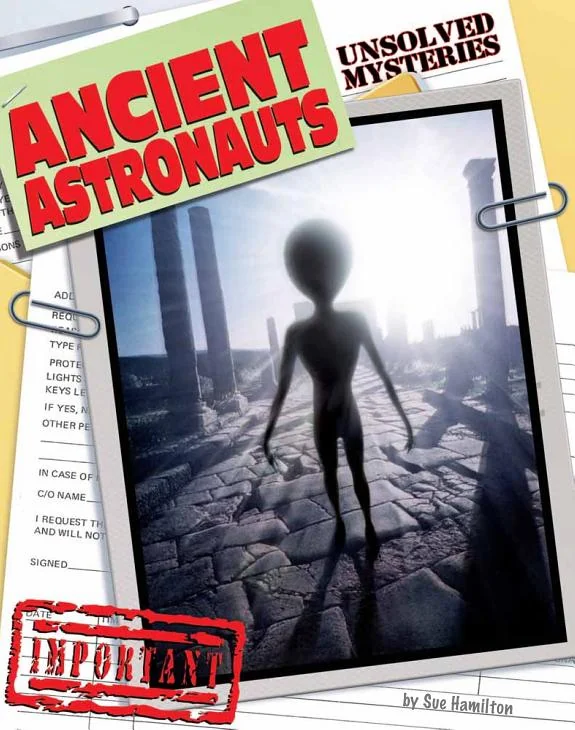
Sue L. Hamilton’s *Ancient Astronauts* presents a compilation of common arguments for extraterrestrial influence on early human history. The work is particularly adept at cataloging the sheer volume of disparate claims, from Nazca lines to Egyptian pyramids, and framing them as evidence for an external intelligence. A strength lies in its broad scope, touching upon numerous cultures and artifacts. However, the book’s primary limitation is its uncritical adoption of the ancient astronaut premise. For instance, the interpretation of the Sumerian King List, which Hamilton might present as evidence of non-human rulers, is largely accepted at face value without rigorous academic counterpoint. The text tends to accept speculative connections as factual, often overlooking established archaeological and anthropological explanations. The work explores intriguing possibilities but rarely engages deeply with scholarly critiques. It serves as an accessible introduction to the *claims* of the ancient astronaut movement, though not a balanced historical analysis.
📝 Description
73
Sue L. Hamilton's 2007 book, *Ancient Astronauts*, examines theories of extraterrestrial influence on early human civilizations.
Published in 2007, *Ancient Astronauts* by Sue L. Hamilton investigates the persistent ideas that alien visitation shaped ancient human societies. The book gathers various accounts, interpretations of archaeological oddities, old texts, and myths. Proponents of these theories believe these elements indicate non-human involvement in human history.
Hamilton's work functions as a survey of the arguments made by those who suggest ancient cultures gained knowledge, technology, or direction from off-world visitors. It presents these ideas as a challenge to standard historical and anthropological explanations. The book is for readers interested in fringe historical theories and unexplained aspects of ancient cultures, particularly those questioning mainstream views of human development.
Within the realm of esoteric thought, *Ancient Astronauts* engages with a long-standing tradition of questioning established historical narratives. The idea that ancient civilizations possessed knowledge or technology beyond their apparent capabilities, often attributed to external, non-human sources, echoes themes found in earlier occult and speculative writings. Hamilton's book enters this discourse by examining the modern iteration of these beliefs, which gained popular momentum in the mid-20th century and continues to challenge conventional understandings of human origins and development.
💡 Why Read This Book?
• Understand the core arguments of the ancient astronaut hypothesis by examining specific 'anomalous artifacts' like the Piri Reis map, which proponents cite as evidence of advanced ancient cartography potentially influenced by non-human knowledge. • Gain insight into how specific ancient myths, such as those concerning the Sumerian Anunnaki, are reinterpreted within this speculative framework, moving beyond traditional mythological analysis to a literal, historical reading. • Appreciate the historical trajectory of ancient astronaut theories, understanding their popularization in the late 20th century and how Hamilton's 2007 publication situates itself within that ongoing discourse.
⭐ Reader Reviews
Honest opinions from readers who have explored this book.
❓ Frequently Asked Questions
What specific ancient texts are discussed in Hamilton's Ancient Astronauts?
The book explores various ancient texts, including the Sumerian King List and portions of biblical narratives, reinterpreting them as accounts of extraterrestrial interactions rather than purely mythological or religious records.
Does Ancient Astronauts by Sue L. Hamilton offer definitive proof of alien visits?
No, the book presents theories and interpretations of artifacts and texts that proponents believe suggest alien visitation, but it does not offer definitive scientific or historical proof accepted by mainstream academia.
When was Ancient Astronauts by Sue L. Hamilton first published?
Ancient Astronauts by Sue L. Hamilton was first published on August 15, 2007, placing it within the broader wave of popular literature on the subject.
What archaeological sites are commonly cited in the ancient astronaut theory discussed in the book?
The book likely references well-known sites such as the pyramids of Egypt, the megalithic structures of Puma Punku in Bolivia, and the geoglyphs of the Nazca Desert in Peru as potential evidence.
Is Sue L. Hamilton a recognized academic historian?
Information regarding Sue L. Hamilton's academic credentials in history or archaeology is not readily available, and the book is generally positioned within the realm of speculative and alternative history.
What is the 'Piri Reis map' mentioned in relation to ancient astronaut theories?
The Piri Reis map, a 1513 Ottoman map, is often cited by ancient astronaut theorists for its seemingly accurate depiction of coastlines, including Antarctica, which some claim suggests knowledge predating its official discovery.
🔮 Key Themes & Symbolism
Extraterrestrial Intervention
This theme posits that advanced alien beings visited Earth in antiquity, significantly influencing human development, technology, and culture. Proponents interpret ancient myths, religious texts, and monumental architecture as evidence of this interaction. The work explores how these theories challenge conventional historical timelines and anthropological explanations for the rise of early civilizations, suggesting that certain leaps in human knowledge or engineering were not independently developed but were gifted or taught by off-world visitors.
Anomalous Artifacts and Structures
A core focus involves examining objects and constructions that defy conventional explanations based on the presumed technological capabilities of ancient peoples. This includes discussing the precision of megalithic stonework, the advanced astronomical alignments of certain ancient sites, and the presence of sophisticated artifacts like the Antikythera mechanism or the Piri Reis map. The book frames these anomalies as potential clues, suggesting they point towards external, possibly non-human, intervention or knowledge transfer.
Reinterpretation of Mythology and Religion
The work examines how ancient stories, deities, and religious narratives from various cultures are re-examined through the lens of the ancient astronaut hypothesis. Myths are often interpreted not as allegories or spiritual truths, but as literal accounts of encounters with extraterrestrial beings. Figures like the Sumerian Anunnaki or biblical 'Nephilim' are presented as alien visitors, and their stories are re-contextualized as historical records of cosmic interactions influencing human spiritual and social development.
Challenging Mainstream History
This theme centers on the direct confrontation between the ancient astronaut perspective and established academic paradigms in archaeology, history, and anthropology. The book highlights how proponents of ancient astronaut theories view conventional explanations as incomplete or deliberately dismissive of evidence. It questions why certain findings are overlooked or explained away, suggesting a potential bias against acknowledging non-terrestrial influences on humanity's past.
💬 Memorable Quotes
Direct passages from the work, attributed to the author.
“The ancient astronaut hypothesis suggests that many unexplained structures and artifacts are not products of early human ingenuity alone.”
— This statement expresses the central premise of the theory: that certain ancient accomplishments surpass the known technological and intellectual capacities of the time, implying external assistance.
“Mythological accounts from diverse cultures often describe visitors from the sky bringing knowledge and civilization.”
— This highlights the method of comparing and contrasting global myths, treating recurring themes of sky-gods or celestial visitors as potential historical records of alien contact.
“The precision of ancient sites like Puma Punku challenges conventional understanding of their construction methods.”
— This points to specific archaeological examples where the advanced engineering or stonework is presented as evidence that requires a non-conventional explanation, such as extraterrestrial influence.
“Conventional archaeology often dismisses evidence that doesn't fit established historical models.”
— This expresses a critique common within alternative history circles, suggesting that mainstream academia may be resistant to theories that radically alter accepted historical narratives.
“The interpretation of ancient texts often hinges on whether they are viewed metaphorically or literally.”
— This speaks to a key interpretive divide: whether ancient writings are seen as symbolic expressions or as factual accounts of events, with ancient astronaut theories favoring the latter.
🌙 Esoteric Significance
Tradition
While not strictly adhering to a single esoteric lineage, *Ancient Astronauts* draws heavily from the speculative and conspiratorial branches of occult thought that emerged in the 20th century, particularly influenced by theosophical ideas of ancient lost civilizations and advanced beings. It departs from traditional Hermetic or Kabbalistic study by focusing on external, non-terrestrial intelligences rather than internal spiritual or cosmic principles derived from Earth-based traditions.
Symbolism
The book frequently interprets ancient symbols and iconography as direct representations of alien technology or beings. For example, depictions of figures with large heads or elaborate headdresses in Mesoamerican art (like the Palenque sarcophagus lid) are often re-imagined not as rulers or deities, but as literal portraits of extraterrestrial visitors or their craft. Similarly, the 'Eye of Horus' symbol in Egyptian iconography might be interpreted as representing advanced optical or technological devices rather than a protective deity.
Modern Relevance
Contemporary interest in ancient astronaut theories persists through online communities, podcasts, and documentaries. Thinkers and researchers who explore consciousness, ufology, and alternative history often cite Hamilton's work or similar texts as foundational in questioning established narratives. Practices involving ancestral healing or channelling sometimes incorporate ancient astronaut concepts, blending them with spiritual frameworks to explore origins and cosmic connections.
👥 Who Should Read This Book
• Individuals fascinated by archaeological anomalies and unexplained ancient mysteries, seeking to understand the arguments for extraterrestrial involvement in human history. • Readers exploring comparative mythology who are interested in alternative interpretations of global myths and religious texts as literal accounts of ancient contact. • Enthusiasts of speculative history and fringe theories who wish to engage with the popular narratives and evidence presented by ancient astronaut proponents.
📜 Historical Context
Published in 2007, Sue L. Hamilton's *Ancient Astronauts* arrived decades after the ancient astronaut hypothesis had become a fixture in popular culture, largely thanks to Erich von Däniken’s *Chariots of the Gods?* (1968). The late 20th and early 21st centuries saw continued fascination with these ideas, often fueled by television documentaries and speculative books. This period was marked by a significant academic pushback against what was widely considered pseudoscience. Scholars like Carl Sagan, in his book *Cosmos* (1980), addressed and refuted many of these claims, arguing for rational explanations rooted in archaeological evidence and human ingenuity. Hamilton's work contributes to this ongoing dialogue, presenting the popular case for extraterrestrial influence during a time when the internet provided new platforms for disseminating such theories, often outside traditional academic discourse and reception.
📔 Journal Prompts
The concept of 'anomalous artifacts' and their implications for human technological development.
Comparing the interpretation of the Anunnaki in ancient Sumerian texts versus traditional mythological understanding.
Reflecting on the psychological appeal of the ancient astronaut hypothesis in modern society.
Analyzing the visual symbolism in ancient art that is interpreted as evidence of alien visitation.
Considering the potential societal impact if definitive proof of ancient alien contact were discovered.
🗂️ Glossary
Ancient Astronaut Hypothesis
The theory that extraterrestrial beings visited Earth in ancient times and were responsible for influencing human culture, technology, and religion, often credited with constructing megalithic sites or imparting knowledge.
Anomalous Artifacts
Objects or structures found in archaeological contexts that appear too advanced or out of place for the known technological capabilities of the culture or era in which they were discovered.
Megalithic Construction
The building of structures using large stones, often with remarkable precision and scale, such as those found at Stonehenge, Puma Punku, or the pyramids of Egypt, which some theories suggest required non-human assistance.
Sumerian King List
An ancient Mesopotamian text listing kings of Sumer, along with their supposed reigns. Proponents of the ancient astronaut theory often interpret the unusually long reigns and the presence of 'gods' as evidence of non-human rulers.
Piri Reis Map
A 1513 map compiled by the Ottoman admiral Piri Reis, which includes coastlines of continents. It is often cited by ancient astronaut theorists for its apparently accurate depiction of Antarctica, suggesting knowledge predating its official discovery.
Nazca Lines
Geoglyphs etched into the Nazca Desert in Peru, depicting various animals, plants, and geometric shapes. Their sheer size and precision have led some to speculate they were created as landing strips or messages for aerial beings.
Anunnaki
A group of deities in ancient Mesopotamian mythology. In ancient astronaut theories, they are often reinterpreted as extraterrestrial beings who visited Earth and influenced human civilization.
This book appears in 1 collection
🔮 Readers Also Liked
Browse all →









From the “Ancient Astronauts” Collection
View all →



More Free Occult Philosophy Books
View all →