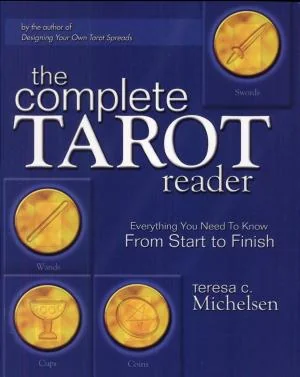
The Complete Tarot Reader
 80
80

The Complete Tarot Reader
Teresa Michelsen’s *The Complete Tarot Reader* offers a refreshing departure from the encyclopedic memorization that often characterizes early Tarot study. Its strength lies in its systematic encouragement of personal intuition, presenting Tarot not as a fixed oracle but as a mirror to the reader's own psyche. The structured approach, complete with study goals and exercises, is genuinely helpful for building confidence. However, the book’s reliance on personal interpretation, while its core strength, could leave absolute beginners feeling adrift without more explicit guidance on how to discern genuinely insightful connections from mere projection. The concept of "active learning" is well-executed, particularly in exercises that prompt readers to associate card imagery with personal memories. Ultimately, Michelsen provides a valuable framework for developing an authentic, self-directed relationship with the Tarot.
📝 Description
80
Teresa Michelsen's 2005 book teaches Tarot reading through intuition, not rote memorization.
The Complete Tarot Reader, published in 2005, offers a structured self-study program for Tarot interpretation. Michelsen moves away from simply memorizing card meanings. Instead, the book guides readers to build an intuitive connection with the cards, using personal experiences and existing knowledge as the basis for interpretation. It functions as a learning tool with study objectives, practical exercises, and progress checks. The goal is to foster a personal and lasting relationship with Tarot reading, regardless of the specific deck used.
This book is for those who want to go beyond basic card meanings. It suits individuals who find traditional interpretations too limiting and prefer a more intuitive, organic method. Aspiring readers seeking to develop an adaptable skill set will find the exercises helpful. Experienced practitioners aiming to deepen their connection with the cards and improve their interpretive skills will also benefit from Michelsen's teaching style.
Michelsen's book emerged in the early 21st century, a time of growing interest in Tarot and esoteric studies. Unlike many guides focused on traditional symbolism, it advocated for a psychological and experiential learning model. This contrasted with more rigid educational methods common in occult circles. The book reflects a move toward personalized spirituality and self-discovery, which became more prominent in the preceding decades.
💡 Why Read This Book?
• Develop a unique, intuitive Tarot reading style that bypasses rote memorization, allowing your personal experiences to inform your interpretations. • Gain a structured, self-study program designed to build confidence and skill, applicable to any Tarot deck, not just one specific system. • Cultivate a deeper, more personal connection with the archetypal imagery of the Tarot, transforming it into a powerful tool for self-discovery.
⭐ Reader Reviews
Honest opinions from readers who have explored this book.
❓ Frequently Asked Questions
What is the core philosophy behind Teresa Michelsen's Tarot reading method?
Michelsen advocates for "right-brain" reading, emphasizing intuition and personal association over memorizing traditional meanings. The philosophy encourages readers to use their own life experiences and subjective understanding to interpret Tarot cards, making the practice highly personal and adaptable.
Can I use any Tarot deck with the techniques in *The Complete Tarot Reader*?
Yes, the book is designed to work with any Tarot deck. Michelsen's approach focuses on developing a personal connection with the archetypes and imagery, rather than adhering to specific meanings tied to particular decks or historical traditions like the Rider-Waite-Smith.
Is this book suitable for complete beginners to Tarot?
It is suitable for beginners willing to engage actively with the exercises. While it encourages intuitive development, absolute novices might benefit from a brief introductory text on basic Tarot structure before diving into Michelsen's more interpretive approach.
How does Michelsen's method differ from traditional Tarot study?
Unlike traditional methods that often stress memorizing card meanings and specific spreads, Michelsen's work prioritizes developing an intuitive, self-guided understanding. It treats the Tarot as a tool for self-reflection, drawing meaning from personal resonance rather than external doctrine.
What kind of exercises are included in the book?
The book includes structured exercises designed to foster intuitive development. These often involve personal reflection, associating card images with memories or feelings, and journaling about one's reactions to the cards, all structured like a study guide.
When was *The Complete Tarot Reader* first published?
*The Complete Tarot Reader* by Teresa Michelsen was first published in 2005, positioning it within the early 21st-century landscape of esoteric literature focused on personal development and intuitive practices.
🔮 Key Themes & Symbolism
Intuitive Card Interpretation
This theme centers on the book's core philosophy: bypassing rote memorization in favor of developing a deeply personal, intuitive connection with the Tarot. Michelsen encourages readers to treat the cards as prompts for introspection, drawing meaning from their own life experiences and associations. The work provides exercises designed to sharpen this intuitive faculty, moving beyond fixed meanings to explore the dynamic, subjective relationship between the querent, the cards, and the reader's own inner landscape. This approach fosters a unique interpretive voice for each individual.
Self-Study and Active Learning
The book is structured as a comprehensive self-study program, mirroring a learning guide with clear goals, activities, and progress checks. This emphasis on "active learning" places the reader at the center of their own educational process. Rather than passively receiving information, students are prompted to engage directly with the material, experiment with techniques, and build their understanding through practice and reflection. This pedagogical approach aims to instill lasting skills and confidence in the reader's ability to interpret Tarot independently.
Personalized Esoteric Practice
Michelsen's work champions the idea that esoteric practices, such as Tarot reading, should be deeply personalized. It challenges the notion of a single, correct interpretation, instead validating the reader's unique perspective. By encouraging the use of personal knowledge and life experiences, the book helps readers integrate Tarot reading into their individual spiritual or psychological framework. This promotes a more authentic and integrated approach to divination and self-exploration, making the practice a tool for personal growth rather than adherence to external dogma.
Archetypal Resonance
While promoting personal interpretation, the book implicitly engages with the archetypal nature of Tarot imagery. The core archetypes within the Major and Minor Arcana serve as universal symbols that resonate differently with each individual based on their life experiences. Michelsen's method encourages exploring this resonance, understanding how these archetypal energies manifest in personal contexts. The goal is not to define these archetypes rigidly but to explore their fluid, many-sided expressions as reflected in the reader's own consciousness.
💬 Memorable Quotes
Direct passages from the work, attributed to the author.
“Reading Tarot with the right side of the brain”
— This phrase suggests an emphasis on creativity, intuition, and holistic perception in Tarot interpretation, contrasting with analytical, linear 'left-brain' thinking. It frames the book's approach as fostering a more imaginative and feeling-oriented engagement with the cards.
“Organized like a study guide, this book includes study goals, progress activities, and easy exercises for exploring the Tarot.”
— This highlights the practical, pedagogical structure of the book. It signifies that the content is designed for systematic learning and skill development, rather than being a purely theoretical or philosophical treatise.
“This book helps students develop a long-lasting, intuitive approach to Tarot reading that works with any Tarot deck!”
— This statement emphasizes the enduring and universal applicability of the methods taught. It promises a sustainable skill development that transcends the limitations of specific decks or transient trends in Tarot interpretation.
“The book encourages readers to use their own life experiences and knowledge to craft a personal understanding of the cards.”
— This reiterates the core principle of personalization in Tarot interpretation. It suggests that the most meaningful readings arise not from external rules but from the reader's unique internal landscape and accumulated wisdom.
💡 Key Ideas
Editorial paraphrase of the work's core concepts — not direct quotes.
Instead of memorizing standard card meanings and spreads, readers are encouraged to use their own life experiences and knowledge to craft a personal understanding of the cards.
This quote captures the book's central thesis: a move away from dogmatic, memorized interpretations towards a fluid, intuitive practice grounded in the individual's lived reality. It highlights the shift from external authority to internal wisdom in Tarot reading.
🌙 Esoteric Significance
Tradition
Michelsen's work can be situated within the modern Western esoteric tradition, particularly its psychological and self-development branches. While not explicitly tied to Hermeticism, Kabbalah, or Theosophy, it draws upon the archetype-focused nature inherent in Tarot, a tool deeply integrated into these lineages since the late 19th century. It departs from stricter, tradition-bound interpretations by prioritizing individual intuition, aligning with post-Jungian psychological interpretations of archetypes and a broader New Age emphasis on personal gnosis.
Symbolism
The book engages with Tarot symbolism not through fixed meanings but through personal resonance. Key symbols within the Tarot deck, such as the Fool, the High Priestess, or the imagery on the Minor Arcana cards, are presented as triggers for introspection. Michelsen encourages readers to explore what these archetypal figures and scenes evoke within their own consciousness, linking universal archetypal patterns to individual life experiences and psychological states.
Modern Relevance
Michelsen's emphasis on intuitive development and personalized practice remains highly relevant. Contemporary practitioners in fields like coaching, mindfulness, and expressive arts therapy often utilize tools like Tarot in ways that echo her approach. Her work speaks to modern online communities focused on self-discovery and alternative spirituality, where the idea of a personal relationship with symbolic systems is paramount, influencing how individuals engage with divination and self-reflection tools.
👥 Who Should Read This Book
• Aspiring Tarot readers seeking an alternative to memorization: This book offers a structured path to develop an intuitive reading style that feels authentic and personal, adaptable to any deck. • Individuals interested in psychological approaches to divination: Those who view Tarot as a tool for self-exploration and understanding their inner world will appreciate the focus on personal experience and intuition. • Experienced practitioners looking to deepen their practice: Readers who feel stuck with conventional interpretations can use this guide to refresh their connection with the cards and cultivate a more dynamic, responsive approach.
📜 Historical Context
Teresa Michelsen's *The Complete Tarot Reader*, first published in 2005, emerged during a period of significant expansion in esoteric and self-help literature. The early 21st century saw a continued interest in divination and personal growth practices, often blending psychological theories with spiritual exploration. Unlike earlier, more rigid approaches to Tarot, Michelsen's work aligned with a growing trend towards experiential and intuitive learning, reflecting a broader cultural shift towards personalized spirituality. This era saw contemporaries like Rachel Pollack exploring Tarot's psychological depth, but Michelsen's focus on a structured, 'right-brain' self-study program offered a distinct pedagogical angle. The book's reception likely benefited from the increasing accessibility of esoteric knowledge online and through various alternative education platforms, positioning it as a practical guide for a generation seeking self-empowerment through accessible mystical tools.
📔 Journal Prompts
What personal memory or feeling does the imagery of the Ace of Cups evoke for you?
How does your understanding of the Magician differ from its traditional interpretation?
Reflect on a recent life event and consider which Tarot card's energy best mirrors it.
Describe a time you felt like the 'Fool' beginning something new.
What aspect of your personality does the Empress archetype represent for you?
🗂️ Glossary
Right-Brain Reading
A method of Tarot interpretation emphasizing intuition, creativity, holistic perception, and emotional connection, as opposed to purely analytical or logical approaches.
Active Learning
An educational approach where the student is actively involved in the learning process through practice, reflection, and experimentation, rather than passive reception of information.
Archetype
In the context of Tarot, universal patterns of human experience and personality represented by the figures and scenes on the cards, which can evoke personal associations.
Intuitive Approach
A way of understanding or interpreting information, such as Tarot cards, based on gut feelings, inner knowing, and subconscious connections rather than conscious reasoning or learned rules.
Personal Understanding
The unique meaning a Tarot card holds for an individual, derived from their personal experiences, associations, and inner responses, rather than a universally prescribed definition.
Study Goals
Specific objectives or learning outcomes outlined within the book designed to guide the reader's progress and focus their efforts during the self-study program.
Progress Activities
Exercises and tasks within the book structured to help readers track their development and reinforce their learning of intuitive Tarot interpretation techniques.
This book appears in 1 collection
🔮 Readers Also Liked
Browse all →









From the “Tarot” Collection
View all →








More Free Occult Philosophy Books
View all →