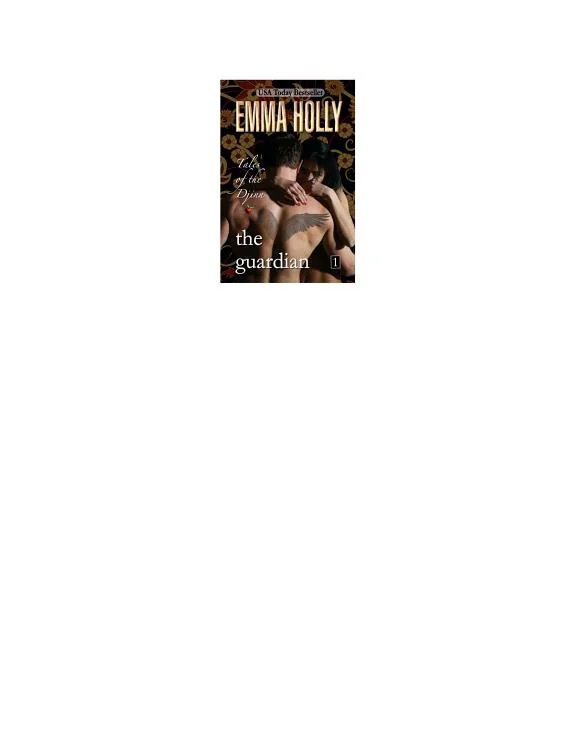
Tales of the Djinn: The Double
 81
81

Tales of the Djinn: The Double
Emma Holly's *Tales of the Djinn: The Double* presents a fascinating premise: what happens when a lover’s doppelgänger emerges, embodying a more rigid, prejudiced past?
The strength of this novel lies in its evocative portrayal of the djinn city and the inherent conflict arising from Arcadius’s presence. Holly effectively uses the magical setting to amplify the emotional stakes. The tension between Elyse and Arcadius, particularly his disdain for her independence, is palpable. However, the narrative occasionally feels constrained by its need to resolve the dualistic conflict, leading to a somewhat predictable conclusion regarding the fate of the curse and the doubles. A particularly resonant moment is Elyse’s struggle to reconcile the Cade she loves with the archaic views represented by Arcadius, highlighting the challenges of integrating disparate aspects of self or partner.
Read more ↓
Ultimately, *Tales of the Djinn: The Double* offers a compelling, if at times conventional, exploration of identity and love against an exotic, magical backdrop.
📝 Description
81
Emma Holly's 2014 novel, Tales of the Djinn: The Double, transports a modern woman into the city of her genie lover.
Elyse finds herself in the djinn homeland when her lover, Cade, brings her there. This city, ruled by djinn, is under a curse that causes internal division among Cade's people. The narrative follows Elyse as she navigates this strange world and the complications that arise from Cade's lineage. Arcadius, a double of Cade, appears, forcing a confrontation with identity and the nature of self. This duality becomes a core element, questioning who Cade is and how it impacts his bond with Elyse.
The book suits readers who enjoy speculative fiction with a metaphysical focus. It examines themes of identity, duality, and the difficulties in relationships that cross cultural or species boundaries. Those drawn to mythology, especially elements reminiscent of Arabian Nights, will find resonance. The plot centers on characters and their relationships, tested by extraordinary circumstances.
Published in 2014, Tales of the Djinn connects to a long tradition of djinn lore found in texts like the *One Thousand and One Nights*. This collection, with roots stretching back centuries and numerous interpretations since the 18th century, provides a rich source for the book's depiction of a djinn city and its inhabitants. The theme of the 'double,' central to the plot, echoes earlier Gothic and psychological literature, such as Edgar Allan Poe's work, but is reimagined within a modern fantasy framework.
💡 Why Read This Book?
• Understand the esoteric implications of duality and self-perception as explored through the character of Arcadius, the djinn double, offering insights into confronting internal conflicts within a magical framework. • Experience the unique challenges of interspecies romance, specifically Elyse’s relationship with Cade, and how magical curses, as depicted in the djinn city, can mirror psychological and relational obstacles. • Engage with modern interpretations of Arabian Nights lore, examining how ancient mythical beings like djinn are reimagined in contemporary fiction, particularly in the context of societal evolution as seen in the djinn’s response to the curse.
⭐ Reader Reviews
Honest opinions from readers who have explored this book.
❓ Frequently Asked Questions
What is the primary conflict in Tales of the Djinn: The Double?
The main conflict involves Elyse and her genie lover Cade dealing with a curse on Cade's people and the unexpected appearance of Arcadius, Cade's double, who embodies archaic beliefs and clashes with modern women.
What is the significance of the 'double' in the book?
The 'double,' Arcadius, represents a darker, more prejudiced aspect of Cade's nature and heritage. His presence forces a confrontation with identity, past grievances, and the evolution of societal and personal values.
What kind of world do the djinn inhabit in this story?
The djinn inhabit a glorious, magical city that is the home of Cade. This city is depicted as facing a severe curse, creating a challenging environment for its inhabitants and for Elyse's arrival.
Does the book explore themes of curses and their effects?
Yes, the book prominently features a curse affecting Cade's people, which serves as a significant plot element and contributes to the overarching challenges faced by the characters and their community.
Who is the author of Tales of the Djinn: The Double?
The author is Emma Holly, with the book first being published on October 24, 2014.
What is the genre of Tales of the Djinn: The Double?
The genre is esoteric fiction, blending elements of fantasy, romance, and occult themes, with a strong focus on mythological beings like djinn.
🔮 Key Themes & Symbolism
Duality and Identity
The narrative examines the concept of duality through the manifestation of Arcadius, Cade's double. This explores how contrasting aspects of self, or perceived selves, can create conflict and challenge authentic identity. It questions whether one can reconcile or integrate these disparate elements, particularly when they embody opposing worldviews. The presence of Arcadius, who disdains modern women, forces Cade and Elyse to confront the shadow aspects that may exist within their relationship and heritage.
Curses and Community Impact
A central plot point is a curse afflicting the djinn city. This theme examines how collective misfortune can impact a society, fostering despair or resistance. The curse acts as an external force that both binds and breaks the community, potentially exacerbating existing social tensions or creating new ones. The story explores the efforts to overcome this blight, linking personal struggles to the fate of an entire civilization.
Interspecies Romance and Cultural Clash
The romance between Elyse, a human, and Cade, a djinn, forms the emotional core. This relationship is complicated by their different origins and Cade's societal norms. Arcadius’s antagonism towards Elyse highlights a cultural clash, specifically his rejection of 'modern women.' This theme scrutinizes prejudice and the challenges of forging connections across seemingly insurmountable differences, as well as the evolution of societal attitudes.
Mythological Reimagining
The book reimagines the lore of djinn, drawing from traditional Arabian Nights narratives but infusing them with contemporary speculative fiction elements. It presents djinn not merely as mythical beings but as characters with complex societies, personal histories, and evolving values. This approach allows for an exploration of ancient magic within a modern narrative structure, making the mythical accessible and relevant to contemporary readers.
💬 Memorable Quotes
Direct passages from the work, attributed to the author.
“What if the man you loved had a double?”
— This question expresses the central premise of the novel, immediately introducing the core conflict of duality and its impact on a romantic relationship. It sets the stage for exploring themes of identity and the unsettling nature of encountering a distorted reflection of someone cherished.
“Arcadius has no patience for modern women, much less for males foolish enough to love them.”
— This statement highlights Arcadius's archaic and judgmental worldview, directly opposing Elyse's modern perspective. It establishes him as an antagonist whose core beliefs clash fundamentally with the protagonists' relationship and values, signaling a significant source of conflict.
“Elyse faces when a flying carpet lands her and her genie lover in the glorious city he calls home.”
— This phrase vividly sets the scene for the story's fantastical journey. It grounds the esoteric elements in a concrete, magical mode of transport and introduces the exotic setting of Cade's djinn city, promising adventure and wonder.
“Cade’s trip to Elyse’s world created a duplicate of himself, a not-quite carbon copy who believes he’s Cade’s superior.”
— This explains the origin of the 'double,' Arcadius, framing him not as an independent entity but as a consequence of Cade's actions. It establishes Arcadius's hubris and creates a direct link between Cade's past actions and present challenges.
💡 Key Ideas
Editorial paraphrase of the work's core concepts — not direct quotes.
Cade’s people need help recovering from a curse, but this isn't the only problem they’ll have to fix.
This line efficiently introduces the dual nature of the plot's challenges: an external, communal problem (the curse) and an internal, relational one (the double). It suggests that the resolution will require more than just magical intervention.
🌙 Esoteric Significance
Tradition
While not strictly adhering to a single esoteric lineage, *Tales of the Djinn: The Double* draws heavily on the rich folkloric and mythological traditions associated with djinn, often found within broader Islamic mysticism and Sufi thought. It intersects with Hermeticism through its exploration of mirroring, duality, and the influence of unseen forces on the material world. The narrative can be seen as a modern interpretation of ancient elemental spirits and their interactions with humanity, fitting within a contemporary occult revival that recontextualizes old myths.
Symbolism
The primary symbol is the 'double' (Arcadius), representing the shadow self, repressed aspects of personality, or an archaic societal consciousness. The 'curse' symbolizes collective trauma, stagnation, or a spiritual imbalance within the djinn community. The 'flying carpet,' a classic motif from Arabian Nights, symbolizes magical transportation, transcendence, and the bridging of disparate worlds and realities.
Modern Relevance
Contemporary occultism and esoteric fiction often revisit ancient mythologies to explore modern psychological and social issues. Works like Holly's resonate with practitioners interested in elemental magic, comparative mythology, and the psychological archetypes found in djinn lore. It connects to modern discussions on identity, the integration of the shadow self, and the challenges of cross-cultural relationships, making ancient magical concepts relevant to contemporary spiritual and personal development.
👥 Who Should Read This Book
• Lovers of fantasy romance seeking narratives that blend enchantment with complex emotional dynamics, particularly those intrigued by Arabian Nights-inspired mythology. • Students of comparative mythology and folklore interested in modern interpretations of djinn, exploring how ancient beings are reimagined to address contemporary themes of identity and duality. • Readers drawn to psychological explorations within speculative fiction, who appreciate narratives that use magical elements to examine internal conflicts, the nature of self, and the impact of 'shadow' aspects.
📜 Historical Context
Published in 2014, *Tales of the Djinn: The Double* emerged in a literary landscape where paranormal romance and urban fantasy were well-established genres. Emma Holly’s work taps into this tradition while offering a specific focus on djinn lore, a subject with deep roots in Middle Eastern mythology, particularly popularized by collections like *The Arabian Nights*. This collection, which saw significant translations and adaptations from the 18th century onward, provided a rich source for characters and magical elements. Holly’s exploration of a djinn’s ‘double’ echoes earlier psychological and Gothic explorations of fractured identity, seen in authors like E.T.A. Hoffmann. While not directly engaging with a specific intellectual movement of 2014, the book implicitly engages with contemporary discussions on identity, otherness, and the evolution of cultural myths. Its reception would have been within the context of ongoing debates about representation in fantasy and the reinterpretation of folklore in modern storytelling.
📔 Journal Prompts
The djinn city's curse as a reflection of internal stagnation.
Arcadius’s disdain for modern women and its symbolic meaning.
Elyse’s navigation between Cade and his double, Arcadius.
The flying carpet as a symbol of bridging worlds.
Personal challenges in integrating opposing aspects of self.
🗂️ Glossary
Djinn
Supernatural creatures in Arabian and Islamic mythology, often depicted as beings of smokeless fire, capable of interacting with the human world and possessing magical abilities. They can be benevolent, malevolent, or neutral.
Double/Doppelgänger
A concept referring to a look-alike or sound-alike of a living person. In literature and psychology, it often symbolizes the shadow self, repressed desires, or a premonition of death.
Curse
In a supernatural context, a curse is a malevolent magical spell intended to bring misfortune, harm, or suffering to a person, place, or object. It represents a disruption of natural order or spiritual imbalance.
Esoteric
Relating to or accessible only by a relatively small number of people with a specialized knowledge or interest. In literature, it implies hidden meanings, mystical themes, or occult symbolism.
Flying Carpet
A legendary mode of transport from Middle Eastern folklore, most famously featured in the tales of *One Thousand and One Nights*. It symbolizes magical travel and the ability to traverse great distances instantly.
Arcadius
In this novel, Arcadius is the 'double' of the djinn Cade, representing a more rigid, prejudiced, and archaic aspect of Cade's nature or heritage.
Cade
A djinn and the primary male love interest in the novel, whose journey to his homeland and the subsequent appearance of his double form the central conflict.
This book appears in 1 collection
🔮 Readers Also Liked
Browse all →









From the “Djinn” Collection
View all →






More Free Occult Philosophy Books
View all →