The Jungians
 79
79

The Jungians
Kirsch's "The Jungians" provides a much-needed historical survey of a complex psychological tradition. The author's direct involvement lends an air of authority, particularly when discussing the personal dynamics and intellectual lineages that shaped Analytical Psychology post-Jung. A notable strength is the clear exposition of how various analysts interpreted and expanded upon Jung's original concepts, demonstrating the field's organic growth. However, the book occasionally feels like a chronicle rather than a critical analysis, focusing more on the 'who' and 'when' than a deep interrogation of the 'why' behind certain theoretical divergences. The section detailing the development of object relations within the Jungian framework, while informative, could benefit from a more robust engagement with competing psychological theories of the same era. Overall, it is an indispensable, if somewhat dry, historical document for serious students of Jungian thought.
📝 Description
79
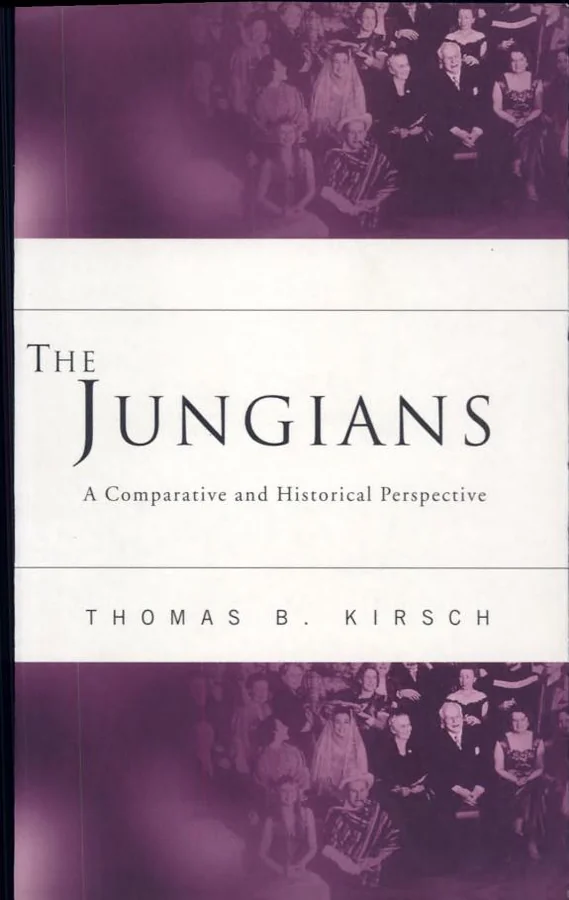
Thomas B. Kirsch's 2000 book details the development of Analytical Psychology after Jung.
Thomas B. Kirsch's "The Jungians" accounts for the growth of Analytical Psychology from its beginnings. The book follows the progression of Carl Jung's ideas, starting with his break from Freudian psychoanalysis around 1913. Kirsch, who was involved in many of these historical events, leads the reader through the core concepts and the later divergence of thought within the Jungian school. It shows how the field grew and changed through the contributions of individuals who influenced its direction over many years.
This book is a valuable resource for anyone wanting to understand the historical and theoretical foundations of Analytical Psychology. It is especially useful for students of psychology, philosophy, and comparative religion who want to understand the historical background of Jungian thought. Those interested in the development of psychodynamic theories and their effect on culture and spirituality will find it informative. It is also helpful for practitioners of Jungian analysis who want a deeper understanding of their field's origins and progress.
Analytical Psychology, as detailed in Kirsch's work, emerged from a desire to understand the psyche beyond purely material or rational explanations. Its roots lie in the 20th century's intellectual ferment, a time when figures like Jung sought to integrate scientific inquiry with explorations of myth, symbolism, and the unconscious. This tradition often engages with archetypal patterns, alchemy, and the spiritual dimensions of human experience, positioning it within a broader esoteric interest in the inner life and its connection to universal forces. Kirsch's book situates this development within that larger context.
💡 Why Read This Book?
• Grasp the foundational split from Freudian psychoanalysis around 1913, understanding the initial divergence that birthed Jungian psychology. • Explore the specific theoretical contributions of key figures like Marie-Louise von Franz and Erich Neumann, seeing how they built upon Jung's initial work. • Understand the development of Analytical Psychology through distinct historical periods, providing context for its evolution and contemporary relevance.
⭐ Reader Reviews
Honest opinions from readers who have explored this book.
❓ Frequently Asked Questions
When did Analytical Psychology officially diverge from psychoanalysis?
Analytical Psychology began to diverge significantly from Freudian psychoanalysis around 1913, a period marked by Carl Jung's break with Sigmund Freud over theoretical and personal disagreements.
Who are considered key figures in the development of Jungian psychology after Carl Jung?
Key figures include Marie-Louise von Franz, Erich Neumann, James Hillman, and Jolande Jacobi, among many others who expanded upon Jung's core concepts in various directions.
What is the significance of the 'collective unconscious' in Jungian thought?
The collective unconscious, a central concept in Jungian psychology, refers to a shared reservoir of archetypes and instincts inherited from our ancestors, influencing human behavior and experience universally.
How did "The Jungians" trace the history of Analytical Psychology?
The book traces the history from its origins around 1913, detailing the intellectual lineage, key figures, and theoretical developments that shaped the field up to the present day from the author's perspective.
Is this book suitable for beginners in psychology?
While thorough, it is best suited for those with some prior exposure to psychological concepts or a specific interest in Jungian theory, as it assumes a degree of familiarity with the subject matter.
What historical events or periods does the book cover concerning Jungian psychology?
It covers the period from the initial split with Freud in 1913 through the various decades of the 20th century, examining the establishment and evolution of Analytical Psychology as a distinct school.
🔮 Key Themes & Symbolism
The Archetypal Psyche
The work examines the Jungian concept of archetypes, proposing they are universal, inherited patterns of thought and imagery residing in the collective unconscious. It explores how these archetypes, such as the Shadow or the Anima/Animus, manifest in myths, dreams, and individual lives. Kirsch's historical account details how analysts following Jung, like Erich Neumann, further elaborated on these primal patterns, viewing them as fundamental structures shaping human consciousness and behavior across cultures and time.
Individuation Process
Central to Jungian psychology is the concept of individuation, the lifelong process of psychological development and self-realization. "The Jungians" traces how this core idea, concerning the integration of conscious and unconscious elements to achieve wholeness, was understood and applied by different analysts. The book illustrates how figures like Marie-Louise von Franz explored the practical application of individuation through fairy tales and alchemy, offering pathways for individuals to understand their unique psychological journey.
The Collective Unconscious
Kirsch's history examines the notion of the collective unconscious, Jung's controversial theory of a transpersonal layer of the psyche shared by all humanity. This section explores how the concept, distinct from personal memory, contains innate predispositions and archetypal images. The book demonstrates how subsequent generations of Jungian thinkers, including James Hillman with his archetypal psychology, continued to investigate and reinterpret this profound idea, influencing depth psychology and its understanding of human nature.
Psyche-Matter Connection
The book touches upon Jung's interest in the interconnectedness of the psyche and the material world, including synchronicity and alchemical symbolism. It shows how this exploration into the union of opposites, the conscious and unconscious, the spiritual and material, became a significant theme within Analytical Psychology. Kirsch details how later Jungians interpreted these connections, often drawing parallels with Eastern philosophies and Gnostic traditions to explain the psyche's relationship to the cosmos.
💬 Memorable Quotes
Direct passages from the work, attributed to the author.
“The divergence from Freud in 1913 marked a critical point.”
— This highlights the foundational break that established Analytical Psychology as a distinct field, moving beyond Freudian psychoanalysis into new theoretical territory.
“Analytical Psychology evolved through the contributions of many individuals.”
— This points to the collaborative and adaptive nature of the discipline, showing how Jung's initial ideas were expanded and interpreted by subsequent generations of analysts.
“The concept of archetypes forms a core element.”
— This emphasizes the enduring importance of Jung's theory of universal psychic patterns that shape human experience and are found across cultures.
“Individuation is the path to psychological wholeness.”
— This captures the Jungian goal of personal development, suggesting a process of integrating various aspects of the self to achieve a more complete and authentic existence.
“The collective unconscious contains inherited psychic structures.”
— This refers to Jung's theory of a shared, transpersonal layer of the psyche, distinct from personal experience, that influences all human beings.
🌙 Esoteric Significance
Tradition
Analytical Psychology, while rooted in clinical psychology, often engages with esoteric traditions. Jung himself studied alchemy, Gnosticism, and astrology, seeing them as expressions of the psyche's deeper symbolic language. "The Jungians" situates this tradition within its historical development, showing how later analysts continued to explore these connections, viewing Jungian concepts like archetypes and the collective unconscious as frameworks for understanding universal spiritual and mystical experiences.
Symbolism
Key symbols explored within the Jungian framework include the Shadow, representing the repressed aspects of the personality, and the Anima/Animus, embodying the contrasexual archetype within the psyche. The book likely details how these, along with alchemical symbols of transformation and integration (like the Ouroboros or the Philosopher's Stone), are understood as potent expressions of the collective unconscious, guiding the process of individuation and psychological wholeness.
Modern Relevance
Contemporary thinkers in areas such as depth psychology, consciousness studies, and comparative mythology continue to draw heavily on Jungian concepts. Archetypal psychology, as championed by James Hillman, represents a significant modern development. Furthermore, practices like dream analysis, active imagination, and the exploration of mythology and symbolism in therapy are direct continuations of the tradition "The Jungians" chronicles, influencing various forms of spiritual and personal growth work.
👥 Who Should Read This Book
• Students of psychology and philosophy: Gain a foundational understanding of the historical evolution and core theoretical pillars of Analytical Psychology. • Researchers in comparative religion and mythology: Explore how Jungian concepts provide frameworks for analyzing cross-cultural spiritual narratives and symbolic systems. • Individuals interested in self-exploration and depth psychology: Discover the key ideas and historical figures that shaped a major school of thought focused on the unconscious and personal transformation.
📜 Historical Context
Published in 2000, Thomas B. Kirsch's "The Jungians" emerged during a period of re-evaluation and expansion within depth psychology. The work traces the lineage of Analytical Psychology from its contentious origins around 1913, a key year marked by Carl Jung's definitive break with Sigmund Freud and Freudian psychoanalysis. This schism occurred amidst a vibrant intellectual milieu in Europe, where existentialism and other philosophical currents were also gaining traction. Kirsch's account implicitly engages with the legacy of figures like Alfred Adler, another early dissenter from Freud, and later thinkers who both built upon and critiqued Jung's work. While the book itself may not have generated specific controversy, the field of Jungian analysis has historically navigated debates about its scientific validity and its relationship to more mainstream psychological approaches. The book’s publication allowed for a comprehensive retrospective on nearly a century of Jungian thought and practice.
📔 Journal Prompts
The historical schism from Freudian psychoanalysis in 1913.
Key figures and their contributions to Analytical Psychology.
The concept of the collective unconscious.
The process of individuation.
Archetypes as universal psychic patterns.
🗂️ Glossary
Analytical Psychology
The school of psychology founded by Carl Jung, emphasizing the exploration of the unconscious, archetypes, and the process of individuation.
Collective Unconscious
A hypothesized universal layer of the human psyche containing inherited archetypes and instincts, shared by all people across cultures and time.
Archetype
Universal, archaic patterns and images that derive from the collective unconscious and are the psychic counterpart of instinct.
Individuation
The lifelong psychological process of differentiation and integration of the conscious and unconscious aspects of the personality to achieve wholeness.
Shadow
The unconscious or repressed aspects of the personality that the conscious ego does not identify in itself; often seen as the 'dark side'.
Anima/Animus
The contrasexual aspect of the psyche: the Anima is the feminine archetype in men, and the Animus is the masculine archetype in women.
Synchronicity
Meaningful coincidences; events that are connected not by causality but by meaning, suggesting an underlying order to reality.
This book appears in 1 collection
🔮 Readers Also Liked
Browse all →








From the “Jungian Psychology” Collection
View all →




More Free Occult Philosophy Books
View all →