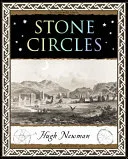
Stone Circles
 76
76

Stone Circles
Hugh Newman's "Stone Circles" is a commendable effort to broaden the discourse on megalithic monuments beyond the usual British Isles focus. The book’s strength lies in its expansive geographical reach, bringing together disparate sites from Japan to Africa and presenting them with a consistent, albeit speculative, analytical lens. Newman’s persistent questioning of established archaeological dogma is refreshing, particularly his focus on potential alignments and the energetic properties of these ancient sites. However, the work occasionally suffers from a lack of critical distance; the author's enthusiasm for "megalithomania" sometimes overshadows a more rigorous, evidence-based approach. For instance, the chapter detailing the geometrical relationships of various sites could benefit from more detailed mathematical exposition rather than broad assertions. Despite this, Newman compellingly argues for a more unified, global understanding of these ancient constructions. It is a valuable, if sometimes overly zealous, compendium for those drawn to the enduring enigma of stone circles.
📝 Description
76
Hugh Newman's 2023 book examines the global phenomenon of stone circles.
Hugh Newman's "Stone Circles" investigates the purpose and construction of megalithic stone arrangements across the globe. Moving beyond the well-known sites in Britain, the book considers a worldwide array of these structures. It notes recurring shapes, such as egg-like or flattened geometric forms, and examines their connections to celestial events and the surrounding geography.
The work considers various theories about the function of stone circles, including their use as astronomical observatories, ritual centers, territorial markers, or energy conduits. Newman looks into who might have built them, the societies that could have supported such large projects, and the enduring human need to create monuments linking the earth and sky. This examination spans multiple continents, suggesting a practice with widespread application.
"Stone Circles" offers a broad survey of megalithic traditions, from familiar British sites to less common ones in France, Poland, North America, Africa, India, and Japan. This wide geographical scope helps reveal commonalities and differences in megalithic practices, showing how distinct cultures, separated by distance and time, used similar architectural and symbolic designs.
This book engages with traditions that seek to understand ancient monuments beyond conventional historical narratives. It touches upon ideas concerning earth energies, forgotten astronomical knowledge, and the spiritual significance of megalithic sites. The focus on a potentially universal human impulse to connect with celestial and terrestrial forces places it within a vein of esoteric thought that looks for deeper meaning in humanity's past and its relationship with the natural world.
💡 Why Read This Book?
• Gain an understanding of the global distribution and common structural characteristics of stone circles, moving beyond the familiar sites of Britain as presented in Chapter 1. • Explore the potential astronomical and landscape alignments of these ancient structures, as detailed in the discussions on solar and lunar observations. • Discover the diverse theories surrounding the purpose and builders of megalithic circles worldwide, drawing on examples from Wessex to India discussed throughout the book.
⭐ Reader Reviews
Honest opinions from readers who have explored this book.
❓ Frequently Asked Questions
What is the primary focus of Hugh Newman's "Stone Circles"?
The book focuses on the global phenomenon of stone circles, examining their construction, purpose, and potential connections to the landscape, Sun, Moon, and stars across various cultures and continents.
When was "Stone Circles" by Hugh Newman first published?
Hugh Newman's "Stone Circles" was first published on May 20, 2021.
Does the book only cover European stone circles?
No, the book offers a worldwide perspective, examining sites in North America, Africa, India, and Japan in addition to European locations like Wessex, Scotland, France, and Poland.
What are some recurring geometric shapes found in stone circles discussed in the book?
The book notes that many stone circles are egg-shaped or possess geometrically flattened forms, prompting questions about their deliberate design and construction.
What is the author's general perspective on the builders of stone circles?
Hugh Newman explores the concept of a widespread 'megalithic culture' and investigates the sophisticated knowledge and societal organization potentially required to build these monuments.
Are astronomical alignments a key theme in the book?
Yes, the book extensively discusses how stone circles relate to the Sun, Moon, and stars, suggesting they served as astronomical observatories or had celestial significance.
🔮 Key Themes & Symbolism
Global Megalithic Networks
Newman posits the existence of a widespread, interconnected 'megalithic culture' that spanned continents and millennia. He argues that the similarities in design, construction, and placement of stone circles across diverse geographical locations—from the British Isles to India and Japan—are too significant to be mere coincidence. This theme challenges conventional archaeological views that often compartmentalize these sites. The book examines how these monuments might represent a shared ancient understanding of cosmology, geometry, and landscape manipulation, suggesting a level of global interaction or a common ancestral knowledge base previously underestimated.
Landscape and Celestial Harmony
A central argument revolves around the deliberate integration of stone circles with their natural environments and the cosmos. The work explores how these structures are frequently aligned with significant solar and lunar events, solstices, and equinoxes, indicating advanced astronomical knowledge. Furthermore, Newman investigates the connection between the placement of circles and the topology of the land itself—hills, rivers, and ley lines—suggesting they were designed to harmonize terrestrial energies with celestial patterns, acting as focal points for ritual and cosmic awareness.
The Purpose of the Stones
"Stone Circles" tackles the perennial question of 'why'. It surveys various interpretations, including astronomical observatories, sacred ritual sites, territorial markers, ancient power conduits, and even early forms of calendars. Newman leans towards a multi-functional understanding, emphasizing the spiritual and cosmological significance these monuments held for their builders. The book questions whether their purpose was solely utilitarian or deeply rooted in a desire to connect with the divine, the earth, and the cyclical nature of time.
Geometry and Sacred Form
The book highlights the recurring geometric patterns observed in stone circles, particularly the prevalence of egg shapes and flattened circles. This focus on form suggests a deliberate and sophisticated understanding of mathematics and geometry among megalithic builders. Newman explores how these specific shapes might relate to natural phenomena, symbolic meanings, or even principles of resonance and energy. The precise measurements and alignments point towards an intentional design philosophy aimed at creating sacred spaces with specific energetic or functional properties.
💬 Memorable Quotes
Direct passages from the work, attributed to the author.
“Many stone circles are egg-shaped or geometrically flattened.”
— This observation points to a deliberate design choice rather than random construction, suggesting a shared architectural or symbolic language among ancient builders across different regions.
“The relationship between stone circles, the landscape, Sun, Moon, and stars is fundamental.”
— This highlights the integral connection these monuments have with both the terrestrial and celestial realms, serving as points where earth and sky energies converge.
“Megalithic culture spans from Wessex to Japan.”
— This statement underscores the global reach of megalithic traditions, suggesting a far more interconnected ancient world than often assumed by compartmentalized historical studies.
“The purpose of stone circles remains a profound mystery.”
— This acknowledges the ongoing debate and speculative nature surrounding the function of these sites, inviting further investigation and challenging definitive conclusions.
“These monuments are tied to the landscape.”
— This emphasizes the importance of geographical context in understanding stone circles, suggesting their placement was strategic and harmonized with natural features.
🌙 Esoteric Significance
Tradition
While not strictly adhering to a single lineage like Hermeticism or Theosophy, "Stone Circles" draws heavily from esoteric traditions that emphasize earth energies, ley lines, and ancient cosmic wisdom. It carries the geomantic explorations found in traditions focused on sacred geography and the energetic properties of the planet. The work's departure lies in its global empirical scope, attempting to find universal symbols and functions across diverse cultures rather than focusing on a specific textual or ritualistic tradition. It contributes to a modern esoteric synthesis that seeks hidden connections in ancient monuments.
Symbolism
The primary symbols explored are the stone circles themselves, representing cosmic order, sacred geometry, and a connection point between the terrestrial and celestial. The egg shape frequently discussed symbolizes creation, fertility, and wholeness, common across many ancient cosmologies. Alignments with the Sun and Moon are potent symbols of cyclical time, divine presence, and the duality of masculine/feminine principles or light and dark, reflecting a fundamental understanding of universal rhythms.
Modern Relevance
Contemporary practitioners of earth mysteries, sacred geometry, and archaeoastronomy find significant value in Newman's work. Thinkers exploring ancient global networks and alternative histories often cite his synthesis of evidence from disparate regions. It informs modern pagan and earth-centered spiritual practices that seek to reconnect with ancient sites and their perceived energies, influencing contemporary discussions on consciousness, landscape spirituality, and the potential for lost ancient technologies or knowledge.
👥 Who Should Read This Book
• Enthusiasts of archaeoastronomy and comparative mythology seeking to understand the global patterns in megalithic construction. • Readers interested in esoteric interpretations of ancient sites who want to explore theories beyond conventional archaeology. • Individuals curious about the potential connections between ancient monuments, landscape features, and celestial events worldwide.
📜 Historical Context
Published in 2021, Hugh Newman's "Stone Circles" emerged in an era marked by renewed popular interest in archaeoastronomy and alternative interpretations of ancient history. While mainstream archaeology often focuses on localized explanations for megalithic sites, Newman engages with a more pan-cultural and speculative approach, aligning with a lineage of researchers like Graham Hancock who challenge orthodox narratives. The book's broad scope reflects a contemporary trend towards synthesizing global data, seeking universal patterns in ancient human endeavors. Unlike the more academic, regional studies common in the late 20th century, Newman's work aims for a grand, unified theory of megalithic construction. Its reception exists within a discourse where alternative theories about ancient civilizations frequently clash with established academic consensus, often finding a larger audience in online communities and independent publishing circles than within traditional university departments.
📔 Journal Prompts
The global distribution of stone circles, as detailed from Wessex to Japan.
The egg-shaped and geometrically flattened forms of megalithic sites.
The relationship between stone circles and celestial bodies like the Sun and Moon.
Theories concerning the purpose of these ancient monuments.
The potential for a shared 'megalithic culture' across continents.
🗂️ Glossary
Megalithic Culture
A term used to describe the widespread phenomenon of constructing large stone monuments (megaliths) across various ancient societies, suggesting shared traditions, knowledge, or possibly interconnectedness.
Archaeoastronomy
The interdisciplinary study of how past cultures understood celestial phenomena and integrated them into their structures, monuments, and cultural practices.
Solstice
The two times each year (around June 20/21 and December 21/22) when the Sun reaches its highest or lowest point in the sky at noon, marking the longest and shortest days.
Equinox
The two times each year (around March 20/21 and September 22/23) when the Sun crosses the celestial equator, resulting in nearly equal amounts of daylight and darkness at all latitudes.
Ley Lines
Hypothetical straight lines proposed to connect a series of ancient sites and natural features, often believed to carry earth energies or represent ancient pathways.
Geomancy
A form of divination or esoteric practice involving the interpretation of earth energies, patterns, and features, often linked to landscape and sacred sites.
Cosmology
The study of the origin, evolution, and eventual fate of the universe; in an ancient context, it refers to a culture's understanding of the structure and workings of the cosmos.