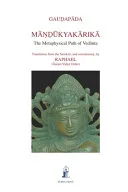
Mandukyakarika
 78
78

Mandukyakarika
Gaudapada's Mandukyakarika, as presented by the Raphael Asram Vidya Order, offers a rigorous exploration of Ajativada, a doctrine that challenges conventional notions of causality and existence. The text's strength lies in its systematic exposition of non-origination, directly addressing the Mandukya Upanishad to establish a philosophical bedrock for Advaita Vedanta. The concept of Asparsayoga, the yoga of no-contact, is particularly compelling, suggesting a path of liberation through the cessation of relational perception. However, the dense philosophical argumentation, while accurate, can be demanding for newcomers. The translation and commentary, while faithful, occasionally adopt a cadence that feels more academic than directly experiential. A passage detailing the four states of consciousness (waking, dreaming, deep sleep, and the transcendent Turiya) serves as a clear anchor, illustrating how the seemingly discrete states are ultimately manifestations of a single, unchanging awareness. It is an essential, albeit challenging, text for serious Advaita scholars.
📝 Description
78
Published in 2021, this edition of the Mandukyakarika offers Gaudapada's early Advaita Vedanta treatise.
The Mandukyakarika, attributed to Gaudapada, is a commentary on the Mandukya Upanishad that centers on the doctrine of Ajativada, or "non-generation." This philosophical text asserts that ultimate Reality, the Absolute, is unborn and undying. Gaudapada sought to articulate this truth, drawing from early Vedic scriptures. The work examines the implications of an unmanifested, unchanging source from which all apparent phenomena arise, a source that remains unaffected by creation or dissolution. The Raphael Asram Vidya Order published this edition in 2021.
This text is for students of Advaita Vedanta and comparative philosophy prepared for complex metaphysical arguments. It will interest those wanting to grasp the philosophical basis of non-dualistic traditions, especially the concept of Maya and the nature of consciousness. Readers studying the historical development of Indian philosophy, particularly early non-dualism, will find this commentary useful. The subject matter is dense and requires sustained contemplation.
Gaudapada's Karika is a foundational text in Advaita Vedanta, likely composed between the 6th and 8th centuries CE. It engages with Buddhist concepts like emptiness (sunyata) and idealism, reinterpreting them within a Vedic framework. Gaudapada's assertion of Brahman's sole reality, against notions of causal origination, marks a significant articulation of non-dual thought predating Adi Shankara's systematization.
💡 Why Read This Book?
• Gain a foundational understanding of Ajativada, the doctrine of non-origination, as articulated by Gaudapada, which challenges the perceived reality of birth and death for the Absolute. • Explore the concept of Asparsayoga, the yoga of no-contact, and its implications for achieving liberation by understanding the unmanifest nature of reality. • Grasp the philosophical framework that underpinned early Advaita Vedanta, providing context for later masters like Adi Shankara and the Vedic philosophical tradition.
⭐ Reader Reviews
Honest opinions from readers who have explored this book.
❓ Frequently Asked Questions
What is Ajativada as presented in the Mandukyakarika?
Ajativada, or "non-generation," is the central doctrine Gaudapada expounds. It asserts that the ultimate Reality is unborn and undying, and that the perceived world of creation and destruction is a cosmic illusion (Maya).
Who was Gaudapada and when did he live?
Gaudapada is traditionally considered the maternal grandfather of Adi Shankara and a significant figure in the development of Advaita Vedanta. His Karika is generally dated between the 6th and 8th centuries CE.
What is Asparsayoga?
Asparsayoga, meaning the "yoga of no-contact" or "unrelatedness," refers to the realization of the non-dual, unchanging nature of reality, thereby transcending the perceived duality and interaction of phenomena.
How does the Mandukyakarika relate to the Mandukya Upanishad?
The Mandukyakarika is a commentary on the Mandukya Upanishad. Gaudapada uses the Upanishad's verses, particularly those concerning the syllable Om and the states of consciousness, to expound his doctrine of Ajativada.
What is the significance of the four states of consciousness in this text?
The text analyzes the four states of consciousness – Vaisvanara (waking), Taijasa (dreaming), Prajna (deep sleep), and Turiya (the transcendent fourth) – to demonstrate that only Turiya is ultimately real, with the other three being illusory manifestations.
Is this text available online for free?
The original Mandukyakarika is ancient scripture. While this specific 2021 edition by Raphael Asram Vidya Order is a published work, older translations and commentaries of the Mandukyakarika may be found in public domain collections.
🔮 Key Themes & Symbolism
The Doctrine of Non-Generation
The central theme is Ajativada, the radical assertion that the Absolute, Brahman, is never born and never dies. Gaudapada argues against any form of causality for the ultimate reality, positing that the apparent creation is akin to a dream or illusion (Maya). This concept challenges conventional understanding of existence, suggesting that phenomena arise and subside within consciousness but do not affect the fundamental nature of reality itself, which remains eternally unborn and unchanging.
Asparsayoga: The Yoga of No-Contact
This theme describes the path to liberation through the realization of non-duality and the cessation of relational perception. Asparsayoga implies that true freedom comes not from engaging with the world but from understanding its illusory nature and recognizing the non-interactive, unattached state of the Absolute. It is the yoga of perceiving the world without being 'touched' by its apparent dualities and transformations, leading to a state of profound peace and equanimity.
The Four States of Consciousness
The Karika systematically analyzes the three empirical states of consciousness – waking (Vaisvanara), dreaming (Taijasa), and deep sleep (Prajna) – as well as the transcendent state of Turiya. Gaudapada uses this analysis to demonstrate that the first three states are conditional and illusory, while Turiya, the underlying awareness, is the only true reality. This framework serves as a crucial tool for understanding the nature of Maya and the path to realizing the non-dual Self.
The Nature of Maya
Maya, the illusory power of the Absolute, is a key concept that explains how the manifold universe appears to arise from the non-dual reality. The Mandukyakarika presents Maya not as a separate entity but as the very appearance of multiplicity within the singularity of Brahman. Understanding Maya is essential to grasping Ajativada, as it clarifies why the world of birth and death is ultimately unreal and does not pertain to the true nature of existence.
💬 Memorable Quotes
Direct passages from the work, attributed to the author.
“The Absolute is unborn and undying.”
— This core tenet of Ajativada posits that ultimate Reality, Brahman, is beyond the concepts of creation and annihilation. It implies that all perceived change and birth are illusory, not affecting the eternal, changeless nature of the Absolute.
“Asparsayoga is the yoga of no-contact.”
— This refers to a state of liberation achieved by realizing the non-dual nature of reality and ceasing to perceive oneself as an individual interacting with a separate world.
“The world is like a dream.”
— This analogy highlights the illusory nature of the phenomenal universe, suggesting that its apparent reality is transient and ultimately unsubstantial, much like the experiences encountered during sleep.
“The Turiya state is the only reality.”
— This emphasizes the transcendent fourth state of consciousness as the sole true reality, distinct from the empirical states of waking, dreaming, and deep sleep, which are seen as mere appearances.
“No one is born, nor does anyone die.”
— A direct articulation of Ajativada, this statement challenges the fundamental assumptions of existence and non-existence, asserting that the ultimate truth lies beyond these dualistic concepts.
🌙 Esoteric Significance
Tradition
The Mandukyakarika is a foundational text for Advaita Vedanta, a prominent school within Hindu philosophy that emphasizes non-dualism. While rooted in Vedic scripture, its philosophical rigor and systematic approach to consciousness and reality align with esoteric traditions that seek direct experiential realization of ultimate truth. It departs from ritualistic or devotional emphasis by prioritizing intellectual discernment and contemplative insight into the nature of the Self and Brahman.
Symbolism
The syllable Om (AUM) is a primary symbol, representing the totality of consciousness and the three empirical states (A for waking, U for dreaming, M for deep sleep) culminating in the silent fourth state, Turiya, which is beyond these distinctions. The concept of 'no-contact' (Asparsa) symbolizes the ultimate state of liberation, where the enlightened individual is no longer affected by the dualistic play of phenomena, remaining in their inherent, untouched nature.
Modern Relevance
Contemporary Advaita Vedanta teachers and practitioners continue to draw heavily on Gaudapada's arguments for Ajativada and Asparsayoga. Philosophers and scholars of comparative religion engage with its sophisticated metaphysics. Its emphasis on consciousness as the sole reality also finds echoes in modern contemplative practices and certain schools of transpersonal psychology exploring the nature of awareness and subjective experience.
👥 Who Should Read This Book
['• Students of Advaita Vedanta seeking to understand the philosophical origins of non-dualism, particularly the doctrine of Ajativada.', '• Comparative philosophy researchers interested in the interplay between Indian and Buddhist metaphysical thought during the classical period.', '• Contemplatives and practitioners aiming to deepen their understanding of consciousness, illusion (Maya), and liberation beyond dualistic perception.']
📜 Historical Context
Composed likely between the 6th and 8th centuries CE, Gaudapada's Mandukyakarika represents an important moment in the philosophical field of ancient India. It emerged during a period of intense intellectual ferment, with various schools of thought, including early forms of Mahayana Buddhism (particularly the Madhyamaka and Yogacara schools), offering competing metaphysical frameworks. Gaudapada's work can be seen as a sophisticated engagement with these Buddhist ideas, particularly the concepts of emptiness (sunyata) and the mind-only doctrine. While Buddhism asserted anatta (no-self) and sunyata, Gaudapada's Ajativada, within the Vedic tradition, reasserted the sole reality of Brahman as the unborn, unmanifest Absolute. His Karika predates Adi Shankara's systematization of Advaita Vedanta, providing foundational arguments that Shankara would later build upon and popularize, making it a crucial text for understanding the lineage of non-dualistic thought.
📔 Journal Prompts
The concept of Ajativada: How does the idea of 'non-generation' challenge your assumptions about cause and effect in reality?
Reflecting on Asparsayoga: What does 'no-contact' with the phenomenal world signify for your personal experience of peace?
The Mandukya Upanishad's four states: How do the waking, dream, and deep sleep states point towards the transcendent Turiya?
Gaudapada's critique of causality: What are the implications of the world appearing like a dream for perceived permanence?
The nature of Maya: How does the concept of illusion help reconcile the apparent reality of the world with the non-dual Absolute?
🗂️ Glossary
Ajativada
The doctrine of "non-generation" or "non-origination," asserting that the ultimate Reality is unborn and undying, and that the perceived universe is an illusion.
Asparsayoga
The "yoga of no-contact" or "unrelatedness," a state of liberation achieved through the realization of the non-dual nature of reality and detachment from phenomenal interactions.
Mandukya Upanishad
One of the shortest Upanishads, primarily focused on the mystic syllable Om (AUM) and its relation to the states of consciousness and the Absolute.
Brahman
In Advaita Vedanta, the ultimate, unchanging, all-pervading reality, the Absolute, which is identical with the Self (Atman).
Maya
The cosmic illusion or magical power that makes the manifold, phenomenal world appear real, obscuring the true nature of Brahman.
Turiya
The "fourth" state of consciousness, transcendent to waking, dreaming, and deep sleep, representing the pure, non-dual awareness of the Absolute.
Sruti
Literally "that which is heard," referring to the canonical scriptures of Hinduism, primarily the Vedas and Upanishads.