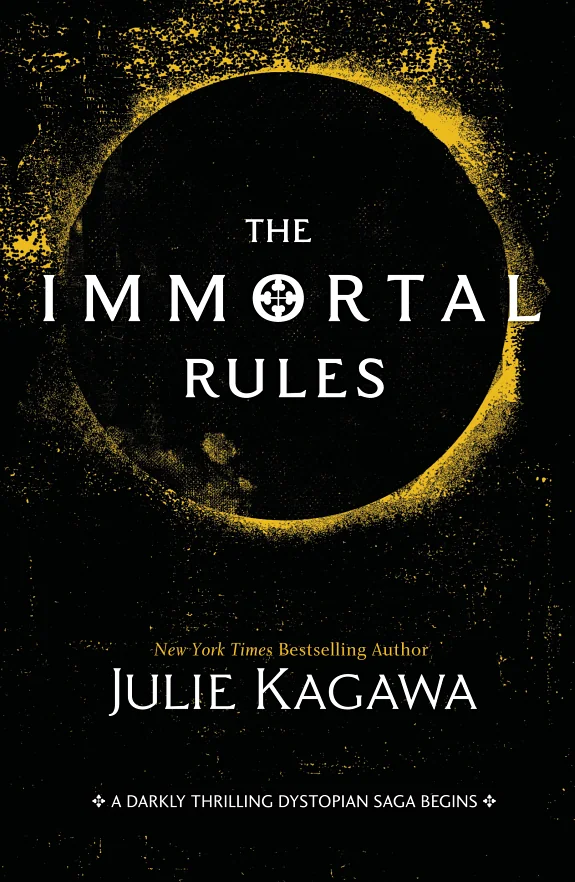
The Immortal Rules
 77
77

The Immortal Rules
Allison Sekemoto's transformation in "The Immortal Rules" is less a rebirth and more a violent stripping away of identity. Kagawa excels at depicting the raw, visceral horror of Allison's vampiric awakening, eschewing the typical romantic gloss for a brutal, instinct-driven existence. The opening chapters, detailing life in the Fringe and the immediate aftermath of Allison's death, are particularly effective in establishing the grim stakes. However, the narrative occasionally falters when it attempts to integrate a broader quest for a cure or a sanctuary, which feels somewhat conventional compared to the compelling internal conflict. The strength lies in Allison's desperate fight to reconcile her former self with the creature she has become, a struggle that feels genuinely earned. The depiction of the vampire society, while functional, lacks the same depth as Allison's personal crisis. "The Immortal Rules" delivers a potent, unflinching look at what it means to survive when survival demands becoming the thing you most despise.
📝 Description
77
Julie Kagawa's 2013 novel 'The Immortal Rules' centers on a young woman surviving in a vampire controlled post-apocalyptic world.
In a world overrun by vampires, Allison Sekemoto lives on the fringes of human society, constantly fighting for survival. Published in 2013, the novel depicts a harsh existence where daytime is for scavenging and nighttime brings the threat of becoming prey. Allison's life in the Fringe, a desolate area outside a human city, is a testament to endurance.
The story follows Allison as she navigates a brutal existence, questioning what it means to be human when surrounded by monsters. Kagawa's work examines the psychological toll of constant danger and the difficult choices individuals make when their very humanity is at stake. It is a narrative for young adult readers who appreciate dark fantasy and strong protagonists facing extreme circumstances.
Published in 2013, 'The Immortal Rules' entered a literary scene still influenced by paranormal romance but chose a different path. Instead of focusing on romanticized vampires, Kagawa presented a grim vision of vampirism as a literal predatory condition. The book's setting, with its isolated human enclaves and resource scarcity, mirrors anxieties about societal breakdown. It stands apart by detailing the visceral horror and survival challenges inherent in a world where humanity is prey.
💡 Why Read This Book?
• Gain insight into the psychological toll of forced transformation, as Allison Sekemoto grapples with her new vampiric nature after her death in 2013. • Explore the grim realities of survival in a post-apocalyptic society, where the stark contrast between the walled city and the Fringe defines existence. • Witness a protagonist's struggle to retain humanity amidst primal urges, a core theme exemplified by Allison's internal battle against her vampiric instincts.
⭐ Reader Reviews
Honest opinions from readers who have explored this book.
❓ Frequently Asked Questions
What is the primary conflict in "The Immortal Rules"?
The main conflict is Allison Sekemoto's struggle to survive after being turned into a vampire. She must hide her new nature from humans while battling her own predatory instincts and seeking a place in a world that fears her kind.
Who are the main antagonists in the book?
The primary antagonists are the vampires who rule the world, treating humans as cattle. However, Allison also faces internal conflict with her own emerging vampiric nature and external threats from both humans and other vampires.
What is the significance of the "Fringe" in the story?
The Fringe represents the lawless, dangerous outskirts of human civilization. It's where Allison and her crew scavenge for survival, constantly under threat from vampires, highlighting the precariousness of human existence outside protected zones.
Does "The Immortal Rules" have romantic elements?
While it's a young adult novel, "The Immortal Rules" focuses more on survival and the horror of transformation than on traditional romance. Any romantic subplots are secondary to Allison's fight for survival and identity.
When was "The Immortal Rules" published?
The book was first published on March 26, 2013, placing it within a period of significant interest in paranormal and dystopian young adult fiction.
What makes Allison Sekemoto a compelling protagonist?
Allison is compelling due to her resilience and her internal struggle. She is forced to adapt to a monstrous existence while desperately trying to hold onto her former humanity and sense of self.
🔮 Key Themes & Symbolism
Loss of Humanity
The core of "The Immortal Rules" lies in Allison Sekemoto's forced transformation into a vampire. The work meticulously details the psychological and physical erosion of her human identity as primal vampiric instincts take over. This theme questions the essence of self: are we defined by our actions, our biology, or our memories? Allison's desperate fight to retain fragments of her former life, even as she becomes a creature of the night, explores the terrifying possibility of becoming the monster one despises, a concept central to many dark fantasy narratives originating from the early 21st century.
Survival in Extremis
Set in a world where humans are prey, survival is a constant, brutal negotiation. The novel depicts the stark dichotomy between the fortified human city and the lawless Fringe, illustrating how extreme circumstances warp societal structures and individual morality. Allison's journey forces her to adapt to a new, predatory existence, highlighting the difficult choices one must make when faced with annihilation. This relentless focus on the visceral struggle for existence, a hallmark of post-apocalyptic fiction since the late 20th century, grounds the supernatural elements in a harsh, believable reality.
Identity and Transformation
Allison's transformation is not just physical but a profound identity crisis. She is no longer the human girl from the Fringe; she is also not fully the vampire she is becoming. The narrative explores the liminal space between these states, where old loyalties and new urges clash. This concept of fluid or imposed identity is a recurring motif in speculative fiction, and Kagawa uses it to examine how external forces can fundamentally alter one's sense of self, forcing a redefinition of who one is and what one stands for in the face of overwhelming change.
💬 Memorable Quotes
Direct passages from the work, attributed to the author.
“Survival meant becoming the monster.”
— A conceptual summary of Allison's predicament. To endure in the ruined world, she must embrace the predatory nature of the vampires, directly confronting the moral cost of staying alive when survival demands embracing what she once abhorred.
“The Fringe was a place for the forgotten, the discarded, the ones who couldn't make it inside the walls.”
— This description defines the harsh environment Allison inhabits before her transformation. It emphasizes the societal stratification and desperation that define life for those on the fringes of human civilization, setting a bleak tone.
💡 Key Ideas
Editorial paraphrase of the work's core concepts — not direct quotes.
I died last night. I am one of them now.
This line, spoken or thought by Allison early in her transformation, captures the central horror of the novel. It signifies the absolute end of her former life and the terrifying beginning of her new, monstrous existence, setting the stage for her internal conflict.
They think humans are cattle. I used to hate them for it.
This paraphrase captures Allison's initial perspective before her transformation. It highlights the deep-seated animosity and fear humans harbored towards vampires, establishing the societal conflict that Allison must now navigate from the other side.
I had to pass for human, a dangerous game.
This paraphrased statement reflects Allison's immediate challenge after becoming a vampire. The need to conceal her true nature from humans underscores the precariousness of her situation and the constant threat of exposure and death.
🌙 Esoteric Significance
Tradition
While "The Immortal Rules" is primarily a young adult dark fantasy novel, its exploration of vampirism can be loosely connected to certain esoteric traditions that view the 'vampire' archetype not merely as a monster, but as a symbol of psychic vampirism or a corrupted life force. Some occult philosophies discuss entities that feed on vital energy, and Allison's transformation into a literal creature that consumes blood can be interpreted through this lens. However, the work departs significantly from structured esoteric systems, focusing on personal transformation and survival rather than spiritual ascent or initiation into a specific lineage like Hermeticism or Kabbalah.
Symbolism
The walled city and the Fringe serve as potent symbols of societal control versus anarchy, safety versus danger, and the stark divisions humans create. Allison's transformation into a vampire represents a primal, instinctual force breaking through the veneer of civilization, symbolizing the dark potential lurking within all beings. The concept of 'blood cattle' symbolizes dehumanization and the exploitation inherent in oppressive power structures, a recurring theme in critical dystopian narratives. These symbols collectively explore themes of containment, liberation, and the terrifying emergence of the suppressed.
Modern Relevance
Contemporary discussions around psychic vampirism, energy sensitivity, and the darker aspects of human nature find echoes in "The Immortal Rules." While not directly referencing specific modern esoteric schools, the book's portrayal of an individual struggling with overwhelming, alien impulses speaks to practices focused on shadow work and integrating the darker aspects of the psyche. Thinkers and practitioners exploring themes of trauma, identity fragmentation, and the psychological impact of societal breakdown might find Allison's journey a compelling, albeit fictionalized, case study in confronting and integrating one's 'inner monster.'
👥 Who Should Read This Book
• Young adult readers seeking dark fantasy narratives with strong, morally complex protagonists who are forced to confront their own monstrous potential. • Fans of post-apocalyptic fiction interested in exploring themes of societal collapse, survival ethics, and the struggle for identity in extreme circumstances. • Readers who appreciate vampire lore that moves beyond romance and studies the visceral horror and psychological transformation associated with becoming undead.
📜 Historical Context
Published in 2013, "The Immortal Rules" arrived during a period saturated with young adult paranormal fiction, a trend significantly amplified by the success of Stephenie Meyer's "Twilight" series. Kagawa’s work distinguishes itself by largely eschewing the romantic entanglements that characterized much of the genre, opting instead for a darker, more visceral exploration of vampirism as a force of horror and survival. The narrative's depiction of a post-apocalyptic world, fractured into enclaves and plagued by scarcity, echoes broader anxieties present in speculative fiction of the early 21st century, reflecting concerns about societal collapse and resource conflict. While not directly engaging with specific intellectual movements, the book’s focus on the brutal realities of becoming a predator tapped into a latent desire for grittier takes on supernatural beings, differentiating itself from lighter fare. The reception generally acknowledged its departure from typical YA romance, highlighting its more action-oriented and morally complex approach to the vampire mythos.
📔 Journal Prompts
Allison's struggle to retain humanity after her transformation.
The societal divisions between the walled city and the Fringe.
The meaning of survival when it requires becoming the predator.
Defining selfhood when one's physical form and instincts change drastically.
The ethical compromises made for self-preservation in a ruined world.
🗂️ Glossary
Fringe
The desolate, lawless outer regions surrounding the walled human city, serving as a scavenging ground and a place of constant danger from vampires.
Vampire
An undead creature that sustains itself by feeding on the blood of the living, often depicted as possessing enhanced physical abilities and a predatory nature.
Blood Cattle
A derogatory term used by vampires to refer to humans, emphasizing their view of humans as mere livestock or resources for sustenance.
Transformation
The process by which a human, like Allison, becomes a vampire, involving death and subsequent reanimation with new, often uncontrollable, instincts and needs.
The City
The fortified, safe zone where humans live, protected by walls from the dangers of the outside world, including vampires and the lawless Fringe.
Pilgrims
A group of individuals, often seeking sanctuary or a specific destination, who travel through the dangerous world outside the city walls.
The Pack
Refers to a group of vampires who operate together, often with a leader, and adhere to certain rules or hierarchies within their society.
This book appears in 1 collection
🔮 Readers Also Liked
Browse all →





From the “Immortality” Collection
View all →





More Free Occult Philosophy Books
View all →