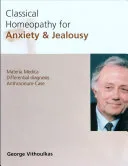
Classical Homeopathy for Anxiety & Jealousy
 82
82

Classical Homeopathy for Anxiety & Jealousy
Vithoulkas’s approach to anxiety and jealousy through classical homeopathy is direct and clinically focused. The strength of this volume lies in its systematic comparison of 25 remedies, a feature that distinguishes it from more general materia medica texts. His explanation of the subtle yet critical differences, particularly concerning the miasmatic layers influencing these states, is invaluable. However, the presentation, being a transcription, occasionally lacks the fluid editing one might expect in a standalone text, making some sections feel dense. The discussion on *Ignatia amara*, for instance, vividly illustrates how a single remedy can present with diverse expressions of grief and anxiety. Ultimately, this book serves as a potent reference for experienced homeopaths seeking Vithoulkas’s specific insights into emotional pathologies.
📝 Description
82
In October 2001, George Vithoulkas presented teachings on 25 homeopathic remedies for anxiety and jealousy.
This volume contains transcribed lectures by George Vithoulkas, given in Zurich in October 2001. It focuses on 25 specific homeopathic remedies, explaining how to apply them to cases of anxiety and jealousy. Vithoulkas uses a comparative materia medica method to show the differences between remedies that might seem alike. He stresses the need to match the remedy to the individual patient's complete set of symptoms, including mental and emotional states.
The book is for classical homeopaths and dedicated students who want to learn from Vithoulkas's extensive clinical work. It is especially useful for practitioners working to improve their diagnosis of complex emotional issues like anxiety and jealousy. Anyone interested in the precise use of particular remedies will find this material valuable. Vithoulkas, a significant figure in modern homeopathy, spent decades developing his methods. This seminar reflects his teaching style and diagnostic approach, which is based on the tradition started by Hahnemann.
This work belongs to the tradition of classical homeopathy, a system of alternative medicine established by Samuel Hahnemann in the late 18th century. Homeopathy operates on the principle of 'like cures like' and emphasizes treating the whole person, including their mental and emotional state, with highly diluted substances. George Vithoulkas is a modern proponent of this tradition, known for his detailed study and teaching of materia medica and case management. The approach detailed in this book centers on precise diagnostic and prescribing skills within this established framework.
💡 Why Read This Book?
• Gain Vithoulkas’s precise differentiation of 25 key remedies for anxiety and jealousy, a specific focus not found in broader materia medica texts. • Understand the comparative materia medica approach as demonstrated in the 2001 Zurich seminar, allowing for nuanced case prescribing. • Learn Vithoulkas's methodology for individualizing treatment based on complex emotional symptom pictures, enhancing your clinical discernment.
⭐ Reader Reviews
Honest opinions from readers who have explored this book.
❓ Frequently Asked Questions
What is the origin of the material in Classical Homeopathy for Anxiety & Jealousy?
The book is derived from a seminar held by George Vithoulkas at the School for Classical Homeopathy in Zurich in October 2001, augmented with later additions by Vithoulkas himself.
How many homeopathic remedies are discussed in detail?
The book provides detailed descriptions and comparative analysis for the 25 most important homeopathic remedies relevant to cases of anxiety and jealousy.
Who is George Vithoulkas and what is his significance?
George Vithoulkas is a renowned contemporary homeopath, author, and teacher, recognized for his work in developing and disseminating the principles of classical homeopathy globally.
What is a 'comparative materia medica' as presented in this book?
It is an approach where Vithoulkas explains the key differences and subtle distinctions between various homeopathic remedies that might present with similar symptoms, aiding in precise remedy selection.
Is this book suitable for beginners in homeopathy?
While it contains valuable information, the depth of comparative analysis and reliance on Vithoulkas's extensive experience suggests it is more suited for intermediate to advanced students and practitioners of classical homeopathy.
When was the book originally published?
The book was first published on October 6, 2021, based on the seminar material from 2001 and subsequent additions.
🔮 Key Themes & Symbolism
Remedy Differentiation
The central theme is the meticulous differentiation of homeopathic remedies specifically for states of anxiety and jealousy. Vithoulkas guides the reader through the subtle nuances that distinguish one remedy from another, such as *Ignatia amara* versus *Natrum muriaticum* in grief or *Staphysagria* in suppressed anger leading to jealousy. This comparative analysis is crucial for accurate prescription, moving beyond superficial symptom matching to grasp the deeper essence of each remedy's action on the mental and emotional plane.
Miasmatic Influences
While not always explicit, Vithoulkas's approach implicitly considers miasmatic influences as the underlying cause for chronic conditions like persistent anxiety and jealousy. The remedies discussed often carry specific miasmatic burdens (e.g., sycosis, syphilis, psora), and understanding these layers helps explain the depth and chronicity of a patient's suffering. This perspective allows for a more profound understanding of why certain individuals are predisposed to these emotional states.
Holistic Symptom Picture
The book underscores the homeopathic principle of totality of symptoms, emphasizing that anxiety and jealousy are not isolated issues but are interwoven with the individual's entire physical, mental, and emotional state. Vithoulkas demonstrates how to elicit and weigh characteristic symptoms, including concomitant symptoms and modalities, to arrive at the most similar remedy, reflecting the holistic philosophy of classical homeopathy.
Vithoulkas's Clinical Experience
A significant theme is the direct transmission of George Vithoulkas's vast clinical experience. The text offers practical insights gleaned from decades of practice, presenting remedies not just as theoretical entities but as vital tools used successfully in real-world cases. This experiential knowledge provides a unique perspective on the application of homeopathy for complex emotional disturbances.
💬 Memorable Quotes
Direct passages from the work, attributed to the author.
“The differences between remedies are often very subtle.”
— This highlights the core challenge and art of classical homeopathy: precise differentiation. Vithoulkas emphasizes that even seemingly similar remedies possess unique characteristics crucial for successful treatment.
“Anxiety can manifest in myriad ways, requiring careful observation.”
— This statement points to the complexity of anxiety as a symptom, underscoring the need for detailed case-taking and analysis to match the correct remedy.
“Jealousy often has deep roots in insecurity and past experiences.”
— This interpretation suggests that understanding the etiology and underlying psychological factors of jealousy is essential for selecting an effective homeopathic remedy.
“Comparative materia medica is essential for avoiding confusion.”
— This emphasizes the book's primary function: to clarify the distinctions between remedies that might otherwise be mistaken for one another, thereby preventing prescription errors.
💡 Key Ideas
Editorial paraphrase of the work's core concepts — not direct quotes.
We must observe the patient's state in its entirety.
This paraphrased concept stresses the holistic approach. It means considering all aspects of a patient's condition—mental, emotional, physical, and generalities—to find the true simillimum.
🌙 Esoteric Significance
Tradition
This work is firmly situated within the Western esoteric tradition of vitalism and energetic medicine, specifically classical homeopathy. It follows the lineage tracing back to Hahnemann, viewing illness as a disturbance of the vital force rather than a purely material disease. Vithoulkas's method, while practical, operates on the principle that remedies possess energetic signatures that resonate with and correct the patient's vital imbalance, aligning with broader esoteric concepts of subtle energies and healing.
Symbolism
While the book's focus is clinical, the remedies themselves can be seen as symbolic archetypes. For instance, remedies like *Staphysagria* might symbolize suppressed indignation or violated dignity, while *Lachesis* could represent the unleashed, often destructive, energy of suppressed emotion or jealousy. The very act of selecting a remedy based on a nuanced symptom picture can be viewed as a symbolic act of aligning the patient's inner state with an external energetic pattern.
Modern Relevance
Vithoulkas's rigorous approach to case analysis and remedy selection continues to influence modern homeopathic practitioners. His emphasis on understanding the underlying causes of disease, including psychological and emotional factors, speaks to contemporary holistic health movements. Contemporary thinkers in psychosomatic medicine and energy psychology, while not always directly referencing homeopathy, explore similar concepts of mind-body interconnectedness and energetic imbalances that Vithoulkas addressed through his materia medica work.
👥 Who Should Read This Book
• Classical homeopaths seeking to refine their prescribing skills for complex emotional states like anxiety and jealousy, benefiting from Vithoulkas's direct clinical experience. • Advanced students of homeopathy who wish to understand the nuanced differentiation between similar remedies, as taught in the 2001 Zurich seminar. • Practitioners interested in the energetic and vitalistic underpinnings of homeopathic treatment, particularly concerning mental and emotional pathologies.
📜 Historical Context
Classical Homeopathy for Anxiety & Jealousy emerges from the enduring legacy of Samuel Hahnemann's system, particularly as championed and evolved by figures like George Vithoulkas in the late 20th and early 21st centuries. The work stems from a seminar held in Zurich in 2001, a period where homeopathy continued to face scrutiny from the established medical community, often contrasted with conventional psychiatric approaches to anxiety and jealousy. Vithoulkas, a prominent proponent of the 'classical' method, emphasized rigorous adherence to Hahnemannian principles, differentiating his approach from more eclectic or polypharmacy methods. His teachings gained international traction through schools and seminars, fostering a global community dedicated to his methodology. While mainstream scientific discourse often questioned homeopathy's efficacy, practitioners like Vithoulkas focused on detailed symptom analysis and individualization, drawing on a vast materia medica. The book's publication in 2021 places it within a contemporary context where complementary and alternative medicine continues to be explored, often by individuals seeking personalized care beyond conventional options.
📔 Journal Prompts
The comparative analysis of *Ignatia amara* and other remedies for grief.
Vithoulkas's method for differentiating remedies in cases of jealousy.
The role of the vital force in homeopathic treatment of anxiety.
Reflecting on the holistic symptom picture for a specific remedy discussed.
The application of miasmatic understanding to chronic emotional states.
🗂️ Glossary
Classical Homeopathy
A system of alternative medicine based on the principle 'like cures like' (similia similibus curentur), using highly diluted substances and emphasizing individualized treatment and minimum dosage, as originally formulated by Samuel Hahnemann.
Materia Medica
A body of knowledge describing the effects of substances used for therapeutic purposes, including their physical, mental, and emotional symptoms, origins, and indications in homeopathy.
Comparative Materia Medica
A method of studying homeopathic remedies by directly comparing and contrasting the symptoms and indications of several remedies that present similar clinical pictures.
Vital Force (or Vital Energy)
In homeopathic philosophy, the animating, intelligent energy that sustains life. Illness is seen as a disturbance of this force, which homeopathy aims to restore.
Simillimum
The homeopathic remedy that most closely matches the totality of the patient's symptoms, both physical and mental/emotional, according to the principle of similars.
Miasm
In homeopathy, a chronic, underlying disease-producing influence or predisposition that affects the vital force, often considered to be inherited (e.g., psora, sycosis, syphilis).
Modality
Factors that can increase or decrease the intensity of a symptom, such as time of day, temperature, position, or emotional state, which are crucial for remedy selection.