In-Form To Formless
 71
71

In-Form To Formless
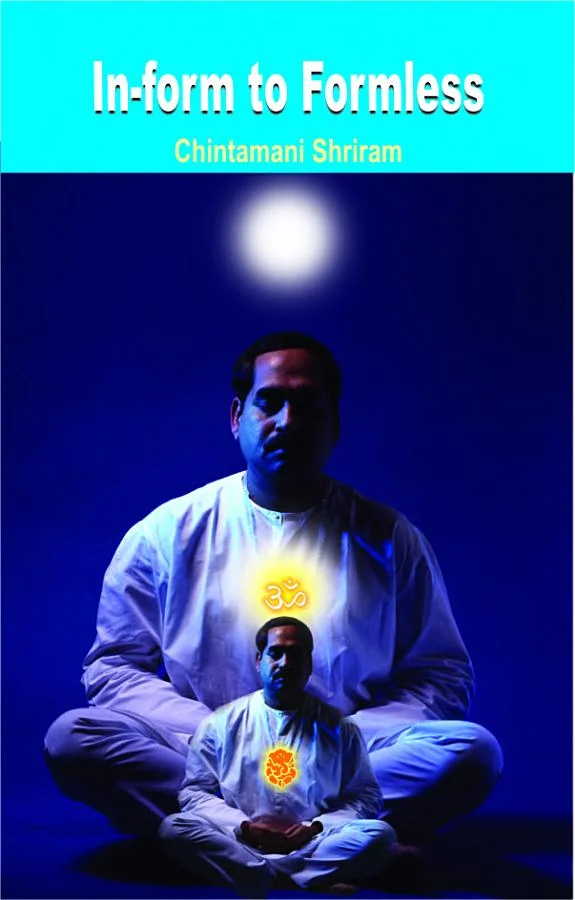
Chintamani Shriram's "In-Form To Formless" attempts to chart a course from the perceived solidity of the world to the boundless nature of pure awareness. Shriram’s prose, while earnest, occasionally struggles to elevate the familiar concepts of non-duality beyond established teachings. The strength of the book lies in its persistent, gentle urging towards introspection, particularly in its examination of how identification with the 'in-form' self creates suffering. A passage discussing the nature of memory as a construct, rather than a direct experience of the past, highlights the book's analytical approach. However, the work's limitation is its tendency towards abstraction, which may leave some readers seeking more concrete experiential pointers. Ultimately, "In-Form To Formless" offers a sincere, if not entirely novel, invitation to explore the nature of being beyond the confines of the perceived self.
📝 Description
71
Chintamani Shriram's 2010 book, In-Form To Formless, begins with the premise that our perceived reality is a construct.
Published in 2010, In-Form To Formless by Chintamani Shriram examines consciousness and existence by guiding readers beyond the limitations of physical form and fixed identity. Shriram's work moves from an understanding of the material world toward a recognition of a fundamental, unmanifest reality. The author prioritizes experiential realization over dogma, urging introspection and a reconsideration of personal boundaries. This book is for sincere seekers of deeper truths, especially those familiar with contemplative practices or philosophical inquiry. Individuals interested in non-dualistic philosophies, the nature of reality beyond the senses, and consciousness will find it particularly relevant. It suits readers prepared to question conventional notions of self and world.
In-Form To Formless was published in 2010, a time when interest in Eastern philosophies and non-dual traditions was growing in Western esoteric circles. The book contributes to a lineage of thought influenced by figures such as Ramana Maharshi and Nisargadatta Maharaj, who emphasized direct experience of the Self. It appeared as digital connectivity increased access to spiritual teachings, yet Shriram's focus remained on internal exploration, distinguishing it from more technologically centered spiritual trends.
💡 Why Read This Book?
• Understand the mechanics of self-identification as described in the book's examination of 'form' versus 'formless', offering a framework to deconstruct personal limitations. • Gain practical guidance on questioning sensory input and mental constructs, a core element of Shriram's approach in the chapter discussing perception's role. • Explore the philosophical underpinnings of non-dualism presented through Shriram's unique lens, distinguishing it from other traditions by its focus on the 2010 publication context.
⭐ Reader Reviews
Honest opinions from readers who have explored this book.
❓ Frequently Asked Questions
What is the primary goal of "In-Form To Formless"?
The book aims to guide readers from an identification with their physical and mental forms to an understanding and experience of the formless, unified consciousness that underlies all existence. It encourages a journey of self-discovery beyond perceived limitations.
Who is Chintamani Shriram and what is his background?
Information on Chintamani Shriram's specific background is not extensively detailed in the original publication, but his writings suggest a deep engagement with Advaita Vedanta and non-dual philosophies, emphasizing direct experience.
Does the book offer practical exercises?
While not a manual of step-by-step exercises, "In-Form To Formless" promotes introspection and contemplation as primary methods, encouraging readers to question their perceptions and identify with the formless.
Is "In-Form To Formless" suitable for beginners in esoteric philosophy?
Yes, the book's clear prose and conceptual progression make it accessible to beginners, provided they are open to exploring fundamental questions about consciousness and reality.
What distinguishes this book from other non-dual texts?
Shriram's work offers a particular framing of the journey from form to formlessness, emphasizing the construction of 'self' through mental identification, a perspective he elaborates on with nuanced language.
When was "In-Form To Formless" first published?
The book was first published on January 1, 2010, placing it within the contemporary wave of interest in Eastern philosophies and consciousness studies.
🔮 Key Themes & Symbolism
The Nature of Form
Shriram posits that our identification with the 'in-form' self—our body, thoughts, and experiences—is the primary source of perceived separation and suffering. The book meticulously dissects how this identification is constructed through mental conditioning and sensory input. It challenges the reader to observe the impermanence of all forms, from the physical body to fleeting thoughts, suggesting that true freedom lies in recognizing the reality that exists prior to and independent of these transient manifestations.
The Formless Absolute
Central to the book is the concept of the formless, an unmanifest, unified consciousness or being that is the ground of all existence. Shriram guides the reader to inquire into this reality, not as an abstract philosophical idea, but as a directly perceivable state. This formless realm is presented as the true nature of the self, free from the limitations and dualities imposed by the mind's tendency to categorize and define.
Consciousness and Perception
The work explores the intricate relationship between consciousness and how we perceive reality. Shriram argues that our perception is not a passive reception of external facts but an active construction shaped by our inherent biases, beliefs, and the very structure of our minds. By understanding how perception creates the 'in-form' world, one can begin to shift their identification towards the formless awareness that observes these perceptions.
Liberation Through Inquiry
Shriram emphasizes self-inquiry as the primary path to liberation from the constraints of the ego and the 'in-form' self. This is not mere intellectual questioning but a deep, contemplative investigation into the nature of 'I'. By persistently asking 'Who am I?' and examining the contents of consciousness, the reader is encouraged to transcend the limitations of conditioned identity and realize their inherent formless nature.
💬 Memorable Quotes
Direct passages from the work, attributed to the author.
“The world you perceive is but a thought projected by the mind.”
— This statement highlights Shriram's view that our experience of reality is not a direct encounter with an objective world, but rather a subjective construct generated by our mental processes and conditioning.
“To be free is to cease identifying with what is impermanent.”
— This concise observation points to the core of liberation as presented in the book: detaching from the ever-changing aspects of existence, such as the body and thoughts, to recognize the unchanging essence.
“The formless is not an absence, but the presence of all that is.”
— This interpretation counters the common misconception that the formless is empty or non-existent. Instead, Shriram suggests it is the fundamental reality, the source from which all forms arise, and therefore the most complete presence.
“The boundary of the self is the boundary of your belief.”
— This conceptual statement implies that our sense of self is a fabricated construct, defined by our limited beliefs and identifications, and that expanding or dissolving these beliefs can expand or dissolve the self.
💡 Key Ideas
Editorial paraphrase of the work's core concepts — not direct quotes.
Your true nature is the awareness that witnesses the thought, not the thought itself.
This quote directly addresses the reader's identity, distinguishing between the transient content of consciousness (thoughts, feelings) and the underlying, constant awareness that experiences them.
🌙 Esoteric Significance
Tradition
Shriram's work aligns closely with the Advaita Vedanta tradition of Hinduism, particularly its emphasis on the non-dual nature of reality (Brahman) and the self (Atman). It also echoes Gnostic ideas of a true, unmanifest Godhead beyond creation and a path to recognizing one's divine origin. The book departs from ritualistic or dogmatic esoteric practices, focusing instead on philosophical inquiry and direct experiential realization, characteristic of certain contemplative schools within both Eastern and Western esoteric thought.
Symbolism
While not heavily reliant on overt symbolism, the core motif is the duality of 'form' and 'formless.' 'Form' represents the manifest world, the physical body, thoughts, and the ego-construct of the individual self. The 'formless' symbolizes the unmanifest Absolute, pure consciousness, the ground of all being, and the true nature of the self. The journey 'in-form to formless' is a symbolic representation of the spiritual path from identification with the transient self to recognition of the eternal, unified reality.
Modern Relevance
In contemporary circles, "In-Form To Formless" finds relevance among mindfulness practitioners, non-dual awareness teachers, and individuals exploring consciousness beyond empirical science. Thinkers and groups focused on the 'spiritual but not religious' movement, as well as those within the broader Advaita Vedanta and Neo-Advaita communities, often draw upon its core concepts. Its emphasis on the constructed nature of the ego is also pertinent to modern psychological and philosophical discussions on identity and selfhood.
👥 Who Should Read This Book
• Seekers of non-dual understanding: Individuals drawn to philosophies that posit a singular, underlying reality and wish to explore the mechanics of perceived separation. • Contemplative practitioners: Those engaged in meditation or self-inquiry who seek a philosophical framework to deepen their practice and understand the nature of awareness. • Students of consciousness studies: Readers interested in exploring theories of consciousness that move beyond materialism, focusing on subjective experience and the nature of reality.
📜 Historical Context
The publication of "In-Form To Formless" in 2010 occurred within a vibrant field of spiritual and philosophical inquiry, particularly concerning non-dualism and consciousness studies. This period saw a growing interest in the teachings of Indian sages like Ramana Maharshi and Nisargadatta Maharaj, whose direct approaches to self-realization resonated widely. Shriram's work can be seen as contributing to this lineage, offering a conceptual framework that complements these traditions. It emerged at a time when many Westerners were seeking alternatives to purely materialistic or organized religious viewpoints. While figures like Ken Wilber were exploring integral theory and others were engaging with quantum physics to explain consciousness, Shriram's focus remained resolutely on introspective inquiry and the direct experience of the formless, distinguishing it from more academic or scientifically-oriented explorations of consciousness.
📔 Journal Prompts
The construction of 'form' through mental identification: How does this process manifest in your daily experiences?
Recognizing the 'formless' as presence: What sensations or states arise when you attempt to disidentify from form?
The role of perception in creating your reality: Detail a situation where your perception shifted and what that revealed.
Your deepest beliefs about self: How do these beliefs act as boundaries to realizing the formless?
The nature of awareness: Observe a fleeting thought and identify the awareness that perceives it.
🗂️ Glossary
In-Form
Refers to the state of being identified with form – the physical body, thoughts, emotions, and personal identity, creating a sense of individual separation.
Formless
The unmanifest, pure consciousness or being that underlies all existence; the ground of reality prior to any manifestation or conceptualization.
Identification
The psychological process of equating oneself with something (e.g., the body, thoughts, roles), which Shriram posits as the root of the ego and suffering.
Perception
The way in which sensory information is interpreted and organized by the mind to create an experience of reality; viewed as a construct rather than a direct reflection of objective truth.
Ego
The sense of a separate, individual self, which Shriram suggests is a mental construct arising from identification with form, rather than one's true nature.
Self-Inquiry
A contemplative practice of investigating the nature of 'I' or the self, aiming to transcend the ego and realize one's true, formless nature.
Absolute
The ultimate reality, considered to be singular, unchangeable, and the source of all phenomena; synonymous with the 'formless' in Shriram's context.
This book appears in 1 collection
🔮 Readers Also Liked
Browse all →








From the “Consciousness Expansion” Collection
View all →






More Free Occult Philosophy Books
View all →