The Illustrated Key To The Tarot
 65
65

The Illustrated Key To The Tarot



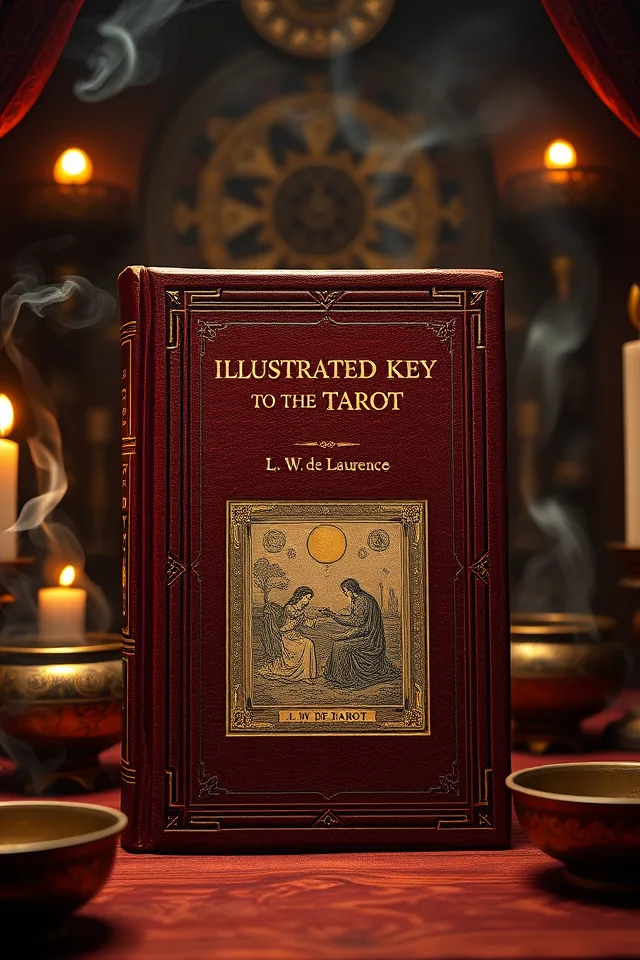
Silas Hawthorne, Hermetic Studies Editor — L. W. de Laurence's "The Illustrated Key To The Tarot" remains an indispensable cornerstone for serious students of the occult. Published in the fertile esoteric landscape of 1916, this volume transcends its era, offering a remarkably coherent and insightful interpretation of the Tarot's symbolic language. De Laurence masterfully bridges the gap between practical divination and profound metaphysical philosophy, revealing the cards not just as predictive tools, but as keys to inner transformation. The distinctive illustrations, imbued with a rich, often yellow-toned palette, enhance the text’s evocative power, making complex concepts accessible. This work is essential for anyone seeking to move beyond superficial readings and engage with the Tarot's deeper, transformative potential.
📝 Description
65
L. W. de Laurence published 'The Illustrated Key To The Tarot' in 1916.
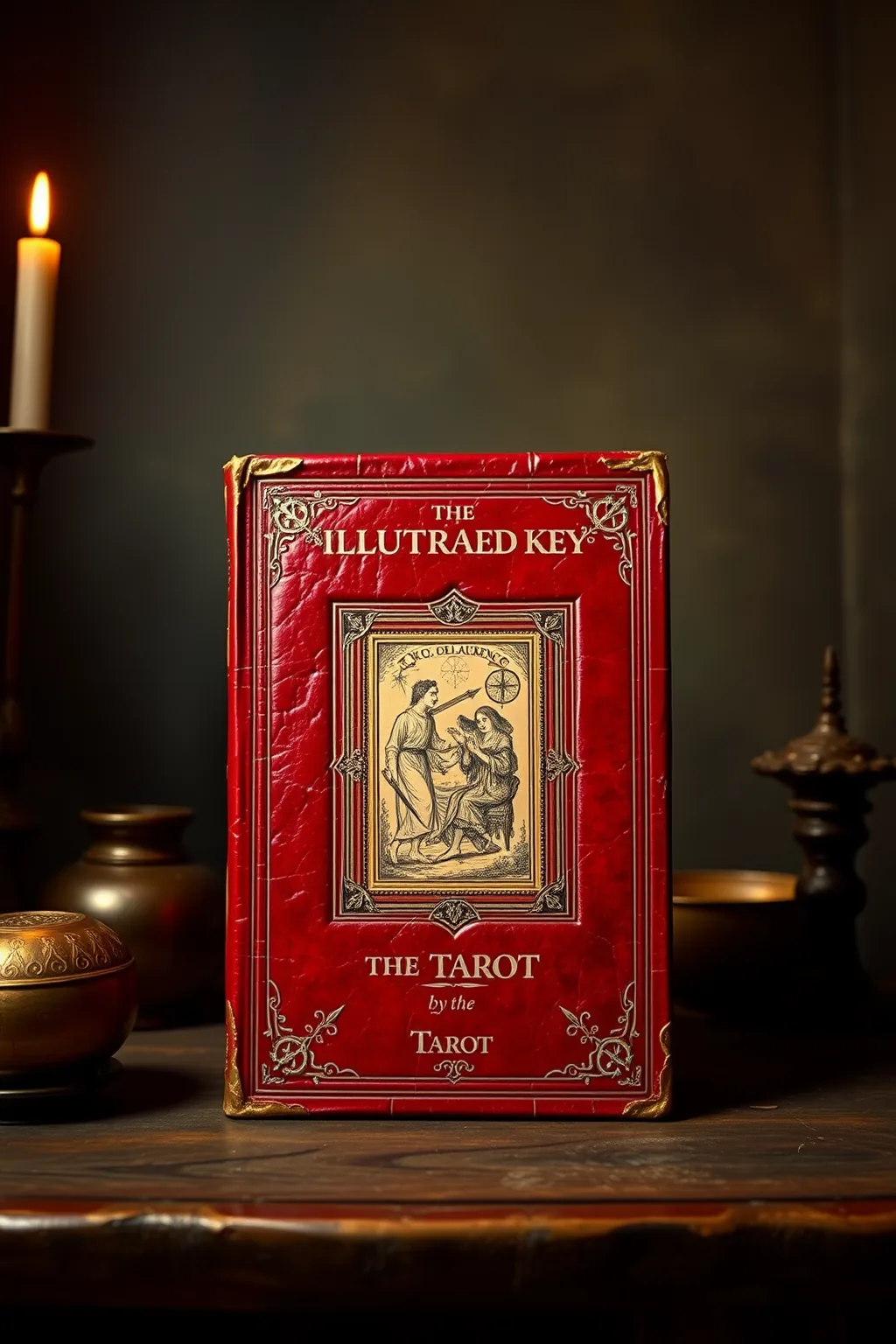
Published in 1916, L. W. de Laurence's 'The Illustrated Key To The Tarot' examines the seventy-eight cards of the deck. De Laurence interprets the traditional symbolism, presenting the Tarot not just as a tool for divination, but as a representation of the human mind and the spiritual cosmos. The book's illustrations, notable for their yellow tones, are intended to unlock deeper meanings and philosophical insights.
This text is aimed at serious students of esoteric subjects. It covers the archetypal forces that influence human experience. Readers are encouraged to consider the connection between the individual spirit and the wider universe. The ouroboros on the cover is a symbol of the cyclical nature of the knowledge presented.
This work fits within the early 20th-century surge of interest in occult and esoteric traditions, particularly those drawing from Hermeticism and Kabbalah. L. W. de Laurence was a publisher and author known for his reissues and original writings on various magical and spiritual subjects. His approach to the Tarot integrates established symbolism with his own interpretations, aiming to reveal a system of universal correspondences and inner truths, rather than focusing solely on predictive techniques.
💡 Why Read This Book?
Unearth the profound, hidden wisdom of the Tarot with a classic text. "The Illustrated Key To The Tarot" offers deep symbolic interpretations and philosophical insights, making it ideal for seekers of ancient knowledge, spiritual practitioners, and Tarot enthusiasts ready to delve beyond surface-level readings into the archetypal currents of existence. Discover your path to enlightenment.
⭐ Reader Reviews
Honest opinions from readers who have explored this book.
❓ Frequently Asked Questions
What makes this edition historically significant?
Published in 1916, this edition represents a crucial moment in the popularization of Tarot studies, offering early, influential interpretations of its symbolism during a peak period of occult interest.
Are the illustrations essential to understanding the text?
Absolutely. De Laurence's "Illustrated Key" emphasizes the visual language of the Tarot. The distinctive yellow-toned images are integral to deciphering the symbolic layers and esoteric meanings he presents.
Is this book suitable for beginners?
While comprehensive, de Laurence's approach is dense. Beginners will find it rewarding with dedication, but it excels for those with a foundational understanding or a serious commitment to deep study of Tarot symbolism and occult philosophy.
What is the philosophical significance of the Tarot according to de Laurence?
De Laurence views the Tarot not merely as a divinatory tool, but as a cosmic map representing the spiritual universe and the journey of the human soul, embodying profound metaphysical truths and archetypal forces.
How does the ouroboros symbol on the cover relate to the book's themes?
The ouroboros, the serpent eating its own tail, symbolizes eternity, cyclical renewal, and the interconnectedness of all things—themes central to the Tarot's depiction of life, death, and spiritual evolution.
🔮 Key Themes & Symbolism
The Tarot as a Cosmic Mirror
De Laurence posits the Tarot as far more than a mere deck of cards; it is a profound symbolic representation of the entire cosmos and the intricate workings of the universe. Each card, from the Major Arcana to the Minor Arcana, reflects archetypal forces and universal laws that govern existence. This perspective invites readers to see the Tarot as a sacred text, a mirror reflecting the divine order and the interconnectedness of all things, offering insights into destiny, consciousness, and the underlying spiritual realities that shape our lives. The journey through the cards becomes a journey of self-discovery and cosmic awareness.
Decoding Esoteric Symbolism
This work is a deep study in deciphering the body of esoteric symbolism embedded within the Tarot. De Laurence meticulously breaks down the visual language of each card, connecting it to ancient wisdom traditions, hermetic philosophy, and occult principles. He reveals how colors, numbers, figures, and celestial alignments all contribute to a deeper, multi-layered meaning. The book encourages a contemplative approach, urging readers to look beyond the literal and engage with the symbolic, thereby unlocking the hidden knowledge and spiritual guidance that the Tarot has preserved through millennia. It is an invitation to learn the language of the soul.
The Path of Inner Illumination
Beyond prediction, de Laurence emphasizes the Tarot's role as a catalyst for personal transformation and spiritual awakening. The cards are presented as guides on the 'Path of Illumination,' clear the challenges and triumphs inherent in the human journey toward higher consciousness. By understanding the archetypal energies at play, practitioners can navigate their inner landscape with greater wisdom and clarity, fostering self-awareness and facilitating spiritual growth. This book serves as a potent tool for those seeking to align their lives with universal truths and achieve a deeper understanding of their own divine potential, leading to a more meaningful existence.
💬 Memorable Quotes
Direct passages from the work, attributed to the author.
“The undevout astronomer is mad.”
— This aphorism emphasizes that a profound understanding of the cosmos can lead to spiritual awe. Applied to Tarot, it suggests that those who dismiss its depth miss a profound avenue for understanding universal truths and the divine.
“The pathology of the poet says that 'the genius is mad'.”
— This speaks to the potential for misunderstanding and isolation that often accompanies useful insights. In Tarot, it can relate to the challenge of articulating and sharing the deep, intuitive knowledge gained from the cards.
“Between these extremes... the sovereign reason takes the part of a moderator.”
— This underscores de Laurence's approach: integrating diverse perspectives and applying measured reason to the mystical, ensuring a balanced and profound understanding of esoteric subjects like the Tarot.
“The oracles behind the veil.”
— This evocative phrase points to the Tarot's function as a conduit to hidden knowledge and divine guidance, suggesting that its wisdom transcends the ordinary and offers glimpses into unseen realms.
💡 Key Ideas
Editorial paraphrase of the work's core concepts — not direct quotes.
The sovereign reason takes the part of a moderator.
This quote highlights the importance of balance and judgment, suggesting that true wisdom lies in moderating extremes and applying rational thought to complex matters, much like reading through the Tarot's diverse symbolism.
🌙 Esoteric Significance
Tradition
This work is deeply rooted in the Hermetic and Kabbalistic traditions, which have long viewed the Tarot as a symbolic representation of the Tree of Life and the path of spiritual evolution. De Laurence draws upon these foundational esoteric systems to imbue the cards with profound metaphysical meaning, linking them to concepts of divine creation, human consciousness, and the interconnectedness of the universe. It serves as a bridge between practical divination and the deeper philosophical underpinnings of Western esotericism.
Symbolism
The "Illustrated Key" excels at dissecting the detailed symbolism of the Tarot. De Laurence meticulously explains how each element—colors, numbers, figures, celestial bodies, and archetypal imagery—carries specific esoteric weight. The recurring ouroboros on the cover, for instance, signifies eternity and cyclical renewal, fundamental themes in Tarot philosophy. The distinctive yellow imagery is not merely aesthetic but often carries symbolic resonance within occult traditions, enhancing the book's ability to communicate hidden meanings and universal truths.
Modern Relevance
In an age often characterized by rapid change and a search for meaning, de Laurence's "Illustrated Key" offers a timeless anchor. Its exploration of archetypal energies, the human psyche, and the interconnectedness of existence provides clear insights relevant to contemporary challenges. The book's emphasis on inner illumination and symbolic understanding encourages a deeper, more contemplative approach to life, making it a valuable resource for modern spiritual seekers, psychologists, and anyone interested in understanding the enduring power of ancient wisdom in reading through the complexities of the 21st century.
👥 Who Should Read This Book
This important work is a treasure for a diverse range of readers. **Beginners** with a serious inclination towards occult studies will find a comprehensive, albeit challenging, introduction to Tarot's deeper meanings. **Occult scholars and practitioners** will appreciate de Laurence's authoritative interpretations and historical context, adding a vital piece to their libraries. **Spiritual seekers** yearning for a more profound understanding of life's mysteries and their own inner journey will discover a potent tool for self-discovery and enlightenment. **Tarot enthusiasts** looking to move beyond superficial readings and engage with the rich philosophical and symbolic dimensions of the cards will find this book indispensable.
📜 Historical Context
Published in 1916, "The Illustrated Key To The Tarot" emerged during a period of intense interest in spiritualism, occultism, and esoteric philosophies in the Western world. The aftermath of the Victorian era saw a surge in movements like Theosophy and the Hermetic Order of the Golden Dawn, which actively explored and disseminated ancient wisdom traditions, including the Tarot. L. W. de Laurence himself was a prolific publisher of occult literature, contributing significantly to making these often-guarded teachings accessible to a wider audience. His work reflects the era's fascination with symbolism, ancient mysteries, and the potential for hidden knowledge to illuminate human existence. The book's enduring appeal lies in its ability to capture the spirit of this esoteric revival, offering a comprehensive guide that resonated with seekers of spiritual truth and arcane understanding during a transformative time.
📔 Journal Prompts
Reflect on the meaning of the ouroboros symbol in your own life's journey. How do you experience cycles of ending and beginning?
Choose a Major Arcana card that speaks to you today. What 'oracle behind the veil' might it be revealing about your current path?
Consider the 'sovereign reason' mentioned in the text. How can you apply moderation and balanced judgment when interpreting your own life experiences or Tarot readings?
If the Tarot is a cosmic mirror, what aspects of the universe are currently being reflected in your personal life?
De Laurence links Tarot to profound metaphysical truths. Identify one truth the Tarot has helped you understand more deeply and describe its impact.
🗂️ Glossary
Arcana
In Tarot, the term refers to the 'secrets' or 'mysteries' contained within the deck. The Major Arcana (22 cards) represent significant life lessons and spiritual journeys, while the Minor Arcana (56 cards) detail everyday events and challenges.
Esoteric
Relating to or being knowledge or understanding intended for or likely to be understood by only a small number of people with a specialized background or interest, often involving mystical or occult subjects.
Hermeticism
A philosophical and religious tradition based on the purported teachings of Hermes Trismegistus. It emphasizes divine wisdom, cosmic unity, and the belief that 'as above, so below,' influencing Western esotericism significantly.
Kabbalah
A system of Jewish mysticism that explores the divine nature and the creation of the universe through symbolic interpretation of scripture and esoteric teachings, often represented visually by the Tree of Life.
Archetype
In psychology and mythology, a universal, inherited pattern of thought or imagery derived from the experience of the race and present in the collective unconscious. In Tarot, archetypes represent fundamental human experiences and symbolic figures.
This book appears in 3 collections
🔮 Readers Also Liked
Browse all →








More by L. W. de Laurence
All books →



From the “Tarot” Collection
View all →







More Free Divination & Tarot Books
View all →