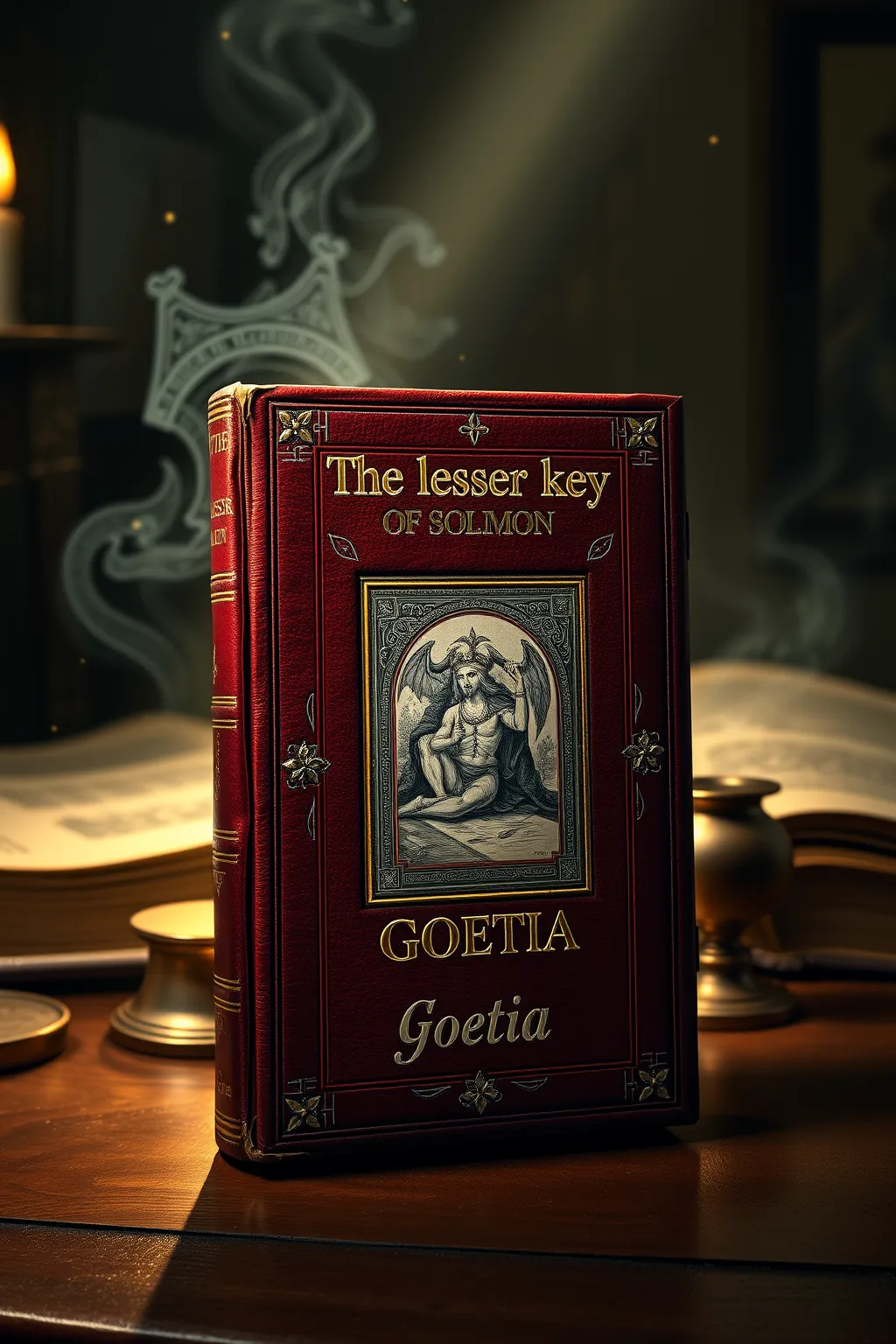
The lesser key of Solomon, Goetia
 63
63

The lesser key of Solomon, Goetia


Sophia Crane (Associate Editor) — L. W. De Laurence's "The Lesser Key of Solomon, Goetia" stands as a foundational text for serious students of ceremonial magic. De Laurence masterfully presents the notorious Goetia with clarity and scholarly respect, making its complex rituals and demonic hierarchies accessible without diluting their inherent power. This edition excels in its detailed descriptions of the spirits, their sigils, and the precise methodologies required for their invocation. It’s an indispensable resource for practitioners seeking to engage with the Qliphothic realms and understand the darker currents of the Kabbalistic tree. While demanding, the rewards for diligent study are immense, offering profound insights into the nature of adversarial forces and the magician's will.
📝 Description
63
L. W. De Laurence's 1916 translation of The Goetia presents the 72 infernal spirits for magical operation.
This edition of The Goetia details the evocation and command of seventy-two specific demons, as originally compiled in the Lesser Key of Solomon. De Laurence's work is a direct translation of the grimoire, focusing on the practical application of its rituals.
The text outlines the necessary preparations, ceremonial tools, and conjurations required for summoning these entities. It describes the attributes and domains of each spirit, providing a framework for understanding their supposed influence over worldly affairs. This grimoire served as a significant source for Western ceremonial magic practitioners in the early 20th century.
The Goetia is a foundational text within the Western esoteric tradition, specifically in the lineage of ceremonial magic that draws from Renaissance grimoires. It is part of the Lemegeton, or Lesser Key of Solomon, a collection of texts believed to have been compiled in the 17th century, though its roots extend further back. This tradition focuses on the systematic invocation and control of supernatural entities, often for purposes of knowledge, power, or personal transformation.
💡 Why Read This Book?
Embark on a profound journey into the heart of Western ceremonial magic. This book is essential for seekers of hidden knowledge, scholars of occult history, and practitioners aiming to understand and ethically engage with the powerful forces described in ancient grimoires. It offers a direct, unvarnished look into a potent system of spiritual and magical exploration.
⭐ Reader Reviews
Honest opinions from readers who have explored this book.
❓ Frequently Asked Questions
What is the Goetia?
The Goetia is the first book of the Lemegeton (The Lesser Key of Solomon), a grimoire detailing the evocation of 72 demons. It provides their names, seals, and the rituals required to summon and command them for various purposes.
Is this book safe to use?
This work contains potentially potent magical practices. It is intended for serious students with a strong ethical foundation and a deep understanding of magical theory. Proceed with extreme caution and respect.
Who was L. W. De Laurence?
L. W. De Laurence was an influential occult publisher and author in the late 19th and early 20th centuries, known for his editions of classic grimoires and his own works on magic and spiritualism.
What are the key components of a Goetic ritual?
Key components typically include the magician's preparation, protective circles, the use of specific tools (wand, sword, etc.), the conjuration of the spirit, the binding, and the dismissal.
Can this book be read by beginners?
While accessible, the Goetia is an advanced text. Beginners are strongly advised to build a solid foundation in magical theory, ethics, and protective practices before attempting any rituals described herein.
🔮 Key Themes & Symbolism
The Seventy-Two Spirits
This section explores the intricate hierarchy and individual natures of the seventy-two spirits cataloged in the Goetia. Each entity is presented with its unique rank, powers, and dominion over specific aspects of creation, from bestowing knowledge and love to causing destruction and revealing hidden things. Understanding these spirits is paramount, as it allows the magician to approach them with informed intent, recognizing their potential benefits and inherent dangers. This exploration is crucial for anyone seeking to comprehend the complex collection of forces that the Goetia purports to harness.
Ceremonial Evocation and Ritual
The core of the Goetia lies in its detailed protocols for ceremonial evocation. This theme encompasses the rigorous preparation of the magician, the construction of sacred spaces (circles, triangles), the use of specific tools, and the precise verbal conjurations. It emphasizes the importance of willpower, purity, and adherence to ancient rites to establish a connection with the spirit world. The text serves as a practical guide, outlining the steps necessary to safely and effectively manifest spiritual entities, thereby bridging the gap between the mundane and the mystical through disciplined magical practice.
The Nature of Power and Dominion
Beyond mere spellcasting, the Goetia explores profound themes of power, will, and dominion. It posits a universe where inherent forces can be understood, directed, and utilized through specific knowledge and practice. The book examines the magician's role as an intermediary, capable of influencing events and acquiring knowledge by commanding intelligences that transcend human limitations. This theme challenges readers to consider the ethical implications of wielding such power and the responsibility that comes with mastering the unseen forces that govern existence.
💬 Memorable Quotes
Direct passages from the work, attributed to the author.
“The magician must be pure in body and soul.”
— This highlights the fundamental requirement of spiritual and physical cleanliness as a prerequisite for effective and safe magical work, emphasizing intent and discipline.
“Each spirit has its own sigil and proper conjuration.”
— This underscores the importance of precise identification and correct invocation methods for each entity, stressing that accuracy is key to successful and controlled magical operations.
“The art of magic is the art of controlling the unseen.”
— This succinctly defines the essence of magic as presented in the Goetia – the disciplined application of will and knowledge to influence and direct non-physical forces.
“Knowledge is power, and power requires wisdom.”
— This aphorism emphasizes that the acquisition of arcane knowledge must be tempered with discernment and ethical understanding to wield its influence responsibly.
💡 Key Ideas
Editorial paraphrase of the work's core concepts — not direct quotes.
Fear not, for the circle is thy protection.
This quote speaks to the sacred geometry and protective symbolism of the magical circle, intended to shield the practitioner from potentially harmful spiritual energies.
🌙 Esoteric Significance
Tradition
The Goetia is deeply rooted in the Western Esoteric Tradition, drawing heavily from Kabbalistic principles, angelic hierarchies, and demonology as understood during the medieval and Renaissance periods. It represents a practical application of ceremonial magic, aiming to interact with spiritual entities for the acquisition of knowledge, power, and influence. This tradition emphasizes the magician's will as a force capable of shaping reality through disciplined ritual and symbolic interaction.
Symbolism
Key symbols within the Goetia include the pentagram (for protection and invocation), the hexagram (often associated with celestial powers), and the specific sigils of each spirit. These sigils are not mere drawings but are considered unique keys or signatures that allow for direct energetic connection and communication with the entity they represent. The circle and triangle also hold profound symbolic meaning, delineating sacred space and serving as conduits for manifestation.
Modern Relevance
Despite its ancient origins, the Goetia remains relevant for modern occult practitioners and scholars. It offers a framework for understanding archetypal forces, psychological complexes, and the nature of consciousness. Many contemporary magical systems and individual practitioners engage with its principles, adapting them for personal growth, spiritual exploration, and the development of magical will, often with a focus on ethical engagement and psychological interpretation rather than literal summoning.
👥 Who Should Read This Book
This important work is indispensable for serious practitioners of ceremonial magic and ceremonialists seeking to understand the foundational texts of Western esotericism. Scholars of occult history and comparative religion will find it an invaluable primary source. Those drawn to the darker aspects of spiritual inquiry, the study of demonology, or the exploration of ancient magical systems will also benefit greatly. It is particularly suited for individuals who approach such material with a disciplined mind, a strong ethical compass, and a desire for profound, albeit challenging, spiritual and magical knowledge.
📜 Historical Context
The Lesser Key of Solomon, particularly the Goetia, emerged from the collection of medieval and Renaissance European occultism. This era was a fertile ground for the synthesis of ancient esoteric traditions, including Hermeticism, Kabbalah, astrology, and Christian demonology. The grimoire tradition flourished, with texts like the Lemegeton consolidating and codifying practices that had been developing for centuries. The perceived threat and fascination with demonic entities during this period fueled the creation of such manuals, which offered practitioners a structured system for understanding and interacting with these forces. L. W. De Laurence's translation and publication in the early 20th century made these complex, often forbidden, texts accessible to a wider audience, contributing significantly to the revival of ceremonial magic and influencing subsequent generations of occultists.
📔 Journal Prompts
Reflect on the ethical considerations of commanding spiritual entities. What personal guidelines would you establish?
Analyze the symbolism of the protective circle and its significance in establishing a safe magical working space.
Consider the potential psychological interpretations of the Goetic spirits. How might they represent aspects of the human psyche?
If you were to attempt a ritual, what specific preparation would be most crucial for your success and safety?
How does the concept of 'will' as presented in the Goetia relate to your own understanding of personal power and agency?
🗂️ Glossary
Grimoire
A textbook of magic, typically containing instructions for invoking spirits, casting spells, and performing rituals. The Lesser Key of Solomon is a famous example of a grimoire.
Sigil
A symbol or sign that is believed to have magical power. In the Goetia, each spirit has a unique sigil used for identification and invocation.
Evocation
The act of calling forth or summoning a spirit or supernatural being, typically into a visible or perceptible form.
Conjuration
A magical ritual or ceremony used to summon or banish spirits. It often involves spoken incantations and specific gestures.
Qliphoth
In Kabbalistic traditions, the Qliphoth are considered the 'husks' or 'shells' of spiritual impurity, often associated with the darker aspects of the Tree of Life. While not explicitly detailed in the Goetia, it is relevant to the 'infernal' entities discussed.
This book appears in 3 collections
🔮 Readers Also Liked
Browse all →








More by L. W. De Laurence
All books →



From the “Ritual Magic” Collection
View all →








More Free Magic & Ritual Books
View all →