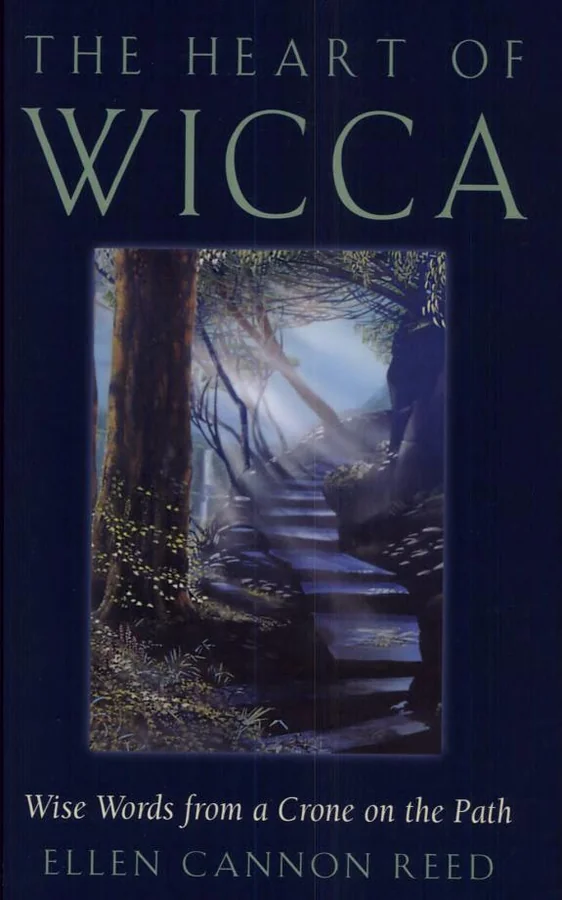
The Heart of Wicca
 71
71

The Heart of Wicca
Ellen Cannon Reed's "The Heart of Wicca" attempts to demystify a faith often shrouded in misconception. Reed provides a lucid, albeit concise, overview of Wiccan life, focusing on the practicalities of coven training, ritual, and initiation. Her strength lies in presenting these elements with a sense of grounded reality, steering clear of the more theatrical elements that sometimes dominate popular Wiccan discourse. The book's primary limitation is its brevity; while it covers many essential topics, readers seeking extensive philosophical depth or complex theological discussions may find it wanting. A passage detailing the structured progression of initiatory degrees offers a clear glimpse into the author's emphasis on disciplined spiritual development. Ultimately, "The Heart of Wicca" serves as a useful introductory primer for those approaching the tradition with serious intent.
📝 Description
71
Ellen Cannon Reed published The Heart of Wicca in November 2000 to clarify Wiccan practice.
Ellen Cannon Reed's The Heart of Wicca, published in 2000, aims to present Wiccan practice without sensationalism, focusing instead on its core principles as a spiritual path. The book guides readers through practical aspects of Wicca, including coven structure, training methods, ritual creation, and the initiation process. It is written for those new to Wicca or individuals seeking a deeper understanding beyond superficial portrayals. Reed's work addresses the religious and philosophical foundations of Wiccan traditions, appealing to those interested in spiritual growth through established practices.
Published during a time of increased public interest and frequent misunderstanding of Neopaganism, Reed's book countered sensationalized accounts prevalent in popular media. It sought to offer an educational perspective grounded in the lived experiences of practitioners and established traditions. The author emphasizes Wicca as a spiritual discipline centered on personal growth and connection with the divine, often represented by the God and Goddess. The text highlights the significance of a structured learning path, mentorship, and progression through ritual stages like initiation, viewing the coven as a sacred space for shared practice and religious ceremony.
The Heart of Wicca emerged in 2000, a period when Neopagan religions were gaining public attention but often faced misrepresentation. Ellen Cannon Reed's book responded to this by grounding Wicca in its established traditions and the actual experiences of its followers. It positions Wicca as a serious spiritual path focused on personal growth and divine connection, rather than solely on ritualistic elements or misconceptions. The work underscores the importance of structured learning and community within the tradition, offering a counterpoint to more sensationalized public perceptions.
💡 Why Read This Book?
• Gain a foundational understanding of coven structure and training protocols, as detailed in Reed's discussions on life within a coven, offering practical insights beyond general Neopagan literature. • Comprehend the religious dedication and spiritual growth inherent in Wicca, as Reed moves past surface-level perceptions to explore the mindset required for this practice. • Learn about the process of initiation and finding a teacher, crucial steps for serious students that are often glossed over in broader introductions to Wicca.
⭐ Reader Reviews
Honest opinions from readers who have explored this book.
❓ Frequently Asked Questions
What is the significance of initiation in The Heart of Wicca?
The book describes initiation as a sacred rite marking a formal commitment to Wiccan practice and spiritual growth, often signifying entry into a coven and a structured path of learning under guidance.
Does Ellen Cannon Reed's book discuss different Wiccan traditions?
While the book focuses on core principles and practices, it generally describes a traditional, coven-based approach to Wicca, offering a foundational perspective rather than an exhaustive survey of all traditions.
When was The Heart of Wicca first published?
The Heart of Wicca was first published on November 1, 2000, placing it within the early wave of accessible Wiccan literature for the new millennium.
What kind of training does The Heart of Wicca suggest for new practitioners?
Reed emphasizes the importance of training within a coven, often under the guidance of an experienced teacher, focusing on ritual, ethics, and spiritual development.
Is spell-casting a major focus in Ellen Cannon Reed's book?
Spell-casting is discussed as one aspect of Wiccan practice, but the book prioritizes understanding the deeper religious and lifestyle commitments that form the core of the tradition.
What is the intended audience for The Heart of Wicca?
The book is intended for individuals seeking a serious and comprehensive understanding of Wiccan beliefs and practices, moving beyond popular misconceptions to grasp its spiritual depth.
🔮 Key Themes & Symbolism
Coven Life and Training
Reed details the structure and dynamics of coven life, presenting it as a vital environment for learning, shared practice, and spiritual progression. The book outlines the commitment involved in training, emphasizing the importance of mentorship and the gradual acquisition of knowledge and ritual skills. This theme underscores the communal aspect of Wicca and the structured path many practitioners follow, moving beyond solitary practice to a more integrated religious experience.
Spiritual Growth and Dedication
Central to Reed's perspective is Wicca as a path of profound spiritual dedication and personal growth. The book steers readers toward understanding the mindset and religious commitment necessary to engage with Wiccan principles. It highlights the transformative potential of the practice, focusing on the inner journey and the cultivation of one's spiritual life through connection with the divine and nature.
Ritual and Initiation
The work elaborates on the significance of rituals and initiations within Wicca. Reed explains their role in marking spiritual milestones, facilitating connection with deities, and reinforcing the practitioner's commitment. The process of initiation is presented as a formal step in one's journey, often involving specific teachings and a transition into deeper engagement with the traditions of the faith.
Moving Beyond Popular Perceptions
A significant theme is Reed's effort to correct widespread misconceptions about Wicca. By focusing on the religious and devotional aspects, she contrasts the often sensationalized or superficial images of Wicca with its reality as a legitimate spiritual path. This theme aims to provide an authentic representation of Wiccan beliefs and practices for both newcomers and those already familiar with the tradition.
💬 Memorable Quotes
Direct passages from the work, attributed to the author.
“Takes us beyond many of the currently popularized ideas and images related to the nature of Wiccan beliefs and practices.”
— This statement frames the book's purpose as a corrective to superficial or inaccurate public portrayals of Wicca, aiming to offer a more authentic representation.
“Guides us past the surface into a deeper understanding of the lifestyle, mind set, and religious dedication.”
— This highlights the book's focus on the internal and existential dimensions of Wicca, emphasizing it as a way of life and a commitment to spiritual development.
“It is a life-transforming practice.”
— This assertion emphasizes the profound personal impact and potential for change that engaging with Wicca can offer its adherents.
“Introduction. Reading list. Index.”
— These elements indicate the book's structure as an educational resource, designed to facilitate learning and further study for the reader.
💡 Key Ideas
Editorial paraphrase of the work's core concepts — not direct quotes.
Reed tells us about life in a coven, training, rituals, initiations, finding a teacher, and spell-casting.
This summarizes the practical, foundational elements covered, indicating the book's comprehensive approach to the tangible aspects of practicing Wicca.
🌙 Esoteric Significance
Tradition
The Heart of Wicca is firmly situated within the Gardnerian and Alexandrian streams of modern Wicca, which emerged in the mid-20th century. It adheres to the lineage-based, coven-centric model of initiation and training that characterizes these traditions. Reed's work emphasizes the religious and devotional aspects, aligning with the Neopagan revival's goal of establishing Wicca as a distinct spiritual path, rather than merely a collection of magical techniques.
Symbolism
While the book doesn't excessively detail symbolism, it implicitly engages with core Wiccan motifs. The pentacle, a recurring symbol of the elements and spirit, is fundamental to Wiccan practice and represents the practitioner's connection to the Earth and the divine. The concept of the God and Goddess represents the dualistic, complementary nature of divinity central to many Wiccan cosmologies, signifying balance and the cycles of nature.
Modern Relevance
Reed's work continues to be relevant for contemporary Wiccans and those interested in the tradition, particularly for its clear exposition of foundational principles. It serves as a reference point for understanding traditional coven structure and training. Modern practitioners, especially those seeking to connect with the roots of organized Wicca or establish structured learning paths, can draw upon its guidance.
👥 Who Should Read This Book
• Newcomers to Wicca seeking a clear, factual introduction to its core beliefs, practices, and lifestyle, moving beyond common misconceptions. • Aspiring Wiccans interested in understanding the structure of coven life, the importance of training, and the process of initiation as described by Ellen Cannon Reed. • Students of comparative religion or Western esotericism looking for a grounded perspective on a significant modern spiritual movement, focusing on its religious and devotional dimensions.
📜 Historical Context
Published in November 2000, "The Heart of Wicca" emerged at a time when Neopaganism, particularly Wicca, was experiencing increased public visibility but also significant misunderstanding. The late 20th century saw a surge in Wiccan practice and literature, often competing with earlier, more academic works and sensationalized popular accounts. Ellen Cannon Reed's book aimed to provide a grounded, accessible introduction to the core tenets and practices of Wicca, focusing on its aspects as a religion and spiritual path. This contrasted with the more esoteric or sometimes sensationalized portrayals found in some contemporary media and literature. The book's emphasis on structured training and coven life reflected a desire to present Wicca as a serious, disciplined tradition, aligning with a broader movement within Neopaganism to establish its legitimacy and depth.
📔 Journal Prompts
The role of training within a coven: how might this structure foster spiritual growth?
Wiccan dedication: what does it mean to commit to a spiritual lifestyle beyond ritual?
The concept of finding a teacher: what qualities are essential for effective mentorship in esoteric paths?
Ritual construction: how can intention and symbolism shape the efficacy of a ceremony?
The transformative potential of practice: how might engaging with Wicca alter one's perspective on life?
🗂️ Glossary
Coven
A group of Wiccans who meet for ritual, training, and fellowship. Traditionally, covens are led by a High Priestess and/or High Priest and often involve initiatory degrees.
Initiation
A formal ritual marking a person's entry into a specific degree or level within a Wiccan tradition, signifying commitment and often involving sacred oaths and teachings.
Ritual
A structured ceremony performed by Wiccans to honor deities, celebrate Sabbats and Esbats, or perform magical workings. Rituals often involve invoking elements, casting circles, and using symbolic tools.
Spell-casting
The practice of directing energy and intention through ritual or other means to achieve a specific outcome. In Wicca, it is often viewed as an extension of spiritual practice and alignment with natural forces.
Teacher (in Wicca)
An experienced practitioner who guides a student (initiate) through the teachings, rituals, and ethics of Wicca, typically within a coven structure.
Sabbats
The eight major seasonal festivals celebrated in many Wiccan traditions, marking key points in the agricultural and solar year, such as Samhain, Yule, and Beltane.
Esbats
The monthly full moon rituals celebrated by Wiccans, often used for magical workings, divination, or honoring the Goddess.
This book appears in 1 collection
🔮 Readers Also Liked
Browse all →



![D. [i. e., Doktor] Balthasar Bekkers reformierten Predigers in Amsterdam bezauberte Welt. ... 1781: Vol 3 Iss 81](/img/thumb/d-i-e-doktor-balthasar-bekkers-reformierten-predigers-in-amsterdam-bezauberte-welt-1781-vol-3-iss-81-bekker-balthasar-1634-1698.webp)



From the “Neopaganism” Collection
View all →



More Free Witchcraft & Paganism Books
View all →