Solitary Wicca For Life
 74
74

Solitary Wicca For Life
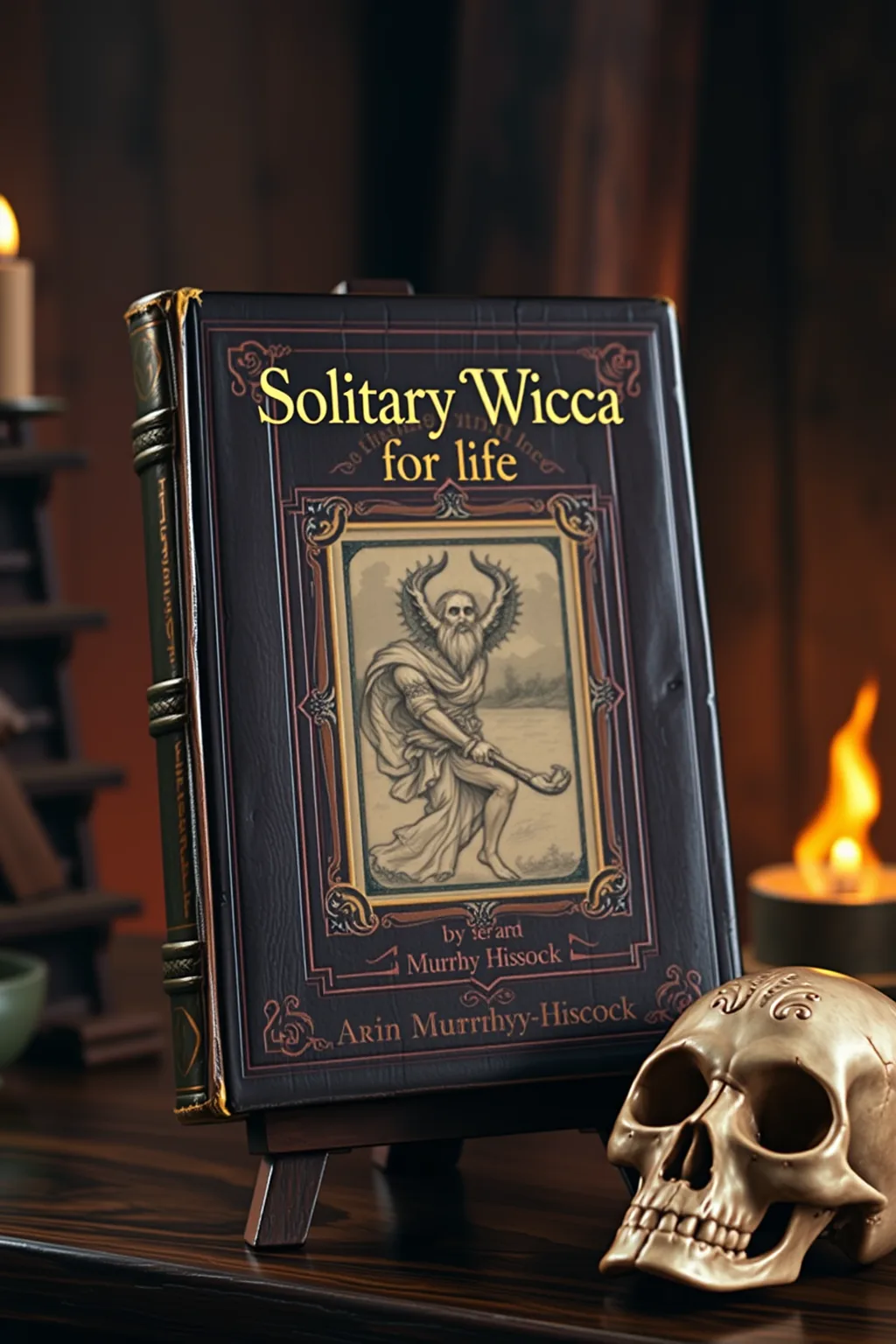
Arin Murphy-Hiscock’s Solitary Wicca for Life, published in 2005, addresses a significant need for resources catering to the independent practitioner. Its strength lies in its direct, no-nonsense approach, providing actionable steps for building a personal magical practice. The book effectively demystifies concepts like altar creation and ritual structure for the solo devotee. However, while it offers a solid foundation, some readers might find its exploration of deeper theoretical underpinnings somewhat brief. A particularly useful section details the creation of a personal Book of Shadows, emphasizing its role as a dynamic, evolving repository of individual magical knowledge, rather than a static text. For its intended audience, the book serves as a practical, if occasionally generalized, manual.
📝 Description
74
Arin Murphy-Hiscock's Solitary Wicca for Life (2005) guides independent witchcraft.
Published in 2005, Solitary Wicca for Life is a guide for individuals pursuing witchcraft alone. It gives beginners the basic knowledge and practical skills needed when they do not belong to a coven or do not want to form one. The book focuses on developing one's own spirituality and creating a personal way of practicing Wicca. It is for those who prefer to work alone in their spiritual path. The text helps people understand Wiccan ideas better and improve their magical skills without the need for group rituals. It is useful for people new to practicing alone and for experienced witches who want to improve their personal craft.
Murphy-Hiscock's work addresses the growing number of practitioners seeking individual paths within Neo-Paganism. It appeared as interest in witchcraft expanded in the mid-2000s, a time when many sought alternatives to traditional coven structures. Unlike established traditions like Gardnerian or Alexandrian Wicca, this book supports those working outside these models, offering clear direction for solitary adherents.
Solitary Wicca for Life emerged during a period of increased interest in Neo-Paganism and witchcraft in the mid-2000s. This era saw a notable rise in practitioners seeking individual spiritual paths outside of established coven structures. While traditions like Gardnerian and Alexandrian Wicca offered group models, Murphy-Hiscock's book provided accessible instruction for those who preferred or required a solitary approach, supporting the trend of independent witchcraft practice.
💡 Why Read This Book?
• Gain practical methods for establishing and maintaining a personal sacred space, a core element for solitary ritual, as detailed in the sections on altar construction and consecration. • Learn to adapt traditional Wiccan festivals, like the eight Sabbats, to a solitary practice, ensuring personal relevance and spiritual connection without group participation. • Develop a foundational understanding of creating a personal Book of Shadows, a vital tool for recording spells, rituals, and personal insights unique to your solitary path.
⭐ Reader Reviews
Honest opinions from readers who have explored this book.
❓ Frequently Asked Questions
When was Solitary Wicca for Life first published?
Solitary Wicca for Life was first published on August 1, 2005, by Arin Murphy-Hiscock.
Is this book suitable for complete beginners to Wicca?
Yes, the book is designed to guide individuals new to Wicca who prefer a solitary path, providing foundational knowledge and practical steps.
Does the book require group participation?
No, the entire premise of the book is to support and instruct those who practice Wicca alone, without a coven.
What kind of rituals does Solitary Wicca for Life cover?
It covers personal rituals, including those for Sabbats, Esbats, spellwork, and the creation of sacred space, all adapted for solo practice.
What is a 'Book of Shadows' in the context of this book?
In Solitary Wicca for Life, the Book of Shadows is presented as a personal grimoire where the practitioner records their unique spells, rituals, and spiritual insights.
Does the author discuss specific deities or pantheons?
The book encourages personal connection and may reference common Wiccan deities, but primarily focuses on the individual's relationship with the divine and nature.
🔮 Key Themes & Symbolism
Personal Sacred Space
The text emphasizes the creation and maintenance of a personal sacred space as fundamental to solitary Wiccan practice. This involves establishing a dedicated area, whether a full altar or a simple corner, that serves as a focal point for ritual and meditation. It details how to consecrate this space, infusing it with personal energy and intent. This theme underscores the book's focus on self-reliance, transforming ordinary environments into places of power through focused will and symbolic arrangement.
Self-Initiation and Growth
A central concept is the idea of self-initiation, where the practitioner takes full responsibility for their spiritual journey without external validation from a coven or established order. Solitary Wicca for Life guides the reader through understanding Wiccan principles and developing their abilities independently. This fosters a deep personal connection to the craft, encouraging continuous learning and evolution of one's practice based on personal experience and intuition, rather than adherence to group dogma.
Adapting Rituals
The book provides frameworks for adapting traditional Wiccan rituals, such as the Sabbats (seasonal festivals) and Esbats (moon phases), for solo practice. It explores how to set intentions, cast circles, invoke elements, and perform workings alone. This theme highlights the flexibility of Wicca and empowers the individual to create meaningful ceremonies that resonate with their personal spiritual needs and circumstances, moving beyond the need for a group dynamic.
The Personal Book of Shadows
Murphy-Hiscock presents the Book of Shadows not as a rigid rulebook, but as a dynamic, evolving journal of the practitioner's magical life. It serves as a repository for spells, rituals, correspondences, and personal reflections. This theme reinforces the solitary path's emphasis on individuality, encouraging the creation of a unique magical record that grows and changes alongside the practitioner, reflecting their personal discoveries and magical development.
💬 Memorable Quotes
Direct passages from the work, attributed to the author.
“You do not need a coven to practice Wicca.”
— This concise statement captures the book's core message, directly addressing the common perception that Wicca necessitates group participation and validating the path of the solitary practitioner.
“Create a space that feels sacred to you.”
— This emphasizes the personal and subjective nature of spiritual practice, encouraging the reader to imbue their environment with their own energy and intention rather than relying on predefined aesthetics.
“Your Book of Shadows is your personal magical journal.”
— This redefines the traditional concept of a Book of Shadows, shifting focus from a potentially intimidating repository of ancient lore to a dynamic tool for personal growth and magical record-keeping.
“The power comes from within.”
— This highlights the internal source of magical ability and spiritual connection in solitary practice, stressing self-reliance and personal empowerment over external sources of authority or energy.
“Celebrate the turning of the wheel of the year on your own terms.”
— This encourages individual interpretation and personal observance of Wiccan festivals like the Sabbats, allowing practitioners to connect with the cycles of nature in a way that is meaningful to them.
🌙 Esoteric Significance
Tradition
Solitary Wicca for Life operates within the broad Neo-Pagan and Wiccan traditions, specifically focusing on the contemporary evolution of witchcraft as a personal spiritual path. It departs from coven-centric models, emphasizing self-dedication and individual interpretation of deities and cosmology. While acknowledging common Wiccan principles, it prioritizes the practitioner's inner authority and direct experience over hierarchical structures or prescribed dogma, aligning with a more modern, decentralized approach to esoteric practice.
Symbolism
Key symbols include the altar, representing the sacred focus point of personal devotion and magical work; the athame, symbolizing the practitioner's will and ability to direct energy; and the Book of Shadows, embodying personal knowledge, growth, and the unique journey of the solitary Witch. These symbols are presented not as rigid requirements but as adaptable tools for personal connection to the divine and the natural world, encouraging creative interpretation within the individual's practice.
Modern Relevance
This work remains relevant for a growing number of individuals seeking spiritual autonomy in the 21st century. Contemporary thinkers and online communities focused on personalized spirituality and DIY occultism often draw upon its principles. Its emphasis on self-reliance and adaptable ritual speaks to modern trends toward individual empowerment and the deconstruction of traditional religious hierarchies, making it a foundational text for those exploring witchcraft outside conventional group frameworks.
👥 Who Should Read This Book
• Individuals new to Wicca who feel drawn to a solitary path and require foundational knowledge and practical guidance for establishing their practice. • Experienced solitary practitioners seeking to deepen their understanding, refine their rituals, and find new inspiration for personal spiritual growth and magical development. • Comparative religion scholars or anthropologists interested in the evolution of Neo-Paganism and the documented rise of individualized spiritual practices in the late 20th and early 21st centuries.
📜 Historical Context
Published in 2005, Arin Murphy-Hiscock's Solitary Wicca for Life emerged during a significant expansion of Neo-Paganism, particularly within American witchcraft circles. This period saw a notable increase in individuals identifying as solitary practitioners, seeking spiritual paths outside the established coven structures prevalent in earlier Wiccan traditions like Gardnerianism. While authors like Scott Cunningham had previously explored solitary paths, Murphy-Hiscock's work offered a more detailed, step-by-step approach for those newly embracing or seeking to formalize their independent practice. The book arrived at a time when online communities were beginning to connect solitary Witches, yet physical resources specifically tailored to their needs were still developing. Its publication contributed to the growing discourse on diverse forms of Wiccan expression, validating personal paths against the backdrop of more traditional, group-oriented witchcraft.
📔 Journal Prompts
The construction of your personal altar: what elements and symbolism are essential for your sacred space?
Reflecting on the Sabbat cycle: how will you personalize your observance of the upcoming festival?
Your Book of Shadows: what personal insights or spells will you record this week?
Developing intuition: what practices can you implement daily to strengthen your inner voice?
Defining your personal sacred space: what makes this area feel imbued with power for you?
🗂️ Glossary
Sabbat
One of the eight major Wiccan festivals celebrating the cycles of the year and the changing seasons, observed by solitary practitioners as personal spiritual events.
Esbat
A Wiccan ritual or celebration honoring the phases of the moon, typically observed monthly by solitary practitioners to connect with lunar energies.
Coven
A traditional group or congregation of Witches, usually numbering around thirteen, who practice together. This book focuses on alternatives to coven practice.
Book of Shadows
A personal grimoire or journal kept by a Witch, containing spells, rituals, correspondences, and personal magical notes, unique to the individual practitioner.
Sacred Space
A designated area, often an altar or a specific room, consecrated and prepared for the performance of magical rituals and spiritual practices.
Self-Initiation
The process by which an individual dedicates themselves to a spiritual path, such as Wicca, without formal rites performed by an established group or priest/priestess.
Athame
A ritual dagger, typically with a black handle, used by Witches primarily as a tool to direct energy and cast circles, not for physical cutting.





![ERIC ED085284: World History. Volumes I and II. [Sahuarita High School Career Curriculum Project].](/img/thumb/eric-ed085284-world-history-volumes-i-and-ii-sahuarita-high-school-career-curriculum-project-eric.webp)