The Gospel of Ramakrishna
 78
78

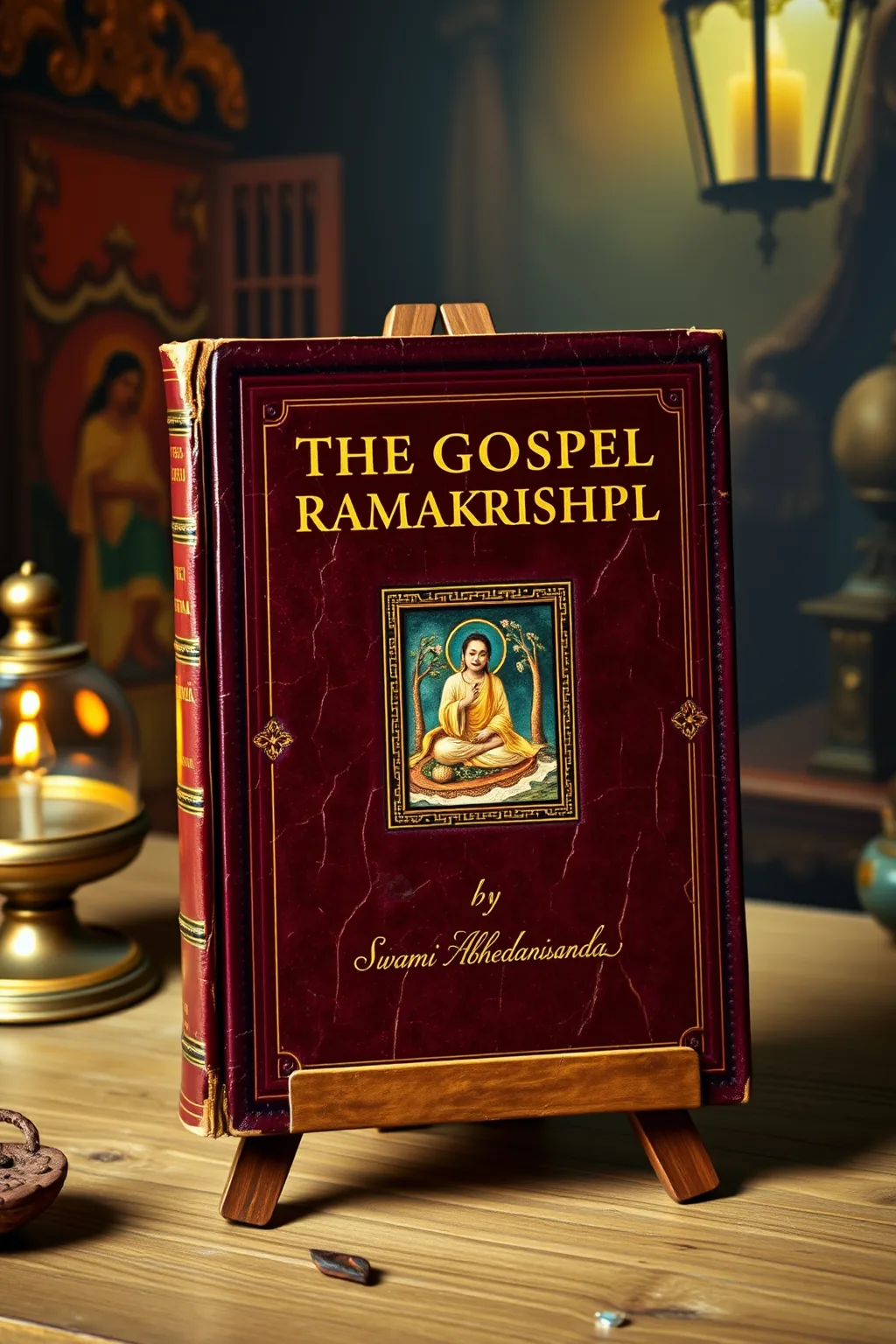
The Gospel of Ramakrishna



Swami Abhedananda's 'The Gospel of Ramakrishna' is an essential grimoire for the modern spiritual aspirant. Abhedananda, a direct inheritor of Ramakrishna's potent lineage, articulates the saint's profound insights with scholarly precision and devotional fervor. This work delves into the esoteric underpinnings of Ramakrishna's ecstatic states and his unique synthesis of diverse spiritual paths. It reveals the hidden language of the divine within everyday experiences, offering a blueprint for direct communion with the Absolute. Essential for practitioners of Raja Yoga, Advaita Vedanta, and all who seek the ultimate truths of existence. A truly illuminating text.
📝 Description
78
Swami Abhedananda's 1907 book presents the teachings of his master, Sri Ramakrishna.
This book details the spiritual insights of Sri Ramakrishna, as recorded by his disciple Swami Abhedananda. Published in 1907, it moves beyond simple biography to convey the core principles of Advaita Vedanta. The text uses Ramakrishna's parables and sayings to explain spiritual concepts. It covers the idea that all religions share a fundamental unity, the methods for achieving inner awakening, and how to apply spiritual principles in daily life.
Abhedananda writes with devotion and care, clarifying the symbolic meanings and subtle energies present in Ramakrishna's words and actions. The book aims to guide readers toward experiencing the divine. It connects the reader to one of modern history's significant spiritual figures, intended as a source of hope and understanding for those on a spiritual path.
The Gospel of Ramakrishna places itself within the Neo-Vedanta movement, which sought to interpret classical Indian philosophy for a Western audience in the late 19th and early 20th centuries. Swami Abhedananda, a direct student of Ramakrishna, was instrumental in this effort. The book focuses on Ramakrishna's direct spiritual experiences and his synthesis of various yogic and devotional traditions, presenting them through the lens of Advaita Vedanta's nondual philosophy. It is concerned with the practical realization of the divine within ordinary life, a hallmark of devotional (Bhakti) and knowledge (Jnana) paths as exemplified by Ramakrishna.
✍️ Author
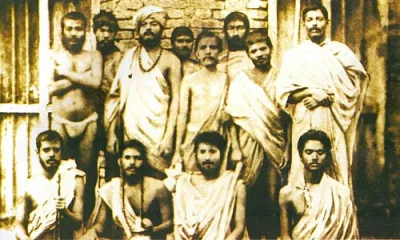
Swami Abhedananda
Swami Abhedananda was a disciple of Ramakrishna Paramahansa and founder of Ramakrishna Vedanta Math.
Mystic
💡 Why Read This Book?
Uncover the direct teachings of a divine incarnation, presented with scholarly depth and devotional warmth. This book offers practical wisdom for spiritual transformation, revealing the unity of all faiths and the esoteric pathways to self-realization. Ideal for seekers, practitioners of Yoga, and scholars of comparative religion yearning for authentic spiritual guidance.
⭐ Reader Reviews
Honest opinions from readers who have explored this book.
❓ Frequently Asked Questions
Who was Sri Ramakrishna?
Sri Ramakrishna Paramahamsa was a 19th-century Indian mystic and saint renowned for his profound spiritual experiences and his ability to embody diverse religious ideals, advocating for the essential unity of all faiths.
What is the primary focus of this book?
The book meticulously chronicles the life, teachings, everyday sayings, and spiritual encounters of Sri Ramakrishna, as observed and recorded by his direct disciple, Swami Abhedananda.
What is the esoteric significance of Ramakrishna's teachings?
Ramakrishna's teachings emphasize direct, experiential knowledge of the Divine, transcending dogma. They offer esoteric insights into the nature of reality, the unity of existence, and the practical application of spiritual disciplines for inner transformation.
Is this book suitable for beginners in spirituality?
Yes, while rich in philosophical depth, the book's narrative style and illustrative anecdotes make Ramakrishna's profound wisdom accessible to beginners seeking an authentic spiritual path.
What is Swami Abhedananda's role in relation to Ramakrishna?
Swami Abhedananda was a direct monastic disciple of Sri Ramakrishna and a prominent figure in the Ramakrishna Mission, dedicated to spreading his master's teachings globally. He offers an intimate and authoritative perspective.
🔮 Key Themes & Symbolism
The Unity of Religions
Dive into the profound understanding that all spiritual paths, though seemingly diverse, converge at the singular peak of divine truth. Ramakrishna, through his own experiences and teachings, demonstrated the inherent oneness of God, revealing how different traditions are but varied expressions of the same ultimate reality. This theme encourages an open-minded approach to spirituality, fostering interfaith dialogue and understanding, and dissolving sectarian divisions. It highlights the universal message of love, compassion, and self-realization that underpins all authentic spiritual endeavors, making divine grace accessible to all who earnestly seek it.
Experiential Spirituality
This book champions a spirituality that is lived and felt, rather than merely intellectually grasped. Ramakrishna's life was a proof of direct, unmediated communion with the Divine. The teachings presented herein emphasize the paramount importance of personal experience and inner transformation over blind faith or ritualistic adherence. It guides the reader toward cultivating an inner awareness, encouraging practices that awaken the dormant spiritual faculties and lead to a profound, tangible connection with the Absolute. This theme resonates deeply with those seeking authentic spiritual growth and a direct apprehension of ultimate truths.
The Divine in the Mundane
Discover the extraordinary within the ordinary as Ramakrishna's life and sayings reveal the sacredness inherent in everyday existence. This theme explores how divine consciousness can be cultivated amidst the challenges and joys of worldly life. Through parables and profound analogies, the book illustrates that the path to God is not confined to ashrams or meditation halls, but is accessible through sincere devotion, selfless action, and mindful living. It teaches the art of seeing the Divine in all beings and circumstances, transforming the mundane into a sacred space for spiritual unfoldment and divine revelation.
💬 Memorable Quotes
Direct passages from the work, attributed to the author.
“As many faiths, so many paths.”
— This iconic statement expresses Ramakrishna's core message of religious pluralism and the universal nature of the Divine, suggesting that diverse spiritual traditions are merely different routes to the same ultimate destination.
“The wave is the water, and the water is the wave.”
— A simple yet profound analogy illustrating the Advaitic concept of non-duality, where the individual soul (wave) is ultimately inseparable from the Universal Consciousness (water).
“When you are hungry, eat; when you are thirsty, drink.”
— This seemingly simple saying conveys a profound spiritual practice: living fully in the present moment and fulfilling needs with awareness, thereby transcending attachment and ego.
💡 Key Ideas
Editorial paraphrase of the work's core concepts — not direct quotes.
God can be realized through all paths.
This quote underscores the book's central theme of religious harmony, asserting that sincere devotion and spiritual seeking, regardless of the chosen tradition, can lead to direct experience of the Divine.
The mind is the cause of bondage and liberation.
Highlighting the psychological and spiritual power of the mind, this quote points to introspection and mental discipline as the keys to overcoming worldly limitations and achieving spiritual freedom.
🌙 Esoteric Significance
Tradition
This work is deeply rooted in the Advaita Vedanta tradition, particularly as embodied by Sri Ramakrishna's direct, experiential understanding. It also draws upon Tantric principles, yogic practices, and Sufi mysticism, reflecting Ramakrishna's unique synthesis of diverse spiritual paths. The esoteric dimension lies in its presentation of these traditions not merely as philosophical systems, but as practical, transformative disciplines for realizing the Divine within oneself and the universe.
Symbolism
The teachings are rich with symbolic language and parables that serve as keys to unlocking deeper spiritual truths. Ramakrishna's ecstatic states, his visions, and his interactions with disciples are imbued with symbolic meaning, representing stages of spiritual ascent and the nature of divine grace. The book implicitly explores symbols of divine manifestation, the chakras, the Kundalini energy, and the journey of the soul towards its ultimate source, guiding the reader to interpret these symbols not as mere figures of speech, but as pointers to profound, lived realities.
Modern Relevance
In an age often characterized by materialism, fragmentation, and spiritual seeking, Ramakrishna's message of unity, inner peace, and direct experience of the Divine remains profoundly relevant. His teachings offer antidotes to existential anxiety, providing a framework for finding meaning and purpose. The emphasis on the universality of spiritual truths transcends cultural and religious boundaries, making it a vital resource for interfaith understanding and personal spiritual growth in our interconnected world. The practical guidance for cultivating mindfulness and divine awareness is directly applicable to modern challenges.
👥 Who Should Read This Book
This volume is an indispensable treasure for the devoted seeker yearning for authentic spiritual guidance and a deeper understanding of the Divine. Scholars of comparative religion and Eastern philosophies will find it an authoritative primary source, useful the practical application of Vedanta. Practitioners of yoga and meditation will discover invaluable insights into the inner journey and the nature of consciousness. Even those new to spiritual exploration will be drawn in by the profound yet accessible narrative of a saint whose life was a living proof of the highest spiritual ideals, offering a clear path to inner transformation and lasting peace.
📜 Historical Context
Published in 1907, 'The Gospel of Ramakrishna' emerged during a period of significant spiritual and intellectual ferment in India. The late 19th and early 20th centuries witnessed a resurgence of indigenous spiritual traditions, partly as a response to colonial rule and the perceived spiritual void in Western materialism. Figures like Ramakrishna and his disciples, including Swami Abhedananda, played an important role in reintroducing and reinterpreting Vedanta and other Indian philosophies to a global audience. Abhedananda himself was instrumental in establishing the Ramakrishna Mission's presence in the West, lecturing extensively and translating complex philosophical ideas into accessible language. The book reflects this era's intellectual curiosity, its search for universal truths, and the growing interest in Eastern mysticism and its potential to offer solace and wisdom to a rapidly changing world.
📔 Journal Prompts
Reflect on a time you experienced the 'unity of faiths' in your own life or observations.
How can you integrate Ramakrishna's teaching of 'the divine in the mundane' into your daily routine?
What does 'experiential spirituality' mean to you, and what steps can you take to cultivate it?
Identify a symbol or parable from the book that deeply resonated with you and explore its personal meaning.
Consider a personal challenge or belief that 'the mind is the cause of bondage and liberation' could help you overcome.
🗂️ Glossary
Advaita Vedanta
A prominent school of Hindu philosophy emphasizing the non-dual nature of reality, asserting that the individual soul (Atman) is identical with the Universal Consciousness (Brahman).
Brahman
The ultimate reality, the supreme cosmic spirit, the source and sustainer of all existence in Hindu philosophy, often described as formless, infinite, and eternal.
Maya
The cosmic illusion or phenomenal world that obscures the true nature of reality (Brahman), often perceived as the veil of duality and multiplicity that separates the individual from the Divine.
Sadhana
Spiritual practice or discipline undertaken to achieve spiritual realization or enlightenment. It encompasses various methods, including meditation, prayer, chanting, and selfless service.
Jnana
Knowledge, particularly spiritual knowledge or wisdom. In Advaita Vedanta, Jnana Yoga is the path of knowledge, aiming at the direct realization of one's true identity with Brahman.
This book appears in 2 collections
🔮 Readers Also Liked
Browse all →









More by Swami Abhedananda
All books →




![Vedanta Philosophy Self-knowledge [atma-jnana]](/img/thumb/vedanta-philosophy-self-knowledge-atma-jnana-swami-abhedananda-114980.webp)
From the “Transcendental Meditation” Collection
View all →









More Free Spiritual Development Books
View all →