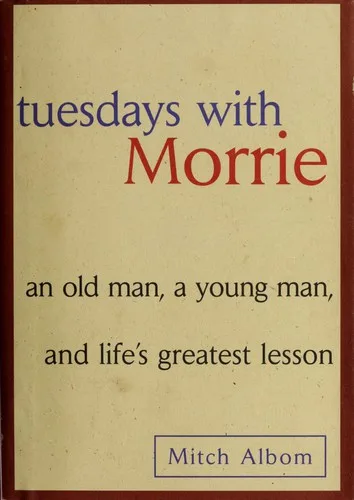
Tuesdays with Morrie
 79
79

Tuesdays with Morrie
Mitch Albom’s Tuesdays with Morrie offers a poignant, if somewhat simplified, exploration of life's ultimate questions. The strength lies in the raw, accessible dialogue between Albom and his ailing professor, Morrie Schwartz. Schwartz’s candid discussions about his approaching death, particularly his reflections on the societal obsession with youth and materialism, are striking. He articulates a profound dissatisfaction with superficial values, urging a focus on love and connection. However, the book occasionally veers into sentimentality, with Albom’s own narrative sometimes overshadowing Schwartz’s wisdom. While not a dense philosophical text, the core message regarding the value of human relationships and conscious living is powerfully conveyed through Schwartz’s personal battle with ALS. The work ultimately succeeds as a moving testament to the enduring power of mentorship and the lessons learned from confronting mortality.
📝 Description
79
Mitch Albom recounts weekly lessons from his dying professor, Morrie Schwartz, in 1997.
Tuesdays with Morrie details the final months of Morrie Schwartz's life, as observed by his former student, Mitch Albom. Their weekly meetings, held on Tuesdays, became a platform for Schwartz to share his philosophies on living, dying, love, and the human condition. Despite his debilitating illness, Amyotrophic Lateral Sclerosis (ALS), Schwartz offered candid wisdom. The book unfolds through their conversations, blending Schwartz's insights with Albom's personal reflections and experiences. It presents a narrative accessible to those confronting life's deeper questions. The memoir follows the progression of their meetings, illustrating Schwartz's teachings as he faces his mortality. It speaks to the importance of human connection and finding meaning amidst life's inevitable changes. The narrative offers a direct engagement with mortality and the pursuit of a well lived life, regardless of external factors.
While not explicitly labeled as esoteric, Tuesdays with Morrie touches on themes often explored in spiritual and philosophical traditions outside mainstream religion. Morrie Schwartz's teachings on detachment from material possessions, acceptance of mortality, and the cultivation of love and forgiveness resonate with concepts found in various wisdom literatures. The book's focus on introspection and finding meaning through personal connection and philosophical dialogue, rather than dogma, aligns with a broader interest in non-traditional spiritual exploration that gained traction in the late 20th century. It presents a secular approach to profound existential questions.
💡 Why Read This Book?
• Learn about the concept of the 'tension of life' as articulated by Morrie Schwartz, understanding how to reconcile our desires with our circumstances. • Grasp Morrie's perspective on societal values, particularly his critique of materialism and the relentless pursuit of youth, as discussed during their Tuesday meetings. • Feel the impact of genuine mentorship through the detailed accounts of Mitch Albom's relationship with Morrie, highlighting the profound influence of shared wisdom.
⭐ Reader Reviews
Honest opinions from readers who have explored this book.
❓ Frequently Asked Questions
When was Tuesdays with Morrie first published?
Tuesdays with Morrie was first published in 1997 by Doubleday. It chronicles the final months of Professor Morrie Schwartz's life.
What illness did Morrie Schwartz have?
Morrie Schwartz was diagnosed with Amyotrophic Lateral Sclerosis (ALS), a progressive neurodegenerative disease that affects nerve cells in the brain and spinal cord.
Is Tuesdays with Morrie based on a true story?
Yes, Tuesdays with Morrie is a memoir based on the real-life relationship between author Mitch Albom and his former college professor, Morrie Schwartz.
What are the main themes explored in Tuesdays with Morrie?
The book explores themes of life, death, love, forgiveness, aging, and the meaning of a well-lived life, all through the lens of Schwartz's final conversations.
Where did Mitch Albom and Morrie Schwartz meet?
Mitch Albom and Morrie Schwartz met at Brandeis University, where Schwartz was a sociology professor and Albom was a student.
What is the significance of the title 'Tuesdays with Morrie'?
The title signifies the regular, weekly meetings that Mitch Albom had with his former professor, Morrie Schwartz, every Tuesday during the final months of Schwartz's life.
🔮 Key Themes & Symbolism
The Art of Dying Well
Morrie Schwartz, facing his own terminal illness, articulates a philosophy centered on accepting death not as an end, but as a teacher. He emphasizes that by confronting mortality, one can learn to live more fully, shedding superficial concerns and focusing on what truly matters: love, connection, and personal growth. This perspective reframes death from a source of terror to a catalyst for profound understanding and appreciation of life's transient nature, encouraging readers to engage with their own existence with greater intentionality.
Detachment from Materialism
The book critiques society's pervasive emphasis on wealth and possessions, presenting Morrie's view that these pursuits are ultimately hollow. Schwartz advocates for a detachment from material desires, arguing that true fulfillment comes from relationships and experiences, not from accumulating goods. He highlights the societal pressure to remain young and the subsequent fear of aging, suggesting that embracing each stage of life, including its challenges, offers a more authentic path to contentment. This theme encourages a re-evaluation of personal values and priorities.
The Power of Love and Forgiveness
Love is presented as the ultimate human need and the driving force behind a meaningful existence. Morrie stresses the importance of giving and receiving love, particularly within family and close relationships. Complementing this is the concept of forgiveness, both for others and for oneself. Schwartz suggests that holding onto grievances prevents true peace and hinders personal liberation. By embracing love and practicing forgiveness, individuals can heal emotional wounds and foster deeper connections, leading to a more compassionate and integrated life.
Embracing Human Connection
The narrative underscores the fundamental human need for connection, portraying it as essential for well-being and happiness. Morrie's final conversations with Mitch are a evidence of the enduring power of the student-teacher bond, transcending time and circumstance. The book suggests that authentic relationships, characterized by empathy, understanding, and mutual support, provide the framework for navigating life's complexities. In the face of isolation and societal fragmentation, the work champions the cultivation of deep, meaningful bonds as a primary source of strength and solace.
💬 Memorable Quotes
Direct passages from the work, attributed to the author.
“The last class of my life.”
— This phrase, referring to Morrie's final lessons, captures the book's premise. It highlights the unique educational opportunity presented by facing mortality, where life's most critical teachings emerge when one is at the brink of its end.
“We cannot be brave when we are afraid.”
— This observation speaks to the human tendency to avoid difficult truths, especially concerning death. It suggests that true courage involves confronting fear rather than succumbing to it, a principle Morrie embodies through his open discussions.
“Once you learn to die, you learn to live.”
— Morrie's core philosophy is distilled here: embracing the reality of death liberates one to fully appreciate and engage with life. This perspective challenges the common avoidance of mortality and promotes living with greater purpose and presence.
“The greatest embarrassment is to die without really living.”
— This powerful statement serves as a direct challenge to complacency. It urges readers to examine their lives and ensure they are pursuing meaningful experiences and connections, rather than merely existing.
“I don't want to be rushed. I want to savor this.”
— Spoken by Morrie as his body fails, this reflects a conscious choice to experience every moment, even in suffering. It's a profound act of presence, prioritizing quality of experience over mere duration of life.
🌙 Esoteric Significance
Tradition
While not explicitly aligned with a single esoteric lineage, Tuesdays with Morrie draws from universal wisdom traditions that emphasize inner transformation and the acceptance of life's cycles. Its focus on the acceptance of death and the cultivation of wisdom aligns with Gnostic themes of understanding the nature of existence and the soul's journey. The emphasis on love and connection can be seen as a manifestation of Hermetic principles concerning universal brotherhood and the interconnectedness of all things.
Symbolism
The recurring Tuesday meetings symbolize ritual and the sacred space for learning, akin to initiatory practices where knowledge is passed down through dedicated sessions. Morrie's deteriorating body serves as a potent symbol of impermanence and the physical limitations of existence, prompting a focus on the non-physical aspects of life—consciousness, love, and wisdom. The 'living eulogy' concept, where one receives praise while still alive, symbolizes the process of integrating one's life and understanding one's legacy, a form of self-realization.
Modern Relevance
In contemporary society, where individualism and digital detachment are prevalent, Morrie's teachings on love, empathy, and genuine human connection remain highly relevant. His critique of societal obsessions with youth and material wealth resonates strongly with modern anxieties. Thinkers and practitioners in fields like positive psychology, mindfulness, and palliative care draw parallels to his approach to facing suffering and finding meaning. The book continues to inspire individuals seeking guidance on navigating existential challenges and cultivating a more intentional, connected life.
👥 Who Should Read This Book
• Individuals grappling with loss or contemplating mortality, seeking comfort and philosophical perspective on the end of life. • Students of narrative philosophy and memoir, interested in how personal stories can convey profound life lessons. • Readers seeking to re-evaluate their own life priorities, particularly concerning relationships, career, and the pursuit of happiness.
📜 Historical Context
When Tuesdays with Morrie was published in 1997, the self-help and memoir genres were experiencing significant growth, yet this book carved a unique niche. It offered a deeply personal narrative that touched on existential themes without resorting to New Age jargon or complex philosophical frameworks. The memoir's success was largely organic, propelled by word-of-mouth, a stark contrast to the more heavily marketed spiritual or psychological texts of the era. While not directly engaging with a specific esoteric tradition, it resonated with a public increasingly interested in meaning and introspection outside traditional religious institutions. Its popularity offered a counterpoint to the rise of technological optimism and consumerism, emphasizing human connection and inner reflection. The book's broad appeal suggests a societal hunger for accessible wisdom on life's ultimate questions, a sentiment echoed by authors like Leo Buscaglia who also explored themes of love and mortality.
📔 Journal Prompts
Morrie's concept of the 'tension of life' and its application to your daily choices.
Reflections on the societal pressures Morrie identified regarding materialism and aging.
The role of love and forgiveness in your personal relationships.
How the acceptance of impermanence could alter your perspective on daily activities.
The legacy you wish to create, as discussed in the 'living eulogy' concept.
🗂️ Glossary
Amyotrophic Lateral Sclerosis (ALS)
A progressive neurodegenerative disease that affects nerve cells in the brain and spinal cord, leading to muscle weakness, paralysis, and eventually respiratory failure. Morrie Schwartz suffered from ALS.
Tension of Life
A concept articulated by Morrie Schwartz, describing the struggle between what we want and what we have, and the human tendency to demand satisfaction rather than accept life's inherent limitations.
Living Eulogy
Morrie's idea of receiving praise and recognition for one's life and contributions while still alive, allowing for acknowledgment and reflection on one's impact.
Detachment
In Morrie's context, this refers to releasing oneself from the grip of societal expectations, material possessions, and superficial desires to focus on more meaningful aspects of life.
The Last Class
Referring to the series of weekly meetings between Mitch Albom and Morrie Schwartz, which served as Morrie's final lessons on life, love, and death.
Death Panel
Morrie's informal term for discussions with Mitch about death and dying, where he openly shared his thoughts and fears as a way to process his condition.
Bubble
Morrie's metaphor for the self-imposed isolation people create to avoid confronting difficult truths or emotions, particularly those related to life's challenges.
🔮 Readers Also Liked
Browse all →









More by Mitch Albom
All books →
More Free Spiritual Development Books
View all →