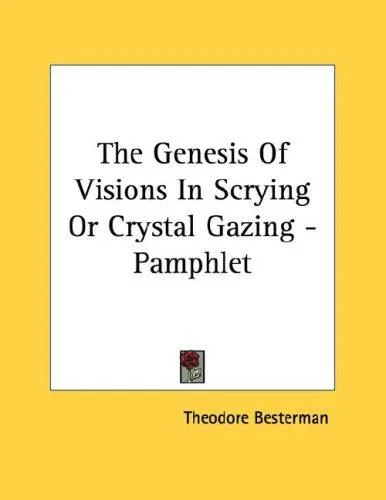
The Genesis Of Visions In Scrying Or Crystal Gazing - Pamphlet
 61
61

The Genesis Of Visions In Scrying Or Crystal Gazing - Pamphlet



Celeste Moreau (Divination & Symbolism Reviewer) — Theodore Besterman's 'The Genesis Of Visions' is a concise yet potent exploration of scrying, a gem for practitioners of esoteric arts. Besterman masterfully distills complex concepts into accessible prose, revealing the psychological and spiritual underpinnings of this ancient practice. His insights into cultivating the necessary inner stillness and interpretive faculties are particularly valuable. The pamphlet excels in demystifying the process, making it approachable for both neophytes and seasoned diviners. It serves as an essential primer for anyone seeking to harness the intuitive power of visual divination, offering a clear and respectful guide to connecting with the subtle realms.
📝 Description
61
Theodore Besterman's 1939 pamphlet, 'The Genesis Of Visions,' examines scrying and crystal gazing.
This pamphlet addresses the practices of scrying and crystal gazing. Besterman outlines the principles and methods for using reflective surfaces like crystals or mirrors to perceive subtle energies and symbolic imagery. The text moves beyond a simple instructional manual to consider the philosophical aspects of perception and intuition. It questions the boundary between the known and the unknown.
The book suggests that disciplined practice can lead to self-discovery and greater understanding of the cosmos. It is written for individuals seeking deeper insight through these divinatory arts. The author focuses on the practical application of scrying while also touching upon its theoretical underpinnings.
This work fits within the broader tradition of Western esotericism that explores methods of divination and altered states of consciousness. Such practices have roots in ancient cultures and were revived and systematized during periods like the Renaissance and the early 20th century occult revival. Besterman's pamphlet contributes to this line of inquiry by detailing specific techniques for accessing visionary states through reflective objects, linking physical practice to inner experience.
💡 Why Read This Book?
Uncover the ancient secrets of scrying and crystal gazing. This pamphlet offers a clear, concise guide to accessing inner visions and intuitive wisdom. Ideal for spiritual seekers, occult scholars, and practitioners of divination who wish to deepen their understanding and practice of reflective divination techniques, fostering a direct connection to symbolic insight.
⭐ Reader Reviews
Honest opinions from readers who have explored this book.
❓ Frequently Asked Questions
What is scrying?
Scrying, or crystal gazing, is an ancient divination technique involving the use of a reflective surface, such as a crystal ball or mirror, to perceive visions, symbols, or hidden knowledge. It is a practice that cultivates inner sight and intuition.
Who was Theodore Besterman?
Theodore Besterman (1904-1976) was a distinguished British bibliographer, literary critic, and scholar of philosophy and literature. He had a profound interest in the esoteric, paranormal, and psychological aspects of human experience, contributing significantly to the study of figures like Voltaire.
Is this book suitable for beginners?
Yes, 'The Genesis Of Visions' is an excellent starting point for beginners. Besterman's clear explanations and focus on foundational principles make the complex art of scrying accessible and encouraging for those new to divination.
What kind of visions can one expect from scrying?
Visions can manifest in various forms: symbolic imagery, fleeting impressions, dreamlike sequences, or even direct insights related to questions posed. The nature of the vision is deeply personal and often reflects the scryer's subconscious or intuitive perceptions.
How does scrying differ from other forms of divination?
Scrying is a visual and intuitive form of divination that relies on the interpretation of images seen within a reflective medium. Unlike tarot or runes, which use pre-defined symbols, scrying taps into a more fluid and personal stream of consciousness and symbolic manifestation.
🔮 Key Themes & Symbolism
The Nature of Visionary Perception
This theme looks at the profound psychological and spiritual mechanisms behind visionary experiences in scrying. Besterman explores how the conscious mind can be stilled to allow the subconscious and intuitive faculties to project images onto the reflective medium. It examines the subtle interplay between the observer, the scrying tool, and the unfolding symbolic language of the inner eye. The text invites readers to consider the nature of reality itself, suggesting that what is perceived in the crystal is not merely fantasy but a reflection of deeper truths and interconnected energies, fostering a contemplative approach to self-awareness.
Symbolism and Interpretation in Scrying
Central to this work is the understanding that scrying is not simply about seeing random images, but about deciphering a wide range of symbols. Besterman guides the reader in recognizing archetypal patterns, personal resonances, and universal motifs that emerge from the depths of the scrying medium. The pamphlet stresses the importance of cultivating intuition and a non-judgmental attitude towards these symbols, encouraging practitioners to develop their unique interpretive vocabulary. It highlights how these symbolic messages can offer useful insights into personal challenges, spiritual growth, and the hidden currents of life, transforming mere observation into meaningful revelation.
The Practice and Preparation for Scrying
This theme focuses on the practical application of scrying techniques. Besterman outlines the essential steps for preparing oneself and the scrying environment, emphasizing the need for mental clarity, emotional equilibrium, and a sacred space conducive to deep focus. He discusses the selection of appropriate scrying tools and the importance of consistent practice in developing one's visionary abilities. The pamphlet underscores that mastery in scrying is a journey of patience and dedicated effort, encouraging a disciplined yet intuitive approach that respects the subtle energies involved in communing with the unseen realms.
💬 Memorable Quotes
Direct passages from the work, attributed to the author.
“Stillness of mind is the key to unlocking the gate.”
— This highlights the essential prerequisite of mental quietude and focus required to quiet the ego and allow subtle, intuitive perceptions to emerge during the scrying process.
“Symbols speak a language older than words.”
— This suggests that the imagery perceived in scrying is deeply symbolic and operates on a primal, archetypal level, communicating profound truths that transcend ordinary linguistic expression.
“The gaze must be soft, not fixed.”
— This practical advice points to the importance of a relaxed, unfocused gaze when scrying, allowing the mind to passively receive impressions rather than straining to see specific images.
“Each vision is a whisper from the universe.”
— This evocative phrase frames scrying visions as gentle, insightful messages from a higher or universal source, encouraging a receptive and respectful approach to their interpretation.
💡 Key Ideas
Editorial paraphrase of the work's core concepts — not direct quotes.
The crystal is a mirror to the soul.
This quote emphasizes that the visions seen in a scrying crystal are not external phenomena but rather reflections of the scryer's own inner landscape, subconscious thoughts, and intuitive wisdom.
🌙 Esoteric Significance
Tradition
This work draws heavily from the Western Esoteric Tradition, specifically the lineage of contemplative and visionary practices found within Hermeticism, Neoplatonism, and various forms of folk magic and divination. It connects to the ancient practice of 'catoptromancy' (divination by mirrors) and 'crystallomancy' (divination by crystals), linking it to a long history of seeking divine or hidden knowledge through reflective surfaces, often interpreted as a means of communing with spiritual guides or accessing the Akashic records.
Symbolism
The primary symbols in scrying are the reflective surface itself (mirror, crystal, water) and the images that manifest within it. The surface symbolizes the boundary between the material and spiritual worlds, a liminal space where perception can transcend ordinary sight. The generated visions are inherently symbolic, representing archetypes, personal subconscious elements, or cosmic energies. Their interpretation relies on understanding universal symbolic language, personal associations, and intuitive resonance, transforming abstract patterns into meaningful guidance.
Modern Relevance
In an era saturated with digital information and external stimuli, 'The Genesis Of Visions' offers a vital counterpoint, guiding individuals back to their inner resources and intuitive capacities. It provides a time-tested method for cultivating focus, developing symbolic literacy, and accessing a deeper, more personal form of wisdom. The pamphlet's emphasis on introspection and self-discovery remains profoundly relevant for those seeking mindfulness, stress reduction, and a more profound connection to their own psyche and the subtle energies of the universe, making it a valuable tool for contemporary spiritual exploration.
👥 Who Should Read This Book
This pamphlet is an invaluable resource for a diverse readership. **Beginners** in divination will find clear, foundational instructions that explain the practice of scrying. **Spiritual seekers** looking to deepen their intuition and explore altered states of consciousness will appreciate its contemplative approach. **Occult scholars** and **historians of esotericism** will recognize its contribution to the understanding of divination practices within Western traditions. **Practitioners of meditation and mindfulness** may find it an accessible gateway to developing inner focus and visual awareness. Ultimately, anyone curious about unlocking the secrets held within reflective surfaces and their own subconscious mind will benefit.
📜 Historical Context
Published during a period of burgeoning interest in psychical research and esoteric studies in the early to mid-20th century, Theodore Besterman's 'The Genesis Of Visions' emerged amidst a broader societal curiosity about the hidden dimensions of consciousness and ancient mystical practices. Following the spiritualist movements of the late 19th century, there was a resurgence of scholarly and popular engagement with divination, parapsychology, and occult traditions. This pamphlet reflects that intellectual climate, offering a structured, rational approach to a practice often shrouded in mystery and superstition. Besterman, known for his rigorous scholarly work, brought a combination of academic inquiry and genuine exploration to the subject, positioning scrying not as mere parlor trickery, but as a legitimate avenue for psychological and spiritual insight, resonating with a generation seeking deeper meaning beyond materialist philosophies.
📔 Journal Prompts
Describe your initial feelings or expectations about scrying before reading this pamphlet.
What personal symbols or recurring images have appeared in your dreams or meditations, and how might they relate to the concepts of scrying?
If you were to prepare a scrying session, what elements (time, place, object) would feel most conducive to your practice?
How can the principle of 'stillness of mind' be applied to challenges you face in your daily life, beyond scrying?
Reflect on a time you experienced a 'vision' or strong intuitive insight. What was the context, and how did you interpret it?
🗂️ Glossary
Scrying
An ancient divination practice involving the use of a reflective surface, such as a crystal ball, mirror, or bowl of water, to perceive visions, symbols, or hidden knowledge through focused gazing and intuition.
Crystal Gazing
A specific form of scrying that utilizes a polished crystal ball or other clear, reflective crystal as the medium for receiving visionary impressions and divinatory insights.
Divination
The practice of seeking knowledge of the future or the unknown by supernatural means, often involving the interpretation of signs, omens, or symbolic patterns revealed through various methods.
Intuition
The ability to understand something immediately, without the need for conscious reasoning; a direct perception or insight that arises from the subconscious or deeper levels of awareness.
Archetype
In Jungian psychology and esoteric traditions, a universal, archaic pattern or image that is part of the collective unconscious, often appearing in myths, dreams, and symbolic imagery.
This book appears in 3 collections
🔮 Readers Also Liked
Browse all →








More by Theodore Besterman
All books →
From the “Tarot” Collection
View all →








More Free Divination & Tarot Books
View all →