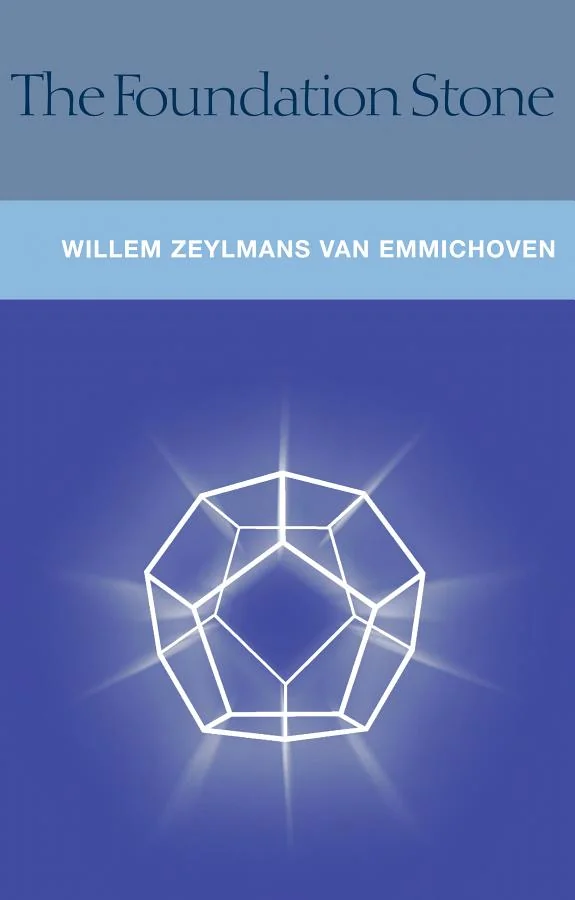
The Foundation Stone
 75
75

The Foundation Stone
Willem Zeylmans Van Emmichoven’s 'The Foundation Stone' is not an introduction for the casual reader, but rather a seasoned guide for those already familiar with the landscape of Anthroposophy. Its strength lies in the author’s direct experience, having been present at the 1923-24 Christmas Conference where Rudolf Steiner first presented the Foundation Stone Meditation. Van Emmichoven meticulously unpacks the meditation and its derivative 'rhythms', offering a practical, almost architectural, approach to spiritual practice. The limitation, however, is its density; without prior grounding in Steiner’s work, the text can feel somewhat inaccessible. The section detailing the 'spiritual anatomy' of the meditation’s gestures is particularly illuminating, showcasing the intricate connection between physical form and spiritual intent. This work is a significant scholarly and practical resource for dedicated students of Anthroposophy.
📝 Description
75
Willem Zeylmans Van Emmichoven wrote 'The Foundation Stone' in the years following Rudolf Steiner's 1923-24 refounding of the Anthroposophical Society.
This book examines Rudolf Steiner's 'Foundation Stone Meditation,' a practice introduced during a crucial period for the Anthroposophical Society. Zeylmans Van Emmichoven, who attended Steiner's lectures in 1923 and 1924, spent decades living with the rhythms Steiner outlined. His work seeks to unpack the structure of this meditation and its capacity for personal, inner growth. He focuses on the meditative exercises and the concept of 'new meditations' that arose from the Foundation Stone.
The author discusses the spiritual meaning behind specific gestures and words within the meditation. These elements are connected to broader themes of cosmic and human evolution. The aim is to cultivate inner strength and spiritual awareness in the practitioner. The text is intended for those seriously committed to spiritual research and self-cultivation within the framework of Anthroposophy.
This work belongs to the Theosophical and Anthroposophical traditions, specifically focusing on the practical spiritual exercises developed by Rudolf Steiner. It engages with the period after the Anthroposophical Society's reorganization in the early 1920s, a time of significant reorientation for the movement. Zeylmans Van Emmichoven's commentary draws on his direct experience of Steiner's teachings and his personal practice over many years, aiming to illuminate the inner work associated with Steiner's meditative initiatives.
💡 Why Read This Book?
• Gain direct insight into Rudolf Steiner's Foundation Stone Meditation as presented in 1923-24, offering a unique historical and practical perspective not found in general esoteric texts. • Understand the concept of 'rhythms' or 'new meditations' derived from the original, providing specific inner exercises for spiritual development based on Zeylmans van Emmichoven’s 30+ years of practice. • Explore the profound connection between specific meditative gestures and cosmic evolution, a detail central to the Foundation Stone Meditation’s efficacy, as detailed by an eyewitness.
⭐ Reader Reviews
Honest opinions from readers who have explored this book.
❓ Frequently Asked Questions
When was the Foundation Stone Meditation first presented by Rudolf Steiner?
Rudolf Steiner first presented the Foundation Stone Meditation during the Christmas Conference of 1923-24, a significant period for the refounding of the Anthroposophical Society.
Who is Willem Zeylmans Van Emmichoven and what is his connection to this work?
Willem Zeylmans Van Emmichoven was present at the 1923-24 Christmas Conference and dedicated over 30 years to intensively practicing and living with the meditations Rudolf Steiner introduced, making his insights deeply personal and authoritative.
What are the 'rhythms' mentioned in relation to the Foundation Stone Meditation?
The 'rhythms' are new meditations or inner practices that Rudolf Steiner showed could be developed from the elements of the Foundation Stone Meditation, designed for daily spiritual work.
Is 'The Foundation Stone' suitable for beginners in esotericism?
While offering profound insights, the book is best suited for individuals already familiar with Rudolf Steiner's work and Anthroposophy, due to its specific terminology and context.
What is the primary focus of the book 'The Foundation Stone'?
The book's primary focus is an in-depth analysis and practical exposition of Rudolf Steiner's Foundation Stone Meditation and its related inner exercises, derived from Zeylmans van Emmichoven's extensive personal engagement.
What historical event is central to the origin of the Foundation Stone Meditation?
The refounding of the Anthroposophical Society during the Christmas Conference of 1923-24 is the central historical event during which Rudolf Steiner first presented the Foundation Stone Meditation.
🔮 Key Themes & Symbolism
The Foundation Stone Meditation
This meditation, first presented by Rudolf Steiner in 1923-24, serves as the core subject. The work dissects its structure, meditative content, and the spiritual forces it aims to awaken in the practitioner. It's presented not merely as a contemplative exercise but as a foundational element for spiritual development and the conscious evolution of humanity.
Inner Rhythms and Practice
Beyond the central meditation, the book explores how its components can be adapted into daily 'rhythms' or new meditations. Zeylmans van Emmichoven, drawing on his extensive personal experience, guides readers on how to integrate these practices into their lives to cultivate specific inner capacities and spiritual perception.
Anthroposophical Society Context
The book is intrinsically linked to the history and spiritual impulses of the Anthroposophical Society, particularly its refounding in 1923-24. Understanding this context is crucial for grasping the significance of the Foundation Stone Meditation as a spiritual anchor for the movement.
Spiritual Perception and Evolution
The overarching theme connects the practice of the meditation and its rhythms to the development of higher spiritual faculties and the conscious participation in human evolution. It posits that inner work through such meditations directly impacts one's capacity to perceive spiritual realities and contribute to a higher future.
💬 Memorable Quotes
Direct passages from the work, attributed to the author.
“Steiner showed how elements of the Meditation could be rebuilt into new meditations (sometimes referred to as rhythms), which could be inwardly practiced.”
— This highlights the adaptive and practical nature of Steiner's teachings, suggesting that the core principles of the Foundation Stone Meditation are not static but can be dynamically applied to ongoing spiritual development through structured inner exercises.
“Zeylmans van Emmichoven was present at that formative meeting and lived intensively with these rhythms for more than 30 years.”
— This emphasizes the author's direct lineage and deep, sustained engagement with the subject matter, lending significant credibility and experiential depth to his exposition of Steiner's work.
“During the Christmas Conference of 1923-24 when the Anthroposophical Society was refounded, Rudolf Steiner presented to its members for the first time the Foundation Stone Meditation.”
— This situates the origin of the meditation within a critical historical juncture for Anthroposophy, underscoring its importance as a spiritual cornerstone laid during a period of renewal and restructuring for the movement.
“Steiner presented to its members for the first time the Foundation Stone Meditation.”
— This points to the foundational role of the meditation, implying it was intended as a core spiritual impulse for the members and the future direction of the Anthroposophical Society.
“On consecutive days during that week, Steiner showed how elements of the Meditation could be rebuilt into new meditations (sometimes referred to as rhythms), which could be inwardly practiced.”
— This detail reveals the pedagogical method employed by Steiner, demonstrating a structured approach to spiritual training that builds upon foundational practices and extends them into adaptable, daily exercises for personal cultivation.
🌙 Esoteric Significance
Tradition
This work is deeply rooted in the Anthroposophical tradition, stemming directly from the teachings of Rudolf Steiner. It represents a specific development within the broader stream of Western Esotericism, focusing on a scientifically rigorous approach to spiritual perception and consciousness development, rather than purely mystical or ritualistic practices.
Symbolism
The 'Foundation Stone' itself is a potent symbol of spiritual stability, cosmic order, and the grounding of human consciousness in higher realities. The meditation's structure often involves specific gestures and word formations that symbolize the connection between the microcosm (human being) and the macrocosm (universe), and the forces of spiritual renewal and transformation.
Modern Relevance
Contemporary practitioners of Anthroposophy, Waldorf education, biodynamic agriculture, and certain branches of holistic medicine draw directly upon the principles and practices outlined by Steiner, including the Foundation Stone Meditation. Thinkers and educators seeking to cultivate a deeper spiritual consciousness and ethical development in individuals often reference this work.
👥 Who Should Read This Book
• Students of Rudolf Steiner's work seeking a detailed exposition of the Foundation Stone Meditation, including its historical context and practical application. • Practitioners of Anthroposophy looking to deepen their understanding and personal practice of core meditative exercises derived from Steiner's original impulses. • Esoteric researchers interested in the specific methods for spiritual development presented within the Anthroposophical tradition, particularly those focusing on consciousness transformation.
📜 Historical Context
Published in 2002, Willem Zeylmans Van Emmichoven's 'The Foundation Stone' looks at material first presented by Rudolf Steiner during the important Christmas Conference of 1923-24. This period marked a significant refounding of the Anthroposophical Society, following internal schisms and Steiner's desire to establish a spiritual basis for the organization. The Foundation Stone Meditation itself was introduced as a central spiritual impulse. Zeylmans van Emmichoven, who attended these sessions, dedicated decades to internalizing these teachings. The work emerged in a period where Anthroposophical studies had a mature, if sometimes academic, following, distinct from its earlier, more pioneering phase. While other spiritual movements like Theosophy and various Western Esoteric traditions were active, Steiner's unique approach to spiritual science offered a distinct path focused on cognitive development and conscious spiritual activity, contrasting with more purely mystical or occult methodologies.
📔 Journal Prompts
The Foundation Stone Meditation's role in spiritual renewal.
How the 'rhythms' derived from the meditation support inner development.
The significance of Rudolf Steiner's presence at the 1923-24 Christmas Conference.
Personal experience with the connection between inner practice and cosmic evolution.
The author's 30+ year intensive practice with these rhythms.
🗂️ Glossary
Anthroposophical Society
A spiritual organization founded by Rudolf Steiner, dedicated to the study of spiritual phenomena and the development of human consciousness through a path known as Anthroposophy.
Foundation Stone Meditation
A central meditation presented by Rudolf Steiner in 1923-24, intended as a spiritual anchor for the Anthroposophical Society and a powerful tool for inner development.
Rhythms (Meditative)
In this context, refers to new meditations or inner exercises that Rudolf Steiner derived from the elements of the Foundation Stone Meditation, designed for daily practice and spiritual cultivation.
Rudolf Steiner
An Austrian philosopher, esotericist, and social reformer who developed Anthroposophy, a complex spiritual philosophy and method of inner development.
Christmas Conference 1923-24
An important meeting where Rudolf Steiner refounded the Anthroposophical Society and introduced significant spiritual impulses, including the Foundation Stone Meditation.
Inner Practice
Refers to disciplined mental and spiritual exercises undertaken by the individual to cultivate consciousness, perception, and connection to spiritual realities.
Spiritual Science
The term Rudolf Steiner used for his path of research into the spiritual world, emphasizing verifiable, cognitive methods for accessing and understanding spiritual realities.
This book appears in 1 collection
🔮 Readers Also Liked
Browse all →








From the “Anthroposophy” Collection
View all →







More Free Theosophy & Anthroposophy Books
View all →