A Witch Alone
 76
76

A Witch Alone
Marian Green’s "A Witch Alone" presents a compelling case for the solitary practitioner, moving beyond the romanticized notions of coven-based witchcraft. Its strength lies in its direct, no-nonsense approach to practical magic, offering actionable advice for those who find themselves drawn to the Craft outside organized groups. The book is particularly effective in its detailed exploration of personal altar setup and the development of a solitary ritual cycle, a section that feels both intimate and instructional. However, the text occasionally leans into a somewhat prescriptive tone regarding the 'correct' way to practice, which might feel restrictive to more eclectic practitioners. The absence of specific historical citations for some of the "old ways" mentioned could also be a minor drawback for academic readers. Nevertheless, for its intended audience, "A Witch Alone" remains a robust and valuable resource for building an independent magical life.
📝 Description
76
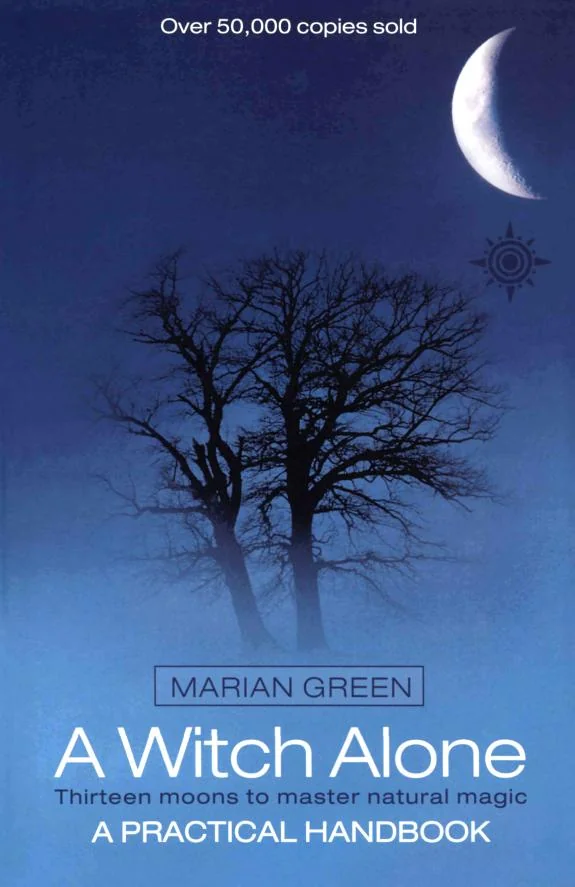
Marian Green's 2002 book, "A Witch Alone," became a manual for solitary practitioners of the old religion.
Published in 2002, "A Witch Alone" by Marian Green addresses witchcraft for individuals who practice magic alone, outside of covens. The book focuses on practical, white magic, detailing traditions and techniques suited for a single practitioner. It appeals to those interested in the archetype of the village witch, emphasizing the establishment of personal magical practices grounded in nature and older traditions. Readers who prefer independent magical work over group rituals will find its solitary focus especially relevant.
The work emerged during a time when resources for solitary witches were scarce. It offers guidance for independent magical study and practice, catering to a growing interest in witchcraft and paganism outside established groups. Green's approach centers on developing personal magical authority and a self-sufficient framework. It highlights the importance of natural cycles and fostering an intuitive connection to the divine and the earth, independent of communal structures.
This book belongs to the modern pagan and witchcraft revival, specifically focusing on traditions that value individual practice. It draws from historical archetypes like the village wise woman or healer, emphasizing a direct, personal connection to natural forces and spiritual principles. Rather than relying on established coven structures, it promotes self-initiation and the development of inner authority, aligning with currents of neo-paganism that seek to reconstruct or adapt older, nature-centered spiritual paths for contemporary life.
💡 Why Read This Book?
• Learn the foundational principles of practicing witchcraft independently, as detailed in the "solo village witch" tradition Green outlines, allowing you to build a personal magical framework. • Discover practical, white magic techniques suitable for a lone practitioner, offering methods for spellcraft and ritual that do not require group participation. • Understand the historical archetype of the solitary witch, gaining insight into how this tradition functioned outside of covens prior to the 2002 publication.
⭐ Reader Reviews
Honest opinions from readers who have explored this book.
❓ Frequently Asked Questions
What is the primary focus of Marian Green's "A Witch Alone"?
The book's primary focus is on practical, white magic for the solitary practitioner, specifically exploring the tradition of the "solo village witch" for those who wish to practice without a coven.
When was "A Witch Alone" by Marian Green first published?
Marian Green's "A Witch Alone" was first published in 2002, positioning it as a significant text in the early 21st-century resurgence of interest in witchcraft.
Is this book suitable for beginners in witchcraft?
Yes, it is suitable for beginners who are serious about practicing witchcraft alone. It guides new practitioners on establishing their own magical path without the need for group instruction.
Does the book discuss coven-based witchcraft?
No, the book explicitly focuses on the path of the solitary witch. It is designed for individuals who do not wish to join or practice within a coven structure.
What kind of magic does "A Witch Alone" emphasize?
It emphasizes white, practical magic. This includes accessible spells, rituals, and magical techniques that can be performed by an individual for constructive and beneficial purposes.
What is the "old religion" mentioned in the book?
The "old religion" refers to a pre-Christian, nature-based spiritual path often associated with indigenous European folk magic and witchcraft traditions, which Green aims to teach for solo practice.
🔮 Key Themes & Symbolism
The Solo Village Witch
The central theme is the archetype of the "solo village witch," a practitioner who draws power and knowledge from within and from their immediate environment, independent of formal groups. Green details how such a witch might establish a personal practice, focusing on self-reliance, intuitive development, and the integration of magic into daily life. This contrasts with coven-centric witchcraft, offering a path for those who prefer or require solitude.
Practical White Magic
Green's approach is firmly rooted in "white, practical magic." This means the book focuses on accessible, ethical, and constructive magical applications. It avoids theoretical esotericism in favor of actionable techniques for spellcasting, healing, and personal empowerment. The emphasis is on tangible results and the responsible use of magical energies by an individual practitioner.
Personal Magical Authority
A significant aspect of "A Witch Alone" is the cultivation of personal magical authority. Without the validation or structure of a coven, the solitary witch must learn to trust their own intuition, develop their own magical system, and stand confidently in their power. The book guides readers in building this inner strength and self-assurance, essential for independent magical work.
Connection to Nature
The work underscores the vital connection between the solitary witch and the natural world. It emphasizes working with the cycles of the moon and seasons, utilizing natural ingredients, and drawing energy from the earth. This attunement to nature is presented as a primary source of power and wisdom for the lone practitioner.
💬 Memorable Quotes
Direct passages from the work, attributed to the author.
“The tradition of the solo village witch.”
— This phrase expresses the book's core focus: witchcraft practiced in isolation, drawing upon localized folk magic and personal intuition, as opposed to group-based ritual.
“Written for serious practitioners.”
— This indicates the book is not a superficial introduction but a guide for committed individuals seeking depth and a structured approach to their solitary magical path.
“Guides those who wish to learn the 'old religion' without the aid of a coven.”
— This highlights the book's specific purpose: to provide instruction in ancient, nature-based spiritual traditions for individuals who choose not to participate in organized witchcraft groups.
“Emphasis on white, practical magic.”
— This clarifies the ethical framework and methodological approach, focusing on constructive, accessible magical techniques rather than theoretical or potentially harmful practices.
“The book explores the tradition of the solo village witch.”
— This points to the specific archetype and historical lineage the work aims to illuminate and provide instruction for, emphasizing its independent and community-rooted nature.
🌙 Esoteric Significance
Tradition
This work fits within the broader Western Esoteric Tradition, specifically its modern manifestations in Neopaganism and contemporary witchcraft. While not strictly adhering to Hermetic, Gnostic, or Kabbalistic lineages, it draws upon nature-based spirituality and folk magic that have historically been components of Western esoteric practices. It departs by focusing exclusively on the solitary path, whereas many other esoteric traditions historically relied on initiatory groups or master-disciple relationships.
Symbolism
Key symbols explored include the personal altar, which serves as a microcosm of the practitioner's universe and a focal point for their magical work. The natural elements (earth, air, fire, water) are also central, representing fundamental forces to be invoked and worked with. The moon, particularly its phases, is crucial for timing rituals and understanding cyclical energies, symbolizing intuition, the subconscious, and the divine feminine.
Modern Relevance
Contemporary thinkers and practitioners focusing on self-empowerment, intuitive development, and personalized spiritual paths find resonance with Green's work. Schools of thought emphasizing eclecticism and individual spiritual authority, as well as modern witch communities that acknowledge and support solo practitioners, continue to draw upon the principles outlined in "A Witch Alone."
👥 Who Should Read This Book
• Individuals feeling a strong calling to witchcraft but lacking access to or interest in coven structures, seeking a guide to build their own practice from the ground up. • Practitioners of folk magic or nature-based spirituality who wish to deepen their understanding of solitary ritual and personal magical development. • Students of contemporary paganism and witchcraft history looking to understand the evolution of different practice models, particularly the rise of the solitary path.
📜 Historical Context
Published in 2002, "A Witch Alone" emerged during a period of significant growth in modern paganism and witchcraft, often referred to as the "Pagan Revival." This era saw a diversification of paths, with increasing numbers of individuals seeking spiritual fulfillment outside of traditional religious structures and even outside of established coven systems. While figures like Gerald Gardner had popularized coven-based witchcraft in the mid-20th century, Green's work catered to a rising demand for resources supporting solitary practice. The book provided a counterpoint to the dominant narrative of group-oriented witchcraft, offering a detailed manual for independent practitioners. Its reception was largely positive among solitary witches who found its practical advice invaluable, though some traditionalists might have viewed its focus as a departure from communal aspects of the Craft. The early 2000s were marked by burgeoning online communities, which likely amplified the reach and impact of books like Green's for isolated practitioners.
📔 Journal Prompts
The solo village witch archetype and its personal resonance.
Personal altar setup and its symbolic meaning.
Developing your own "old religion" practices.
Ethical considerations of white, practical magic.
Cultivating personal magical authority.
🗂️ Glossary
Solo Village Witch
An archetype of a witchcraft practitioner who works independently, often drawing on local folklore and nature, rather than as part of a formal coven.
Old Religion
Refers to pre-Christian, nature-based spiritual paths and magical traditions, often associated with indigenous European folk practices and witchcraft.
White Magic
A category of magic focused on constructive, ethical, and beneficial purposes, often contrasted with 'black magic' intended for harm.
Coven
A traditional group or gathering of witches, typically consisting of thirteen members, for the purpose of practicing witchcraft together.
Personal Altar
A dedicated space or surface set up by an individual practitioner for performing rituals, meditation, and magical work.
Practical Magic
Magical techniques and spells focused on achieving tangible results or addressing everyday concerns, rather than purely theoretical or spiritual exploration.
Intuition
The ability to understand something immediately, without the need for conscious reasoning; a key faculty for solitary practitioners to develop.
This book appears in 1 collection
🔮 Readers Also Liked
Browse all →![Histoire de M. Oufle, par abbé Bordelon Cretouchée et réduite par M. G.] et la Description du sabbat. ... 1793: Iss 140](/img/thumb/histoire-de-m-oufle-par-abb-bordelon-cretouch-e-et-r-duite-par-m-g-et-la-description-du-sabbat-1793-iss-140-bordelon-laurent-1653-1730.webp)




From the “Paganism” Collection
View all →






More Free Witchcraft & Paganism Books
View all →