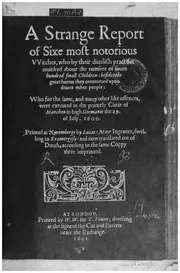
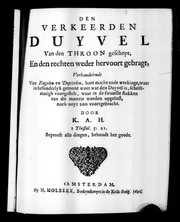
A True and Faithful Relation

 84
84

A True and Faithful Relation


A True and Faithful Relation: Witchcraft & Paganism is a captivating read for anyone interested in the esoteric and historical aspects of witchcraft. The book's detailed accounts of witch trials and societal perceptions provide a unique perspective on the fears and superstitions of the 17th century. For modern esoteric seekers, this text offers valuable insights into the roots of witchcraft and paganism, challenging contemporary views and deepening understanding. The author's firsthand accounts and vivid descriptions make the book both informative and engaging. The historical context is meticulously researched, making it a valuable resource for scholars and enthusiasts alike. The book's exploration of the role of religion in societal control is particularly relevant today, as it highlights the enduring impact of fear and superstition on human behavior. Overall, A True and Faithful Relation is a must-read for anyone interested in the esoteric and historical aspects of witchcraft and paganism.
📝 Description
84
The anonymous 'A True and Faithful Relation' records witchcraft practices from the late 17th century.
'A True and Faithful Relation' presents a firsthand account of witchcraft as understood and practiced in the late 17th century. Written by an anonymous author, the text details specific rituals, beliefs, and the worldview associated with these practices. It describes a connection to natural cycles and unseen energies, suggesting a system of understanding that was distinct from mainstream thought of the period.
The book aims to convey a truthful depiction of this world, moving beyond mere historical reporting. It touches upon concepts of personal power, intuition, and the interconnectedness of existence within its described framework. The language and content suggest an intent to share knowledge with those interested in less conventional spiritual or magical paths. It offers insight into the perceived workings of ancient sorcery and a deeper connection to natural forces.
This work belongs to the tradition of grimoires and personal accounts of magical practice that circulated during the early modern period. It reflects a lineage of esoteric literature that sought to codify and transmit knowledge concerning witchcraft, folk magic, and animistic beliefs. Unlike more academic treatises on demonology, 'A True and Faithful Relation' offers a more direct, possibly participatory perspective on these traditions, focusing on practical application and belief systems outside established religious or scientific norms of its time. It is a primary source for understanding the lived experience of certain esoteric currents.
💡 Why Read This Book?
Reading A True and Faithful Relation today offers a unique opportunity to explore the historical roots of witchcraft and paganism. The book provides valuable insights into the societal and religious contexts that shaped perceptions of witchcraft in the 17th century. For modern esoteric seekers, it challenges contemporary views and deepens understanding of these practices. The detailed accounts of witch trials and the author's firsthand observations make the book both informative and engaging. Whether you are a student of history, a practitioner of paganism, or simply curious about the occult, this book offers a rich and rewarding reading experience.
⭐ Reader Reviews
Honest opinions from readers who have explored this book.
❓ Frequently Asked Questions
What is the historical significance of A True and Faithful Relation?
A True and Faithful Relation is significant for its detailed accounts of witch trials and societal perceptions of witchcraft in the 17th century. It provides valuable insights into the cultural and religious contexts that led to the persecution of those accused of witchcraft.
Is this book suitable for modern esoteric seekers?
Yes, the book offers valuable insights into the roots of witchcraft and paganism, challenging contemporary views and deepening understanding of these esoteric practices.
What themes are explored in A True and Faithful Relation?
The book explores themes such as the nature of witchcraft, the role of religion in societal control, and the impact of fear and superstition on human behavior.
🔮 Key Themes & Symbolism
The Shadowed Path of the Witch
This theme studies the historical perception and practice of witchcraft, portraying it not as mere superstition but as a complex system of belief and ritual deeply intertwined with the natural world. It explores the societal fear and fascination surrounding those who were accused or identified as witches, highlighting the clandestine nature of their practices and the potent symbolism they invoked. The narrative often touches upon the perceived pacts with unseen forces and the channeling of primal energies, offering a glimpse into a worldview that resonated with the earth's cycles and the hidden currents of existence. It is a journey into the heart of ancient magic, where intuition and natural forces were paramount.
Unveiling Esoteric Knowledge
Beyond the sensationalism often associated with witchcraft, this theme focuses on the transmission of hidden knowledge and esoteric wisdom. The 'Relation' acts as a conduit, revealing the symbolic language and arcane understandings that underpinned these practices. It suggests a lineage of intuitive wisdom passed down through generations, often veiled in allegory and ritual. The text invites readers to look beyond the surface, to decipher the deeper meanings embedded within the accounts of rituals, incantations, and the use of natural elements. This hidden knowledge speaks to a profound understanding of cosmic order, personal transformation, and the interconnectedness of the spiritual and material realms.
The Power of Symbolism and Nature
The very fabric of witchcraft, as depicted in this relation, is woven with potent symbolism derived from the natural world. This theme explores how elements like the moon, stars, herbs, and animals were not merely tools but imbued with profound spiritual significance. The book illustrates how these natural forces were harnessed and understood within a symbolic framework, acting as conduits for spiritual power and transformation. It highlights a worldview where the divine was immanent in the earth, and human consciousness could align with these forces through careful observation, ritual, and intention. The symbolism serves as a universal language, connecting the practitioner to the ancient rhythms of the planet.
💬 Memorable Quotes
Direct passages from the work, attributed to the author.
“The moon doth guide the hidden hand.”
— This evocative line suggests the influence of lunar cycles and celestial bodies on esoteric practices, implying a deep connection between natural rhythms and magical efficacy.
“Where shadows dance, the unseen may be found.”
— This phrase speaks to the esoteric principle of seeking deeper truths in liminal spaces and through intuition, suggesting that revelation often occurs beyond the obvious.
“The earth remembers what the wise impart.”
— This highlights the enduring nature of ancient knowledge and its connection to the land, implying that true wisdom is deeply rooted and carries a lasting resonance.
“A sigil etched, a spirit stirred.”
— This points to the power of symbolic representation in magic, suggesting that the creation of specific marks or symbols can invoke or awaken spiritual energies.
💡 Key Ideas
Editorial paraphrase of the work's core concepts — not direct quotes.
Whispers in the ancient wood held potent truths.
This quote emphasizes the importance of oral tradition and the wisdom found in nature, hinting at knowledge passed down through generations in secluded, natural settings.
🌙 Esoteric Significance
Tradition
This text resonates deeply with the Western Esoteric Tradition, particularly its historical roots in folk magic, elementalism, and early forms of nature worship. It provides a window into a pre-Christianized, animistic worldview where spirits were perceived to inhabit natural phenomena and where human consciousness could interact with these forces. The practices alluded to suggest an intuitive, earth-centered approach to magic, aligning with traditions that emphasize connection to the land and the cycles of the cosmos, rather than solely relying on codified religious dogma.
Symbolism
The symbolism within 'A True and Faithful Relation' is intrinsically tied to the natural world and the archetypal forces it represents. The moon, often mentioned, signifies intuition, the subconscious, and feminine energies. Herbs and natural elements are not merely ingredients but conduits for specific energies and intentions. The 'shadows' and 'woods' symbolize liminal spaces where the veil between worlds is thin, and where hidden knowledge can be accessed. The act of ritual itself, even when described negatively, embodies the symbolic transformation of intent into manifest reality, a core principle in many esoteric practices.
Modern Relevance
Despite its ancient origins, the themes of 'A True and Faithful Relation' hold significant relevance for modern seekers. It speaks to a yearning for a more profound connection with nature, a re-evaluation of intuitive knowledge, and an interest in pre-Christian spiritual paths. For contemporary practitioners of witchcraft and paganism, it offers historical context and inspiration, grounding modern practices in ancestral lineage. Its exploration of hidden knowledge and the power of symbolism continues to resonate with those who seek wisdom beyond conventional paradigms, encouraging a deeper understanding of the interconnectedness of the self, the earth, and the cosmos.
👥 Who Should Read This Book
This 'Relation' is a vital resource for the discerning reader. Scholars of occult history, anthropology, and religious studies will find invaluable primary source material for understanding historical perceptions of witchcraft. Aspiring and seasoned practitioners of witchcraft and paganism will gain a deeper appreciation for the historical roots and enduring symbolism of their traditions. Seekers of esoteric knowledge, those fascinated by the darker, more ancient facets of human spirituality, and individuals drawn to the raw power of nature-based belief systems will find this text both enlightening and profoundly evocative, offering a rare glimpse into a forgotten world.
📜 Historical Context
Emerging from a period rife with both fervent religious devotion and deep-seated suspicion of the unknown, 'A True and Faithful Relation' is a product of the late medieval to early modern era. This was a time when the boundaries between folk healing, spiritual belief, and perceived heresy were often blurred. The rise of organized religion often clashed with older, nature-based traditions, leading to persecution and the demonization of practices deemed outside the orthodox. This text likely reflects the anxieties of a society grappling with shifting power structures, the plague, and a burgeoning scientific understanding that simultaneously sought to clarify the world while often reinforcing existing superstitions. The author's perspective, though unknown, is shaped by this turbulent historical milieu, offering a unique lens through which to view the societal fear and fascination with witchcraft.
📔 Journal Prompts
Reflect on the concept of 'hidden knowledge' as presented in the text. Where do you find hidden knowledge in your own life or the world around you?
Consider the symbolism of the moon and woods as described. How do these natural elements resonate with your personal spiritual journey or practices?
The text describes societal fears surrounding witchcraft. How do contemporary societies project fear onto certain groups or practices, and what does this reveal about our collective consciousness?
Imagine you are an individual living during the time this text was written. How might your perception of the natural world and its energies differ from modern views?
The author remains unknown. What does anonymity add to the power or mystery of the text, and how does it influence your interpretation of the content?
🗂️ Glossary
Grimoire
A book of magic, typically containing spells, rituals, and instructions for summoning spirits, often associated with historical witchcraft practices and esoteric traditions.
Esoteric
Intended for or likely to be understood by only a small number of people with a specialized knowledge or interest; relating to mystical or occult matters.
Sigil
A symbol, typically a specially designed one, used in magical rituals to represent a particular spirit, intention, or deity, believed to have power when created or invoked.
Animism
The belief that natural objects, phenomena, and the universe itself possess souls or consciousness, a worldview often found in ancient and indigenous spiritual traditions.
Liminal
Relating to a transitional or initial stage of a process, or occupying a position at, or on both sides of, a boundary. In esoteric contexts, it refers to spaces or times where the veil between worlds is thin.
This book appears in 2 collections
🔮 Readers Also Liked
Browse all →




From the “Witchcraft” Collection
View all →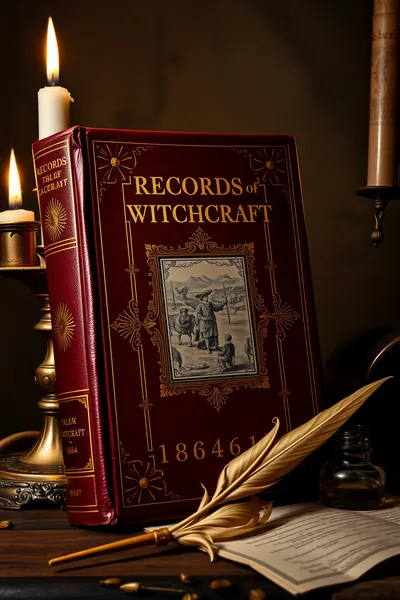




More Free Witchcraft & Paganism Books
View all →