Rome's vestal virgins
 78
78

Rome's vestal virgins
Wildfang's "Rome's Vestal Virgins" offers a compelling examination of a fascinating but often misunderstood aspect of Roman religion. The author skillfully moves beyond simplistic portrayals, detailing the Vestals' considerable legal autonomy and their tangible influence within Roman society, particularly their ability to act independently of male guardianship. The exploration of the *incestum* taboo and its dire consequences—burial alive—is starkly presented, highlighting the extreme demands placed upon these women. A notable strength is the detailed account of their property rights and courtroom appearances, illustrating their unique social standing. However, the work occasionally feels constrained by its focus, sometimes lacking a broader comparative perspective on other ancient priesthoods or female religious roles across the Mediterranean. The section on the founding myths, while informative, could benefit from more critical engagement with the historiographical debates surrounding Numa Pompilius. Despite this, Wildfang provides a solid, fact-based account of these sacred guardians. It's a valuable resource for understanding a crucial, yet often overlooked, component of Roman religious and social structure.
📝 Description
78
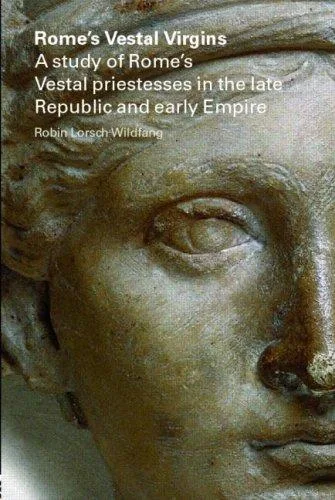
Robin Lorsch Wildfang's 2006 book examines the sacred fire and unique status of Rome's Vestal Virgins.
Robin Lorsch Wildfang's "Rome's Vestal Virgins" analyzes the religious and social positions of these priestesses in ancient Roman society. More than just religious figures, the Vestals possessed distinct legal and spiritual standing. They were guardians of Vesta's sacred fire, a symbol of Rome's ongoing existence and prosperity. Their chastity was crucial to their authority, believed to ensure divine favor and prevent disaster. The book details the rituals, strict rules, and considerable influence these women had in a male-dominated world.
The Vestals held a unique place in the Roman Republic and Empire. Unlike most women, they were independent of their fathers' or husbands' legal authority. This independence extended to their property and their ability to testify in court. Wildfang shows how this status enabled them to participate in political and economic life beyond the reach of other Roman women. The work notes instances where Vestals influenced legal cases or public opinion, illustrating their significant social standing. Their cult, linked to Numa Pompilius, dates to Rome's earliest days, highlighting their foundational importance to Roman identity. Maintaining the perpetual flame in Vesta's temple was a symbolic act representing the Roman state's continuity and divine connection; its extinguishment signaled impending disaster.
This book examines a specific aspect of Roman state religion, focusing on a group whose duties and status were deeply intertwined with the perceived well-being of the state itself. The perpetual fire maintained by the Vestals, and the rituals surrounding it, represent a form of civic magic or divine placation central to Roman cosmology. Understanding their role requires looking beyond simple historical accounts to appreciate the symbolic weight and religious efficacy attributed to their actions within the broader framework of Roman belief.
💡 Why Read This Book?
• Gain a nuanced understanding of the Vestals' legal standing and property rights, a unique aspect of Roman women's lives, as detailed in Wildfang's analysis of their independence from *patria potestas*. • Comprehend the profound symbolic weight of the sacred fire of Vesta and its connection to Rome's perpetual existence, a concept central to the city's identity since its early days. • Appreciate the stark contrast between the Vestals' public veneration and the personal sacrifices demanded by their thirty-year vow of chastity, a critical element explored by Wildfang.
⭐ Reader Reviews
Honest opinions from readers who have explored this book.
❓ Frequently Asked Questions
What was the primary duty of the Vestal Virgins?
The Vestal Virgins' primary duty was to maintain the sacred fire of Vesta, which was kept perpetually burning in the Temple of Vesta in the Roman Forum. This fire symbolized the continuity and well-being of Rome itself.
What did 'incestum' mean for a Vestal Virgin?
'Incestum' referred to the violation of a Vestal Virgin's vow of chastity. This was considered a grave offense against the gods and the Roman state, punishable by being buried alive.
How long did a Vestal Virgin serve?
A Vestal Virgin typically served for a period of thirty years. This service began in childhood, usually between the ages of six and ten, and concluded in their early thirties.
Did Vestal Virgins have any special privileges?
Yes, Vestal Virgins enjoyed significant privileges. They were freed from the authority of their fathers or husbands, could own property, make wills, and had the right to testify in court.
When was the cult of Vesta founded?
Tradition attributes the founding of the cult of Vesta and the institution of the Vestal Virgins to Numa Pompilius, the second king of Rome, who reigned approximately from 753 to 716 BCE.
What happened if the sacred fire went out?
If the sacred fire of Vesta went out, it was considered a terrible omen, signifying divine displeasure or impending disaster for Rome. The fire was immediately rekindled with great ceremony.
🔮 Key Themes & Symbolism
Sacred Fire and State Continuity
The perpetual flame tended by the Vestals was more than a mere ritual element; it was the symbolic heart of Rome, representing the state's enduring power and divine protection. Wildfang illustrates how its maintenance was intrinsically linked to Rome's prosperity and security. The extinguishing of this fire was a catastrophic omen, underscoring the Vestals' critical role as guardians of the city's very essence. This theme connects the mundane act of tending a fire to the highest levels of state religion and political stability in ancient Rome.
Autonomy and Legal Standing
Beyond their religious duties, the Vestals possessed an extraordinary degree of legal and social autonomy within Roman society. Freed from the traditional patriarchal authority of *patria potestas*, they could own property, control their finances, and even appear in legal proceedings. This work highlights how this unique status allowed them to exert influence and navigate Roman life with a freedom unimaginable for most women. Their independence served as a crucial counterpoint to the prevailing patriarchal structures of the era.
Chastity as a Societal Mandate
The strict requirement of celibacy for the Vestals was central to their sacred function and societal power. Wildfang examines how this enforced chastity was believed to channel divine favor and ensure the city's well-being. The severe punishment for transgression, *incestum*, buried alive, underscores the profound fear of impurity and the absolute necessity of maintaining their sacred status. This theme explores the complex relationship between female sexuality, religious purity, and civic order in ancient Rome.
Ritual and Discipline
The daily lives of the Vestals were governed by a rigorous schedule of rituals and strict disciplinary codes. From elaborate ceremonies to the meticulous upkeep of their temple and household, their existence was one of constant sacred duty. The work details the various festivals and rites they performed, emphasizing the precision and devotion required. This theme reveals the highly structured nature of their service and the constant vigilance necessary to uphold their sacred trust.
💬 Memorable Quotes
Direct passages from the work, attributed to the author.
“The Vestals were the only women in Rome who could escape the authority of a father or husband.”
— This statement highlights the Vestals' unique legal status, setting them apart from all other Roman women and granting them a considerable degree of personal and financial independence.
“Breaking the vow of chastity meant a horrifying death by entombment.”
— This emphasizes the extreme consequences of *incestum* for a Vestal Virgin, illustrating the immense pressure and the severity of the religious and legal penalties associated with their sacred vows.
“Their thirty-year service began in childhood.”
— This fact points to the lifelong commitment and sacrifice involved in becoming a Vestal, as individuals entered service at a very young age, dedicating their formative years to the cult.
“Vestals could own property and make wills.”
— This highlights a practical aspect of their autonomy, demonstrating that their independence extended to economic and legal matters, allowing them control over their assets.
💡 Key Ideas
Editorial paraphrase of the work's core concepts — not direct quotes.
The flame of Vesta represented the continued existence of Rome.
This paraphrased concept underscores the profound symbolic importance of the sacred fire, directly linking its perpetual burning to the survival and prosperity of the Roman state itself.
🌙 Esoteric Significance
Tradition
While not strictly an esoteric text in the vein of Hermeticism or Kabbalah, "Rome's Vestal Virgins" touches upon themes resonant with Western esoteric traditions, particularly those focused on divine feminine principles and sacred guardians. The Vestals' role as keepers of a perpetual, sacred fire echoes archetypal imagery found in Gnosticism and various nature-based spiritualities. Their enforced chastity and dedication to a singular, life-sustaining force align with ascetic practices and vows of devotion found across many mystical paths, emphasizing purity and focused spiritual energy.
Symbolism
The central symbol is the sacred fire of Vesta, representing Rome's life force, continuity, and divine connection. Its perpetual burning signifies an unbroken spiritual lineage and the city's enduring strength. The Vestals themselves, as consecrated virgins, embody purity, sacrifice, and the channeling of divine feminine energy for the collective good. Their burial alive for transgressing chastity symbolizes the ultimate consequence of impurity and the severing of that divine link, a potent symbol of cosmic order disrupted.
Modern Relevance
Contemporary neo-pagan and goddess-focused spiritual movements often draw inspiration from figures like the Vestals, seeing them as ancient exemplars of female spiritual authority and connection to Earth-based energies. The concept of maintaining a sacred hearth or inner flame appeals to modern practices of mindfulness and personal ritual. Furthermore, the Vestals' unique position as powerful women within a patriarchal structure continues to inform discussions on gender, power, and religious leadership in contemporary society.
👥 Who Should Read This Book
["• Students of Roman history and religion: Those seeking a detailed, fact-based account of the Vestals' specific roles, rituals, and societal impact will find this book important for understanding a key aspect of Roman life.", "• Researchers of ancient gender studies: Individuals interested in the complexities of female power, autonomy, and religious authority within patriarchal societies will benefit from the analysis of the Vestals' unique legal and social standing.", '• Devotees of classical mythology and archetypes: Readers drawn to the symbolism of sacred fires, eternal flames, and the archetype of the devoted priestess will find rich material exploring these themes in a historical context.']
📜 Historical Context
Published in 2006, Robin Lorsch Wildfang's "Rome's Vestal Virgins" entered a scholarly landscape where the study of Roman religion and gender roles was well-established. The work builds upon decades of archaeological findings and textual analysis, engaging with scholarship that dates back to classical philologists and historians like Theodor Mommsen. In the early 21st century, feminist interpretations of antiquity were gaining significant traction, offering new lenses through which to view the power dynamics and social structures of Rome. Wildfang's book arrives in a period of continued academic interest in the lived experiences of women in the ancient world, moving beyond purely mythological or elite-focused narratives. While not directly engaging with a specific contemporary debate or public controversy, the work contributes to the broader ongoing discussion about female agency and religious authority within patriarchal societies, a discussion that has seen prominent contributions from scholars like Mary Beard.
📔 Journal Prompts
The Vestals' sacred fire: Reflect on what symbolic 'eternal flame' you tend in your own life.
Vestal autonomy: How did the Vestals' freedom from *patria potestas* shape their actions and influence?
The vow of chastity: Consider the societal mandate for purity and its personal implications.
The Temple of Vesta: What does the architecture and placement of the temple reveal about its significance?
Incestum's penalty: Reflect on the concept of sacred impurity and its extreme consequences.
🗂️ Glossary
Vesta
The Roman goddess of the hearth, home, and family. Her cult was central to Roman state religion, and her sacred fire was maintained by the Vestal Virgins.
Vestal Virgins
Priestesses of the goddess Vesta in ancient Rome, chosen in childhood and sworn to chastity for thirty years, holding significant religious and legal privileges.
Sacred Fire
The perpetual flame maintained in the Temple of Vesta, symbolizing the continuity, life, and divine protection of Rome.
Incestum
The violation of the Vestal Virgins' vow of chastity. It was considered a grave offense against the gods and Rome, punishable by being buried alive.
Patria Potestas
The legal power wielded by the male head of a Roman family over his descendants, including his wife, children, and grandchildren. Vestals were exempt from this.
Temple of Vesta
The circular temple located in the Roman Forum where the sacred fire of Vesta was kept burning continuously by the Vestal Virgins.
Numa Pompilius
The second king of Rome, traditionally credited with establishing the Roman religious system, including the institution of the Vestal Virgins around the 8th century BCE.
🔮 Readers Also Liked
Browse all →




![D. [i. e., Doktor] Balthasar Bekkers reformierten Predigers in Amsterdam bezauberte Welt. ... 1781: Vol 3 Iss 81](/img/thumb/d-i-e-doktor-balthasar-bekkers-reformierten-predigers-in-amsterdam-bezauberte-welt-1781-vol-3-iss-81-bekker-balthasar-1634-1698.webp)


More by Robin Lorsch Wildfang
All books →
More Free Witchcraft & Paganism Books
View all →