The First Grimoire
 81
81

The First Grimoire
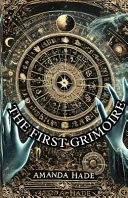
Amanda Hade's *The First Grimoire* attempts to distill the vast and often arcane world of grimoires into a digestible format for the uninitiated. Its strength lies in its clear, unpretentious prose, which avoids the overly florid language that can plague introductory occult texts. The section on elemental correspondences, for instance, offers a lucid breakdown of a fundamental concept. However, the book sometimes errs on the side of oversimplification. While aiming for accessibility, some discussions on ritual structure could benefit from more nuanced historical or theoretical context. A passage detailing the creation of a simple warding circle feels practical but lacks depth regarding the energetic principles involved. Despite this, *The First Grimoire* serves as a competent, if basic, primer for those standing at the threshold of magical study.
📝 Description
81
Published in 2023, The First Grimoire aims to demystify occult practices for newcomers.
The First Grimoire acts as an introductory text for those beginning their study of magic and ritual. Its purpose is to make the often-complex world of occult practices understandable, providing a structured method for grasping fundamental ideas. The book functions as a starting point, intending to give readers the basic knowledge and terminology needed to comprehend and participate in esoteric traditions. It emphasizes clarity, making difficult concepts easy to grasp and establishing a foundation for subsequent learning. This work is largely for individuals new to magic, occultism, and ritual. It speaks to those feeling a pull toward these subjects but unsure where to begin. Readers looking for practical advice on simple spellcasting, understanding the elements of rituals, or learning about divination techniques will find its introductory approach helpful. It is also useful for those encountering occult terms and seeking a straightforward explanation.
The author, AMANDA. HADE, designed this book to be a clear entry point into the study of magical practices. It covers essential concepts without assuming prior knowledge, focusing on building a solid understanding from the ground up. The text avoids overly academic language, prioritizing accessibility for the uninitiated.
Grimoires, a category of magical texts, have a long history, with many significant examples appearing in late medieval and early modern Europe. Works such as the *Key of Solomon* and the *Grimorium Verum* set a precedent for practical magical instruction. These historical texts often included rituals, incantations, and methods for spirit invocation, drawing from Kabbalistic, astrological, and folk magic sources. *The First Grimoire* recognizes this historical lineage, presenting itself as a contemporary adaptation and an accessible way into this tradition of occult literature.
💡 Why Read This Book?
• Gain a foundational understanding of elemental correspondences, learning how to identify and utilize earth, air, fire, and water in practical spellwork, as detailed in the book's introductory chapters. • Learn the basic steps for constructing a ritual, including the preparation of space and the articulation of intent, mirroring the guidance provided in the section on 'Ritual Structure'. • Demystify the concept of magical intent by exploring its role in directing energy, a core principle discussed throughout the early sections of *The First Grimoire*.
⭐ Reader Reviews
Honest opinions from readers who have explored this book.
❓ Frequently Asked Questions
What is a grimoire and why is this book called 'The First Grimoire'?
A grimoire is a textbook of magic, typically containing instructions for summoning spirits, casting spells, and performing rituals. This book is titled 'The First Grimoire' because it is designed as an introductory text, serving as the initial step for beginners entering the study of magic and esoteric practices.
Is this book suitable for experienced practitioners?
While *The First Grimoire* is primarily aimed at beginners, experienced practitioners might find its clear, foundational explanations useful for refreshing core concepts or for use in teaching others. Its focus is on accessibility rather than advanced techniques.
What kind of magic does this book cover?
The book covers general principles of Western esoteric magic, focusing on foundational concepts like spellcraft, ritual structure, and elemental correspondences. It aims to provide a broad introduction to magical practice rather than specializing in a single tradition.
Does the book require any prior knowledge?
No prior knowledge of magic or occultism is required. *The First Grimoire* is structured to assume no background, explaining fundamental terms and concepts from the ground up, making it accessible for absolute beginners.
When was 'The First Grimoire' first published?
The book 'The First Grimoire' by Amanda Hade was first published on February 6, 2025. This 2025 publication date positions it as a contemporary entry into the field of esoteric literature.
Are there practical exercises or spells included?
Yes, the book includes practical guidance on basic spellcraft and ritual construction. It aims to provide readers with actionable steps they can take to begin practicing simple magical techniques and understanding ritual components.
🔮 Key Themes & Symbolism
Foundations of Ritual
This theme explores the essential components of ritual practice as presented for newcomers. It breaks down the purpose and execution of sacred rites, emphasizing the creation of focused intent and the establishment of a conducive environment. Readers learn about the conceptual framework behind ritual, including the significance of timing, space, and personal preparation, providing a clear pathway for those new to ceremony and magical workings.
Elemental Magic Principles
The book explores the traditional understanding of the four elements—Earth, Air, Fire, and Water—and their role in magical theory and practice. It explains how these elemental forces are believed to influence the material world and human consciousness, and how practitioners can invoke or work with them. This theme offers a fundamental perspective on the building blocks of many magical systems, crucial for understanding correspondences and spell composition.
Introduction to Spellcraft
This section serves as a primer on the art of crafting spells, explaining the process for novice practitioners. It covers the essential elements required for effective spellcasting, such as clear intention, symbolic representation, and the channeling of energy. The aim is to equip readers with the basic knowledge needed to formulate simple spells, understand their components, and approach magical creation with confidence and clarity.
The Nature of Grimoires
The book contextualizes itself by exploring the historical and functional significance of grimoires. It explains what these texts traditionally represent within occult traditions—compendiums of magical knowledge, rituals, and lore. By defining the grimoire's role, *The First Grimoire* helps readers understand the lineage and purpose of the magical literature they are beginning to explore, positioning itself as a modern entry into this ancient genre.
💬 Memorable Quotes
Direct passages from the work, attributed to the author.
“Intent is the unseen hand that shapes magical energy.”
— This aphorism highlights the crucial role of focused will and mental direction in the practice of magic. It suggests that the practitioner's purpose and concentration are the primary forces that give form and direction to magical workings, rather than external agents.
“Ritual is the framework through which intention finds expression.”
— This statement emphasizes the functional relationship between ritual and intent. It posits that structured ceremonies and symbolic actions provide the necessary container and pathway for the practitioner's focused will to manifest its desired effects in the world.
“Every spell begins with a seed of desire, nurtured by knowledge.”
— This interpretation underscores the dual nature of spellcraft: it is born from a personal wish or goal (the seed of desire) and requires acquired understanding and technique (nurtured by knowledge) to come to fruition.
“Sacred space is a mind-state made manifest.”
— This concept suggests that the creation of a consecrated or magically prepared area is not solely an external act but originates from the practitioner's internal focus and intention. The external environment reflects the internal state of awareness.
💡 Key Ideas
Editorial paraphrase of the work's core concepts — not direct quotes.
The elements are the primal forces echoing in all existence.
This quote frames the classical elements (Earth, Air, Fire, Water) not merely as physical substances, but as fundamental energetic principles that permeate reality. It suggests a symbolic and spiritual understanding of these forces, vital for their use in esoteric practices.
🌙 Esoteric Significance
Tradition
This work situates itself within the broad lineage of Western Esotericism, specifically touching upon practical magic and ceremonial traditions historically documented in grimoires. It bridges the gap between historical occult texts and contemporary seekers, offering a modern interpretation of foundational magical principles. While not strictly aligned with a single esoteric school like Golden Dawn Hermeticism or Theosophy, it draws upon the common threads of ritual structure, elemental symbolism, and intentional magic found across these diverse traditions.
Symbolism
The book likely explores elemental symbolism, representing the four classical elements (Earth, Air, Fire, Water) as fundamental forces influencing both the macrocosm and microcosm. Another key symbol is likely the concept of the 'sacred circle,' representing a protected space for ritual work, a microcosm of the universe, and a boundary between the mundane and the magical. The practitioner's 'wand' or 'tool' could also be discussed as a symbol of focused will and the practitioner's authority within the magical space.
Modern Relevance
Contemporary practitioners of witchcraft, modern ceremonial magic, and even those exploring mindfulness through symbolic frameworks can find relevance in *The First Grimoire*. Its accessible approach to ritual structure and elemental theory informs modern practices that emphasize personal power and intention. Thinkers and groups interested in the historical evolution of magical texts and practices, such as those studying the history of Western Esotericism or comparative religion, also find value in its foundational explanations.
👥 Who Should Read This Book
• Aspiring practitioners of magic and ritual seeking a clear, step-by-step introduction to fundamental concepts and practices, avoiding overly complex historical or theoretical jargon. • Individuals curious about the historical tradition of grimoires and occult texts who want a gentle entry point before engaging with more advanced or archaic literature. • Students of comparative religion or cultural history interested in understanding the basic principles and structures of Western magical traditions from a practical, beginner-focused perspective.
📜 Historical Context
The tradition of grimoires gained significant traction in early modern Europe, particularly from the 15th century onwards, though many texts claim older origins. These books served as practical manuals for magic, often drawing from a confluence of Neoplatonic philosophy, Kabbalah, and folk beliefs. Figures like Agrippa of Nettesheim, whose *Three Books of Occult Philosophy* (published 1531-1533) synthesized Hermetic, Kabbalistic, and magical traditions, were influential contemporaries. Grimoires like the *Key of Solomon* and the *Grimorium Verum* (mid-18th century) represent key examples of this genre, offering instructions for rituals, spirit evocations, and talismans. While some grimoires faced condemnation and censorship due to their association with forbidden practices, they formed the bedrock of Western ceremonial magic, influencing subsequent occult movements. The 19th-century occult revival, spearheaded by figures like Éliphas Lévi, re-examined and popularized many of these older texts, demonstrating their enduring impact.
📔 Journal Prompts
The role of intent in shaping magical outcomes.
Elemental correspondences and their personal significance.
Structuring a simple ritual for personal focus.
The concept of sacred space as a mental construct.
Initial steps in crafting a basic spell.
🗂️ Glossary
Grimoire
A textbook of magic, typically containing spells, rituals, instructions for summoning spirits, and other esoteric knowledge. Historically, grimoires have served as practical guides for practitioners of magic.
Ritual
A sequence of activities involving gestures, words, actions, or objects, performed according to a set sequence. In magic, rituals are often used to achieve a specific outcome or to create a sacred space.
Spellcraft
The art and practice of creating and casting spells. It involves understanding the principles of magic, intent, and the use of symbolic elements to influence events or circumstances.
Elemental Correspondences
The symbolic association of elements (Earth, Air, Fire, Water) with various concepts, qualities, deities, and phenomena. These correspondences are used in magical practices for balance, invocation, and spell composition.
Intent
The focused purpose or goal of a magical act. In magic, clear and unwavering intent is considered crucial for directing energy and achieving desired results.
Sacred Space
An area consecrated or prepared for magical or religious purposes. It is often seen as a boundary between the mundane world and the spiritual or magical realms, facilitating focus and protection.
Divination
The practice of seeking knowledge of the future or the unknown by supernatural means. Methods can include tarot, astrology, scrying, and other forms of interpretation.
This book appears in 1 collection
🔮 Readers Also Liked
Browse all →









From the “Spellcraft” Collection
View all →

More Free Occult Philosophy Books
View all →