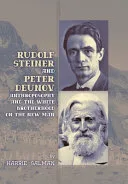
Rudolf Steiner and Peter Deunov
 71
71

Rudolf Steiner and Peter Deunov
Harrie Salman's "Rudolf Steiner and Peter Deunov" offers a necessary, if at times dense, comparative analysis of two major esoteric figures of the early 20th century. Salman's strength lies in meticulously charting the parallel trajectories of Steiner's Anthroposophy and Deunov's White Brotherhood, particularly their shared commitment to inner development rooted in esoteric Christianity. A concrete example of this is the exploration of their respective approaches to cultivating spiritual senses, a concept central to both systems. However, the work occasionally feels overly academic, potentially alienating readers seeking a more immediately accessible spiritual text. The lack of direct engagement with any significant criticisms or controversies surrounding either figure, beyond implicit contextualization, represents a missed opportunity for deeper critical engagement. Despite this, Salman provides a valuable resource for understanding the foundational ideas that propelled these movements forward.
This is a scholarly yet essential comparison for serious students of modern esotericism.
📝 Description
71
Harrie Salman's 2023 study compares Rudolf Steiner and Peter Deunov, two spiritual teachers of the early 20th century.
Harrie Salman's book offers a comparative examination of Rudolf Steiner, the founder of Anthroposophy, and Peter Deunov, the Bulgarian spiritual leader. Salman places their public movements and core teachings within the context of European spiritual renewal in the early 20th century, a time marked by a reaction against materialism and established religious structures. The study looks at how both figures articulated paths for inner development and the cultivation of human capacities.
This work is aimed at serious students of Western esotericism, comparative religion, and the history of spiritual movements. It will appeal to those interested in the practical application of spiritual principles for personal and societal change. The book is especially relevant for individuals exploring the modern expressions of esoteric Christianity and seeking to understand the similarities and differences between concurrent spiritual traditions.
Published in 2023, this book engages with the period of spiritual and philosophical ferment in early 20th-century Europe. This era saw figures like Rudolf Steiner and Peter Deunov emerge, often in response to prevailing materialism and existing religious frameworks. Steiner, after his work with the Theosophical Society, founded Anthroposophy in 1912, while Deunov began his public ministry in Bulgaria around the same time. Both drew upon esoteric Christian traditions to articulate paths of inner growth and universal human values, existing alongside other spiritual currents like Theosophy and early psychology.
💡 Why Read This Book?
• Gain a nuanced understanding of the parallel spiritual paths of Rudolf Steiner and Peter Deunov, learning how both figures independently developed methods for inner cultivation based on esoteric Christian principles. • Grasp the historical context of the early 20th century, recognizing how Steiner's Anthroposophy and Deunov's School of the White Brotherhood emerged as responses to prevailing materialistic philosophies. • Explore specific concepts like 'universal human values' and 'spiritual perception' as articulated by these two teachers, understanding their practical application for personal transformation.
⭐ Reader Reviews
Honest opinions from readers who have explored this book.
❓ Frequently Asked Questions
What is the primary focus of Harrie Salman's "Rudolf Steiner and Peter Deunov"?
The book focuses on a comparative study of Rudolf Steiner, founder of Anthroposophy, and Peter Deunov, founder of the School of the White Brotherhood. It examines their teachings, movements, and shared roots in esoteric Christianity during the early 20th century.
When were Rudolf Steiner and Peter Deunov active?
Rudolf Steiner (1861-1925) and Peter Deunov (1864-1944) were both prominent spiritual teachers in the early to mid-20th century, stepping into public life in Europe around the turn of the century.
What is Anthroposophy?
Anthroposophy is a spiritual philosophy founded by Rudolf Steiner, aiming to provide a path of inner development and understanding of the spiritual world through a method of thinking and spiritual research.
What is the School of the White Brotherhood?
Founded by Peter Deunov, the School of the White Brotherhood is a spiritual movement that teaches inner development, vegetarianism, and the cultivation of universal human values, often drawing from esoteric Christian traditions.
Does the book discuss the relationship between Steiner's and Deunov's teachings?
Yes, the book is a comparative study, highlighting the similarities in their teachings on inner development and esoteric Christianity, as well as their distinct approaches and the movements they founded.
Who is Harrie Salman?
Harrie Salman is the author of "Rudolf Steiner and Peter Deunov." He is known for his scholarly work in the field of esotericism and comparative religion, exploring spiritual movements and their founders.
🔮 Key Themes & Symbolism
Esoteric Christianity
The work positions both Rudolf Steiner and Peter Deunov within the tradition of esoteric Christianity, distinguishing it from conventional religious practice. It explores how both teachers emphasized the inner, spiritual dimensions of Christian teachings, focusing on personal transformation and direct spiritual experience rather than solely on dogma or outward ritual. This lineage is presented as a source for their respective paths of inner development and their articulation of universal human values.
Inner Development Paths
A central theme is the concept of 'inner development' as taught by Steiner and Deunov. The book contrasts their approaches to cultivating spiritual consciousness and ethical capacities. This involves understanding the methods and exercises proposed by each teacher for achieving higher states of awareness and a deeper connection to the spiritual world, moving beyond the materialist worldview prevalent in the early 20th century.
Founders of Spiritual Movements
The book examines Steiner and Deunov not just as teachers but as founders of significant spiritual movements: Anthroposophy and the School of the White Brotherhood, respectively. It looks at how they structured these organizations, disseminated their teachings, and fostered communities dedicated to spiritual research and practice, shaping the range of modern Western esotericism.
Universal Human Values
Central to both Steiner's and Deunov's teachings, as presented in the book, is the emphasis on 'universal human values.' This theme explores how the spiritual paths offered by these figures aimed to cultivate qualities applicable to all humanity, transcending cultural or religious specificities, and fostering a basis for a renewed spiritual culture.
💬 Memorable Quotes
Direct passages from the work, attributed to the author.
“Heralds of a new culture”
— This phrase captures the role attributed to both Steiner and Deunov, suggesting they brought forth essential spiritual impulses and teachings intended to shape a future spiritual and social order.
“Inner development based on the universal values of humanity”
— This captures the core purpose of the teachings discussed, highlighting a focus on personal spiritual growth and the cultivation of ethical principles applicable to all people.
“Tradition of esoteric Christianity”
— This positions the work of Steiner and Deunov within a specific lineage of spiritual thought, emphasizing hidden or inner meanings within Christianity accessible through direct spiritual experience.
“Founder of the Anthroposophical Movement”
— This identifies Rudolf Steiner with a specific, organized spiritual path he established, known as Anthroposophy, which seeks to understand the spiritual nature of existence.
“Founder of the School of the White Brotherhood”
— This designates Peter Deunov as the originator of the School of the White Brotherhood, a spiritual community and teaching he established.
🌙 Esoteric Significance
Tradition
The work places Steiner and Deunov firmly within the lineage of esoteric Christianity, a tradition that seeks the inner, spiritual meaning of Christian teachings. This approach departs from exoteric, orthodox Christianity by emphasizing direct spiritual experience, inner transformation, and a more Gnostic understanding of spiritual realities. It aligns with a broader Western esoteric tradition that includes Hermeticism and Kabbalah in its search for hidden wisdom accessible through disciplined inner work.
Symbolism
While specific symbols are explored within the book's detailed analysis, a key motif is the concept of 'inner development' itself, acting as a symbolic representation of the journey from the material to the spiritual. The establishment of organized movements like Anthroposophy and the School of the White Brotherhood can also be seen symbolically, representing the structure needed to contain and transmit spiritual impulses into the earthly realm.
Modern Relevance
The teachings of Rudolf Steiner continue to influence various contemporary fields, including Waldorf education, biodynamic agriculture, and anthroposophical medicine. Peter Deunov's legacy is particularly strong in Bulgaria and among spiritual communities that emphasize harmony, health, and cosmic love. Both figures' emphasis on inner development and universal ethics remains relevant for contemporary spiritual seekers and those interested in alternative models for personal growth and societal well-being.
👥 Who Should Read This Book
• Students of comparative esoteric traditions seeking to understand the parallels between Western spiritual movements of the early 20th century. • Individuals interested in Rudolf Steiner and Anthroposophy, looking for context and connections to other spiritual teachers of his era. • Seekers exploring Peter Deunov and the School of the White Brotherhood, wanting to grasp his unique spiritual philosophy and its roots.
📜 Historical Context
The early 20th century in Europe was a fertile ground for spiritual and esoteric movements, often emerging as a response to the perceived spiritual vacuum left by scientific materialism and industrialization. In this milieu, figures like Rudolf Steiner (1861-1925) and Peter Deunov (1864-1944) presented distinct yet convergent paths. Steiner, initially active within the Theosophical Society, broke away to found Anthroposophy in 1912, offering a comprehensive spiritual science. Deunov, meanwhile, established the School of the White Brotherhood in Bulgaria, emphasizing inner development and esoteric Christianity. Their work stood in contrast to the more dogmatic religious institutions and also offered an alternative to other esoteric currents like Theosophy, which had gained significant traction. Both teachers aimed to foster a 'new culture' grounded in spiritual understanding and universal ethics, reflecting a broader European intellectual current seeking renewal beyond purely materialist frameworks.
📔 Journal Prompts
The concept of 'inner development' as presented by Steiner and Deunov.
How the 'universal values of humanity' informed the teachings of both figures.
The legacy of esoteric Christianity in the 20th century.
The distinct methods for spiritual cultivation offered by Steiner and Deunov.
The establishment of organized spiritual movements like Anthroposophy.
🗂️ Glossary
Anthroposophy
A spiritual philosophy founded by Rudolf Steiner, aiming to provide a path of inner development and understanding of the spiritual world through a method of thinking and spiritual research.
School of the White Brotherhood
A spiritual movement founded by Peter Deunov, focused on inner development, ethical living, and the cultivation of universal human values, often drawing from esoteric Christian principles.
Esoteric Christianity
A tradition that interprets Christian teachings in terms of inner, spiritual meaning and direct experience, focusing on personal transformation rather than solely on dogma or outward religious practice.
Inner Development
The process of cultivating one's spiritual consciousness, ethical capacities, and inner faculties, as taught by spiritual masters to achieve higher states of awareness and understanding.
Universal Human Values
Ethical principles and qualities considered fundamental to all human beings, transcending cultural or religious differences, and forming a basis for spiritual and social harmony.
Spiritual Science
A term used by Rudolf Steiner to describe his approach to understanding the spiritual world through rigorous investigation and disciplined thinking, akin to scientific method applied to spiritual realities.
Theosophical Society
An international organization founded in 1875, promoting the study of comparative religion, philosophy, and science, and seeking to further the universal brotherhood of humanity. Rudolf Steiner was a prominent member before forming his own movement.