The Feng Shui Companion
 75
75

The Feng Shui Companion
George Birdsall’s The Feng Shui Companion offers a remarkably clear entry point into a system often shrouded in mystique. The 1997 publication date places it within a wave of accessible introductions to Eastern practices, but its strength lies in its direct, no-nonsense approach. Birdsall avoids overly spiritual jargon, focusing instead on the practical application of geomantic principles. The section on the Five Elements, for instance, breaks down their interactions with admirable simplicity, illustrating how a balance of Wood, Fire, Earth, Metal, and Water can influence a home’s energy. A limitation, however, is that the book's brevity, while a strength for beginners, might leave those with more experience wanting deeper theoretical exploration or more nuanced applications. Nonetheless, for its intended audience, it provides a solid foundation for making immediate, beneficial environmental changes. It serves as a capable, if introductory, guide.
📝 Description
75
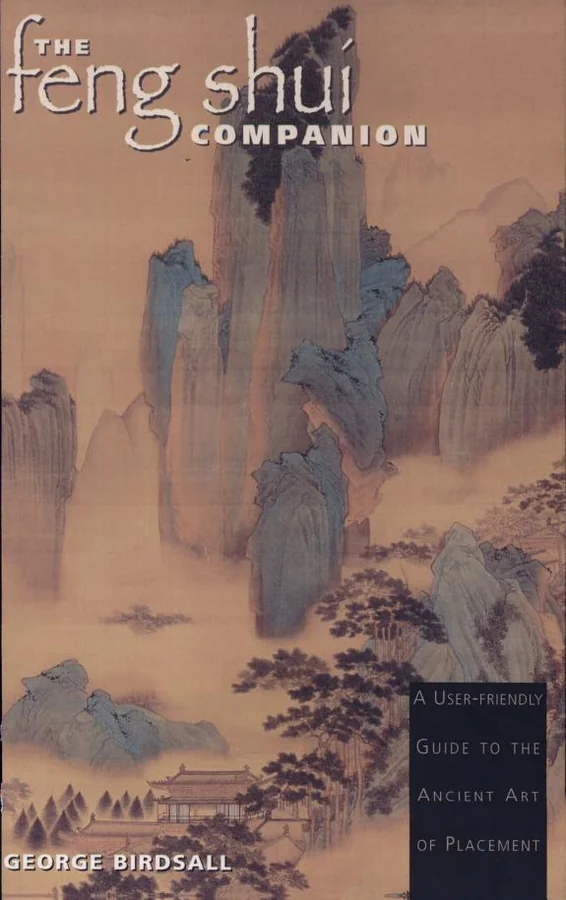
George Birdsall published 'The Feng Shui Companion' in March 1997, translating ancient Chinese geomancy for Western homes.
This handbook applies the principles of ancient Chinese geomancy to personal spaces. It translates complex theories into actionable advice, showing how small environmental adjustments can improve harmony and prosperity. The book emphasizes that these changes often require minimal financial investment, making the art accessible to anyone seeking to improve their living and working conditions. It is designed for individuals curious about Feng Shui, regardless of prior knowledge. Homeowners, renters, and anyone interested in creating a more balanced environment will find the accessible explanations and actionable steps useful. It caters to the pragmatic seeker, not just the academic theorist.
Published in March 1997, the book emerged during a time of increased Western interest in Eastern philosophies. As globalization grew, so did the accessibility of traditions like Feng Shui. The book arrived as New Age spirituality gained traction, offering a grounded, non-dogmatic approach to a complex system. Its user-friendly format distinguished it from more academic or purely spiritual texts available then.
The Feng Shui Companion positions itself within the tradition of Chinese geomancy, a practice concerned with the flow of energy in physical spaces. It draws upon centuries of Taoist philosophy and observation, aiming to harmonize human dwellings with their surroundings. Unlike purely philosophical texts, Birdsall's work focuses on the practical application of concepts like Qi and the Five Elements, making them relevant to contemporary living environments. The book bridges the gap between ancient wisdom and modern life, offering a method for individuals to consciously influence their environment for well-being.
💡 Why Read This Book?
• Learn how to identify and harness Qi, the vital life force energy, within your own living space, as explained in the book's foundational chapters on energy flow, enabling you to foster a more vibrant atmosphere. • Understand the practical application of the Five Elements (Wood, Fire, Earth, Metal, Water) as outlined in Birdsall's specific examples, allowing you to consciously balance these energies to support specific life goals. • Discover how to use the Bagua map, a core concept detailed in the text, to analyze and enhance distinct areas of your home or office, such as career, relationships, or wealth, with minimal cost.
⭐ Reader Reviews
Honest opinions from readers who have explored this book.
❓ Frequently Asked Questions
When was The Feng Shui Companion first published?
The Feng Shui Companion by George Birdsall was first published in March 1997, positioning it as an accessible guide during a surge of interest in Eastern philosophies in the West.
Does the book require expensive materials to implement Feng Shui?
No, the book explicitly states that many effective Feng Shui principles can be implemented at little or no cost, focusing on arrangement and intention rather than costly purchases.
What is the core philosophy behind Feng Shui as presented in the book?
The book explains Feng Shui as the ancient Chinese art of geomancy, focused on creating balance and harmony in one's environment to foster prosperity and well-being through subtle adjustments.
How does the book explain the concept of Qi?
The Feng Shui Companion introduces Qi as the vital life force energy that flows through all things, and explains how its proper circulation within a space is crucial for positive environmental effects.
What are the Five Elements mentioned in the book?
The Five Elements discussed are Wood, Fire, Earth, Metal, and Water. The book details how these elements interact and how their balance or imbalance affects the energy of a space.
Is this book suitable for complete beginners to Feng Shui?
Yes, the book is described as a user-friendly handbook, specifically designed for anyone interested in employing Feng Shui, implying it is suitable for those with no prior knowledge.
🔮 Key Themes & Symbolism
Qi and Energy Flow
The book centers on the concept of Qi, or vital life force energy, as the fundamental element of Feng Shui. It posits that the way Qi flows through a space—whether smoothly, stagnantly, or too rapidly—directly impacts the inhabitants' well-being and prosperity. Birdsall illustrates how to identify blockages, such as clutter or poor furniture placement, and how to encourage a beneficial flow. This theme is crucial for understanding how environmental arrangement is not merely aesthetic but energetically significant, aligning with Taoist principles of natural harmony.
The Five Elements
A core tenet explored is the interplay of the Five Elements: Wood, Fire, Earth, Metal, and Water. The work details the productive and destructive cycles through which these elements interact. Understanding these cycles allows practitioners to consciously introduce or balance elements within their environment. For instance, using water features to nourish Wood or employing Earth tones to temper excessive Fire energy are practical applications discussed, rooted in ancient Chinese cosmology and its application to terrestrial spaces.
Bagua and Environmental Mapping
The book introduces the Bagua, an octagonal energy map used to divide a space into nine areas, each corresponding to a different aspect of life (e.g., wealth, health, relationships, career). Birdsall explains how to orient the Bagua within a home or room to identify which physical areas relate to which life aspects. This mapping system provides a structured approach to analyzing one's environment and applying specific remedies or enhancements to improve particular areas, linking the metaphysical to the physical layout.
Practical Application and Harmony
A significant theme is the emphasis on practical, cost-effective implementation. Birdsall guides readers to make seemingly minor adjustments—like repositioning a desk, decluttering a specific corner, or introducing a particular color—that can lead to substantial positive shifts. The ultimate goal, as presented throughout the book, is the creation of a harmonious environment that supports the occupants' physical, mental, and spiritual well-being, fostering balance and prosperity in alignment with natural principles.
💬 Memorable Quotes
Direct passages from the work, attributed to the author.
“Just a few seemingly inconsequential changes can have enormous positive effects.”
— This highlights the book's central premise: that Feng Shui is not about grand, expensive renovations but about the power of subtle, intentional adjustments to one's environment to influence life outcomes.
“Certain principles can be implemented at little or no cost.”
— This underscores the accessibility of Feng Shui as presented by Birdsall, emphasizing that practical improvements to one's living space are achievable through awareness and mindful arrangement, rather than financial expenditure.
“The ancient Chinese art of geomancy to create balance, harmony, and prosperity.”
— This concisely defines the purpose and scope of Feng Shui as explored in the book, framing it as a practical system for improving one's personal environment and thereby enhancing overall life quality.
“A user-friendly handbook for anyone interested in employing Feng Shui.”
— This emphasizes the book's accessibility and target audience, positioning it as an introductory guide for newcomers to the principles and practices of Feng Shui.
“Shows how to create balance, harmony, and prosperity in his or her personal environment.”
— This captures the core benefit offered by the book: the practical guidance on transforming one's immediate surroundings to foster positive states of being and fortune.
🌙 Esoteric Significance
Tradition
The Feng Shui Companion draws from the Taoist tradition of Chinese metaphysics, specifically the school of Form and Compass schools of Feng Shui. It is rooted in the concept of harmonizing human existence with the natural environment (Qi). While not strictly Hermetic or Kabbalistic, it shares the Hermetic principle of 'As Above, So Below,' applying cosmic principles to earthly dwellings. Its departure from Western esoteric traditions lies in its focus on the physical landscape and its energetic properties, rather than symbolic or spiritual correspondences in the Western sense.
Symbolism
Key symbols and motifs include the Five Elements (Wood, Fire, Earth, Metal, Water), representing fundamental forces and their cyclical interactions in the universe and within a space. The Bagua, an octagonal map, serves as a symbolic representation of the universe's energy patterns applied to a dwelling, correlating different life areas with directions. The concept of Qi itself is a symbolic representation of life force, invisible yet palpable, that flows through all things and must be managed for well-being.
Modern Relevance
Contemporary thinkers and designers in fields like sustainable architecture, interior design, and wellness coaching often incorporate Feng Shui principles, influenced by accessible guides like Birdsall's. Schools of mindfulness and positive psychology also echo Feng Shui's emphasis on environmental influence on mental states. Modern practitioners might integrate its principles into urban planning, office design, or personal habit formation, recognizing the enduring connection between our surroundings and our inner experience.
👥 Who Should Read This Book
• Individuals new to Feng Shui seeking a clear, practical introduction to its core principles and how to apply them in their homes or workplaces. • Homeowners or renters interested in making tangible improvements to their living environment to foster greater harmony, balance, and prosperity without extensive renovations. • Those exploring Eastern philosophies and their practical applications for personal well-being, who appreciate a grounded, actionable approach over purely theoretical or spiritual explorations.
📜 Historical Context
George Birdsall's The Feng Shui Companion, published in March 1997, arrived during a significant period of Western assimilation of Eastern esoteric practices. The 1990s saw a burgeoning interest in holistic living, mindfulness, and alternative philosophies, fueled by increased global connectivity and a desire for personal well-being beyond conventional means. Feng Shui, alongside practices like yoga and meditation, gained mainstream traction. Birdsall's work entered a market already featuring more academic treatises and spiritual interpretations of Feng Shui. Its key differentiator was its pragmatic, user-friendly approach, distinguishing it from earlier, perhaps more esoteric, texts. While authors like Lillian Too were also popularizing Feng Shui globally around the same time, Birdsall's book focused on simple, actionable steps, making it a valuable resource for beginners seeking tangible environmental improvements without deep theoretical dives. The book's reception reflected a broader cultural shift towards integrating ancient wisdom into modern daily life.
📔 Journal Prompts
Reflect on the flow of Qi in your primary living space, noting any areas that feel stagnant or overly rapid.
Consider the balance of the Five Elements in your home's main gathering area and identify potential adjustments.
Map your current environment using the Bagua principles outlined in the book; what insights emerge about your life areas?
Identify one 'inconsequential' change suggested by Birdsall that you can implement this week to improve your environment.
How does decluttering your space, as recommended, relate to the flow of Qi and your personal sense of harmony?
🗂️ Glossary
Qi (Chi)
The vital life force energy believed to flow through all living things and the environment. Proper circulation of Qi is considered essential for health, prosperity, and harmony.
Bagua
An energy map, typically octagonal, used in Feng Shui to divide a space into nine areas, each corresponding to a specific aspect of life (e.g., wealth, fame, love, family).
Five Elements
The fundamental forces in Chinese cosmology: Wood, Fire, Earth, Metal, and Water. They are believed to interact in cycles that influence the energy and balance of environments.
Geomancy
The practice of divining or understanding the energies of the earth and landscape, of which Feng Shui is a specific application focused on buildings and their surroundings.
Harmony
In Feng Shui, the state of balance and positive energetic flow within an environment, leading to well-being, prosperity, and reduced conflict.
Prosperity
A state of abundance and success, encompassing financial well-being, good fortune, and overall flourishing, which Feng Shui aims to enhance through environmental adjustments.
Personal Environment
Refers to the immediate surroundings of an individual, including their home, workspace, and any space where they spend significant time, which Feng Shui seeks to optimize.
This book appears in 1 collection
🔮 Readers Also Liked
Browse all →









From the “Geomancy” Collection
View all →








More Free Occult Philosophy Books
View all →