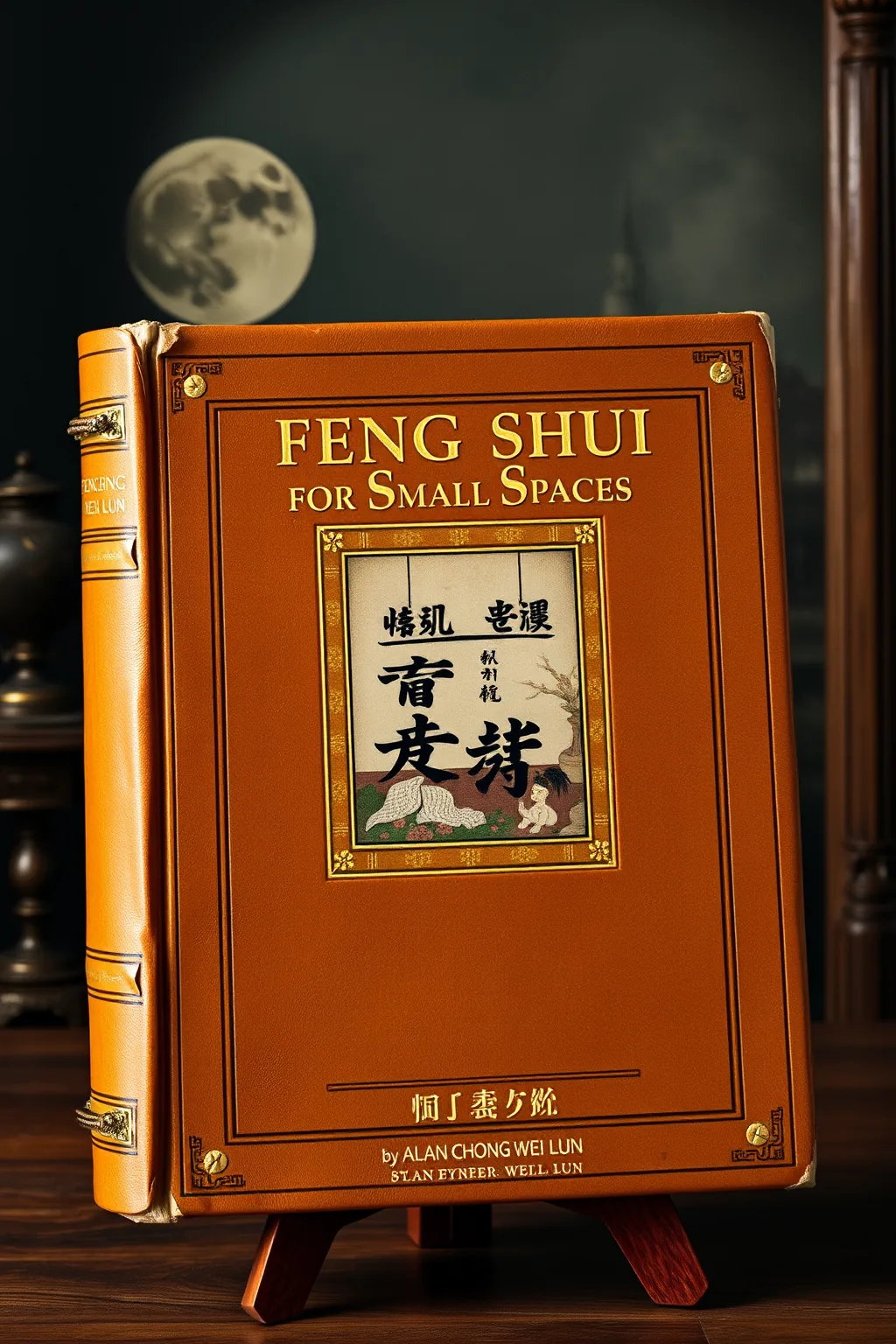
Feng Shui for Small Spaces
 61
61

Feng Shui for Small Spaces



Ophelia Vance, Mystical Literature Reviewer — Alan Chong Wei Lun's "Feng Shui for Small Spaces" is a masterclass in applied esoteric wisdom for the contemporary world. Wei Lun artfully demystifies the complex principles of Feng Shui, rendering them accessible and profoundly impactful for those with limited living areas. His insights into the energetic interplay of space, object, and inhabitant are both practical and deeply resonant, offering a potent toolkit for transforming one's environment into a source of empowerment and spiritual alignment. This book is a rare gem, bridging the gap between ancient philosophy and modern living with grace and authority, essential reading for any practitioner seeking to cultivate harmony and abundance.
📝 Description
61
Alan Chong Wei Lun's 2018 book shows how Feng Shui applies to apartments and studios.
Feng Shui for Small Spaces by Alan Chong Wei Lun addresses the practice of harmonizing living environments within limited square footage. The book examines how the arrangement of objects and the movement of chi, or vital energy, can convert a small home into a more tranquil and prosperous place. It presents Feng Shui as a dynamic philosophy, not a strict set of rules, connecting it to the wider cosmos. Readers learn to use the symbolic meanings of their surroundings and to infuse their homes with positive energy.
The guide is for individuals who believe that even small spaces possess significant potential. It aims to help readers cultivate balance, attract good fortune, and achieve inner peace by altering their perception of their homes. The book encourages viewing the environment as a source of meaning, where each item and arrangement contributes to the overall atmosphere.
This book operates within the tradition of classical Feng Shui, a Chinese metaphysical art concerned with the study of energy flow and its impact on human well-being. It draws on principles established over centuries, particularly those related to the Five Elements (Wu Xing), Yin and Yang, and the Bagua map, adapting them for contemporary urban living. Unlike more academic or historical examinations of Feng Shui, this work prioritizes practical application for those living in smaller, often rented, accommodations, bridging the gap between ancient theory and modern necessity.
💡 Why Read This Book?
This indispensable guide offers practical, esoteric wisdom for transforming even the most confined living spaces into havens of positive energy. Learn to harness ancient principles to enhance well-being, attract prosperity, and cultivate inner peace. Ideal for urban dwellers, minimalist practitioners, and anyone seeking to imbue their home with profound, life-affirming vibrations.
⭐ Reader Reviews
Honest opinions from readers who have explored this book.
❓ Frequently Asked Questions
Can Feng Shui truly impact a small apartment?
Absolutely. The principles of Feng Shui are about energy flow (chi), which is present in every space, regardless of size. This book teaches you to maximize positive chi even in limited areas.
What is 'chi' in Feng Shui?
Chi, or Qi, is the vital life force energy that flows through all things. In Feng Shui, understanding and directing the flow of chi is crucial for creating harmonious and auspicious environments.
How does the Bagua map apply to small spaces?
The Bagua map can be adapted to any space, including individual rooms or even specific furniture arrangements within a small dwelling. It helps identify areas for specific life aspirations.
Are there specific colors or elements that are better for small spaces?
Yes, certain colors and elements can be used strategically to expand perceived space and enhance specific energies. The book provides guidance on these applications.
Is Feng Shui a religion?
No, Feng Shui is a philosophical system and an art form based on observing natural patterns and energy flows. It complements many spiritual beliefs without requiring adherence to a specific doctrine.
🔮 Key Themes & Symbolism
Harnessing Micro-Environments
This theme explores the profound concept that no space is too small to be imbued with potent energetic forces. The book reveals how to meticulously analyze and optimize the subtle currents of chi within confined areas, demonstrating that even a studio apartment or a single room can become a powerful nexus of positive energy. It looks at the idea that intentional design and arrangement can transform perceived limitations into energetic advantages, allowing for the cultivation of wealth, health, and happiness within even the most modest of dwellings. This approach empowers readers to see their living spaces not as constraints, but as canvases for profound energetic transformation.
The Language of Symbolism and Form
Looking at the esoteric heart of Feng Shui, this theme unpacks the rich symbolic language embedded within everyday objects and spatial arrangements. It teaches readers to perceive the deeper meanings behind colors, shapes, materials, and the placement of items, understanding how they communicate with and influence the ambient energy. The book guides practitioners to select and position elements that resonate with specific intentions, thereby creating a visual and energetic dialogue that supports their aspirations. This understanding elevates interior decoration from mere aesthetics to a profound practice of intentional manifestation, where each choice becomes a deliberate act of energetic alignment.
Cultivating Inner Harmony Through Outer Space
This crucial theme underscores the inextricable link between our external environment and our internal state. The book elucidates how a harmoniously arranged living space acts as a mirror and amplifier of inner peace, clarity, and well-being. By applying Feng Shui principles to small spaces, readers are guided to create an external sanctuary that fosters emotional balance, reduces stress, and enhances mental focus. This holistic approach posits that by consciously shaping our surroundings, we are, in essence, shaping our inner landscape, leading to a more integrated and fulfilling existence. It's about using the tangible to influence the intangible.
💬 Memorable Quotes
Direct passages from the work, attributed to the author.
“Every object whispers its purpose to the discerning eye.”
— This highlights the symbolic nature of Feng Shui, where everyday items possess deeper meanings that can be understood and utilized for energetic enhancement.
“Chi flows like water; its direction shapes destiny.”
— This metaphorical quote illustrates the dynamic nature of life force energy and its critical role in influencing the course of one's life.
“Balance in space is balance within.”
— This profound statement connects the outer environment directly to the inner psychological and emotional state of the inhabitant.
“To curate your home is to curate your life.”
— This suggests that the conscious act of arranging one's living space is a powerful form of self-creation and intentional living.
💡 Key Ideas
Editorial paraphrase of the work's core concepts — not direct quotes.
The smallest dwelling can hold the grandest energies.
This quote emphasizes that the potential for positive energetic influence is not dictated by physical size, but by intentional application of principles.
🌙 Esoteric Significance
Tradition
Feng Shui is deeply rooted in Taoist philosophy, drawing upon concepts such as Yin and Yang, the Five Elements (Wu Xing), and the I Ching. It represents a practical application of these metaphysical principles to the physical world, aiming to harmonize human existence with the natural order. It's an esoteric art that seeks to understand the unseen forces shaping our reality, guiding practitioners to cultivate auspicious environments that foster well-being and prosperity by aligning with the cosmic flow of chi.
Symbolism
Key symbols in Feng Shui include the Bagua map, representing the eight life aspirations and their corresponding directions; the Five Elements (Wood, Fire, Earth, Metal, Water), symbolizing dynamic cycles of creation and destruction; and various auspicious creatures and objects (e.g., dragons, turtles, water features) that represent specific energetic qualities like strength, longevity, and abundance. These symbols are not merely decorative but serve as energetic conduits, influencing the flow of chi within a space.
Modern Relevance
In our increasingly urbanized and often cramped living environments, Feng Shui offers a vital pathway to reclaiming a sense of balance and well-being. The principles of optimizing energy flow, decluttering, and creating intentional spaces are more relevant than ever for combating stress and enhancing mental clarity. "Feng Shui for Small Spaces" demonstrates how these ancient techniques can be powerfully applied to modern challenges, empowering individuals to create harmonious sanctuaries that support their personal growth and aspirations, regardless of their dwelling's size.
👥 Who Should Read This Book
This book is a treasure for the contemporary seeker. Beginners will find a clear, accessible introduction to the fundamental principles of Feng Shui, explaining its practice for everyday life. Scholars and practitioners of esoteric arts will appreciate the depth of Wei Lun's insights, offering new perspectives on ancient wisdom. Those grappling with limited living spaces – urban dwellers, students, or anyone in smaller accommodations – will discover practical, transformative techniques. Ultimately, anyone yearning to harmonize their environment, attract positive energy, and cultivate a deeper connection with their surroundings will find invaluable guidance within these pages.
📜 Historical Context
Feng Shui, originating in ancient China, emerged from observations of the natural world and the desire to align human settlements with auspicious environmental forces. Its development spans millennia, evolving from early geomancy practices used for siting tombs and palaces to a sophisticated system of environmental philosophy. During periods of dynastic rule, Feng Shui masters held significant influence, advising emperors on everything from city planning to personal residences. The Tang and Song dynasties, in particular, saw a flourishing of Feng Shui literature and practice. While often associated with traditional Chinese culture, its principles have a universal resonance, reflecting a deep understanding of human connection to the earth and cosmos. The late 20th and early 21st centuries have witnessed a global resurgence of interest in Feng Shui, adapting its ancient wisdom to modern lifestyles, including the challenges and opportunities presented by urban living and smaller homes.
📔 Journal Prompts
Reflect on the primary energetic 'feeling' of your current living space. What emotions or sensations does it evoke?
Identify one area in your small space that feels stagnant or energetically 'stuck.' What might be contributing to this?
Consider the symbolic meaning of the objects currently present in your most frequently used room. How do they align with your aspirations?
If you could introduce one element (color, material, shape) to enhance your space's energy, what would it be and why?
How does the flow of movement (or lack thereof) within your small space affect your daily life and mood?
🗂️ Glossary
Chi (Qi)
The vital life force energy that flows through all living things and the environment. In Feng Shui, its harmonious flow is paramount for well-being and prosperity.
Yin and Yang
The fundamental Taoist concept of complementary, interconnected opposites (e.g., dark/light, passive/active). Balance between Yin and Yang is crucial for energetic harmony.
Bagua
An octagonal map or grid used in Feng Shui to analyze the energy of a space, correlating different areas with specific life aspirations such as wealth, health, and relationships.
Five Elements (Wu Xing)
The cyclical theory of Wood, Fire, Earth, Metal, and Water, representing fundamental energies that interact in cycles of creation and control, influencing the balance and transformation of chi.
Auspicious
Suggestive of future success; favorable or conducive to good fortune. In Feng Shui, auspicious arrangements are designed to attract positive outcomes.
This book appears in 3 collections
🔮 Readers Also Liked
Browse all →









From the “Geomancy” Collection
View all →







More Free Divination & Tarot Books
View all →