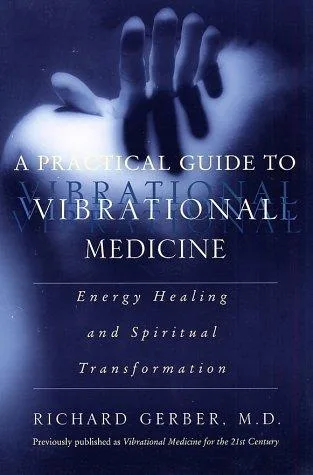
A Practical Guide to Vibrational Medicine
 78
78

A Practical Guide to Vibrational Medicine
Richard Gerber's A Practical Guide to Vibrational Medicine attempts to chart a new course for healing, moving away from the purely physical to embrace energetic interactions. The book is ambitious, cataloging a wide spectrum of therapies that operate on principles of frequency and resonance. Gerber’s strength lies in his ability to connect disparate fields, from ancient healing traditions to cutting-edge physics, presenting a unified, albeit complex, vision. However, the sheer breadth of topics covered can sometimes lead to a lack of depth in any single area. The discussion on "Bioresonance Scanning," for example, while intriguing, feels underdeveloped and could benefit from more rigorous exploration of its scientific underpinnings or clinical applications. Despite this, the work offers a compelling argument for the body’s energetic nature, challenging readers to consider healing from a more holistic perspective. It provides a solid foundation for those wishing to explore the burgeoning field of energy medicine.
📝 Description
78
Richard Gerber's 2013 book examines energy-based healing modalities as the next frontier in medicine.
A Practical Guide to Vibrational Medicine presents energy-based healing as a significant area for medical advancement. Dr. Richard Gerber draws on extensive research and anecdotal accounts to move beyond a purely physical understanding of the body. The book discusses how subtle energies, frequencies, and electromagnetic fields impact health and illness. It suggests that recognizing these energetic patterns can lead to new therapeutic strategies.
This guide is for anyone interested in alternative and complementary medicine, especially those curious about the energetic aspects of health. It is also valuable for healthcare providers looking to expand their healing perspectives beyond conventional approaches. Lay readers interested in personal wellness and holistic health will also find it useful. Individuals with a background in physics or an interest in the connections between science and spirituality will find specific value here.
Published in 2013, Gerber's work emerged during a time when scientific thought was increasingly open to concepts of subtle energies and consciousness. This period saw a growing challenge to purely materialistic views of biology, drawing from quantum physics and Eastern philosophies. The book synthesizes disparate fields such as homeopathy, acupuncture, and electromagnetism, contributing to the development of what is often called 'energy medicine'. It connected these areas into a more unified framework.
💡 Why Read This Book?
• Gain a comprehensive overview of energy medicine concepts, including the biofield and its interaction with subtle energies, as presented in Gerber's synthesis of various healing modalities. • Understand the historical context of vibrational medicine, tracing its roots and connections to fields like homeopathy and electromagnetism, as explored in the book's historical sections. • Discover practical applications and theoretical frameworks for therapies that utilize sound, light, and frequency, offering a distinct perspective on health beyond conventional paradigms.
⭐ Reader Reviews
Honest opinions from readers who have explored this book.
❓ Frequently Asked Questions
When was A Practical Guide to Vibrational Medicine first published?
A Practical Guide to Vibrational Medicine by Richard Gerber was first published on September 24, 2013. This edition aimed to synthesize contemporary research on energy-based healing modalities.
What is the central idea behind vibrational medicine as explained by Dr. Gerber?
The central idea is that the human body is an energetic system, and illness or health can be understood through the lens of subtle energies and frequencies. Healing, therefore, involves restoring energetic balance.
Does the book discuss specific therapeutic techniques?
Yes, the book explores a wide range of techniques including sound therapy, light therapy, crystal healing, homeopathy, acupuncture, and other forms of energy healing that operate on vibrational principles.
Is this book suitable for beginners in esoteric science?
Yes, while it covers complex topics, the book is structured as a practical guide, aiming to introduce readers to the concepts and potential applications of vibrational medicine.
What scientific concepts does Gerber relate vibrational medicine to?
Gerber relates vibrational medicine to concepts from quantum physics, electromagnetism, and bioenergetics, suggesting that these scientific fields offer a framework for understanding subtle energy phenomena in the body.
What is the 'biofield' according to A Practical Guide to Vibrational Medicine?
The biofield is described as an energetic field that surrounds and permeates the body, influencing health and well-being. It is believed to be the medium through which vibrational therapies interact with the organism.
🔮 Key Themes & Symbolism
The Biofield and Subtle Energies
The work posits that the human body is enveloped and permeated by a subtle energy field, termed the biofield. This field is seen as the matrix for life processes, interacting with and influencing physical health. Gerber details how various healing modalities, from acupuncture meridians to electromagnetic fields, are expressions of this bioenergetic system. The book explores how disruptions or imbalances within the biofield can manifest as physical or emotional ailments, laying the groundwork for understanding energy-based diagnostics and therapeutics.
Frequencies and Resonance in Healing
A central tenet of vibrational medicine, as presented by Gerber, is the application of specific frequencies and resonant patterns for therapeutic purposes. The book examines how sound, light, and even specific electromagnetic wavelengths can be used to correct energetic imbalances. It draws parallels between physical phenomena like resonance and biological processes, suggesting that targeted frequencies can promote cellular repair and restore harmonic balance within the body's energetic matrix. This concept underpins many of the therapies discussed.
Holistic Health Paradigms
Gerber's work advocates for a rethinking in understanding health, moving beyond a purely reductionist, materialist model. It champions a holistic view where the physical, emotional, mental, and spiritual aspects of an individual are interconnected through an energetic framework. The book integrates insights from diverse traditions and scientific disciplines to support this integrated approach, suggesting that true healing addresses the whole person and their energetic system, rather than isolated symptoms or parts.
The Future of Medicine
The book frames vibrational medicine not merely as an alternative but as the future direction of medical science. It argues that as conventional medicine encounters limitations in treating chronic and complex conditions, energetic approaches offer promising new avenues. Gerber presents research and theoretical models that suggest a more nuanced and effective way to understand and intervene in human health, anticipating a future where energy-based diagnostics and therapies are integrated into mainstream healthcare.
💬 Memorable Quotes
Direct passages from the work, attributed to the author.
“Our bodies are not machines, but complex energetic systems.”
— This interpretation highlights the fundamental shift Gerber proposes: viewing the human form not as a collection of independent parts, but as an integrated, dynamic field of energy. It underscores the book's departure from traditional biomechanical models.
“Energy follows consciousness.”
— This concise statement points to the crucial role of mental and spiritual states in shaping physical reality and health. It suggests that our thoughts and intentions are not separate from our physical well-being but are intrinsically linked through energetic pathways.
“Every illness has an energetic signature.”
— This concept implies that diseases manifest as specific patterns of energetic disturbance within the body's field. Identifying and correcting these signatures forms the basis of many vibrational healing approaches discussed in the book.
“Sound and light are fundamental tools for energetic intervention.”
— This highlights specific modalities discussed in the book, framing sound and light not just as sensory experiences but as potent agents capable of influencing and rebalancing the body's subtle energy systems for therapeutic outcomes.
💡 Key Ideas
Editorial paraphrase of the work's core concepts — not direct quotes.
The body has an innate ability to heal itself when its energetic balance is restored.
This paraphrased idea emphasizes the self-regulatory and regenerative capacities of the human organism. The role of vibrational medicine, according to this view, is to facilitate and support these natural healing mechanisms by addressing energetic blockages.
🌙 Esoteric Significance
Tradition
While not strictly adhering to a single esoteric lineage, Gerber's work draws heavily from Hermetic principles of 'As Above, So Below,' linking cosmic energetic laws to human physiology. It also echoes Theosophical concepts of subtle bodies and man's energetic constitution. The emphasis on energy fields and consciousness aligns with broader New Age and metaphysical thought that emerged in the mid-20th century, seeking to integrate scientific inquiry with spiritual understanding.
Symbolism
The book frequently references symbols of energy and balance. The concept of the 'biofield' itself acts as a modern esoteric symbol for the unseen energetic matrix of life. Light and sound are also treated symbolically, representing fundamental forces that can be harnessed for healing. The idea of 'frequency' becomes a symbolic representation of an individual's state of being, with specific frequencies associated with health or disease.
Modern Relevance
Gerber's work continues to influence contemporary practitioners and researchers in fields such as energy psychology, biofield therapies, integrative medicine, and consciousness studies. Thinkers like Dawson Church, who writes about the science of intention and energy healing, and organizations promoting mind-body medicine, often cite or echo the foundational concepts presented in vibrational medicine. The book remains a key reference for those exploring the intersection of physics, biology, and consciousness.
👥 Who Should Read This Book
• Individuals exploring holistic and alternative health practices: This book offers a comprehensive introduction to the theory and application of energy-based healing modalities, providing a foundation for understanding these approaches. • Healthcare practitioners seeking to expand their knowledge: For medical doctors, therapists, or energy workers interested in complementary therapies, Gerber's work provides a framework for integrating energetic concepts into their practice. • Students of esoteric science and metaphysics: Those studying the nature of energy, consciousness, and the human subtle anatomy will find this book a valuable resource for understanding a significant branch of modern esoteric thought.
📜 Historical Context
A Practical Guide to Vibrational Medicine, first published in 2013, arrived during a period when the scientific community was slowly beginning to acknowledge the limitations of purely reductionist models of biology and medicine. The late 20th and early 21st centuries saw a resurgence of interest in concepts like bioenergetics, influenced by developments in quantum physics that challenged classical determinism. Thinkers like Candace Pert were exploring the mind-body connection through neuropeptides, and the field of subtle energy research, while still on the fringes, was gaining traction. Gerber's work synthesized disparate threads, including homeopathy (popularized by Samuel Hahnemann in the late 18th century) and traditional Chinese medicine's meridian system, positioning them within a modern energetic framework. It emerged in contrast to the dominant allopathic model, offering a more holistic and energetic perspective on health and disease that resonated with a growing audience seeking complementary approaches.
📔 Journal Prompts
The concept of the biofield and its relation to personal well-being.
Personal experiences with vibrational therapies or frequencies.
How consciousness might influence energetic states and health.
The interplay between physical symptoms and energetic patterns.
Identifying personal energetic signatures in daily life.
🗂️ Glossary
Biofield
An energetic field that surrounds and permeates the human body, believed to be crucial for health and well-being. It is considered the medium through which subtle energies interact with the physical organism.
Vibrational Medicine
A field of healing that utilizes subtle energies, frequencies, and electromagnetic fields to diagnose and treat illness, aiming to restore the body's natural energetic balance and promote self-healing.
Frequency
In the context of vibrational medicine, frequency refers to the rate at which energy oscillates, often measured in Hertz. Different frequencies are believed to have specific effects on biological systems.
Resonance
The phenomenon where one vibrating system causes another to vibrate at a specific frequency. In healing, it refers to the sympathetic interaction between therapeutic frequencies and the body's energetic patterns.
Subtle Energy
Forms of energy that are not readily detectable by conventional scientific instruments but are believed to influence biological and psychological processes. Examples include chi, prana, and biofields.
Electromagnetic Fields (EMFs)
Fields generated by electric currents and magnetic activity. The book explores how the body generates its own EMFs and how external EMFs can impact health.
Homeopathy
A system of alternative medicine based on the principle of 'like cures like,' using highly diluted substances that are believed to stimulate the body's self-healing mechanisms through energetic imprints.