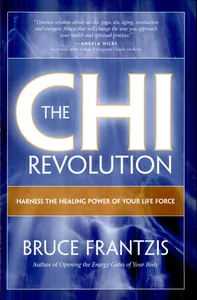
The family guide to homeopathy
 80
80

The family guide to homeopathy
Andrew Lockie’s "The Family Guide to Homeopathy" presents a lucid, if somewhat earnest, exposition of homeopathic principles. Its strength lies in its clarity; Lockie succeeds in translating complex ideas into digestible prose suitable for the layperson. The section on understanding symptom pictures is particularly well-executed, guiding the reader through the nuanced process of matching remedies. However, the work occasionally leans towards an uncritical presentation of homeopathy’s efficacy, which may not satisfy readers seeking a balanced scientific critique. A notable passage details the energetic 'memory of water' concept, a cornerstone for many homeopaths but a point of contention in conventional science. Ultimately, this guide serves as a dedicated primer for those predisposed to exploring homeopathic practices.
📝 Description
80
Andrew Lockie's 1989 guide explains homeopathy for household use.
This book serves as an introduction to the principles and practices of homeopathy, written for individuals without prior medical background. It aims to clarify the system by detailing its theoretical basis and practical applications for common health issues. The text covers the fundamental ideas behind homeopathic remedies, their preparation, and their use in a home setting.
"The Family Guide to Homeopathy" is intended for those interested in alternative health approaches for themselves and their families. It will appeal to readers drawn to natural healing, self-care, and understanding the body's ability to regain balance. Those seeking clear instructions on choosing and administering remedies for everyday health concerns will find this manual helpful. The book systematically introduces core homeopathic concepts, including the 'Law of Similars' and the process of potentization. It also explains the use of a materia medica to match patient symptoms with specific remedies.
Published in 1989, this work reflects a late 20th-century interest in alternative medicine and natural healing. Homeopathy, originating with Samuel Hahnemann in the late 18th century, experienced renewed attention alongside movements advocating for holistic health. Lockie's book offers a contemporary perspective on these traditional principles, making them accessible to a general audience interested in self-care and complementary health practices.
💡 Why Read This Book?
• Learn the foundational 'Law of Similars' and how it informs remedy selection, offering a distinct perspective on treating illness that differs from conventional pharmacology. • Understand the 'potentization' process, including dilution and succussion, to grasp how homeopathic remedies are prepared and believed to gain their therapeutic energy. • Gain practical knowledge on using a 'materia medica' to match specific symptoms to appropriate remedies, empowering you with tools for self-care and family wellness.
⭐ Reader Reviews
Honest opinions from readers who have explored this book.
❓ Frequently Asked Questions
When was "The Family Guide to Homeopathy" first published?
Andrew Lockie's "The Family Guide to Homeopathy" was first published in 1989, reflecting a growing interest in alternative health practices during that era.
What is the core principle of homeopathy explained in the book?
The book explains the core homeopathic principle known as the 'Law of Similars,' which posits that a substance causing symptoms in a healthy person can cure similar symptoms in a sick person.
Does the book provide guidance on preparing remedies?
Yes, "The Family Guide to Homeopathy" details the 'potentization' process, which involves serial dilution and succussion (shaking) to prepare homeopathic remedies.
What is a 'materia medica' according to this guide?
The book describes a 'materia medica' as a reference work listing various remedies and their associated symptom profiles, essential for identifying the correct homeopathic treatment.
Is this book suitable for complete beginners to homeopathy?
Absolutely. The book is specifically designed as a family guide, aiming to make the complex principles of homeopathy accessible to individuals with no prior knowledge.
What kind of health issues does the book address?
It covers practical applications for common ailments and everyday health concerns, providing guidance for a household setting rather than complex or chronic diseases.
🔮 Key Themes & Symbolism
The Law of Similars
This fundamental tenet, central to Lockie's guide, posits that 'like cures like.' The book elaborates on how a substance that produces specific symptoms in a healthy individual can be used to treat similar symptoms when administered to a sick person. This principle forms the bedrock of homeopathic prescribing, differentiating it from allopathic medicine's approach of using opposites to combat disease. The guide provides numerous examples illustrating this concept in practice for various common ailments.
Potentization and Vital Force
A key esoteric aspect explored is 'potentization,' the process of diluting and vigorously shaking (succussion) substances to create remedies. Lockie explains how this method is believed to enhance the energetic or 'vital' properties of the original substance, making it therapeutically active. This concept aligns with vitalist philosophies, suggesting an underlying life force that remedies aim to stimulate or rebalance, facilitating the body's natural healing capabilities.
Materia Medica Application
The book emphasizes the practical use of a 'materia medica,' a compendium of remedies and their detailed symptom pictures. Lockie guides readers on how to observe and record a patient's unique set of symptoms—physical, mental, and emotional—to accurately match them with the corresponding remedy profile. This holistic approach to symptom analysis is crucial for effective homeopathic prescribing, moving beyond mere symptom suppression.
Holistic Health and Self-Care
Presented as a 'family guide,' the work champions a holistic view of health, integrating mind, body, and spirit. It empowers individuals to take an active role in their well-being through informed self-care practices. By explaining homeopathy, Lockie encourages readers to consider natural approaches for everyday health challenges, fostering a sense of agency and connection to their body's inherent healing potential.
💬 Memorable Quotes
Direct passages from the work, attributed to the author.
“Like cures like.”
— This concise statement expresses the fundamental principle of homeopathy, known as the Law of Similars, which guides the selection of remedies based on symptom matching.
“The process of potentisation increases the energy of the remedy.”
— This highlights the core belief in homeopathy that through dilution and succussion, the energetic capacity of a substance is amplified, making it an effective therapeutic agent.
“Understanding the symptom picture is key to choosing the correct remedy.”
— This emphasizes the individualised nature of homeopathic treatment, where a detailed analysis of a patient's unique constellation of symptoms is paramount for successful prescribing.
“Homeopathy works with the body's own healing powers.”
— This interpretation suggests that homeopathic remedies are not designed to suppress symptoms but rather to stimulate the organism's innate vital force, thereby promoting self-healing.
“A materia medica is a reference for remedies and their uses.”
— This defines the essential tool for homeopaths, detailing the specific effects of various substances on the human system, aiding in the diagnostic process.
🌙 Esoteric Significance
Tradition
Homeopathy, as presented by Lockie, draws heavily from vitalist traditions that posit a life force or 'vital energy' governing health. This aligns with esoteric philosophies that view the physical body as an expression of subtler energetic planes. While not strictly Hermetic or Kabbalistic, its emphasis on unseen forces, energetic signatures, and holistic balance finds parallels in various Western esoteric schools that explore the interconnectedness of mind, body, and spirit.
Symbolism
The primary symbolic act in homeopathy is 'potentization,' the ritualistic dilution and succussion of a substance. This process symbolizes the extraction and amplification of an energetic essence, moving from the material to the immaterial. The 'materia medica' itself acts as a symbolic language, where each remedy represents a specific pattern of disturbance and healing, akin to a symbolic map of illness and recovery.
Modern Relevance
Lockie's work continues to inform contemporary homeopathic practitioners and individuals exploring natural health. Its accessible format remains relevant for those seeking self-care tools. The underlying principles of vitalism and energetic medicine discussed in the book resonate with modern holistic health movements, including certain branches of energy healing, mindfulness practices, and the broader wellness industry's focus on intrinsic body intelligence.
👥 Who Should Read This Book
• Individuals new to natural health seeking practical guidance on using homeopathy for common family ailments, offering a clear introduction to its core principles. • Aspiring homeopathic students or practitioners looking for a foundational text that explains remedy selection and preparation in an understandable format. • Anyone interested in exploring alternative therapeutic systems and understanding the philosophical underpinnings of vitalist medicine and energetic healing.
📜 Historical Context
Andrew Lockie's "The Family Guide to Homeopathy," published in 1989, arrived during a significant resurgence of interest in alternative and complementary medicine. The late 20th century saw growing public skepticism towards conventional medicine's side effects and a concurrent embrace of natural healing modalities. Homeopathy, established by Samuel Hahnemann in the early 19th century, had already experienced periods of popularity, notably in Victorian England. Lockie's book tapped into this contemporary movement, providing accessible knowledge for a generation seeking self-empowerment in health. It emerged in a landscape populated by various holistic health advocates and writers, such as Marion Woodman and the burgeoning natural foods movement. While mainstream medical science largely remained critical, citing a lack of robust evidence according to its standards, books like Lockie's offered a practical entry point for believers and the curious, contributing to homeopathy's persistent presence in the wellness discourse.
📔 Journal Prompts
The 'Law of Similars' as a healing paradigm.
Your understanding of the 'vital force' and its role in health.
Reflecting on the detailed symptom pictures in a materia medica.
The process of potentization and its energetic implications.
Personal experiences with or interest in self-care through natural remedies.
🗂️ Glossary
Law of Similars
The fundamental principle of homeopathy, stating that a substance which causes symptoms in a healthy person can be used to treat similar symptoms in a sick person.
Potentization
The process of preparing homeopathic remedies involving serial dilution and succussion (vigorous shaking) to increase the energetic potency of a substance.
Materia Medica
A comprehensive reference work detailing the symptoms, causes, and therapeutic uses of various medicinal substances in homeopathy.
Succussion
The vigorous shaking or striking of a diluted substance during the preparation of homeopathic remedies, believed to enhance its energetic properties.
Vital Force
The concept of an animating, energetic principle that governs life and health, which homeopathic remedies are believed to stimulate or rebalance.
Symptom Picture
The totality of characteristic physical, mental, and emotional symptoms presented by a patient, used to match them with the most appropriate homeopathic remedy.
Allopathy
A term used in homeopathy to describe conventional Western medicine, which typically treats diseases with remedies that produce effects different from or opposite to those produced by the disease.
🔮 Readers Also Liked
Browse all →







More by Andrew Lockie
All books →





More Free Occult Philosophy Books
View all →