The variable man, and other stories

 76
76

The variable man, and other stories
Philip K. Dick's "The Variable Man, and Other Stories" offers a disquieting glimpse into realities that are both familiar and fundamentally warped. The titular story, "The Variable Man," showcases Dick at his investigative best, presenting a protagonist whose very unpredictability becomes a weapon against a seemingly deterministic future. While the collection excels in its conceptual rigor and the unsettling atmosphere it cultivates, some of the shorter pieces occasionally feel underdeveloped, serving more as thought experiments than fully realized narratives. The strength lies in Dick's consistent interrogation of perception and authority, particularly evident in tales where bureaucratic systems become nightmarish obstacles. This collection remains a potent reminder of Dick's unique ability to deconstruct the everyday and reveal the strangeness lurking beneath.
📝 Description
76
Philip K. Dick's 1957 collection, 'The Variable Man, and Other Stories,' examines reality's fragility.
Philip K. Dick's collection, 'The Variable Man, and Other Stories,' gathers tales from the mid-1950s that grapple with reality's fluid nature. His protagonists often confront distorted perceptions, nonsensical bureaucracies, and existential dread within carefully constructed, sometimes disturbing, future settings. The narratives pose questions about individual responses when the bedrock assumptions of existence are challenged. These stories are for readers of speculative fiction who seek more than simple plots, engaging instead with philosophical puzzles. The collection suits those interested in questioning free will, determinism, and the personal experience of reality. Readers who enjoy authors combining detailed world-building with psychological depth will find ample material here.
Published during a mid-20th century marked by technological growth and Cold War fears, Dick's work reflects its time. It appeared as science fiction began moving beyond space adventures toward more introspective and socially aware themes. While contemporaries like Robert Heinlein and Arthur C. Clarke were also active, Dick's focus tended toward the inner workings of the mind and the erosion of objective truth. The stories frequently touch on precognition, the fallibility of memory, the essence of consciousness, and how external forces—be they technological, governmental, or metaphysical—shape individual destinies.
Dick's work often touches on Gnostic themes, exploring a flawed or illusory reality created by a lesser deity, where humanity struggles for true knowledge. His characters frequently experience a form of 'gnosis,' an intuitive, often terrifying, realization of the true nature of their world. This collection, with its focus on altered perceptions and the breakdown of objective truth, fits within a tradition that questions the material world and emphasizes subjective, often hidden, spiritual or psychological realities. The feeling of being trapped in a manipulated existence echoes Gnostic cosmology.
💡 Why Read This Book?
• Gain a concrete understanding of precognitive paradoxes as explored in "The Variable Man," examining how foreseen events might paradoxically influence their own causation, a concept less explored in typical sci-fi. • Experience firsthand Dick's unique critique of unchecked bureaucratic power, a recurring motif in his 1950s-era writing, offering a specific historical lens on societal anxieties. • Encounter the theme of subjective reality versus objective truth, a core concern in Dick's oeuvre, providing a unique perspective on what constitutes 'real' that differs from philosophical idealism.
⭐ Reader Reviews
Honest opinions from readers who have explored this book.
❓ Frequently Asked Questions
What is the central theme of "The Variable Man"?
The central theme of "The Variable Man" is determinism versus free will. The story explores whether an individual, whose actions cannot be predicted by future technology, can alter a preordained, destructive fate for humanity.
When was "The Variable Man" originally published?
"The Variable Man" was originally published as a novella in 1954, appearing in the December issue of Astounding Science Fiction magazine.
Does this collection include other notable Philip K. Dick stories?
Yes, this collection typically includes several other significant short stories and novellas by Philip K. Dick, showcasing his early thematic preoccupations and narrative styles.
What kind of philosophical ideas does Philip K. Dick explore?
Philip K. Dick frequently explores philosophical ideas related to the nature of reality, artificial intelligence, paranoia, the definition of humanity, and the unreliability of perception.
How does "The Variable Man" relate to other works by Dick?
"The Variable Man" shares thematic elements with other Dick works, such as his interest in precognition, the struggle against oppressive systems, and characters whose identities are fluid or uncertain, as seen in "Ubik" or "Do Androids Dream of Electric Sheep?".
What was the general reception of Philip K. Dick's early short fiction?
Philip K. Dick's early short fiction, including "The Variable Man," was generally well-received within the science fiction community for its originality and intellectual depth, contributing to his growing reputation.
🔮 Key Themes & Symbolism
Precognition and Determinism
The collection intensely scrutinizes the concept of knowing the future. In "The Variable Man," the existence of a "variable man"—someone whose actions cannot be foreseen by temporal prediction technology—becomes humanity's last hope against an inevitable war. This theme looks at whether true free will can exist if the future is knowable, or if knowing it irrevocably binds one to it. Dick questions the very fabric of causality, suggesting that human agency might be the ultimate unpredictable force in a seemingly ordered universe.
The Nature of Reality
Dick consistently blurs the lines between objective reality and subjective experience. Characters often find their perceptions challenged by altered environments, implanted memories, or hallucinatory phenomena. This exploration appeals to esoteric traditions that posit reality as a construct or illusion. The stories invite readers to question the solidity of the world around them and the reliability of their own senses, mirroring Gnostic inquiries into the illusory nature of the material plane.
Bureaucracy and Oppression
Many of Dick's narratives feature overwhelming, dehumanizing bureaucratic systems that crush individual spirit. The stories depict a pervasive sense of paranoia and powerlessness as characters navigate labyrinthine governmental or corporate structures. This reflects a deep-seated anxiety about external control and the erosion of personal freedom, a sentiment that can be linked to critiques found in certain anarchist or anti-authoritarian esoteric philosophies that emphasize individual sovereignty.
Identity and Consciousness
The fragility of personal identity is a recurring motif. Characters grapple with fragmented memories, artificial consciousness, or the possibility of being replaced or simulated. Dick uses these scenarios to probe what constitutes a unique self. This aligns with esoteric inquiries into the nature of the soul, consciousness, and the potential for spiritual transformation or dissolution, questioning the perceived stability of the ego.
💬 Memorable Quotes
Direct passages from the work, attributed to the author.
“He was a man out of time, or perhaps, a man who made time.”
— This interpretation points to the character of the 'variable man' and his unique relationship with causality. It suggests a potential for individuals to transcend linear temporal progression or influence events in ways that defy conventional understanding.
“The system is designed to break you.”
— This interpretation reflects the pervasive theme of oppressive, dehumanizing systems in Dick's work. It speaks to the feeling of being trapped in bureaucratic or societal structures that actively work against individual well-being and autonomy.
“Perhaps the greatest freedom is not to be known.”
— This concept relates to the 'variable man' and the power of unpredictability. It suggests that anonymity or eluding definitive categorization can be a form of liberation from external control and judgment.
💡 Key Ideas
Editorial paraphrase of the work's core concepts — not direct quotes.
The future is not written. It is being written.
This paraphrased concept highlights Dick's persistent exploration of free will versus determinism. It suggests that even if a future seems predictable, the act of living and making choices continually reshapes that future.
What is real? Whatever the mind accepts as real.
This paraphrased concept underscores Dick's frequent thematic concern with the subjective nature of reality. It implies that perception and belief are the primary architects of one's experienced world, a notion explored in various mystical traditions.
🌙 Esoteric Significance
Tradition
Dick's work, particularly in collections like "The Variable Man, and Other Stories," often aligns with Gnostic and Hermetic traditions. The recurring themes of a flawed, illusory material world, the search for hidden knowledge (gnosis), and the struggle against oppressive, demiurgic forces echo Gnostic cosmology. The questioning of perceived reality and the emphasis on subjective experience and inner revelation resonate with Hermetic principles, such as "As Above, So Below," suggesting a correspondence between inner states and outer phenomena.
Symbolism
The concept of the "variable man" himself can be seen as a symbol of divine unpredictability or the spark of free will that defies deterministic systems, akin to the spark of the divine within the Gnostic aeons. Bureaucratic systems often function as symbolic representations of the Archons or lower spiritual powers that trap souls in ignorance and illusion, hindering their ascent. Altered perceptions or fragmented realities symbolize the veil of Maya or the illusory nature of the material world that obscures true spiritual understanding.
Modern Relevance
Philip K. Dick's exploration of simulated realities, artificial intelligence, and the breakdown of consensus truth has become profoundly relevant in the digital age. Contemporary thinkers and artists in fields ranging from transhumanism to virtual reality design often cite Dick's prescient visions. His work continues to inform discussions on consciousness, AI ethics, and the philosophical implications of technology, making him a touchstone for understanding our increasingly complex and often disorienting modern existence.
👥 Who Should Read This Book
• Students of comparative religion and philosophy interested in modern interpretations of Gnostic and Hermetic concepts within speculative fiction, offering a unique lens on ancient ideas. • Aspiring science fiction writers seeking to understand how to imbue genre narratives with deeper philosophical and psychological complexity beyond typical plot devices. • Readers experiencing existential unease or questioning the nature of reality, who will find Dick's explorations of perception and identity validating and intellectually stimulating.
📜 Historical Context
Philip K. Dick's "The Variable Man, and Other Stories" emerged from the fertile ground of 1950s American science fiction, a period marked by rapid technological advancement, Cold War anxieties, and a growing interest in philosophical speculation within the genre. Published amidst the burgeoning careers of contemporaries like Robert Heinlein and Isaac Asimov, Dick's work distinguished itself by its deeper dive into psychological states and the unreliability of perception, often diverging from the more optimistic or technologically focused narratives prevalent at the time. The era saw science fiction grappling with questions of nuclear annihilation, alien encounters, and the potential consequences of scientific progress. Dick's focus on paranoia, bureaucratic nightmares, and the dissolution of objective reality found a receptive audience, even as his often bleak outlook contrasted with some prevailing Golden Age themes. His early stories, like "The Variable Man" (1954), began to establish his unique voice, which would later be recognized for its profound engagement with Gnostic and existentialist ideas, a departure from more straightforward scientific extrapolation.
📔 Journal Prompts
The concept of the "variable man" and its implications for free will.
Your personal definition of "real" in the context of altered perceptions.
Reflecting on the oppressive nature of bureaucratic systems encountered.
The fragmentation of identity as portrayed in Dick's characters.
Analyzing precognition's role in shaping future events within the narrative.
🗂️ Glossary
Variable Man
A character or concept representing an individual whose actions cannot be predicted by future-sensing technology, becoming a key element in defying deterministic outcomes.
Precognition
The ability to perceive or know future events. In Dick's work, this often leads to paradoxes or anxieties about free will and the immutability of fate.
Determinism
The philosophical position that every event, including human cognition, behavior, and decision, is causally determined by an unbroken chain of prior occurrences. Dick frequently challenges this concept.
Bureaucracy
A system of government or administration characterized by hierarchical structure, official regulations, and a tendency toward impersonality and inefficiency, often depicted as oppressive in Dick's fiction.
Subjective Reality
The reality as perceived and experienced by an individual, emphasizing personal consciousness and perception over objective, external truth.
Gnosticism
An ancient philosophical and religious movement that posits that the material world is corrupt and that salvation comes through secret knowledge (gnosis) of a divine nature within oneself.
Hermeticism
A philosophical tradition based on writings attributed to Hermes Trismegistus, emphasizing spiritual knowledge, the interconnectedness of all things, and the power of the mind.
🔮 Readers Also Liked
Browse all →









More by Philip K. Dick, Philip Dick, Philip K. Dick
All books →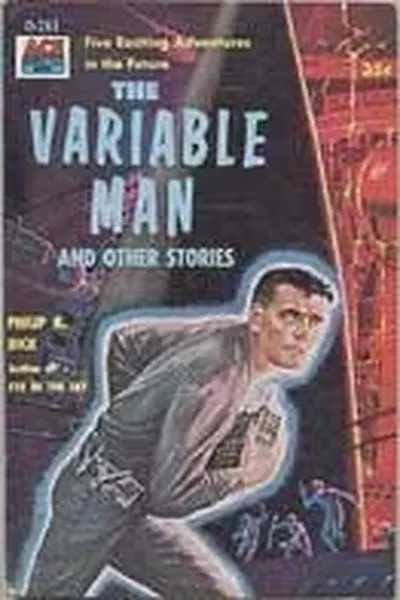
More Free Occult Philosophy Books
View all →