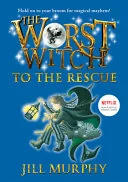
The Worst Witch to the Rescue: #6
 77
77

The Worst Witch to the Rescue: #6
Jill Murphy's The Worst Witch to the Rescue continues the familiar, comforting rhythm of Mildred Hubble's often-disastrous school year at Miss Cackle's. The plot, centering on Ethel Hallow's sabotage involving Mildred's summer project and the theft of Einstein the tortoise, feels like a classic setup for Mildred to stumble her way toward a resolution. Murphy excels at capturing the everyday anxieties of school life – the fear of failure, the sting of unfairness – and transposing them into a witchy context. The strength lies in this relatable core, making Mildred's magical mishaps feel grounded. However, the 'Aligned to Common Core Standards' note feels jarringly utilitarian within the narrative's whimsical frame; while practical, it pulls the reader out of the enchantment. A particularly effective moment, though not explicitly stated in the blurb, is likely Mildred's internal struggle to recover Einstein, representing her fight for her academic integrity and her bond with her magical familiar. The book delivers a solid, if predictable, installment for its established audience. It is a reliably charming addition to the series.
📝 Description
77
In 2022, Mildred Hubble faced her rival Ethel Hallow stealing her project and pet tortoise in The Worst Witch to the Rescue.
The sixth book in Jill Murphy's series, The Worst Witch to the Rescue, published in 2022, returns readers to Miss Cackle's Academy for Witches. Mildred Hubble finds herself in trouble again, this time with her nemesis Ethel Hallow. Ethel escalates her bullying by stealing Mildred's crucial summer project and her tortoise, Einstein, who is more than just a pet; he is a vital magical companion.
This installment focuses on Mildred's efforts to retrieve her stolen items and clear her name. The narrative engages young readers aged 7-11 with familiar themes of school life, friendship, and overcoming adversity, all within a magical context. While the series has a long history, this 2022 release continues Mildred's adventures for both long-time fans and newcomers to the world of Miss Cackle's Academy.
While not overtly focused on occult practices, The Worst Witch series taps into a tradition of children's literature that uses magic and witchcraft as a metaphor for navigating childhood challenges. The academy setting provides a structured environment where fantastical elements highlight social dynamics and personal growth. The "magic" here serves as a backdrop for relatable schoolyard conflicts and the development of character, rather than exploring complex magical systems or esoteric lore.
💡 Why Read This Book?
• Learn about the strategic use of sabotage and rivalry in a magical school setting, as exemplified by Ethel Hallow's actions against Mildred in *The Worst Witch to the Rescue*, offering insights into interpersonal conflict within educational environments. • Experience Mildred Hubble's journey of overcoming adversity when her enchanted tortoise, Einstein, is stolen, providing a relatable narrative of resilience and problem-solving against external pressures. • Understand the enduring appeal of magical boarding school narratives, a genre popularized since the late 20th century, through Murphy's consistent, whimsical approach established in books like this 2022 publication.
⭐ Reader Reviews
Honest opinions from readers who have explored this book.
❓ Frequently Asked Questions
What is the main conflict in The Worst Witch to the Rescue?
The primary conflict involves Mildred's rival, Ethel Hallow, stealing Mildred's summer project and her enchanted tortoise, Einstein, setting Mildred up for disaster.
Who is the author of The Worst Witch to the Rescue?
The author is Jill Murphy, and the book was first published in August 2022.
What age group is this book recommended for?
The book is generally recommended for children aged 7-11, fitting into the chapter book category.
What is the significance of Einstein in the story?
Einstein is Mildred's enchanted tortoise and a crucial part of her magical studies; his theft by Ethel is a major plot point.
Does The Worst Witch to the Rescue follow educational standards?
Yes, the book is aligned to Common Core Standards and correlated to state standards, making it suitable for educational use.
Is this the first book in The Worst Witch series?
No, The Worst Witch to the Rescue is the sixth book in the popular series by Jill Murphy.
🔮 Key Themes & Symbolism
Rivalry and Sabotage
The narrative looks at the destructive nature of rivalry, particularly through Ethel Hallow's deliberate actions against Mildred. Stealing Mildred's summer project and Einstein, her enchanted tortoise, exemplifies how competition can escalate into malicious sabotage. This theme highlights the challenges of navigating social dynamics in a school setting, where jealousy can lead to unfair obstacles. The story suggests that true magical aptitude isn't about outmaneuvering others through deceit but about perseverance and innate ability, even when faced with deliberate setbacks.
Perseverance and Resilience
Mildred Hubble's character embodies resilience. Despite her frequent mishaps and the constant threat of expulsion or failure, she consistently bounces back. The theft of Einstein and her project by Ethel serves as a significant test of her resolve. The book implicitly argues that success often comes not from perfection but from the refusal to give up. Mildred's journey, even when fraught with magical accidents, demonstrates the importance of inner strength and the ability to face challenges head-on, learning from mistakes along the way.
The Nature of Magic and Talent
Within the context of Miss Cackle's Academy, the book explores different facets of magical talent. While Mildred is prone to accidents, her underlying potential and connection to her magical tools, like Einstein, are evident. Ethel, conversely, exhibits a more calculated, perhaps less intuitive, form of magic driven by ambition and rivalry. The series often contrasts these approaches, suggesting that genuine magical ability involves more than just technical skill; it includes heart, empathy, and the ability to connect with magical creatures and objects on a deeper level, as Mildred often does.
Friendship and Support
Although the blurb focuses on rivalry, the underlying strength of Mildred's character is often bolstered by her friendships. While not explicitly detailed in the original blurb, the series typically portrays Mildred relying on her friends, like Maud Spellbody and Enid Nightshade, to navigate difficult situations. These relationships provide emotional support and practical assistance, underscoring the idea that even in a competitive environment, camaraderie is essential for overcoming personal challenges. The support network Mildred builds is as crucial as her own developing magical skills.
💬 Memorable Quotes
Direct passages from the work, attributed to the author.
“Ethel Hallow steals Mildred's summer project and her enchanted tortoise, Einstein.”
— This core conflict establishes the stakes: Mildred's academic standing and her bond with a magical familiar are threatened by her rival's malicious actions, setting the stage for Mildred's characteristic struggle and eventual triumph.
“Mildred is set up for disaster.”
— This phrase expresses Mildred's recurring predicament. It highlights her tendency to attract trouble, often due to external factors or her own well-intentioned clumsiness, making her a relatable underdog for young readers.
“Aligned to Common Core Standards and correlated to state standards.”
— This annotation signals the book's utility beyond pure entertainment, indicating its suitability for educational purposes and its alignment with contemporary pedagogical frameworks.
“Chapter Books is an imprint of Spotlight, a division of ABDO.”
— This provides publishing metadata, identifying the specific imprint and parent company responsible for the book's production within the broader educational publishing landscape.
“The book is the sixth in the Worst Witch series.”
— This contextualizes the narrative within Jill Murphy's established world, assuring returning readers of familiar characters and settings while indicating a continuation of Mildred's ongoing magical education.
🌙 Esoteric Significance
Tradition
While not overtly tied to a specific esoteric lineage like Hermeticism or Kabbalah, The Worst Witch series operates within the broader archetype of the magical academy, a trope common in Western occult fiction. It shares thematic elements with foundational texts that explore hidden knowledge and specialized training. The academy setting itself functions as a symbolic container for learning, mirroring real-world esoteric schools where initiates undergo structured progression. Murphy's work simplifies these concepts for a younger audience, focusing on the social and personal aspects of learning magical arts rather than complex ritual or doctrine.
Symbolism
The enchanted tortoise, Einstein, serves as a primary symbol. In many traditions, tortoises represent longevity, wisdom, stability, and the earth element. For Mildred, Einstein likely symbolizes her connection to practical magic, her grounding influence, and perhaps a quiet, steadfast companion in her often chaotic world. His theft signifies a disruption of Mildred's stability and a direct attack on her magical studies and personal security. Broomsticks, a ubiquitous symbol in witchcraft lore, represent freedom, mobility, and the practitioner's ability to transcend limitations, serving as a key tool for both travel and magical practice within the narrative.
Modern Relevance
In contemporary discussions of children's literature and fantasy, Murphy's series remains relevant for its accessible portrayal of magic and its focus on relatable character development. Thinkers and educators exploring the evolution of the magical school genre often cite *The Worst Witch* as an early and influential example. Its enduring popularity speaks to a continued appetite for stories that blend the mundane challenges of childhood—friendship, rivalry, academic pressure—with the wonder of the supernatural, providing a gentle introduction to fantastical themes for new generations of readers.
👥 Who Should Read This Book
• Young readers aged 7-11 who enjoy fantasy stories featuring magic, schools, and relatable protagonists facing everyday challenges, offering a gentle introduction to the genre. • Parents and educators seeking engaging chapter books that are aligned with educational standards (Common Core), providing a blend of entertainment and subtle learning opportunities. • Established fans of Jill Murphy's *Worst Witch* series looking for the next installment in Mildred Hubble's adventures at Miss Cackle's Academy, wanting to follow her ongoing magical journey.
📜 Historical Context
Published in 2022, *The Worst Witch to the Rescue* arrives in a literary landscape deeply influenced by the magical school genre, a space significantly shaped by J.K. Rowling's *Harry Potter* series, which began publication in 1997. However, Jill Murphy’s *Worst Witch* series predates this boom, with its first installment appearing in 1974. This longevity allows Murphy’s work to be viewed not just as a contemporary fantasy but as a foundational text within the genre, offering a gentler, more character-driven exploration of magical education compared to some later, darker works. The series’ enduring appeal, spanning decades, suggests a consistent narrative strength that transcends passing trends. While contemporary works might explore more complex magical systems or darker themes, Murphy's focus on Mildred's relatable struggles with everyday school problems—albeit with spells and broomsticks—provides a unique charm. The book’s publication by Spotlight, a division of ABDO, places it within a modern educational publishing framework, aiming for both reader engagement and academic alignment.
📔 Journal Prompts
Mildred's stolen summer project and Einstein.
The rivalry between Mildred and Ethel Hallow.
The concept of an enchanted tortoise named Einstein.
Miss Cackle's Academy for Witches setting.
The narrative function of being 'set up for disaster'.
🗂️ Glossary
Enchanted Tortoise
A tortoise imbued with magical properties, serving as a companion and possibly an aid in magical studies or tasks for a witch.
Summer Project
An academic assignment undertaken by students during their summer break, often significant for their overall grade or progression at school.
Arch-nemesis
The primary and most significant enemy or rival of a protagonist, often characterized by persistent antagonism and deep-seated opposition.
Miss Cackle's Academy for Witches
The fictional boarding school where the protagonist, Mildred Hubble, learns witchcraft, known for its magical curriculum and eccentric inhabitants.
Chapter Books
A category of children's literature typically longer than picture books but shorter than young adult novels, featuring chapters and aimed at newly independent readers.
Spotlight (Imprint)
A specific publishing imprint, in this case, a division of ABDO, that specializes in producing books, often with educational or specific genre focus.
Common Core Standards
Educational standards adopted by many U.S. states, outlining what K-12 students should know in English language arts and mathematics at the end of each grade.
This book appears in 1 collection
🔮 Readers Also Liked
Browse all →









From the “Incantations” Collection
View all →





More Free Occult Philosophy Books
View all →