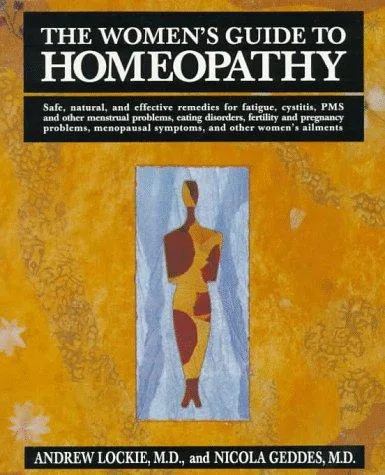
The women's guide to homeopathy
 71
71

The women's guide to homeopathy
Andrew Lockie's 1992 text offers a practical, if somewhat dated, introduction to homeopathic applications for women. Its strength lies in its clear organization, breaking down complex materia medica into digestible profiles for common female health issues. The section on remedies for pregnancy and childbirth, for instance, provides specific indications that remain useful for practitioners. However, the book's limitation is its adherence to a predominantly classical homeopathic framework, which may feel rigid to those exploring more contemporary or integrated natural health modalities. The discussion around remedies like *Sepia* and its indications for hormonal imbalances, while detailed, could benefit from broader context concerning modern endocrine understanding. Lockie's work is a solid, foundational text for its intended audience but requires supplementation for a truly holistic modern perspective.
📝 Description
71
Andrew Lockie's 1992 guide applies homeopathic principles specifically to women's health.
Published in 1992, Andrew Lockie's The Women's Guide to Homeopathy details homeopathic principles and their use, particularly for female health concerns. The book covers the materia medica, explaining the properties and applications of various homeopathic remedies. It works as an introduction for newcomers and a reference for those already familiar with homeopathy. Lockie structures the book to make complex homeopathic ideas understandable.
This guide is for women interested in natural health and well-being. It addresses how homeopathy can help with common ailments and life stages, from menstruation and pregnancy through menopause. It also offers value to students of homeopathy and complementary medicine, providing a specialized perspective on the practice. Readers who favor self-care and natural remedies will find practical suggestions here.
The Women's Guide to Homeopathy appeared in 1992 amidst a renewed interest in alternative medicine. Homeopathy, founded by Samuel Hahnemann, continued to be debated by conventional medicine. Lockie's book joined a growing field aiming to make these practices more accessible, especially to women seeking non-allopathic health solutions. This work fit within the broader New Age movement's focus on natural healing methods.
💡 Why Read This Book?
• Gain specific insights into how remedies like *Pulsatilla* are indicated for menstrual irregularities, offering a natural approach you might not find in conventional guides. • Understand the homeopathic principle of 'like cures like' as applied to common women's health complaints, providing a framework for symptom-based self-care. • Learn about the historical context of homeopathy's resurgence in the early 1990s, understanding its place alongside other natural healing movements of that era.
⭐ Reader Reviews
Honest opinions from readers who have explored this book.
❓ Frequently Asked Questions
What is the primary focus of The Women's Guide to Homeopathy?
The book's primary focus is on applying homeopathic principles and remedies specifically to women's health concerns, covering a wide range of issues from menstruation to menopause.
When was The Women's Guide to Homeopathy first published?
The Women's Guide to Homeopathy was first published in 1992 by Andrew Lockie.
Does the book explain how homeopathic remedies are made?
Yes, the book explains the process of potentization, which involves diluting and energetically imprinting substances to create homeopathic remedies.
What are some key remedies discussed for women's health?
Key remedies discussed include Pulsatilla for hormonal fluctuations, Sepia for reproductive health issues, and Lachesis, often indicated for menopausal symptoms.
Is this book suitable for beginners in homeopathy?
Yes, the book is structured to be accessible for beginners while also serving as a useful reference for those with prior knowledge of homeopathy.
What is the 'Law of Similars' as explained in the book?
The Law of Similars, a core homeopathic principle, suggests that a substance causing symptoms in a healthy person can be used to treat similar symptoms in a sick person.
🔮 Key Themes & Symbolism
Homeopathy for Female Physiology
The work centers on the application of homeopathy to the unique health field of women. It examines how remedies can address hormonal cycles, reproductive health, pregnancy, childbirth, and menopause. Concepts like the vital force are discussed in relation to maintaining balance throughout a woman's life stages. Lockie details specific remedies such as *Sepia* and *Lachesis*, explaining their nuanced indications for various female ailments, moving beyond generic disease treatment to individualized symptom pictures.
Materia Medica and Individualization
A significant portion of the book is dedicated to the materia medica, profiling individual homeopathic substances. Each profile elaborates on the substance's origin, key symptoms it covers (physical and emotional), and specific uses. The emphasis is consistently on individualization; Lockie stresses that a remedy's effectiveness depends on matching its profile to the patient's unique symptom constellation, a core tenet of classical homeopathy first articulated by Hahnemann.
Principles of Homeopathic Healing
The book systematically explains the fundamental principles of homeopathy, including the Law of Similars and the concept of potentization. It clarifies how remedies are prepared through serial dilution and succussion, leading to energetic preparations. The vital force, understood as the animating principle of life, is presented as the target of homeopathic intervention, aiming to restore balance and health rather than merely suppress symptoms.
Natural Approaches to Health
Positioned within the broader context of natural healing, this guide advocates for gentle, non-toxic methods of healthcare. It presents homeopathy as an alternative or complementary system that works in harmony with the body's inherent healing capacities. The book implicitly critiques conventional pharmaceutical approaches by highlighting homeopathy's focus on holistic well-being and minimal side effects.
💬 Memorable Quotes
Direct passages from the work, attributed to the author.
“The choice of remedy depends on the totality of symptoms.”
— This captures the core principle of individualization in homeopathy, asserting that effective treatment requires matching the patient's entire symptom picture, not just a diagnosis, to a specific remedy.
“Pulsatilla is indicated for women who are mild, yielding, and weepy.”
— This highlights the homeopathic approach of considering emotional and personality traits alongside physical symptoms when selecting a remedy, particularly for *Pulsatilla* in women.
“Homeopathy stimulates the body's own healing mechanisms.”
— This interpretation emphasizes the vitalistic philosophy behind homeopathy, suggesting it acts as a catalyst for innate self-healing rather than imposing an external force.
“Sepia is often considered for conditions related to the female reproductive system.”
— This points to the specific affinity of the remedy *Sepia* for addressing a range of gynecological issues, reflecting the book's focus on women's health applications.
“The potency of a remedy is related to its energetic nature.”
— This refers to the concept of potentization in homeopathy, where remedies are believed to gain energetic strength through dilution and succussion, influencing their therapeutic effect.
🌙 Esoteric Significance
Tradition
While homeopathy is primarily considered a system of natural medicine, its vitalistic underpinnings connect it to broader esoteric traditions. The concept of the 'vital force' or 'life energy' aligns with ideas found in vitalism, traditional Chinese medicine, and even certain streams of Hermeticism concerning an animating principle. Lockie's work, though pragmatic, operates within this vitalistic framework, seeking to restore energetic balance rather than merely treating physical symptoms.
Symbolism
The primary 'symbol' in homeopathy is the remedy itself, acting as a pattern or energetic signature. Materia medica entries often use vivid language to describe remedy pictures, which can function symbolically. For instance, the description of *Sepia* often evokes themes of exhaustion and detachment, symbolizing states of imbalance in women's lives. The process of potentization, with its increasing dilutions, can be seen symbolically as a refinement or spiritualization of the original substance.
Modern Relevance
Works like Lockie's continue to inform contemporary homeopaths specializing in women's health. While the field of natural medicine has diversified, classical homeopathy remains a significant practice. Thinkers and practitioners in fields like naturopathy, functional medicine, and holistic gynecology may still reference or draw upon the detailed remedy profiles and individualized approach presented in such foundational texts, particularly for established remedies like Pulsatilla or Lachesis.
👥 Who Should Read This Book
• Women interested in exploring natural and holistic approaches to managing their health concerns throughout different life stages, seeking alternatives to conventional treatments. • Students and practitioners of homeopathy looking for a focused guide on applying classical principles to female physiology and common gynecological issues. • Individuals engaged in the study of alternative medicine and vitalistic healing systems who wish to understand the historical development and application of homeopathy.
📜 Historical Context
Andrew Lockie's *The Women's Guide to Homeopathy* appeared in 1992, a period marked by a significant surge in the popularity of complementary and alternative medicine (CAM) in the West. Homeopathy, originating in the late 18th century with Samuel Hahnemann, had weathered various waves of acceptance and dismissal. By the 1990s, it was a well-established practice within the CAM landscape, often debated against conventional pharmacology. Lockie's work tapped into a growing demand among women for natural health options, aligning with the broader New Age movement's focus on holistic well-being and self-care. While figures like Dr. Andrew Weil were popularizing integrative medicine, Lockie focused specifically on refining the application of classical homeopathy for a female audience, distinguishing it from more generalized CAM texts.
📔 Journal Prompts
Reflect on the concept of the 'vital force' and its perceived role in your personal health.
Consider the homeopathic principle of 'like cures like' in relation to a common ailment you experience.
Analyze the described symptom picture for *Pulsatilla* and its potential application to emotional states.
Explore the idea of individualized treatment versus disease-based labeling in health.
Examine the historical context of homeopathy's rise alongside other natural healing movements.
🗂️ Glossary
Materia Medica
A comprehensive resource detailing the properties, uses, and symptom profiles of homeopathic remedies (substances).
Law of Similars
The fundamental homeopathic principle stating that a substance which causes symptoms in a healthy person can cure similar symptoms in a sick person.
Potentization
The process of preparing homeopathic remedies through serial dilution and succussion (vigorous shaking), believed to increase their energetic potency.
Vital Force
The animating principle or life energy that, according to homeopathic philosophy, sustains health and is the target of homeopathic intervention.
Totality of Symptoms
The complete set of physical, mental, and emotional symptoms experienced by an individual, used for selecting the most appropriate homeopathic remedy.
Individualization
The homeopathic practice of tailoring treatment to the unique symptom picture of each patient, rather than prescribing based solely on a disease name.
Hormonal Imbalances
Disruptions in the body's hormone levels, often discussed in relation to women's health issues like menstruation, pregnancy, and menopause.
🔮 Readers Also Liked
Browse all →








More by Andrew Lockie
All books →





More Free Occult Philosophy Books
View all →