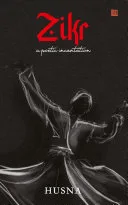
Zikr: An Anthology of Poetic Incantations
 79
79

Zikr: An Anthology of Poetic Incantations
Husna's 'Zikr' offers a collection of verses that attempt to capture the essence of spiritual longing and the multifaceted nature of the beloved. The strength of this anthology lies in its consistent evocation of a tender, earnest voice that seeks connection across the perceived divides of the mundane and the divine. The interpretation of the 'beloved' as encompassing both the sacred and the everyday human experience, from a dewdrop to a lover's glance, is particularly compelling, grounding abstract spiritual yearning in concrete imagery. However, the anthology occasionally suffers from a certain homogeneity in tone; while the verses are varied in length, their emotional tenor remains largely consistent, which might leave some readers desiring greater dynamic range. The initial blurb's reference to the 'city of catastrophe' is a powerful, albeit brief, anchor for the Sufi perspective of gratitude amidst trials. Ultimately, 'Zikr' serves as a quiet, introspective devotional text for those seeking solace in poetic invocation.
📝 Description
79
Husna's 'Zikr: An Anthology of Poetic Incantations' was first published in 1901.
'Zikr: An Anthology of Poetic Incantations' is a collection of devotional verses attributed to Husna. These poems function as invocations, directed primarily toward a concept of the 'beloved.' This beloved is understood in broad terms, encompassing divine presence alongside the full spectrum of human experience. The verses vary in length, creating a diverse rhythm for personal reflection.
The anthology is suited for readers who appreciate contemplative and devotional poetry with a spiritual or metaphysical bent. It will interest those drawn to Sufi poetry, mystical traditions, and the use of love and longing to approach an understanding of existence. Individuals who find value in writing that balances introspection with poetic expression, and who prefer a focus on gratitude and resilience during life's trials, may find this work resonates with them.
Published in 1901, 'Zikr' appeared during a time of growing Western interest in Eastern mysticism and esoteric philosophies. The Theosophical Society had already promoted comparative religion and spiritual inquiry. Husna's work, with its Sufi resonances, fits this intellectual climate. It offered Western audiences a view into Islamic mystical traditions, often seen through the aesthetic of early 20th-century Romantic and Symbolist poetry.
💡 Why Read This Book?
• Gain an appreciation for the Sufi concept of gratitude and steadfastness, as exemplified by the 1901 publication context, fostering a resilient spiritual outlook. • Explore the multifaceted symbolism of the 'beloved' in Husna's poetry, understanding how it represents both divine presence and the human experience. • Contemplate the poetic invocation of 'Zikr,' learning how verses can serve as a form of spiritual practice, as presented in this collection from the early 20th century.
⭐ Reader Reviews
Honest opinions from readers who have explored this book.
❓ Frequently Asked Questions
What is the primary theme of Husna's 'Zikr: An Anthology of Poetic Incantations'?
The primary theme is poetic invocation and remembrance ('Zikr') of the beloved, understood as both divine presence and the spectrum of human experience, exploring love, longing, and melancholia.
When was 'Zikr' by Husna first published?
'Zikr: An Anthology of Poetic Incantations' by Husna was first published in 1901.
What does the term 'Ruh' signify in the context of this book?
'Ruh,' as mentioned in the blurb, refers to the soul, encouraging it not to despair even when facing difficult circumstances or 'the city of catastrophe.'
How does 'Zikr' relate to Sufi practices?
The work is described as a collection of poetic incantations, reflecting the Sufi practice of 'Zikr,' which involves remembrance and invocation of the divine, often through recitation.
What kind of imagery is used in Husna's 'Zikr'?
The imagery is drawn from both nature, like 'the dew of rain,' and human relationships, such as 'a lover's gaze,' to illustrate the broad scope of the beloved.
What is the perspective on trials presented in 'Zikr'?
The book advocates for a Sufi perspective where one remains grateful for blessings and steadfast ('sabr') even when enduring trials, viewing them as part of the spiritual path.
🔮 Key Themes & Symbolism
The Many-sided Beloved
The central theme revolves around the concept of the 'beloved,' which Husna interprets expansively. It is not confined to a singular divine entity but extends to encompass the totality of existence and human connection. This includes transient natural beauty, such as morning dew, and intimate interpersonal moments, like a partner's gaze. This broadens the scope of spiritual devotion, suggesting that the sacred can be found in the most ordinary and profound aspects of life, making the invocation of 'Zikr' a continuous engagement with the world.
Gratitude and Steadfastness
A core tenet presented is the Sufi ideal of maintaining gratitude ('shukr') for blessings while remaining steadfast ('sabr') during trials. The introductory blurb frames this as essential wisdom for navigating difficult periods, metaphorically termed 'the city of catastrophe.' This theme emphasizes resilience and a balanced spiritual perspective, encouraging the reader to find equanimity by acknowledging both fortune and hardship as integral parts of the soul's ('Ruh') journey.
Poetic Invocation as Spiritual Practice
The anthology positions its verses as 'poetic incantations,' suggesting that the act of reciting or contemplating these poems is a form of spiritual practice, or 'Zikr.' The work explores how language and form can serve as conduits for connecting with the beloved. The varied lengths of the verses imply different modes of engagement, from brief utterances of longing to more extended meditations, highlighting the power of lyrical expression in devotional contexts.
Melancholia and Longing
Intertwined with devotion is a palpable sense of longing and melancholia. Each verse is described as telling its own story, often imbued with a deep love for life but also an awareness of its transient nature and the pain that can accompany profound connection. This exploration of sorrow is not presented as despair, but as an intrinsic element of a life lived with deep feeling and spiritual awareness, particularly relevant in the context of seeking the beloved.
💬 Memorable Quotes
Direct passages from the work, attributed to the author.
“Do not despair as you enter the city of catastrophe.”
— This phrase serves as an opening exhortation, framing life's unavoidable hardships ('catastrophe') not as reasons for surrender, but as points of entry into deeper spiritual understanding and resilience.
“A Sufi is grateful for his blessings, and steadfast in his trials.”
— This concisely articulates a central tenet of Sufi practice: maintaining a balanced perspective characterized by thankfulness for positive experiences and unwavering patience during difficult ones.
“‘Zikr’ is a collection of long and short verses. It is a poetic invocation of the beloved, the central muse.”
— This defines the book's form and function, identifying the verses as 'Zikr'—a spiritual remembrance—and establishing the 'beloved' as the primary focus of this poetic invocation.
“The muse... exists, therefore, as much in the dew of rain as in a lover’s gaze.”
— This highlights the expansive definition of the 'beloved' or muse, illustrating that spiritual or profound experience can be found equally in the ephemeral beauty of nature and the intimacy of human relationships.
“Every verse tells its own story, a deep love of life, longing and melancholia.”
— This emphasizes the narrative and emotional depth within each poem, suggesting that the collection explores the full spectrum of human feeling, from profound affection for existence to its inherent sorrows.
🌙 Esoteric Significance
Tradition
This work aligns primarily with the Sufi tradition within Islam, focusing on the mystical path of love and remembrance ('Zikr'). It emphasizes the direct experience of the divine and the cultivation of inner states like gratitude and steadfastness. While rooted in Islamic mysticism, its presentation as 'poetic incantations' also suggests connections to broader esoteric practices of using sacred texts or utterances for spiritual work, potentially resonating with traditions like Hermeticism or Neoplatonism that explore divine love and the soul's journey.
Symbolism
The 'beloved' functions as a central, multi-layered symbol, representing the ultimate divine reality, the Prophet Muhammad, or even the idealized human connection, all viewed as manifestations of the One. 'Ruh' (soul) symbolizes the individual consciousness on its quest for union or recognition of the beloved. The 'city of catastrophe' symbolizes the trials and tribulations of earthly existence, which the Sufi seeker must navigate with faith and resilience, seeing them not as obstacles but as transformative stages.
Modern Relevance
Contemporary practitioners of Islamic spirituality and comparative mysticism continue to draw inspiration from Sufi poets like Husna. Her work speaks to modern seekers interested in devotional poetry as a means of spiritual practice, echoing in circles exploring mindfulness, contemplative prayer, and the intersection of art and spirituality. The emphasis on finding the divine in everyday experiences aligns with modern holistic and embodied spiritual approaches, making the 1901 anthology relevant to those seeking accessible yet profound expressions of faith and longing.
👥 Who Should Read This Book
• Students of Sufism and Islamic mysticism seeking poetic expressions of devotional practice and the concept of 'Zikr.' • Readers interested in early 20th-century esoteric literature and the Western reception of Eastern spiritual traditions. • Individuals drawn to lyrical poetry that explores themes of love, longing, spiritual melancholy, and finding the divine in everyday life.
📜 Historical Context
Published in 1901, 'Zikr: An Anthology of Poetic Incantations' emerged during a period of significant Western engagement with Eastern spiritual traditions. The late Victorian and Edwardian eras saw a surge in interest in mysticism, occultism, and comparative religion, partly fueled by figures associated with the Theosophical Society. Husna's work, drawing from Sufi devotional poetry, tapped into this intellectual current. It offered a lyrical, accessible entry point into Islamic mysticism, a tradition often misunderstood or exoticized in the West. At the time, academic study of Islam was developing, but popular access to its mystical dimensions was often through translations and interpretations that shaped perceptions. While Rumi was known, his widespread influence in English literature and spirituality was still developing. Husna's anthology presented a more contemporary, poetic voice within this lineage, potentially engaging readers who were also exploring movements like Aestheticism and Symbolism, which valued subjective experience and vivid language.
📔 Journal Prompts
The 'city of catastrophe' as a metaphor for personal trials.
Reflections on the 'beloved' as both divine and human.
The practice of 'Zikr' through poetic recitation.
Cultivating gratitude ('shukr') amidst life's challenges.
Connecting with spiritual insight through natural imagery like 'dew of rain.'
🗂️ Glossary
Zikr
Arabic term meaning remembrance, invocation, or ذکر. In Sufism, it refers to the ritual repetition of divine names or phrases, intended to achieve spiritual presence and closeness to God.
Ruh
Arabic word for 'soul' or 'spirit.' It signifies the vital essence of a living being, often understood as the divine breath or spark within humanity.
Beloved
In Sufi poetry, a term often used to refer to God, the ultimate object of love and devotion. It can also encompass the divine manifest in creation or the spiritual guide.
City of Catastrophe
A metaphorical description for periods of intense suffering, hardship, or existential crisis that an individual may face on their spiritual or life journey.
Shukr
Arabic term for gratitude or thankfulness. It is considered a vital spiritual state in Islam, especially Sufism, involving appreciation for all of God's blessings.
Sabr
Arabic term for patience, endurance, or steadfastness. It is a key virtue in Islam, particularly important when facing adversity and maintaining faith.
Muse
In a literary context, a source of inspiration, typically imagined as a female deity. Here, it parallels the 'beloved,' representing the central inspiration for the poetic invocations.