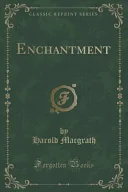
Enchantment (Classic Reprint)
 71
71

Enchantment (Classic Reprint)
Harold Macgrath's "Enchantment", as presented in this 2015 reprint, offers a curious glimpse into the anxieties of theatrical production. The initial excerpt immediately establishes a core tension: the author's presence as a disruptive force during a comedy's rehearsal. Macgrath vividly portrays the "star" and "leading man's" discomfort, a relatable depiction of how external observation can stifle natural performance. The strength lies in its nuanced exploration of performance psychology, capturing the delicate balance actors require. However, the narrative feels somewhat confined to this singular dramatic situation, leaving the reader wanting a broader scope beyond the rehearsal room. The core idea, that an artist's presence can inadvertently create a "lack of nervousness and embarrassment" in others, is a compelling, if specific, observation. It is a focused, albeit limited, study of creative pressure.
📝 Description
71
Harold Macgrath's 1915 novel "Enchantment" examines the performance anxieties of actors.
Published originally in 1915, Harold Macgrath's "Enchantment" probes the psychological terrain of theatrical performance. The narrative centers on how the presence of an author during rehearsals can disrupt a performer's natural engagement with a comedy. Actors, particularly leading men, find their confidence undermined by the awareness of being observed by the work's creator, leading to a palpable tension that hinders the comedic spirit. The book suggests that a performer's ability to achieve "utter lack of nervousness and embarrassment" is paramount for success, and this state is fragile, easily disturbed by external scrutiny.
Macgrath delves into the delicate interplay between confidence and vulnerability inherent in artistic creation. The work questions the ideal conditions for creativity, implying that the environment in which a play is developed is as crucial as the creative act itself. "Enchantment" appeals to those interested in the inner workings of stage production and the subtle pressures that shape the creative process. It offers a character-driven plot that observes the internal struggles of performers under the gaze of their creator.
While "Enchantment" is primarily a work of fiction, its focus on the psychological states required for optimal performance and the subtle energies that influence them touches upon esoteric concepts. The idea that an author's presence can introduce a disruptive force, affecting the "comedic spirit," suggests an awareness of the energetic and psychic atmosphere of a creative space. This aligns with traditions that explore the mind's influence on physical reality and the importance of mental discipline and environmental harmony for achieving desired outcomes, particularly in artistic endeavors.
💡 Why Read This Book?
• Gain insight into the psychological pressures faced by performers, as demonstrated by the "star" and "leading man's" reactions to the author's presence during rehearsals, a concept explored in the text. • Understand how external observation can impact the creative process, a theme Macgrath addresses by detailing the need for an "utter lack of nervousness and embarrassment" for successful artistic output. • Appreciate a narrative that examines the subtle dynamics within theatrical production, specifically the delicate interplay between creator and performer, as implied by the author's exclusion from final rehearsals.
⭐ Reader Reviews
Honest opinions from readers who have explored this book.
❓ Frequently Asked Questions
What is the primary conflict presented in the excerpt from Harold Macgrath's Enchantment?
The primary conflict involves the author's disruptive presence during a comedy's final rehearsal. The actors, particularly the "star" and "leading man," experience heightened tension and embarrassment, feeling their natural performance is compromised by the author's observation.
When was Harold Macgrath's Enchantment originally published?
The provided information states the book was first published on 2015-09-27, indicating this is a modern reprint of the work.
What specific roles are mentioned as being affected by the author's presence?
The "star" and the "leading man" are specifically mentioned as being affected by the author's presence during the rehearsal, impacting their ability to perform naturally.
What condition is deemed essential for the success of the theatrical production in Enchantment?
The essential condition highlighted is "utter lack of nervousness and embarrassment" among everyone involved in the production, which the author's presence was felt to jeopardize.
What is the genre or category of Enchantment as listed by Esoteric Library?
Enchantment is categorized under 'Esoteric' by Esoteric Library, suggesting themes or approaches that align with mystical, occult, or metaphysical literature.
Why was the author's presence deemed unnecessary by the stage manager?
The stage manager, Shaw, deemed the author's presence unnecessary because it was believed to "only add to the tension" and hinder the "utter lack of nervousness and embarrassment" crucial for the performance.
🔮 Key Themes & Symbolism
Performance Anxiety
The work examines the psychological pressures inherent in performance, particularly within a theatrical setting. It illustrates how the mere presence of the author, or any perceived external judgment, can disrupt an actor's ability to achieve a state of natural expression. The text highlights the fragility of confidence for performers, suggesting that an environment free from undue scrutiny is paramount for artistic success. This theme is central to the excerpt, focusing on the tension created by the author's observation.
Creator-Performer Dynamics
Enchantment explores the often-fraught relationship between the creator of a work and its performers. The excerpt shows the stage manager prioritizing the performers' comfort over the author's direct involvement in rehearsals. This points to a broader theme of how the creator's intent must be translated and embodied by others, and the potential friction that arises when the creator's oversight becomes a source of unease rather than collaboration. The work implicitly questions the ideal level of creator involvement.
The Nature of Comedy
The narrative touches upon the specific challenges of performing comedy, where "entering naturally into the spirit" is crucial. The excerpt suggests that the delicate art of comedic timing and delivery is particularly susceptible to external pressures and self-consciousness. The "leading man's" inability to "enter naturally into the spirit" of the comedy due to observation underscores that humor often relies on an uninhibited state, which can be easily shattered by awareness of being watched.
Environmental Influence on Art
A significant concept presented is the wide impact of the creative environment on the quality of artistic output. The need for "utter lack of nervousness and embarrassment" points to the idea that the physical and psychological atmosphere of a rehearsal or creation space is not merely incidental but fundamental. The work suggests that external factors, even the perceived judgment of the author, can actively inhibit the creative process, making the environment a critical element of artistic success.
💬 Memorable Quotes
Direct passages from the work, attributed to the author.
“The "star" complained that her efforts to interpret my lines to my satisfaction were wearing her thin.”
— This highlights the pressure on performers to meet the creator's specific vision. The "star's" exhaustion suggests the difficulty in perfectly embodying the author's intent, especially when under scrutiny, indicating a strain in the collaborative process.
“while the "leading man" declared that he could not enter naturally into the spirit of the comedy so long as he knew I was watching from across the front.”
— This sentiment from the "leading man" vividly illustrates how self-consciousness, induced by being observed by the author, can inhibit spontaneous and natural comedic performance. It points to the delicate nature of comedic timing and expression.
“The "leading man" declared that he could not enter naturally into the spirit of the comedy so long as he knew I was watching from across the front.”
— This illustrates how the awareness of being observed by the work's creator can destroy the spontaneous emotional state required for effective comedic performance, leading to self-consciousness and a loss of natural flow.
💡 Key Ideas
Editorial paraphrase of the work's core concepts — not direct quotes.
So much depended upon every one's utter lack of nervousness and embarrassment that Shaw, the stage manager, decided that my presence at the final rehearsal would only add to the tension, and was therefore unnecessary.
This line underscores the paramount importance of an actor's psychological state for a successful performance. It reveals the stage manager's pragmatic decision to shield the performers from the author's gaze, prioritizing their comfort and confidence over direct creator oversight.
The "star" complained that her efforts to interpret my lines to my satisfaction were wearing her thin
This quote suggests the immense effort and potential frustration involved when performers strive to perfectly align their interpretation with the author's expectations, particularly when the author is perceived as a critical observer.
🌙 Esoteric Significance
Tradition
While "Enchantment" is categorized as Esoteric, its specific lineage is not immediately apparent from the excerpt. However, its focus on the internal states of performers and the subtle energies of a creative environment can be loosely aligned with traditions that explore consciousness, intention, and subtle influence. Concepts such as the "aura" of a performer or the "psychic atmosphere" of a space are often discussed in esoteric circles. The work seems to touch upon the unseen forces that impact human endeavors, a common thread in many esoteric philosophies.
Symbolism
The primary symbolic element in the excerpt is the author's "presence" as a disruptive force. This can be interpreted as a symbol for external judgment, ego, or the critical faculty that can inhibit creative flow. The "utter lack of nervousness and embarrassment" represents a state of pure, unadulterated artistic expression, a form of ego-dissolution or flow state. The theatre itself can be seen as a symbolic space where illusions are crafted, and the integrity of that space is paramount for the enchantment to work.
Modern Relevance
Contemporary discussions in fields like performance coaching, positive psychology, and even certain strands of mindfulness practice echo the concerns raised in "Enchantment." The emphasis on creating supportive environments for peak performance and the understanding of how self-consciousness can impede natural talent are highly relevant. Thinkers and practitioners focusing on flow states, as popularized by Mihaly Csikszentmihalyi, or those exploring the psychology of creativity in the digital age, might find Macgrath's early articulation of these dynamics insightful.
👥 Who Should Read This Book
• Aspiring actors and performers seeking to understand the psychological hurdles of stage presence and the impact of external observation on their craft. • Writers and creators interested in the dynamics of collaboration and the subtle influences they may exert on their interpreters, even unintentionally. • Readers fascinated by the internal workings of the theatrical world and narratives that explore the delicate balance of confidence and vulnerability in creative professions.
📜 Historical Context
Harold Macgrath's "Enchantment," despite its 2015 reprint date, likely originates from an era where the relationship between author, actor, and audience was undergoing significant shifts. The early 20th century, a period marked by the rise of psychological realism in literature and experimental theatre, saw many works grappling with the internal lives of artists and performers. This context is crucial for understanding the excerpt's focus on the delicate psychological state required for performance. Contemporaries like Eugene O'Neill were exploring the intense emotional landscapes of theatre professionals, while figures in literary modernism, such as Virginia Woolf, were deeply invested in portraying subjective experience. Macgrath's work, by detailing the specific anxieties of a theatrical production, engages with these broader currents of exploring interiority and the conditions of creative expression. The reception of such works often hinged on their perceived authenticity in capturing the artist's struggle, a theme that continued to be debated throughout the century.
📔 Journal Prompts
The stage manager Shaw's decision regarding the author's presence.
The "leading man's" inability to enter the spirit of the comedy.
The "star's" complaint about interpreting the author's lines.
The concept of "utter lack of nervousness and embarrassment" in performance.
The perceived tension between the author's intent and the performer's execution.
🗂️ Glossary
Stage manager
The person responsible for the technical aspects of a theatre production, coordinating rehearsals and ensuring the smooth running of performances. Their decisions directly impact the production's environment.
Star
The principal actor in a theatrical production, often carrying significant audience draw. Their performance is typically central to the show's success.
Leading man
The principal male actor in a play or film, often playing the romantic lead or a central heroic role.
Rehearsal
A practice session where actors and crew prepare for a performance, allowing for refinement of lines, blocking, and technical elements.
Spirit of the comedy
The essential mood, tone, and energy required for a comedic performance to be effective, implying naturalness, spontaneity, and genuine humor.
Tension
A state of mental or emotional strain or excitement, often detrimental to natural performance and contributing to nervousness.
Interpret my lines
To understand and enact the meaning and intention behind the written dialogue, a process that requires both technical skill and emotional connection from the actor.
This book appears in 1 collection
🔮 Readers Also Liked
Browse all →








From the “Enchantment” Collection
View all →



More Free Occult Philosophy Books
View all →