Vedanta
 80
80

Vedanta
Rajneesh’s exploration of Vedanta, first published in 1976, offers a potent, if sometimes abrasive, reinterpretation of Advaita philosophy. His strength lies in his relentless focus on the experiential dimension, cutting through scholasticism to present non-duality as an immediate, accessible state. He particularly excels in dissecting the concept of Maya, not as a mere philosophical construct, but as the very mechanism of our everyday delusion. However, the work's limitation is its inherent reliance on Rajneesh's singular, often dogmatic, presentation style. The absence of scholarly apparatus or comparative analysis means readers are presented with a singular, authoritative voice, which can preclude deeper critical engagement with the tradition itself. A notable passage involves his deconstruction of the ego's perceived solidity, framing it as a phantom born of misidentification. Ultimately, Vedanta is a powerful, albeit subjective, invitation to radical self-inquiry.
📝 Description
80
Bhagwan Rajneesh delivered discourses on Advaita Vedanta in India during the 1970s, later compiled into this work.
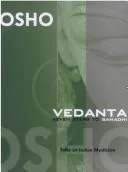
This book presents Bhagwan Rajneesh's (Osho) interpretations of Advaita Vedanta, a prominent school of Hindu philosophy. It is not a systematic theology but a collection of talks that dissect the core texts and philosophical ideas of Advaita. Rajneesh uses a modern, often direct style to remove perceived dogma and highlight the experiential aspect of non-duality. The discussions address concepts such as Brahman, Atman, Maya, and Moksha, framing them not as abstract theories but as practical paths toward self-realization and liberation.
Individuals seeking a contemporary, experience-focused view of Advaita Vedanta will find this volume suitable. It is particularly for those who question conventional religious practices and prefer direct spiritual insight over blind adherence. Readers familiar with Rajneesh’s other works on meditation, consciousness, and social commentary will recognize recurring themes. The book appeals to those who are skeptical of established religious systems and are open to a fresh look at spiritual ideas, especially when traditional explanations seem disconnected from modern life.
Emerging from discourses given in India in the 1970s, this work engages with Advaita Vedanta, a major tradition within Hindu philosophy. Advaita, notably systematized by Adi Shankara around the 8th century CE, emphasizes the oneness of the individual soul (Atman) and the ultimate reality (Brahman). Rajneesh's approach in this book acts as a counterpoint to both traditional scholarly interpretations and the international popularization of Eastern thought, which he saw as sometimes superficial. He sought to re-center the teachings on direct, lived experience, challenging established interpretations and encouraging a personal understanding of non-duality.
💡 Why Read This Book?
• Gain a direct, experiential understanding of Brahman and Atman, moving beyond abstract philosophical definitions as presented in the discourses on Advaita Vedanta. • Grasp the mechanics of Maya as an active illusion, not just a theoretical concept, through Rajneesh's confrontational approach to the nature of reality. • Explore the path to Moksha as an immediate realization, bypassing ritual and dogma, by engaging with the text's emphasis on direct self-knowledge, a core tenet since Adi Shankara.
⭐ Reader Reviews
Honest opinions from readers who have explored this book.
❓ Frequently Asked Questions
What is the core philosophy discussed in Bhagwan Rajneesh's Vedanta?
The book centers on Advaita Vedanta, a school of Hindu philosophy emphasizing non-duality. It posits that the individual self (Atman) is identical with the ultimate reality (Brahman), and the perceived world is an illusion (Maya).
When was Bhagwan Rajneesh's Vedanta originally published?
Bhagwan Rajneesh's discourses on Vedanta were first published in 1976, reflecting the burgeoning interest in Eastern spirituality during that era.
How does Rajneesh's interpretation of Vedanta differ from traditional schools?
Rajneesh prioritizes direct, experiential realization over scholarly study or ritual. He uses modern language and psychological insights to challenge conventional interpretations of Advaita concepts like Maya and Brahman.
What is the ultimate goal of the teachings in Vedanta?
The ultimate goal is Moksha, liberation from suffering and the cycle of rebirth, achieved through the direct realization of one's true nature as Brahman, free from the illusion of separateness.
Is this book suitable for beginners to Vedanta?
It can be, provided the reader is open to Rajneesh's provocative and unconventional style. It offers a fresh perspective but may be less systematic than academic texts for absolute beginners.
Who was Adi Shankara in relation to Vedanta?
Adi Shankara, often cited as the most significant proponent of Advaita Vedanta, systematically articulated its core principles around the 8th century CE, laying the groundwork for later interpretations like Rajneesh's.
🔮 Key Themes & Symbolism
The Illusion of Self
The work rigorously deconstructs the ego, portraying it not as a stable entity but as a construct of conditioned thought and sensory experience. Rajneesh argues that the perceived separation between 'I' and 'other' is the primary illusion (Maya) that binds individuals to suffering. This challenges the common-sense understanding of identity, urging readers to look beyond the personality for their true nature, which is ultimately non-dual and formless.
Brahman as Experiential Reality
Rather than defining Brahman as a distant, abstract God or cosmic principle, Rajneesh insists on its immediate presence within consciousness. The discourses aim to guide the reader toward recognizing Brahman not as something to be attained, but as the very ground of being, the fundamental awareness in which all phenomena arise. This perspective shifts the focus from intellectual assent to direct, unmediated perception of ultimate reality.
Liberation Through Awareness
The path to Moksha, or liberation, is presented not as a gradual process of moral or spiritual improvement, but as an instantaneous awakening of awareness. Rajneesh emphasizes that freedom comes from seeing through the illusion of separateness and realizing the non-dual nature of existence. This requires a radical shift in perspective, moving from identification with the mind and body to pure witnessing consciousness.
The Nature of Maya
Maya is explored not merely as deception but as the creative power that veils the true nature of reality. Rajneesh illustrates how this cosmic illusion operates through our senses, thoughts, and societal conditioning, creating a world of duality—subject/object, good/bad, real/unreal. Understanding Maya is presented as crucial for dismantling the false structures of perception that perpetuate ignorance and attachment.
💬 Memorable Quotes
Direct passages from the work, attributed to the author.
“The ego is a phantom, a story you tell yourself.”
— This statement captures the Advaita Vedanta concept of 'Anatta' (no-self) as interpreted by Rajneesh. It suggests that our sense of a fixed, individual identity is merely a narrative constructed by the mind, lacking ultimate substance.
“You are not the doer; you are the witness.”
— This highlights the distinction between the active self (the ego) and the passive, observant consciousness. Rajneesh encourages a shift from identifying with actions and their consequences to simply observing them without attachment.
“The world is not outside you; it is within your consciousness.”
— This points to the non-dual nature of reality, where the perceived external world is inseparable from the internal experience of consciousness. It challenges the subject-object duality fundamental to ordinary perception.
“Truth is not a belief; it is an experience.”
— This emphasizes the experiential core of spiritual realization, contrasting it with dogmatic adherence to religious doctrines. Rajneesh advocates for direct, personal insight over intellectual acceptance of external teachings.
💡 Key Ideas
Editorial paraphrase of the work's core concepts — not direct quotes.
To know Brahman is to be Brahman.
This powerful statement summarizes the Advaita goal of Moksha. It suggests that the realization of the ultimate reality (Brahman) is not an intellectual understanding but a complete identification with it.
🌙 Esoteric Significance
Tradition
This work engages directly with the Advaita Vedanta tradition, a major school within Hindu philosophy. While Vedanta itself is a 'darshana' (philosophical school) deeply rooted in Vedic scriptures, Rajneesh's approach is highly esoteric in its focus on direct, unmediated experience of non-duality, often bypassing the ritualistic and scriptural exegesis typical of some Vedanta lineages.
Symbolism
Key symbolic motifs include the 'neti neti' ('not this, not this') method, used to negate all conceptual limitations and arrive at the ineffable reality of Brahman. The concept of Maya functions symbolically as the veil of illusion, representing the perceived multiplicity and separateness that obscures the singular, undifferentiated truth of existence.
Modern Relevance
Rajneesh's interpretation of Vedanta continues to influence contemporary spiritual seekers and thinkers interested in consciousness studies, mindfulness, and non-dual awareness. His emphasis on psychological insight and the deconstruction of the ego appeals to modern therapeutic approaches and secularized spiritual practices that seek inner transformation outside traditional religious frameworks.
👥 Who Should Read This Book
• Students of comparative philosophy and religion seeking modern, unconventional interpretations of classical Indian thought, particularly Advaita Vedanta. • Individuals exploring non-dual spiritual paths who find traditional doctrines restrictive and desire a more direct, experiential approach to self-realization. • Readers interested in the teachings of Bhagwan Rajneesh (Osho) and his unique method of using dialogue and provocation to facilitate spiritual awakening.
📜 Historical Context
Bhagwan Rajneesh's discourses on Vedanta, first compiled and published in 1976, emerged during a period of intense global interest in Eastern philosophies, spurred by the counterculture movement. While Advaita Vedanta, famously systematized by Adi Shankara in the 8th century, has a profound historical lineage, Rajneesh offered a radical departure from both traditional scholarship and the popular, often diluted, Western interpretations of Indian spirituality. His approach directly challenged the prevailing gurus and academic circles, emphasizing personal, often confrontational, experiential realization over rote learning or devotional practices. This period saw numerous figures exploring similar spiritual territories, but Rajneesh's unique style and his eventual establishment of a commune in Pune, India, set him apart, drawing both fervent followers and significant controversy. His work stood in contrast to the more academic presentations of Vedanta found in universities and the devotional emphasis of movements like ISKCON.
📔 Journal Prompts
The ego as a narrative construct: What stories define your 'self'?
Witnessing consciousness: Observe a mundane activity without judgment.
The nature of Maya: Identify one instance where illusion shaped your perception today.
Realizing Brahman: Reflect on moments of profound unity or interconnectedness.
The path of 'neti neti': How can negating concepts clarify your understanding of reality?
🗂️ Glossary
Advaita Vedanta
A major school of Hindu philosophy emphasizing non-duality, meaning the ultimate reality (Brahman) and the individual self (Atman) are one.
Brahman
The ultimate, unchanging, absolute reality or consciousness that underlies all existence in Hindu philosophy.
Atman
The individual soul or self, which in Advaita Vedanta is understood to be identical with Brahman.
Maya
The cosmic illusion or principle that conceals the true nature of reality and perpetuates the perception of a separate self and world.
Moksha
Liberation or release from the cycle of birth and death (samsara), achieved through spiritual realization.
Neti Neti
A Sanskrit phrase meaning 'not this, not this,' used as a method of inquiry to arrive at the true nature of reality by negating all conceptual descriptions.
Samsara
The cycle of death and rebirth, driven by karma, from which liberation (Moksha) is sought.
🔮 Readers Also Liked
Browse all →









More by Bhagwan Rajneesh
All books →





More Free Occult Philosophy Books
View all →