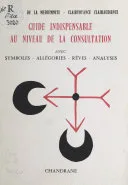
Vade-mecum de la médiumnité-clairvoyance, clairaudience
 73
73

Vade-mecum de la médiumnité-clairvoyance, clairaudience
Chandrane's "Vade-mecum" offers a direct, almost clinical, approach to clairvoyance and clairaudience, a welcome antidote to overly romanticized accounts of psychic phenomena. The author’s methodical breakdown of developing these faculties, particularly the emphasis on energetic preparation and mental discipline, stands out. For instance, the detailed discussion on purifying one's 'etheric vehicle' before attempting astral projection provides a concrete, actionable framework. However, the prose, while functional, can feel somewhat dry, lacking the evocative language that some readers might seek in esoteric literature. The original publication date of 1985 means some conceptual frameworks might feel dated compared to contemporary neurological or quantum-physics inspired approaches to consciousness. Despite this, the book remains a solid, practical manual for disciplined psychic development. It is a functional guide for the serious student, prioritizing technique over mysticism.
📝 Description
73
Chandrane's Vade-mecum de la médiumnité-clairvoyance, clairaudience was first published in the 1980s.
This guide, originally published in the 1980s, addresses the practical and theoretical aspects of clairvoyance and clairaudience. Chandrane provides instruction for those wishing to develop or understand psychic perception. It functions as a manual for cultivating these specific faculties.
The text is for individuals seriously investigating mediumship and psychic abilities, particularly clairvoyance and clairaudience. It suits students of esotericism, parapsychology, and spiritual development who want detailed explanations and practical exercises. Readers interested in historical views of psychic phenomena and foundational texts from the late 20th century will find this work valuable.
Published in the 1980s, this work emerged during a period of renewed interest in spiritualism and psychic research. It continues a lineage of literature that sought to codify and teach psychic abilities, often intersecting with Theosophical concepts and older Hermetic traditions. The book exists within a context still influenced by figures like Helena Blavatsky and Arthur Conan Doyle, while also engaging with emerging New Age philosophies.
💡 Why Read This Book?
• Gain a structured understanding of clairvoyance and clairaudience, learning practical techniques for developing these specific psychic senses as detailed in the book's core sections. • Understand the energetic and mental preparations required for reliable psychic work, informed by the author's emphasis on purifying the 'etheric vehicle' as discussed in Chapter 3. • Explore the historical context of psychic development literature from the 1980s, appreciating Chandrane's contribution alongside contemporaries within the spiritualist and esoteric movements of that era.
⭐ Reader Reviews
Honest opinions from readers who have explored this book.
❓ Frequently Asked Questions
What is the original publication year of "Vade-mecum de la médiumnité-clairvoyance, clairaudience"?
The original publication year for "Vade-mecum de la médiumnité-clairvoyance, clairaudience" by Chandrane is 1985. This digital edition makes the text available again after its initial print run went out of circulation.
What specific psychic abilities does this book focus on?
This book primarily focuses on two specific psychic abilities: clairvoyance, the faculty of clear seeing or inner sight, and clairaudience, the faculty of clear hearing or inner hearing.
Is this book suitable for beginners in esotericism?
Yes, the book is suitable for beginners who are serious about understanding and developing psychic perception. It offers a structured approach with practical exercises, though a foundational interest in esoteric subjects is beneficial.
Does the book discuss the astral plane?
Yes, the work explores the nature of the astral plane, discussing its role in psychic perception and astral projection, and outlining the necessary preparations for navigating it.
What is the main difference between clairvoyance and clairaudience as presented by Chandrane?
Chandrane differentiates clairvoyance as perception through an inner 'eye' and clairaudience as perception through an inner 'ear,' both considered distinct channels for receiving information beyond the physical senses.
Where can I find more information on Chandrane's other works?
As this is a reissue of a mid-20th-century text, information on other works by Chandrane may be limited. This specific volume, "Vade-mecum de la médiumnité-clairvoyance, clairaudience," is the primary focus of this digital edition.
🔮 Key Themes & Symbolism
Clairvoyance and Clairaudience
The central focus is on the systematic development and understanding of clairvoyance ('clear seeing') and clairaudience ('clear hearing'). Chandrane details the nature of these faculties, viewing them not as mystical gifts but as trainable psychic senses. The text likely explores how to cultivate these abilities through focused practice, mental discipline, and energetic purification, distinguishing them from mere imagination or hallucination. This theme addresses the 'how-to' of psychic perception.
The Astral Plane
Understanding the astral plane is crucial for navigating clairvoyant and clairaudient experiences. Chandrane's work likely positions the astral plane as an energetic dimension accessible through altered states of consciousness. The book probably guides readers on its structure, inhabitants, and the safety precautions necessary when venturing into or perceiving from this realm. It’s presented as a landscape for psychic exploration and interaction.
Energetic and Mental Preparation
A significant theme is the preparation of the practitioner's energetic and mental state. Chandrane emphasizes that reliable psychic perception requires a purified 'etheric vehicle' and a disciplined mind, free from emotional turbulence and distracting thoughts. This involves practices aimed at increasing vitality, mental clarity, and spiritual grounding, ensuring the medium acts as a clear channel rather than a distorted lens.
Discernment and Control
The work stresses the importance of discernment in interpreting psychic impressions. Chandrane likely provides methods for distinguishing genuine spiritual or psychic messages from lower-vibrational influences, personal biases, or wishful thinking. Control over the mediumistic state is paramount, ensuring that perceptions are received consciously and intentionally, rather than passively or chaotically. This theme addresses the ethical and practical challenges of psychic work.
💬 Memorable Quotes
Direct passages from the work, attributed to the author.
“The etheric vehicle must be purified before one can accurately perceive astral phenomena.”
— This statement highlights the foundational principle that the practitioner's own energetic body serves as the primary instrument for psychic perception. Purification implies a process of cleansing and vitalizing this vehicle to ensure clarity and accuracy in receiving impressions from non-physical realms.
“Clairaudience is the hearing of the inner ear, distinct from physical sound.”
— This defines clairaudience as a specific sensory faculty operating on a non-physical level. It differentiates the experience from auditory hallucinations, framing it as a legitimate form of perception that requires specific cultivation and interpretation.
“Mental discipline is key to preventing imaginative interference with genuine psychic impressions.”
— This emphasizes the role of the conscious mind in psychic work. It suggests that uncontrolled thoughts, desires, or preconceptions can distort or fabricate psychic messages, underscoring the need for mental focus and detachment.
“The astral plane is a vibratory realm where consciousness can travel.”
— This offers a conceptualization of the astral plane as an energetic dimension characterized by distinct vibrational frequencies. It presents the idea that consciousness, when disengaged from the physical body, can navigate this realm.
“Discernment is necessary to differentiate higher influences from lower manifestations.”
— This points to the critical need for judgment and evaluation in psychic experiences. It suggests that the astral or psychic realms contain a spectrum of influences, and the practitioner must be able to identify and engage with beneficial or truthful ones.
🌙 Esoteric Significance
Tradition
This work fits within the broader Western Esoteric tradition, specifically drawing from the lineage of mediumistic and psychic development literature that gained prominence in the 19th and 20th centuries. It appears to synthesize elements found in spiritualism, theosophy, and Hermeticism, focusing on the practical cultivation of psychic faculties rather than purely theoretical or ceremonial magic. It represents an effort to systematize and clarify psychic perception within a spiritual context.
Symbolism
While specific symbols are not detailed in the brief, the work likely engages with concepts such as the 'inner eye' (representing clairvoyance), the 'inner ear' (representing clairaudience), and the 'etheric vehicle' (representing the subtle body used for psychic perception). These are symbolic representations of energetic structures and perceptual channels crucial for navigating non-physical dimensions and receiving intuitive information.
Modern Relevance
Contemporary interest in consciousness studies, lucid dreaming, and non-ordinary states of awareness finds echoes in Chandrane's practical approach to clairvoyance and clairaudience. Modern practitioners exploring energy healing, intuitive development, or even neuroscientific perspectives on perception might find value in the book's emphasis on disciplined practice and the mind-body connection, albeit from a different theoretical standpoint.
👥 Who Should Read This Book
['• Aspiring psychics and mediums seeking a structured, practical guide to developing clairvoyance and clairaudience, focusing on foundational techniques and preparation.', '• Students of esoteric history interested in understanding the evolution of psychic development literature from the mid-20th century and its place within broader spiritualist traditions.', '• Individuals exploring consciousness and altered states who wish to learn disciplined methods for accessing and interpreting non-physical perceptions beyond common meditative practices.']
📜 Historical Context
Chandrane's "Vade-mecum de la médiumnité-clairvoyance, clairaudience," first published in 1985, emerged during a resurgence of interest in paranormal phenomena and New Age spirituality, building upon foundations laid by earlier movements. This period saw continued engagement with spiritualist traditions, while also incorporating influences from psychology and nascent consciousness studies. While figures like Helena Blavatsky and Allan Kardec had established spiritualism and mediumship as subjects of serious inquiry in the preceding century, the 1980s saw these explorations integrated into broader self-help and metaphysical frameworks. Unlike the more purely spiritualistic focus of the late 19th century, Chandrane's work appears to adopt a more systematic, almost pedagogical approach, perhaps influenced by contemporary parapsychological research or esoteric orders that sought to codify psychic development. The book’s reappearance addresses a continued demand for practical guides to psychic abilities, a demand also met by other authors exploring similar themes in the wake of figures like Edgar Cayce.
📔 Journal Prompts
The purification of the etheric vehicle: What practices can enhance its clarity?
Reflecting on the 'inner ear': How might clairaudience manifest in daily life?
The role of mental discipline: How can I differentiate imagination from psychic impressions?
Reading through the astral plane: What are the essential precautions for safe exploration?
Discernment in perception: How can I cultivate a keener ability to judge psychic information?
🗂️ Glossary
Clairvoyance
The psychic ability to perceive objects, persons, events, or information beyond the normal range of the senses, often described as 'clear seeing' through an inner eye.
Clairaudience
The psychic ability to hear sounds or voices beyond the range of normal hearing, often perceived as 'clear hearing' through an inner ear.
Etheric Vehicle
In esoteric literature, this refers to the subtle body or energy field that interpenetrates the physical body and serves as a medium for psychic perception and life force.
Astral Plane
A non-physical dimension or area of existence, often described as vibratory, that is believed to be accessible through altered states of consciousness, dreams, or astral projection.
Discernment
The faculty of judging well, particularly in the context of psychic work, involving the ability to differentiate between genuine spiritual or psychic impressions and other influences.
Mediumship
The practice of acting as a channel or intermediary between the physical world and the spirit world, or for receiving and conveying psychic information.
Psychic Perception
The reception of information through means other than the five physical senses, encompassing abilities like telepathy, precognition, clairvoyance, and clairaudience.