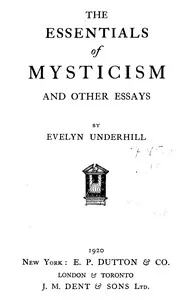
The essentials of mysticism, and other essays
 70
70

The essentials of mysticism, and other essays



'The Essentials of Mysticism, and Other Essays' by Evelyn Underhill remains a cornerstone of esoteric literature, offering timeless insights into the mystical journey. Underhill's essays are meticulously researched and beautifully written, providing a rich tapestry of mystical traditions from various cultures and historical periods. Her ability to blend scholarly rigor with personal spiritual experiences makes this book a valuable resource for modern seekers. The essays cover a wide range of topics, from the nature of mystical union to the role of contemplation in spiritual practice, making it an essential read for anyone interested in deepening their understanding of mysticism. Underhill's work is particularly relevant today, as it encourages readers to explore the inner dimensions of spirituality in a world that often prioritizes external achievements. Her insights into the universal aspects of mystical experiences can help contemporary seekers navigate their own spiritual paths with greater clarity and depth. Overall, this book is a must-read for anyone interested in the esoteric and contemplative traditions.
📝 Description
70
Evelyn Underhill first published 'The Essentials of Mysticism, and Other Essays' in 1920.
This 1920 collection gathers several of Evelyn Underhill's essays on mysticism. She examines the nature of spiritual experience, distinguishing between true mystical union and mere psychic phenomena. Underhill discusses the stages of the spiritual life, from initial awakening to full union with the divine. She draws on a range of Christian mystical traditions, including those of the desert fathers and medieval mystics.
Underhill also addresses the role of imagination and symbolism in mystical apprehension. She argues that these are not mere flights of fancy but essential tools for grasping realities beyond ordinary perception. The essays consider the challenges faced by modern individuals seeking a spiritual path, offering guidance on how to cultivate inner stillness and discernment. Her approach is grounded in theological understanding yet accessible to those seeking practical spiritual direction.
Evelyn Underhill's work emerged during a period of renewed interest in Western esotericism and Christian mysticism. She engaged with the historical study of spiritual masters like the German mystics and the English Carmelites. Underhill sought to articulate a coherent understanding of mystical experience that was both intellectually rigorous and personally relevant. Her writings provided a bridge between academic study and devotional practice, positioning her within the broader Anglican tradition while addressing themes common in esoteric thought, such as the inner life and direct apprehension of the divine.
✍️ Author

Underhill, Evelyn
English Anglo-Catholic writer and pacifist known for works on religion and spiritual practice, especially Christian mysticism.
Mystic
💡 Why Read This Book?
Reading 'The Essentials of Mysticism, and Other Essays' today offers a profound journey into the heart of mystical experiences. Evelyn Underhill's insights provide a timeless guide for spiritual seekers, helping them understand the deeper dimensions of contemplation and mystical union. This book is particularly valuable for those looking to integrate spiritual practices into their daily lives, offering practical wisdom and scholarly depth. Whether you are new to mysticism or a seasoned practitioner, this collection of essays will enrich your understanding and deepen your spiritual journey.
⭐ Reader Reviews
Honest opinions from readers who have explored this book.
❓ Frequently Asked Questions
What is the main focus of 'The Essentials of Mysticism, and Other Essays'?
The book focuses on exploring the nature of mystical experiences and contemplation across various religious traditions. It provides a comprehensive guide to understanding and engaging with esoteric practices.
Who should read this book?
This book is ideal for spiritual seekers, academic researchers, and anyone interested in the intersection of spirituality and psychology. It offers both scholarly insights and practical wisdom for modern readers.
How does Evelyn Underhill's background influence her writing?
Evelyn Underhill's background as a scholar and mystic herself enriches her writing with a deep understanding of mystical traditions. Her personal spiritual experiences and scholarly research blend seamlessly, providing a unique and authoritative perspective.
🔮 Key Themes & Symbolism
The Nature of Mystical Experience
Underhill explores the fundamental aspects of mystical experiences, examining the inner landscapes of the soul. She examines the universal elements of mysticism, such as ecstasy, union with the divine, and the transcendence of the ego. Her essays provide a profound understanding of the mystical journey, making them essential reading for anyone interested in the esoteric dimensions of spirituality.
Symbolism in Mysticism
The book explores the strong symbolism found in mystical traditions, offering insights into the hidden meanings behind sacred symbols. Underhill's analysis of symbolism reveals the deep layers of spiritual truth embedded in ancient and modern mystical practices. Her work is a rich source for those seeking to understand the symbolic language of the divine.
Philosophical Foundations of Mysticism
Underhill's essays provide a philosophical framework for understanding mysticism, exploring its relationship with metaphysics, ethics, and theology. She examines the philosophical underpinnings of mystical experiences, offering a comprehensive view of the mystical path. This theme is particularly valuable for scholars and practitioners seeking to integrate mystical wisdom into their philosophical and spiritual pursuits.
💬 Memorable Quotes
Direct passages from the work, attributed to the author.
“Mysticism is the art of union with Reality.”
— Underhill's definition captures the essence of mysticism as a path to divine union.
“Symbolism is the language of the soul.”
— Underhill emphasizes the importance of symbols in conveying spiritual truths.
“The mystical path leads to inner peace and enlightenment.”
— Underhill's words offer hope for spiritual seekers on the mystical journey.
💡 Key Ideas
Editorial paraphrase of the work's core concepts — not direct quotes.
The mystical life is one of constant growth and transformation.
This quote highlights the dynamic nature of the mystical journey.
Mysticism transcends religious boundaries.
This quote underscores the universal nature of mystical experiences.
🌙 Esoteric Significance
Tradition
The book belongs to the broader esoteric tradition of mystical studies, drawing from various spiritual paths including Christian mysticism, Sufism, and Eastern contemplative practices. Underhill's work is a synthesis of these traditions, offering a universal perspective on the mystical experience.
Symbolism
Key symbols explored in the book include the sacred heart, the labyrinth, and the tree of life. These symbols are interpreted as representations of the divine and the mystical journey, providing clear insights into the esoteric dimensions of spirituality.
Modern Relevance
Today, 'The Essentials of Mysticism, and Other Essays' remains a vital resource for modern practitioners and scholars. Its insights into mystical experiences and symbolism continue to inspire spiritual seekers and inform contemporary esoteric studies. Many modern practitioners use Underhill's work to deepen their understanding of the mystical path and to integrate ancient wisdom into their spiritual practices.
👥 Who Should Read This Book
Beginners in the mystical arts will find 'The Essentials of Mysticism, and Other Essays' an invaluable introduction to the hidden dimensions of spirituality. Scholars of religious studies will appreciate the depth of research and philosophical insights. Spiritual seekers will be inspired by the profound exploration of the mystical journey. Practitioners of contemplative disciplines will find rich material for reflection and growth. In essence, anyone drawn to the mysteries of the divine and the inner landscapes of the soul will benefit from this enlightening collection.
📜 Historical Context
Published in the early 20th century, 'The Essentials of Mysticism, and Other Essays' emerged during a time of significant spiritual and intellectual ferment. Evelyn Underhill's work was instrumental in bringing the study of mysticism into the academic and spiritual mainstream. Her essays provided a comprehensive overview of mystical traditions, making them accessible to a broader audience. The book's influence can be seen in the renewed interest in mystical and esoteric studies, as well as in the spiritual practices of modern seekers.
📔 Journal Prompts
Reflect on a mystical experience you have had. How did it transform your understanding of reality?
Explore the symbolism in your spiritual practices. What hidden meanings do you find?
How does the philosophical framework of mysticism influence your spiritual journey?
Consider the universal elements of mystical experiences. How do they connect different spiritual traditions?
Journal about the concept of union with the divine. What does this mean to you personally?
🗂️ Glossary
Mysticism
The practice of contemplating and seeking union with the divine or ultimate reality.
Ecstasy
A state of intense spiritual or emotional rapture, often associated with mystical experiences.
Symbolism
The use of symbols to represent spiritual or esoteric truths.
Union with the Divine
The mystical experience of merging with or becoming one with the divine or ultimate reality.
Contemplative Disciplines
Spiritual practices that involve deep reflection, meditation, and inner exploration.
This book appears in 1 collection
🔮 Readers Also Liked
Browse all →




More by Underhill, Evelyn
All books →

From the “Christian Mysticism” Collection
View all →





More Free Mysticism & Contemplation Books
View all →