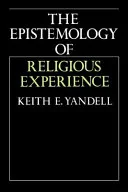
The Epistemology of Religious Experience
 79
79

The Epistemology of Religious Experience
Keith E. Yandell’s 1994 work, The Epistemology of Religious Experience, is a rigorous defense of the cognitive significance of encounters with the divine. Yandell’s central argument, that religious experiences are not inherently ineffable and can provide evidence for God’s existence, is powerfully articulated. He meticulously dismantles the notion that sociological or psychological explanations negate the epistemic weight of these experiences, a point he makes particularly effectively when discussing the variety of religious expressions. A limitation, however, is that the philosophical density may prove challenging for readers unaccustomed to analytic philosophy of religion. The discussion around the 'doxastic voluntarism' debate, while crucial, requires significant reader engagement. Nevertheless, Yandell’s persistent focus on the evidential role of religious experience offers a valuable counterpoint to purely naturalistic interpretations. It is a solid contribution to understanding how subjective spiritual encounters can possess objective epistemic value.
📝 Description
79
Keith E. Yandell argued in 1994 that religious experiences can be grounds for belief in God.
Published in 1994, The Epistemology of Religious Experience directly addresses the skepticism surrounding religious encounters. Yandell challenges the view that these experiences are merely subjective or psychological, contending instead that they can provide valid evidence for the existence of God. He argues against philosophical trends that reduced religious phenomena to social constructs or naturalistic explanations. Yandell’s work systematically analyzes the arguments that question the reliability of religious experience, including issues of ineffability and critiques from social sciences like anthropology and sociology. He builds a case for understanding religious experiences as a form of evidence, similar to perceptual or inferential evidence, that points toward a divine reality. This book is for those interested in the philosophical underpinnings of religious belief and the nature of religious knowledge.
Yandell's work engages with the long tradition of mystics and contemplatives who claim direct apprehension of the divine. While philosophical naturalism was prominent in the mid-1990s, this book defends the epistemic weight of such claims, situating them within the context of debates originating from empiricist philosophy and contemporary philosophy of religion. It acknowledges the challenges posed by the subjective nature and ineffability often associated with these experiences, but seeks to establish their potential as knowledge-bearing events.
💡 Why Read This Book?
• Learn how religious experiences can function as evidence for God’s existence, challenging purely naturalistic explanations, as detailed in the book's 1994 publication context. • Understand Yandell's argument against the ineffability of religious experience, a key concept explored to assert their cognitive value. • Grasp how social science and nonreligious accounts of belief do not automatically invalidate the force of a religious experience, a core contention of Yandell's philosophical analysis.
⭐ Reader Reviews
Honest opinions from readers who have explored this book.
❓ Frequently Asked Questions
What is the main argument of The Epistemology of Religious Experience?
The book argues that religious experiences are not inherently ineffable and can provide evidence for God's existence, countering the idea that social science or nonreligious explanations nullify their epistemic force.
When was The Epistemology of Religious Experience first published?
The Epistemology of Religious Experience by Keith E. Yandell was first published on November 25, 1994.
Does Yandell believe religious experiences are always clear and understandable?
No, Yandell argues against the notion that religious experiences are *necessarily* ineffable, meaning they cannot be expressed or understood. He contends they can be articulated and serve as evidence.
How does Yandell address social scientific explanations of religion?
He contends that explanations from fields like sociology or psychology, while descriptive of belief formation, do not inherently cancel out the potential evidential status of the experience itself.
Who is the intended audience for this book?
The book is primarily for philosophers of religion, theologians, and students of philosophy interested in epistemology and the justification of religious belief.
What philosophical tradition does Yandell engage with?
Yandell engages with analytic philosophy of religion, epistemology, and critiques of religious experience stemming from empiricist and naturalistic viewpoints.
🔮 Key Themes & Symbolism
Evidential Value of Experience
Yandell’s central thesis is that religious experiences possess genuine evidential weight, capable of grounding belief in God’s existence. He argues against the prevailing view that such experiences are private, incommunicable, and therefore epistemically inert. By drawing parallels with other forms of empirical evidence, he posits that the subjective encounter with the divine can, under certain conditions, justify belief in its object. This theme challenges both skeptical empiricism and certain forms of fideism, advocating for a rational assessment of spiritual encounters.
Critique of Ineffability
A significant portion of the book is dedicated to dismantling the claim that religious experiences are inherently ineffable. Yandell argues that while the ultimate nature of a divine encounter may transcend full description, the experience itself is not necessarily beyond articulation or understanding. He contends that to label all religious experiences as ineffable is to preemptively dismiss their potential to convey knowledge or provide justification for belief, thereby shutting down philosophical inquiry.
Social Science vs. Epistemology
Yandell addresses the challenge posed by social scientific explanations of religious belief and experience. He acknowledges the insights offered by disciplines like sociology and anthropology in understanding the cultural and psychological factors influencing religious life. However, he firmly asserts that these explanations do not automatically negate the epistemic status of the experience itself. The book seeks to show that understanding *how* a belief or experience arises is distinct from evaluating its truth or evidential worth.
Rationality of Religious Belief
Underpinning the entire work is a commitment to the rationality of religious belief. Yandell engages with contemporary philosophical debates concerning justification, evidence, and knowledge. His project is to provide a philosophical framework wherein religious experience can be seen not as a departure from reason, but as a potential source of rational grounds for belief in God. This appeals to broader efforts in the philosophy of religion to defend the intellectual respectability of faith.
💬 Memorable Quotes
Direct passages from the work, attributed to the author.
“religious experience need not be ineffable”
— This concise statement captures Yandell's core argument against a common philosophical dismissal of religious encounters. It challenges the notion that such experiences are beyond description or comprehension, paving the way for their consideration as valid sources of knowledge.
“social scientific explanations do not cancel out the force of the experience”
— Yandell asserts that understanding the origins or mechanisms of a religious experience (e.g., psychological or sociological factors) does not automatically invalidate its claim to truth or its role as evidence for something beyond the natural realm.
“religious experience can provide evidence of God's existence”
— This is the central thesis, positing that direct encounters with the divine are not merely subjective states but can function epistemically, offering reasons to believe in the reality of God, much like sensory experiences provide evidence for the external world.
“The justification of religious belief is a philosophical task.”
— This highlights Yandell's approach, framing the defense of religious claims within the rigorous methods of epistemology and analytic philosophy, rather than solely relying on theological dogma or subjective feeling.
“The force of religious experience is not nullified by naturalistic accounts.”
— Yandell argues that even if one accepts naturalistic explanations for *why* people have religious experiences, this does not preclude those experiences from being genuine encounters with a supernatural reality that provides evidence for its existence.
🌙 Esoteric Significance
Tradition
While not strictly within a single esoteric lineage like Hermeticism or Gnosticism, Yandell's work touches upon themes relevant to mystical traditions. Esotericism often emphasizes direct, transformative experience of the divine or ultimate reality as a primary mode of knowing. Yandell’s defense of the epistemic validity of religious experience provides a philosophical grounding that can support the claims made within these traditions, arguing that such experiences are not merely psychological aberrations but potentially reliable channels of truth.
Symbolism
The book itself does not focus on traditional esoteric symbols. However, the 'religious experience' it analyzes often involves profound subjective encounters that can be interpreted through symbolic lenses within various esoteric frameworks. For example, a vision of light might be interpreted in Neoplatonic or Theosophical terms, or a sense of union might echo Sufi or Kabbalistic concepts. Yandell’s work provides a philosophical framework for considering the truth-claims embedded within these symbolic interpretations.
Modern Relevance
Contemporary discussions in philosophy of religion, particularly those exploring Reformed Epistemology and responses to New Atheism, continue to grapple with the justification of religious belief. Yandell’s arguments remain relevant for scholars and practitioners seeking to articulate the epistemic grounds for faith beyond mere fideism or scientific naturalism. His work informs discussions on consciousness, altered states, and the potential for non-empirical knowledge, areas of interest in modern spiritual and psychological inquiry.
👥 Who Should Read This Book
• Philosophers of religion and students of epistemology seeking rigorous arguments for the evidential value of religious experience. • Theologians and spiritual seekers who wish to understand the philosophical justification for their own profound spiritual encounters. • Skeptics and naturalists interested in understanding the counter-arguments to purely reductionist explanations of religious phenomena.
📜 Historical Context
Keith E. Yandell’s *The Epistemology of Religious Experience*, published in 1994, entered a philosophical landscape where naturalism and critiques of religious language were influential. The analytic tradition in philosophy of religion, particularly in the Anglophone world, was deeply engaged with questions of justification and the meaningfulness of religious claims. Thinkers like Antony Flew had long championed skeptical arguments against theistic belief, and responses often focused on logic and language. Yandell’s work directly engages with the empiricist tradition, particularly the challenges it posed to claims based on subjective experience. While figures like Ninian Smart were exploring the phenomenology and sociology of religions, Yandell’s focus remained squarely on the *epistemological* status of religious experience – its capacity to provide evidence. The book can be seen as a contribution to the ongoing debate about religious epistemology, offering a reasoned defense against reductionist accounts that sought to explain away religious experience entirely.
📔 Journal Prompts
The concept of ineffability in religious experience: How does Yandell's critique influence your understanding?
Reflect on the distinction between social scientific explanation and epistemological justification for religious experience.
Consider a religious experience (personal or reported) and analyze its potential evidential force according to Yandell's criteria.
The role of experience in grounding belief: How does Yandell’s argument compare to other epistemic frameworks?
Evaluate the claim that religious experiences can be more than mere psychological states.
🗂️ Glossary
Epistemology
The branch of philosophy concerned with the theory of knowledge, investigating its nature, scope, and justification. It asks how we know what we know and what constitutes valid evidence.
Ineffable
Too great or extreme to be expressed or described in words. In the context of religious experience, it suggests an encounter so profound or transcendent that it cannot be adequately communicated.
Evidential Value
The capacity of something (like an experience or a piece of data) to serve as evidence or justification for a belief or claim.
Fideism
A philosophical viewpoint that emphasizes faith or revelation over reason and philosophical argument in matters of religious belief.
Naturalism
The philosophical viewpoint that denies or ignores supernatural phenomena and regards scientific explanations of the universe as complete.
Doxastic Voluntarism
The view that beliefs are within our voluntary control, meaning we can choose what to believe, which is a concept Yandell engages with regarding religious belief.
Reformed Epistemology
A philosophical approach, associated with Alvin Plantinga and Nicholas Wolterstorff, arguing that belief in God can be rational or 'properly basic' even without traditional philosophical arguments or empirical evidence.
This book appears in 1 collection
🔮 Readers Also Liked
Browse all →









From the “Enlightenment” Collection
View all →







More Free Occult Philosophy Books
View all →