Grossen Philosophen

 80
80

Grossen Philosophen
Karl Jaspers’ *Grossen Philosophen* offers a potent distillation of philosophical history through the lens of existential urgency. Rather than a dry recounting, Jaspers approaches figures like Socrates and Augustine as fellow travelers wrestling with the fundamental questions of being. His strength lies in revealing the existential stakes embedded within their thought, demonstrating how their ideas were not abstract exercises but vital confrontations with the human condition. The work’s intellectual rigor is undeniable, particularly in its exploration of how these thinkers navigated what Jaspers termed 'limit situations.' However, the book’s density can be a significant hurdle. Jaspers’ own philosophical framework, particularly the concept of the 'Encompassing,' requires considerable reader effort to fully grasp, sometimes overshadowing the philosophers he ostensibly discusses. A particularly striking passage involves his analysis of Socrates’ enduring commitment to his philosophical mission despite facing execution, highlighting the philosopher’s ultimate reliance on his own inner conviction. Ultimately, *Grossen Philosophen* provides a challenging but rewarding perspective on philosophical legacy, best suited for those prepared to engage deeply with Jaspers’ distinctive existentialist interpretation.
📝 Description
80
Karl Jaspers' 1955 book, Grossen Philosophen, offers a personal encounter with history's greatest minds.
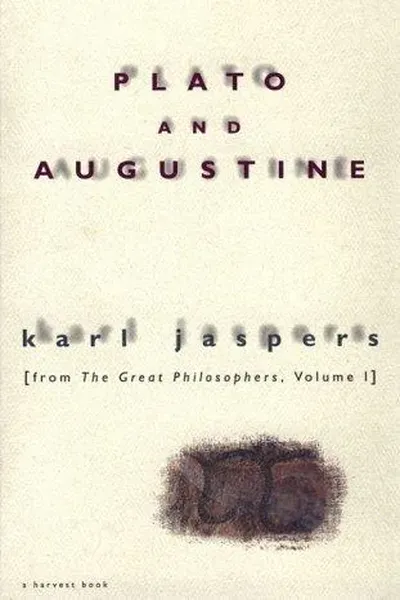
Published in 1955, Karl Jaspers' Grossen Philosophen is not a simple history of philosophy. Instead, Jaspers engages directly with the lives and thought of thinkers he considered crucial to understanding existence. He examines figures like Socrates, Plato, and Augustine, not just for their ideas, but for how those ideas presented fundamental challenges and offered illumination regarding being and freedom.
Jaspers uses these thinkers to foster a dialogue with the past, positioning philosophy as an active pursuit. This book is for readers who see philosophy as a way to grasp their own lives, not just an academic subject. It will appeal to those interested in existentialism and the history of Western thought, particularly from a less conventional viewpoint. Students and scholars can also find value in Jaspers' distinct method of examining philosophical history and his critique of purely conceptual approaches.
Grossen Philosophen emerged in post-war Europe, a time of intense reflection on individual responsibility. Jaspers, a key figure in existentialism, sought the philosophical roots of human action and authentic being. The book engages with thinkers from antiquity and the early Christian era, placing them within a framework that emphasizes their enduring relevance to the human condition. It is less about historical cataloging and more about how these past philosophies continue to pose urgent questions for contemporary existence.
💡 Why Read This Book?
• Understand the existential dimension of major Western philosophers, such as Socrates, through Jaspers' unique post-war perspective, gaining insight into how their ideas confronted 'limit situations' beyond mere academic discourse. • Grasp Karl Jaspers' concept of the 'Encompassing' (das Umgreifende) as a framework for understanding the ultimate nature of reality that transcends empirical knowledge, a key departure from positivist philosophies of the mid-20th century. • Explore how philosophical inquiry, as exemplified by figures like Augustine, can be framed as an act of existential decision and self-awareness, offering a counterpoint to rigid, systematic world-view philosophies.
⭐ Reader Reviews
Honest opinions from readers who have explored this book.
❓ Frequently Asked Questions
When was Karl Jaspers' Grossen Philosophen first published?
Karl Jaspers' *Grossen Philosophen* was first published in 1955, a period following World War II that heavily influenced existentialist philosophy's focus on individual responsibility and meaning.
Which philosophers does Grossen Philosophen examine?
The book examines a range of pivotal Western thinkers, including figures like Socrates, Plato, Augustine, and Immanuel Kant, viewed through Jaspers' existentialist lens.
What is the concept of 'limit situations' in Jaspers' philosophy?
Limit situations, such as death, suffering, and guilt, are existential realities that Jaspers believed are crucial for individuals to confront in order to achieve authentic self-understanding and freedom.
How does Grossen Philosophen differ from a standard history of philosophy?
Unlike a standard history, *Grossen Philosophen* interprets philosophers' lives and works through an existentialist framework, emphasizing their personal struggles and the impact of their ideas on the human condition.
What is the 'Encompassing' in Jaspers' work?
The 'Encompassing' (das Umgreifende) is a core concept in Jaspers' philosophy, referring to that which surrounds and enables all existence but remains ultimately beyond direct conceptualization or empirical grasp.
Is Grossen Philosophen suitable for beginners in philosophy?
While foundational, *Grossen Philosophen* is quite dense and assumes some familiarity with philosophical concepts. It is best suited for readers with a developing interest in existentialism or those seeking a deeper, critical engagement with philosophical figures.
🔮 Key Themes & Symbolism
Existential Confrontation with Limit Situations
Jaspers reframes the lives and works of canonical philosophers not as abstract intellectual exercises, but as profound engagements with 'limit situations' – death, suffering, struggle, and guilt. He posits that these unavoidable aspects of human existence are critical catalysts for genuine self-awareness and the forging of authentic freedom. For instance, he examines Socrates' final moments not merely as a historical event but as the ultimate existential test of his philosophical commitment. This theme challenges readers to consider how their own encounters with adversity can be opportunities for profound philosophical realization, moving beyond superficial understanding to a deeper grasp of what it means to be human.
The Philosophy of the 'Encompassing'
Central to Jaspers' thought is the concept of 'das Umgreifende' or the 'Encompassing.' This refers to that which surrounds and makes possible all existence, including consciousness, but which itself cannot be fully grasped or defined by objectifying thought. Jaspers uses the Great Philosophers to illustrate attempts to reach towards this ultimate reality, often through moments of existential transcendence or philosophical illumination. The work explores the tension between the knowable world and the unknowable ground of being, suggesting that true philosophical understanding involves acknowledging the limits of reason and embracing the mystery inherent in existence.
Authenticity vs. World-View Philosophies
Jaspers distinguishes between genuine philosophical existence, characterized by personal striving and existential decision, and what he criticizes as 'world-view philosophies.' These latter are systems that offer totalizing explanations of reality, often becoming rigid ideologies that stifle individual freedom and critical inquiry. In *Grossen Philosophen*, he highlights how figures like Plato and Augustine, despite their systematic contributions, also embodied an ongoing quest for truth that transcended their own formulated doctrines. This theme prompts reflection on intellectual dogmatism and the vital importance of maintaining an open, questioning stance towards all philosophical and ideological claims.
Philosophical Legacy as Existential Dialogue
The book reinterprets the history of philosophy as a continuous, living dialogue rather than a static canon. Jaspers engages with past thinkers as if they were contemporaries, wrestling with the same fundamental dilemmas of existence. He emphasizes that the value of these philosophers lies not solely in their doctrines but in their courage to question, to confront the unknown, and to articulate their being-in-the-world. This approach encourages readers to see philosophical texts not as historical artifacts but as invitations to participate in this ongoing human conversation about meaning, freedom, and the nature of reality.
💬 Memorable Quotes
Direct passages from the work, attributed to the author.
“Limit situations are the ground for the possibility of the philosophical faith.”
— This concept highlights Jaspers' belief that extreme human experiences like death and suffering, while painful, are crucial for breaking down intellectual defenses and opening individuals to a deeper, existential understanding of reality and their place within it.
“Authentic existence is not given, but achieved.”
— This interpretation underscores the existentialist emphasis on human agency. It suggests that true selfhood is not predetermined but is the result of conscious choices, struggles, and confrontations with the fundamental realities of life.
“Philosophy's task is to illuminate the conditions of human freedom.”
— This captures Jaspers' focus on the practical and existential implications of philosophical thought. It suggests that philosophy's ultimate purpose is to help individuals understand and actualize their own freedom within the constraints of existence.
💡 Key Ideas
Editorial paraphrase of the work's core concepts — not direct quotes.
The philosopher is not the possessor of knowledge, but the seeker of wisdom.
This paraphrase captures Jaspers' view that philosophy is an active, ongoing pursuit rather than a static collection of doctrines. It emphasizes the personal journey and the inherent uncertainty in the quest for truth, aligning with existentialist themes of freedom and responsibility.
The 'Encompassing' can be experienced but not fully known.
This paraphrase points to Jaspers' central metaphysical idea that there are fundamental aspects of reality that transcend human comprehension and empirical verification, requiring a different mode of awareness beyond rational discourse.
🌙 Esoteric Significance
Tradition
While not strictly belonging to a single esoteric lineage like Hermeticism or Kabbalah, Jaspers' philosophy deeply engages with themes resonant in Western esotericism. His exploration of the 'Encompassing' and 'limit situations' touches upon Gnostic concerns with the limitations of the material world and the search for transcendent knowledge. The emphasis on individual consciousness confronting ultimate realities echoes mystical traditions that prioritize direct experience and inner transformation over dogma. Jaspers' work can be seen as a philosophical articulation of the existential dimension inherent in many esoteric paths, focusing on the individual's struggle for meaning and authentic being.
Symbolism
Within *Grossen Philosophen*, the symbolic weight often resides in the figures themselves and their existential struggles. Socrates, for example, symbolizes unwavering commitment to truth and the philosophical life even unto death. Augustine represents the profound inner journey of self-discovery and the confrontation with divine grace. Jaspers' concept of 'limit situations' can be seen as symbolic of the archetypal challenges or trials that individuals must face to achieve spiritual or philosophical maturity, acting as crucibles for transformation.
Modern Relevance
Jaspers' work continues to inform contemporary existentialist thought and philosophical psychology. Thinkers and practitioners in fields like existential therapy draw directly from his analysis of anxiety, freedom, and the search for meaning. His critique of totalizing systems and emphasis on authentic selfhood remain relevant in an era of information overload and ideological polarization. Furthermore, scholars of comparative philosophy and religious studies find value in his unique interpretation of classical thinkers, offering alternative perspectives that bridge philosophical inquiry with lived experience, a pursuit echoed in modern integral and transpersonal philosophies.
👥 Who Should Read This Book
• Students of Existentialism and 20th-Century Philosophy: Gain a foundational understanding of Karl Jaspers' core concepts like the 'Encompassing' and 'limit situations' as applied to the history of Western thought. • Comparative Religion and Philosophy Scholars: Explore how Jaspers reinterprets classical philosophers, offering new perspectives on figures like Socrates and Augustine beyond traditional theological or metaphysical frameworks. • Individuals Seeking Deeper Self-Understanding: Engage with a philosophical approach that emphasizes personal freedom, authenticity, and the confrontation with fundamental existential realities, moving beyond superficial answers to life's core questions.
📜 Historical Context
Published in 1955, *Grossen Philosophen* emerged during a period of intense intellectual reevaluation in post-war Germany and Europe. Existentialism, with its focus on individual freedom, responsibility, and the search for meaning in a seemingly absurd world, was a dominant philosophical current. Karl Jaspers, a key figure alongside Martin Heidegger and Jean-Paul Sartre, was responding to the profound societal and moral crises precipitated by the Second World War. The intellectual landscape was marked by a reaction against the abstract idealism and totalitarian tendencies of earlier philosophies, and a renewed interest in phenomenology and the concrete human experience. Jaspers' work engaged with the tradition of Western philosophy, from Socrates and Plato to Kant, but reinterpreted these figures through his existentialist lens. He was in dialogue with, and sometimes in opposition to, other major thinkers of his time, critically assessing their contributions to understanding the human condition. The reception of such works often reflected the ongoing philosophical debates about the nature of truth, the limits of reason, and the path to authentic existence in a fragmented world.
📔 Journal Prompts
The philosophical quest for wisdom embodied by Socrates.
Confronting your own 'limit situations' and their philosophical implications.
The nature of the 'Encompassing' in your lived experience.
Distinguishing between authentic philosophical inquiry and rigid world-view philosophies.
The existential choices made by the philosophers discussed.
🗂️ Glossary
The Encompassing (das Umgreifende)
A fundamental concept in Jaspers' philosophy denoting that which surrounds and makes possible all existence, including consciousness, yet remains beyond direct conceptual grasp or empirical definition.
Limit Situations (Grenzsituationen)
Inescapable aspects of the human condition such as death, suffering, struggle, and guilt, which Jaspers believed are crucial catalysts for achieving authentic self-understanding and freedom.
Existentialism
A philosophical movement emphasizing individual existence, freedom, and choice. It holds that humans define their own meaning in life and try to make rational decisions despite existing in an irrational universe.
World-View Philosophy (Weltanschauungsphilosophie)
Jaspers' term for philosophical systems that attempt to provide comprehensive, totalizing explanations of reality, which he often criticized for potentially stifling individual freedom and critical thought.
Authenticity
In existentialist terms, living in accordance with one's own freely chosen values and accepting responsibility for one's existence, rather than conforming to external expectations or societal norms.
Philosophical Faith
Jaspers' concept referring to a profound, non-dogmatic belief or orientation towards existence that arises from confronting limit situations and acknowledging the Encompassing.
Ciphers (Chiffren)
Jaspers' idea that elements of the world can be interpreted as indirect signs or pointers towards the Encompassing, though they do not fully reveal it.
🔮 Readers Also Liked
Browse all →









More by Karl Jaspers
All books →


More Free Occult Philosophy Books
View all →